

Starting your running journey without a clear, personalized plan can feel like navigating without a map. Many beginners struggle to find workouts that match their fitness level, schedule, and race goals, leading to frustration or injury. This article provides practical, evidence-backed beginner workout examples designed to build your confidence safely and prepare you effectively for your first race.
Table of Contents
- How To Choose The Right Beginner Workout Plan
- Examples Of Beginner Workouts
- Weekly Training Structure For Beginners
- Comparison Of Popular Beginner Running Plans
- Strategic Personalization Of Beginner Workouts
- Considerations And Precautions For Beginner Running Workouts
- Summary And Situational Recommendations
- Get Started With Personalized Beginner Running Plans
- Frequently Asked Questions About Beginner Workouts
Key Takeaways
| Point | Details |
|---|---|
| Personalization reduces dropout | Customized plans cut dropout rates by approximately 30% in the first 8 weeks. |
| Run/walk intervals boost adherence | Interval methods improve adherence by 15-20% compared to continuous running. |
| Gradual progression prevents injury | Increasing workload slowly with rest days supports safe fitness gains. |
| Weekly structure balances effort | Three workouts per week with recovery days optimizes beginner progress. |
| Matching plans to fitness matters | Choosing workouts suited to your baseline fitness and time boosts success. |
How to Choose the Right Beginner Workout Plan
Selecting a beginner workout plan requires honest assessment of where you stand today. Start by evaluating your current fitness level and any mobility limitations. Can you walk briskly for 20 minutes without discomfort? Do you experience joint pain during physical activity? These answers guide your starting intensity.
Next, consider your realistic weekly time commitment. A plan demanding six days per week won't work if you can only train three times. Match your plan's frequency and intensity to your target race distance and date. Training for a 5K in three months differs from preparing for a 10K in six months.
Decide between interval and continuous running formats based on your injury history and preferences. Intervals alternate running with walking, reducing stress on joints and muscles. Continuous running maintains steady effort but requires higher baseline fitness. Choose formats that feel sustainable, not punishing.
Ensure your chosen plan includes gradual progression. Jumping into high volumes too quickly causes overuse injuries. Look for plans that increase total running time by no more than 10% weekly. This measured approach builds strength while protecting your body.
Key selection criteria include:
- Honest baseline fitness assessment
- Realistic time availability per week
- Alignment with race distance and timeline
- Format preference for intervals or continuous effort
- Built-in gradual progression and rest days
Examples of Beginner Workouts
Run/walk intervals provide the safest entry point for absolute beginners. These workouts alternate short running segments with walking recovery periods. A typical session might include one minute of easy running followed by two minutes of walking, repeated for 20 minutes total. This approach improves adherence by 15-20% and enjoyment for beginners compared to continuous slow runs.
Brisk walking combined with brief jogging intervals suits those with joint concerns or very low fitness. Start with 25 minutes of brisk walking, inserting 30-second jogging bursts every five minutes. This method builds cardiovascular fitness while minimizing impact stress. Over weeks, gradually extend jogging intervals and reduce walking portions.
Continuous slow running demands higher baseline fitness but builds endurance efficiently. Begin with 15-20 minutes at a conversational pace where you can speak full sentences comfortably. Increase duration by two to three minutes weekly. This format works best for individuals who can already walk vigorously for 30 minutes without fatigue.
Consistency matters more than intensity during your first weeks. Three quality sessions weekly produce better results than sporadic high-effort attempts. Your body adapts through regular stimulus, not occasional heroic efforts.
Pro Tip: Track how you feel after each workout. If you're exhausted for more than 24 hours, dial back intensity or duration in your next session.
Workout variety prevents boredom and supports balanced fitness development. Alternate between interval days, easy continuous runs, and beginner-friendly exercises like bodyweight strength work. This mix keeps training fresh and reduces overuse injury risk.
Key workout types:
- Run/walk intervals for lowest fitness levels
- Brisk walking with jogging for joint protection
- Continuous slow runs for moderate baseline fitness
- Cross-training for variety and injury prevention
Weekly Training Structure for Beginners
A sustainable beginner schedule balances workout frequency with adequate recovery. Most effective plans prescribe three running sessions weekly, allowing rest days between efforts. This rhythm supports adaptation while preventing cumulative fatigue.
Start with shorter durations and increase total running time gradually over six to eight weeks. Week one might total 45 minutes of combined running and walking across three sessions. By week eight, you could reach 90 minutes total, with more time spent running than walking.

Integrate lower-intensity cross-training or complete rest days between running workouts. Activities like swimming, cycling, or yoga maintain fitness without adding impact stress. Complete rest days support tissue repair and mental recovery.
Variety within your weekly structure maintains engagement. Alternate between interval workouts, easy continuous runs, and slightly longer sessions. This pattern prevents monotony while addressing different fitness components.
Example progressive weekly structure:
- Week 1: Three 15-minute run/walk sessions with 1:2 run-to-walk ratio
- Week 2: Three 18-minute sessions maintaining same ratio
- Week 3: Three 20-minute sessions shifting to 1:1.5 ratio
- Week 4: Recovery week with three 15-minute easy sessions
- Week 5: Three 22-minute sessions at 1:1 ratio
- Week 6: Three 25-minute sessions with increasing run portions
Discover structured beginner weekly plans that automate this progression based on your feedback and race timeline.
Comparison of Popular Beginner Running Plans
Three distinct beginner approaches offer different balances of frequency, intensity, and time commitment. Understanding their trade-offs helps you select the plan matching your lifestyle and fitness profile.
Plan A emphasizes very short run/walk intervals with moderate frequency. This conservative approach suits individuals with minimal exercise history or significant joint concerns. Sessions occur three times weekly, starting with 30-second running intervals. Progression remains gradual, prioritizing injury prevention over speed gains.
Plan B increases both frequency and interval length for faster progression. Four weekly sessions include longer running segments from the start. This format works for people with moderate baseline fitness aiming at specific race performance targets. Higher frequency accelerates adaptation but demands greater time commitment and recovery attention.
Plan C uses continuous slow running at lower frequency. Two to three weekly sessions last 20-40 minutes at conversational pace. This traditional approach benefits those with existing aerobic fitness transitioning to running. It requires flexibility for longer individual sessions but fewer total weekly workouts.
| Feature | Plan A | Plan B | Plan C |
|---|---|---|---|
| Weekly frequency | 3 sessions | 4 sessions | 2-3 sessions |
| Initial format | 30s run/2min walk | 1min run/1min walk | 20min continuous |
| Progression speed | Gradual (8-10 weeks) | Moderate (6-8 weeks) | Faster (5-6 weeks) |
| Injury risk | Lowest | Moderate | Higher |
| Time per session | 15-25 minutes | 20-30 minutes | 25-40 minutes |
| Best for | Very low fitness | Moderate fitness, time available | Baseline fitness, flexible schedule |
Plan A minimizes injury risk through short intervals and conservative progression. Plan B balances adaptation speed with safety through moderate intervals and frequency. Plan C suits experienced exercisers making the running transition but carries higher injury risk if baseline fitness is overestimated.
Strategic Personalization of Beginner Workouts
Customizing workouts to your individual pace, schedule, and race date dramatically improves outcomes. Generic plans ignore your unique constraints and capabilities, leading to frustration or dropout. Personalizing beginner workouts reduces dropout rates by approximately 30% in the first 8 weeks compared to generic plans.
Tailored plans adapt workout intensity to your current pace, ensuring each session challenges you appropriately without overwhelming your system. They account for your weekly availability, scheduling sessions when you can consistently complete them. They align progression with your specific race date, building fitness peaks at the right moment.
Digital platforms automate these adjustments continuously. As you complete workouts and provide feedback, algorithms modify upcoming sessions to maintain optimal challenge levels. This dynamic approach keeps motivation high by preventing both boredom from easy workouts and burnout from excessive difficulty.
Beginner feedback and progress data inform safe pace and progression modifications. If you consistently rate sessions as too hard, the system dials back intensity. If workouts feel too easy, it accelerates progression within safe parameters. This responsive approach mimics having a personal coach monitoring your development.
Pro Tip: Reassess your weekly schedule and fitness level every three to four weeks. Life changes and adaptation rates vary, so adjust your plan proactively rather than pushing through outdated programming.
Explore personalized running plans that adapt automatically to your evolving fitness and feedback, ensuring your training stays effective and sustainable throughout your beginner journey.
Considerations and Precautions for Beginner Running Workouts
Safety practices prevent the injuries and frustration that derail many beginner runners. Avoid jumping into high-intensity continuous runs immediately, regardless of how fit you feel. Running stresses muscles, tendons, and joints differently than other activities. Your cardiovascular system may handle the effort, but your musculoskeletal system needs gradual adaptation time.
Increase your total weekly workload progressively, following the 10% rule. If you ran 60 minutes total this week, next week should not exceed 66 minutes. This measured approach allows tissues to strengthen without accumulating damage faster than they can repair.
Pay close attention to pain and fatigue signals, distinguishing normal adaptation discomfort from warning signs. Muscle soreness 24-48 hours after workouts is normal. Sharp pain during activity, persistent joint discomfort, or exhaustion lasting days indicates you need rest or reduction.
Walk/run intervals manage intensity naturally, giving your body regular recovery moments within each session. This format reduces injury risk substantially compared to continuous running for beginners. Don't view walking as failure; it's a strategic tool for sustainable progression.
Key safety practices:
- Start with conservative volumes and intensities
- Follow the 10% weekly increase guideline
- Distinguish normal soreness from injury pain
- Use walk breaks strategically, not reluctantly
- Schedule rest days before you feel you need them
Pro Tip: Schedule rest days proactively in your calendar, treating them as important as workout days. Recovery is when your body builds fitness, not during the workout itself.
Include true rest or gentle cross-training days between running sessions. Your body builds fitness during recovery periods, not during the workout stress itself. Skipping rest to accelerate progress typically backfires through injury or burnout.
Summary and Situational Recommendations
Choosing the right beginner workout depends on matching plan characteristics to your personal situation. The table below summarizes key features and ideal use cases for each approach, helping you make an informed decision.
| Plan Type | Weekly Frequency | Intensity Level | Format | Best For | Key Advantage |
|---|---|---|---|---|---|
| Short intervals | 3 sessions | Low | 30s run/2min walk | Very low fitness, joint concerns | Minimal injury risk |
| Moderate intervals | 3-4 sessions | Moderate | 1-2min run/1min walk | Moderate fitness, consistent time | Balanced progression |
| Brisk walk/jog | 3 sessions | Low-moderate | Walking with 30s jog bursts | Very low fitness, safety priority | Gentle cardiovascular build |
| Continuous slow | 2-3 sessions | Moderate | 20-40min conversational pace | Baseline fitness, flexible schedule | Efficient endurance gain |
If you have very low fitness or joint concerns, prioritize short run/walk intervals with conservative progression. This approach minimizes injury risk while building foundational strength and cardiovascular capacity safely.
For moderate fitness with consistent weekly time availability, moderate interval plans balance adaptation speed with safety. You'll progress faster than ultra-conservative approaches while maintaining sustainable workload increases.
Those transitioning from other aerobic activities with baseline fitness can consider continuous slow running, but remain vigilant about overuse injury signs. Your cardiovascular system may be ready before your running-specific musculoskeletal system adapts.
Regardless of plan selection, prioritize consistency over intensity during your first eight weeks. Regular moderate efforts produce better long-term results than sporadic heroic sessions followed by extended recovery periods.
Get Started with Personalized Beginner Running Plans
Moving from knowledge to action requires a plan that adapts to your unique situation. Improvio offers tailored beginner running plans that adjust to your pace, schedule, and race date automatically. The platform learns from your feedback after each workout, modifying upcoming sessions to keep you progressing safely without overwhelming your system.
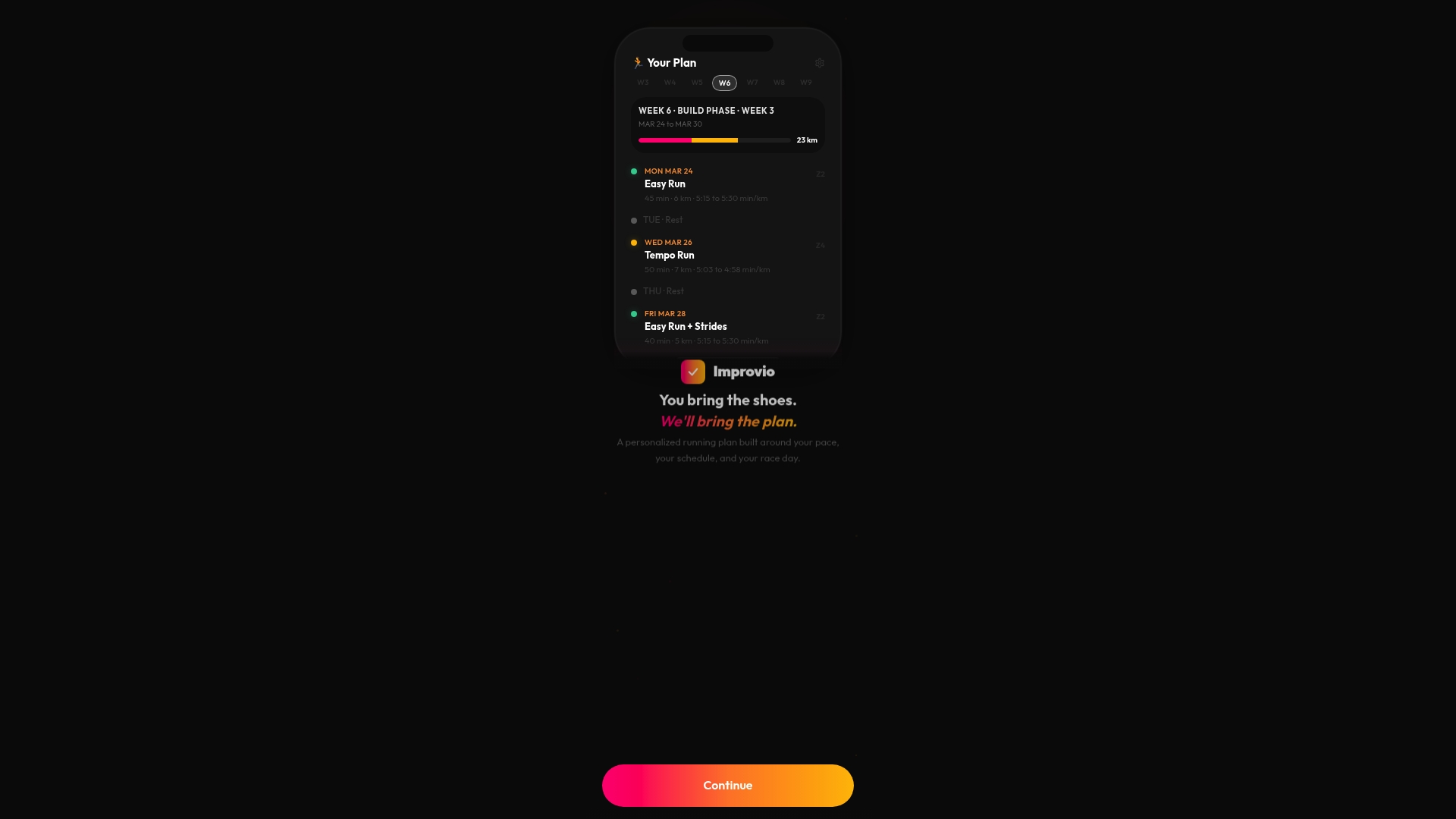
Digital personalization supports safe progression and sustained motivation based on how your body actually responds, not generic assumptions. You'll receive exactly the right challenge at the right time, preventing both injury from excessive load and boredom from inadequate stimulus.
Start your running journey confidently with expert-backed personalized beginner running plans designed specifically for absolute beginners. The streamlined setup takes approximately 60 seconds, and initial planning is free.
Pro Tip: Use Improvio's onboarding to get a custom plan that evolves with your fitness level, ensuring your training stays effective as you adapt and grow stronger.
Explore the Improvio app to access structured, goal-oriented running plans that make your first race achievable and enjoyable.
Frequently Asked Questions About Beginner Workouts
What is a good start for absolute beginner runners?
A run/walk interval plan focusing on very short running segments provides the safest entry point. Start with 30-second running intervals alternating with two-minute walking recovery periods. Complete three sessions weekly, gradually increasing running portions as your body adapts over six to eight weeks.
How often should beginners run each week?
Typically three days per week with rest or cross-training days in between produces optimal results. This frequency balances consistent training stimulus with adequate recovery time. Avoid running on consecutive days during your first two months to prevent overuse injuries and allow tissue adaptation.
Can beginners run continuously from day one?
Not recommended unless you have strong baseline fitness from other aerobic activities. Starting with continuous running significantly increases injury risk because your musculoskeletal system needs gradual adaptation time. Walk/run intervals provide safer progression, allowing your joints, tendons, and muscles to strengthen properly.
How can I personalize my beginner workout?
Adjust pace, interval ratios, and session frequency to match your current fitness level and weekly schedule. Monitor how you feel after workouts and modify intensity if you experience excessive fatigue or discomfort. Digital platforms like Improvio automate these adjustments based on your feedback, ensuring your plan evolves appropriately.
When should I increase running duration?
Gradually over several weeks, following the 10% rule for weekly volume increases. Monitor how your body responds to current workload before advancing. If you feel consistently strong with good recovery between sessions, small increases are appropriate. If fatigue persists or discomfort develops, maintain current volume longer before progressing.