
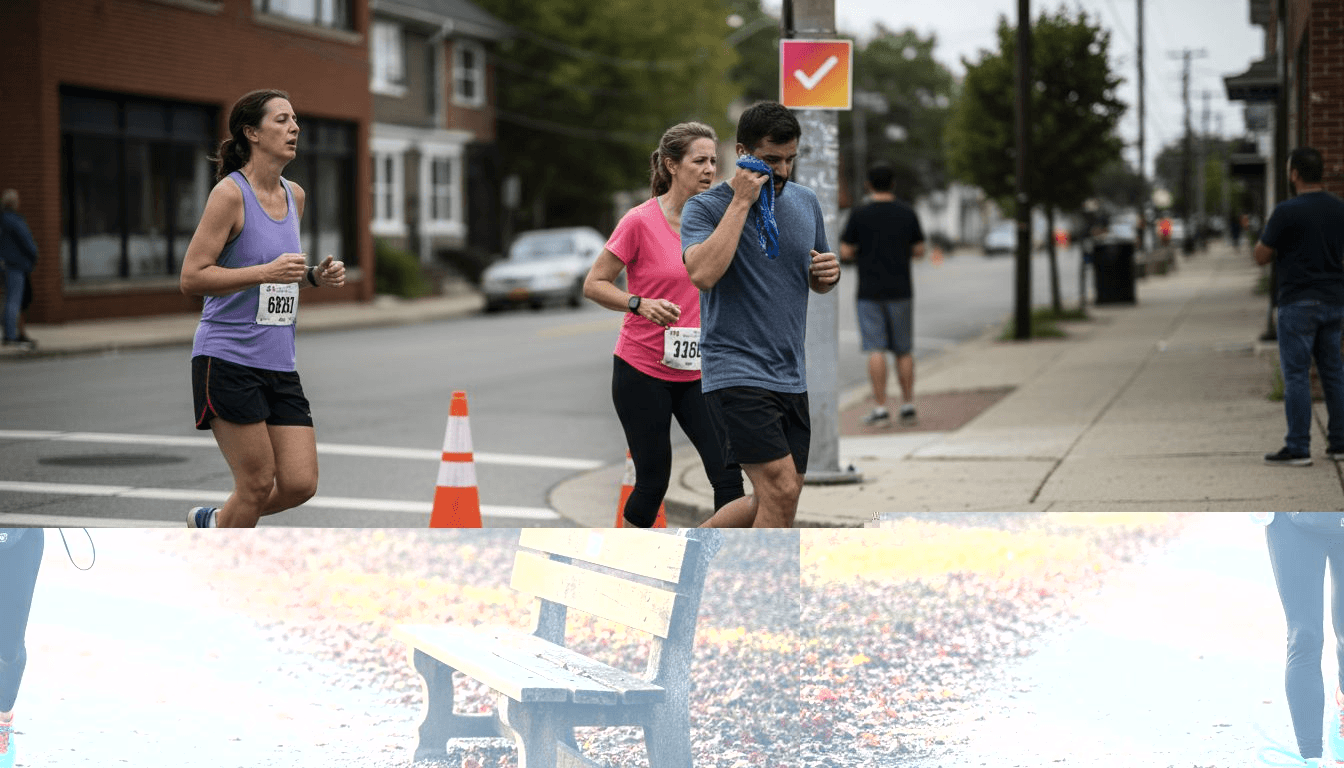
You've probably heard experienced runners talk about pacing strategies, but assumed that's too advanced for you right now. That's wrong. Pacing is the single most critical skill for beginners to master because it determines whether you finish your run feeling strong or utterly defeated. Proper pacing can make you 14% faster while protecting you from the most common beginner injuries. This guide breaks down exactly how pacing works and why it matters from day one of your running journey.
Table of Contents
- What Is Pacing And Why It Matters For Beginners
- The Science Of Pacing: How It Works And Why It Matters
- Common Beginner Mistakes: Why Starting Too Fast Fails You
- Why Mastering Pacing Early Saves You Time And Energy
- The Role Of Pacing In Injury Prevention And Endurance Building
- How Pacing Skills Develop And Improve With Practice
- Practical Pacing Strategies And Tools For Beginner Runners
- Enhance Your Running Journey With Improvio's Beginner Training Plans
- Frequently Asked Questions About Pacing For Beginner Runners
Key Takeaways
| Point | Details |
|---|---|
| Pacing distributes effort efficiently | Smart energy management prevents early fatigue and enables consistent performance throughout your run. |
| Self-selected pacing works best for beginners | Choosing your own comfortable speed adapts naturally to your fitness level and daily conditions. |
| Starting too fast causes performance decline | Beginners who start aggressively experience up to 7.9% pace decline versus 4.14% in experienced runners. |
| Pacing is a learnable skill | Regular practice with feedback improves your ability to regulate effort and achieve better race outcomes. |
| Proper pacing improves performance by 14% | Unskilled pacing makes recreational runners significantly slower, costing nearly 2 minutes on a 3000m run. |
What is Pacing and Why It Matters for Beginners
Pacing is how you regulate your effort and energy throughout a run. Think of it like managing your phone's battery. You wouldn't crank the brightness to maximum and run every app simultaneously if you needed your phone to last all day.
Self-selected pacing means choosing a running speed based on how you feel rather than following a prescribed pace. For beginners, self-selected pacing is adaptable to individual and contextual demands in endurance running, making it ideal because your fitness level, weather conditions, and daily energy vary significantly.
Why does this matter so much for new runners? Proper pacing prevents the boom-and-bust cycle that sidelines countless beginners. When you pace yourself correctly, you build endurance systematically and avoid the frustration of runs that start strong but end miserably.
Here's what happens when you ignore pacing:
- Early exhaustion forces you to walk or stop completely
- Muscle fatigue increases injury risk in your knees, shins, and ankles
- Inconsistent effort makes it impossible to track real progress
- Mental burnout from repeatedly feeling defeated during runs
- Unable to complete planned training distances
Pacing transforms running from a painful struggle into a sustainable practice. You'll finish runs feeling accomplished rather than destroyed, which keeps you coming back consistently.
The Science of Pacing: How It Works and Why It Matters
Your body's oxygen uptake kinetics and energy metabolism directly determine how long you can sustain running effort. When you start too fast, you accumulate metabolic byproducts faster than your body can clear them, leading to that burning sensation and forced slowdown.
Research comparing different pacing strategies found no significant performance difference between self-selected and imposed pacing across 24 studies. This validates trusting your body's signals as a beginner.
Interestingly, fast-start pacing improves oxygen uptake and can enhance performance in short to middle distances. However, this strategy requires experience to execute without crashing.
| Pacing Strategy | Pros for Beginners | Cons for Beginners |
|---|---|---|
| Even pacing | Predictable effort, easier to complete distance, builds confidence | May feel boring, harder to gauge without experience |
| Self-selected pacing | Adapts to daily conditions, reduces injury risk, feels natural | Can lead to inconsistency if you lack body awareness |
| Fast-start pacing | Improves oxygen uptake efficiency | High crash risk, requires advanced fitness and experience |
| Progressive pacing | Builds mental toughness, satisfying finish | Demands significant energy reserves beginners often lack |
For optimal beginner development:
- Start conservatively to establish baseline fitness
- Maintain consistent effort that allows conversation
- Monitor how different paces feel in your body
- Gradually increase pace only in final portions of runs
Pro Tip: Try inserting one or two 30-second pickups during easy runs to improve your oxygen uptake without the risks of sustained fast-start pacing. Walk or jog slowly between these brief efforts.
Common Beginner Mistakes: Why Starting Too Fast Fails You
Speed variability is the hallmark of inexperienced pacing. While veteran runners maintain remarkably consistent splits, beginners often start their runs 20 to 30 seconds per mile faster than they can sustain.
The data is stark. Lower-level runners exhibit up to 7.9% pace decline during races versus 4.14% in experienced runners. That 3.76% difference represents the pacing skill gap.

Starting too fast triggers a cascade of problems. Your heart rate spikes into zones you can't maintain. Glycogen stores deplete rapidly. Lactate accumulates in your muscles. Within minutes, you're gasping and your legs feel like concrete.
Age compounds pacing challenges. Young and older runners show greater pacing variability, requiring tailored advice. If you're under 30, you probably overestimate your sustainable pace due to youthful enthusiasm. Over 60, physiological changes demand extra pacing caution.
| Common Pacing Mistake | Why It Happens | Corrective Strategy |
|---|---|---|
| Starting 20-30 seconds per mile too fast | Excitement and adrenaline override body signals | Use first 5 minutes as gradual warmup, increase pace slowly |
| Matching pace with faster runners | Social pressure and competitive instinct | Run your own race, let others go ahead |
| Ignoring perceived exertion | Over-reliance on pace targets from apps | Check in with breathing and muscle tension every few minutes |
| No pacing plan for different conditions | Lack of experience adjusting for heat, hills, fatigue | Slow down 15-30 seconds per mile in heat or on hilly courses |
Key warning signs you've started too fast:
- Unable to speak in complete sentences within first 5 minutes
- Heart pounding uncomfortably in your chest
- Burning sensation in your legs before halfway point
- Strong urge to walk appearing earlier each run
Pro Tip: Practice mindful perceived exertion by rating your effort from 1 to 10 every few minutes. Beginners should stay at 5 to 6 for most of each run, which feels moderately challenging but sustainable.
Why Mastering Pacing Early Saves You Time and Energy
Poor pacing doesn't just feel bad. It measurably destroys your performance. Unskilled pacing causes recreational runners to be 14% slower, losing nearly 2 minutes on a 3000m run. Scale that to a 5K or 10K, and you're talking about minutes of wasted potential.
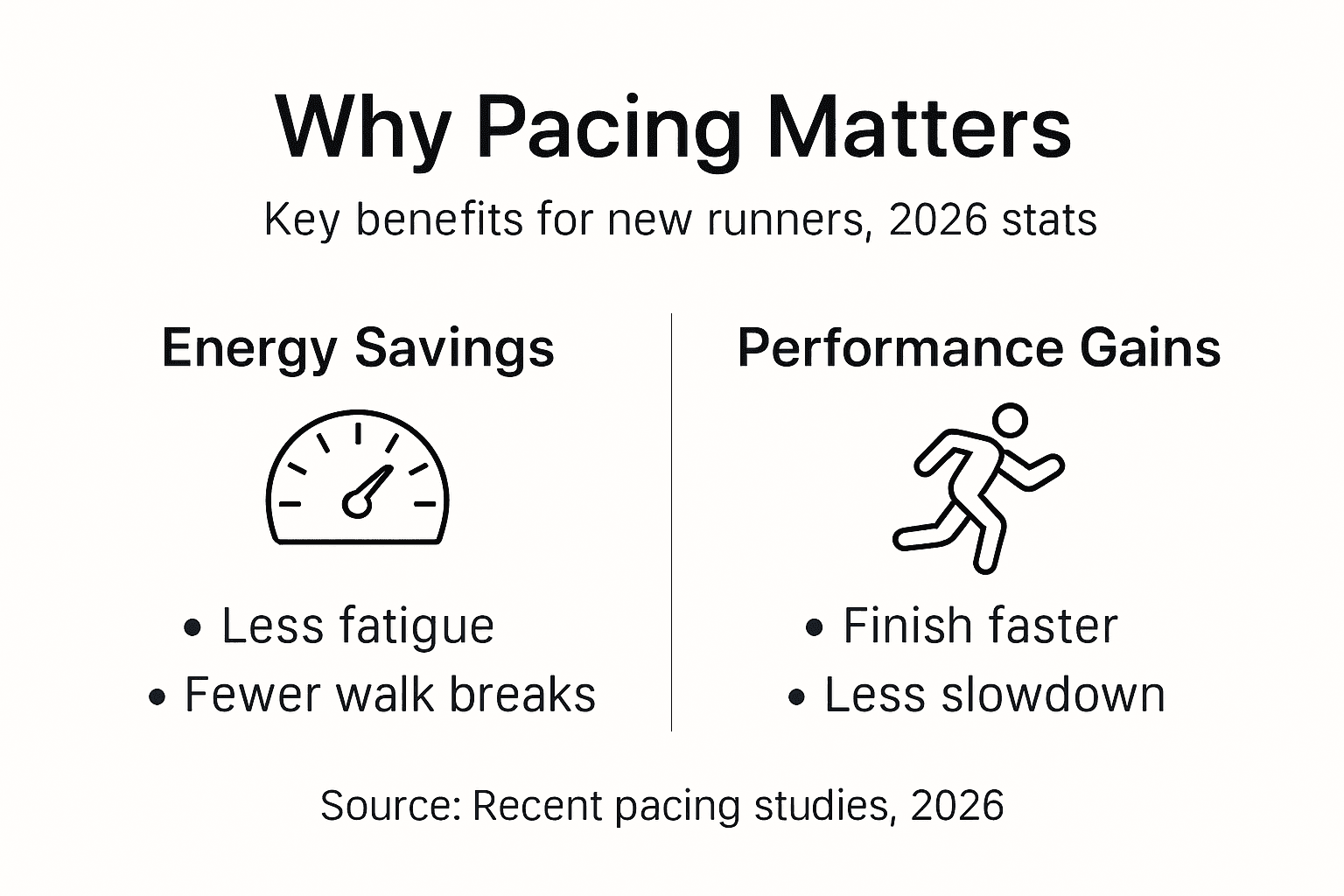
When you master pacing early, you preserve energy for sustained effort. Instead of burning matches in the first mile, you distribute your energy budget wisely. This means finishing strong rather than limping across the finish line.
The compounding benefits of good pacing:
- Improved endurance as your body adapts to consistent effort levels
- Reduced injury risk from avoiding the strain of erratic pace changes
- More enjoyable runs that don't leave you dreading the next workout
- Consistent training that builds fitness systematically
- Better race day performance and achievement of time goals
- Increased confidence in your ability to complete planned distances
Pacing is absolutely trainable. Your brain learns to calibrate effort through repeated exposure. Each well-paced run teaches your nervous system what sustainable feels like. Over weeks and months, you develop an intuitive sense of your capabilities.
Think of pacing skill as your running foundation. You can build speed, distance, and strength on top of it. Without that foundation, everything else crumbles. The beginner who learns pacing in month one will outperform the beginner who ignores it for six months, even if the latter has better raw fitness.
The Role of Pacing in Injury Prevention and Endurance Building
Fatigue and overexertion cause the majority of beginner running injuries. Shin splints, runner's knee, and stress fractures typically result from doing too much, too soon, too fast. Proper pacing acts as your built-in safety mechanism.
When you pace appropriately, you guide your effort to levels your body can handle. This allows gradual adaptation. Your muscles, tendons, and bones strengthen progressively without the shock of excessive stress.
Structured pacing reduces injury incidence by preventing early excessive effort, a major cause of beginner running injuries, according to research on beginner running adherence.
Smart pacing supports sustainable endurance building:
- Maintains effort within your aerobic capacity for maximum adaptation
- Allows full completion of planned training distances
- Prevents compensatory movement patterns that cause injury
- Builds mental resilience through consistent successful runs
- Creates positive feedback loop encouraging training adherence
For beginners preparing for a first race, pacing is non-negotiable. You're not just trying to survive the distance. You're building a sustainable running practice that lasts years. Rushing this process through poor pacing sets you up for injury, burnout, and quitting.
Consider pacing your insurance policy. It costs you nothing except initial patience, but pays enormous dividends in injury prevention and long-term success. Every run completed at appropriate pace strengthens your foundation for the next training cycle.
How Pacing Skills Develop and Improve with Practice
Pacing is not genetic talent. It's an acquired skill that improves dramatically with experience. Pacing behavior emerges from childhood and improves significantly with repeated exposure and practice.
Each run you complete provides feedback about effort regulation. Your brain compares your pacing decisions with the outcomes. Did starting conservatively allow you to finish strong? Did that aggressive first mile force you to walk? This learning process reshapes your internal pacing template.
Practical ways to develop your pacing skills:
- Run the same route weekly to compare effort and times
- Use a heart rate monitor to learn what different effort levels feel like
- Practice negative splits where second half is faster than first half
- Record perceived exertion and actual pace to calibrate your internal gauge
- Join group runs with experienced pacers who model consistency
- Complete time trials monthly to track pacing improvement
The mental benefits extend beyond physical performance. Better pacing builds race day decision-making confidence. You trust your ability to choose sustainable effort. You resist the urge to chase faster runners in the opening miles. You execute your race plan rather than reacting emotionally.
Be patient with yourself. Elite runners spend years refining pacing instincts. As a beginner, expect gradual progress over months. Your first few races will teach you more about pacing than any training run. Each experience adds to your skill base.
View pacing practice as an investment in every future run. The work you put in now developing this skill pays dividends for your entire running career.
Practical Pacing Strategies and Tools for Beginner Runners
Ready to apply pacing principles to your training? Here are specific strategies tailored for absolute beginners preparing for their first race.
-
Start every run conservatively. Begin 30 to 45 seconds per mile slower than your target pace for the first 10 minutes as your body warms up.
-
Use personalized pace targets from training apps. These calculate appropriate speeds based on your current fitness and race goals.
-
Incorporate run-walk intervals initially. Alternate 2 to 3 minutes of running with 1 minute of walking to manage fatigue and practice effort control.
-
Leverage GPS watches or smartphone apps for real-time pace feedback. Glance occasionally but don't become enslaved to the numbers.
-
Learn to run by heart rate zones rather than pace. This accounts for terrain, weather, and daily variation.
-
Practice the talk test. You should be able to speak in complete sentences during easy runs. Gasping means you're too fast.
-
Adjust pacing dynamically based on conditions. Slow down 15 to 30 seconds per mile in heat, humidity, or on hilly courses.
-
Complete monthly time trials at race effort to calibrate what sustainable pacing feels like over your goal distance.
-
Record post-run notes about pacing decisions and how they felt. Review these to identify patterns and improvements.
Pro Tip: Combine perceived exertion awareness with technology feedback for optimal pacing control. Check your heart rate or pace every 5 minutes, but make decisions based primarily on how your body feels. Technology confirms your instincts rather than replacing them.
The best pacing strategy adapts to you specifically. Experiment during training to discover what works for your fitness level, schedule, and goals.
Enhance Your Running Journey with Improvio's Beginner Training Plans
Mastering pacing transforms running from struggle to sustainable practice. But knowing pacing principles and applying them consistently are different challenges.
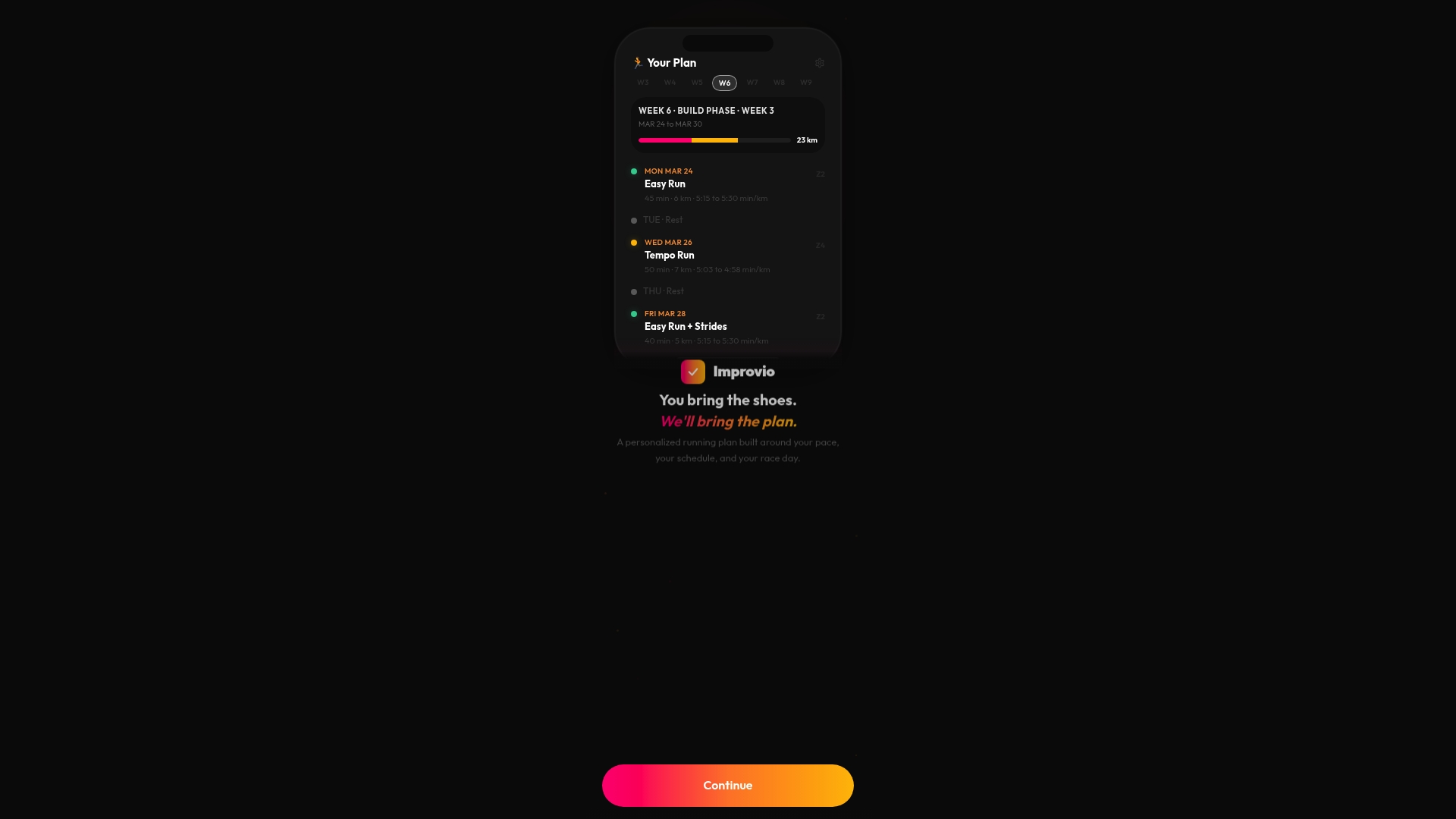
Improvio offers personalized beginner training plans designed specifically to teach proper pacing while building your endurance safely. Each plan incorporates pacing strategies based on your current fitness, schedule, and race date.
The Improvio running app provides real-time pacing feedback during workouts and tracks your progress as your pacing skills develop. You'll learn to regulate effort effectively while expert guidance ensures you avoid common beginner mistakes.
Start building the pacing foundation that supports your entire running journey. Your future self will thank you for the injury-free miles and race day success.
Frequently Asked Questions About Pacing for Beginner Runners
What is the easiest pacing method for beginners to follow?
The talk test is the simplest and most reliable pacing method for new runners. If you can speak in complete sentences without gasping, your pace is appropriate for building endurance. This requires no technology and works in any conditions.
How can I tell if I'm running too fast early in my run?
Warning signs include inability to talk comfortably within the first 5 minutes, heart pounding uncomfortably, and feeling winded before completing one-third of your planned distance. If you experience these, slow down immediately rather than pushing through.
Can pacing strategies change depending on race distance?
Absolutely. Shorter races like 5Ks tolerate slightly faster starts because the duration is brief. Longer races demand more conservative early pacing to preserve energy for later miles. As a beginner, prioritize even effort for all distances until you gain experience.
How often should I practice pacing techniques during training?
Every single run is pacing practice. Focus on pacing awareness during at least 3 runs weekly, with one specifically dedicated to even-pace execution. Monthly time trials at race effort provide concentrated pacing skill development.
Will using a running watch help me pace better?
A GPS watch provides valuable feedback but shouldn't replace body awareness. Use it to confirm your perceived exertion is accurate and to identify pacing patterns. The best approach combines technology data with how you actually feel during the run.