
Starting your first race while juggling a full calendar can feel like a challenge, especially when every ache makes you second-guess your training. Many new runners overlook the importance of proper body alignment, but this simple step lowers your risk of pain and helps you run more efficiently. With a few easy adjustments, you will set a strong foundation so every run feels smoother and more enjoyable, no matter where your busy life takes you.
Table of Contents
- Step 1: Set Up Your Body for Proper Alignment
- Step 2: Practice Key Running Form Basics
- Step 3: Integrate Form Drills into Your Routine
- Step 4: Check and Adjust Your Running Technique
Quick Summary
| Important Insight | Explanation |
|---|---|
| 1. Maintain Proper Body Alignment | Ensure your head, shoulders, spine, hips, knees, and ankles align vertically to reduce injury risk. |
| 2. Focus on Efficient Running Form | Utilize proper arm swing and foot strike techniques to enhance efficiency and prevent strain. |
| 3. Integrate Form Drills Regularly | Incorporate drills such as high knees and bounding twice a week to build better running mechanics. |
| 4. Regularly Assess Running Technique | Record and review your running form frequently to identify and correct any bad habits that develop. |
Step 1: Set Up Your Body for Proper Alignment
Before you lace up your running shoes, let's talk about how your body should actually line up. Good alignment means your head, shoulders, spine, hips, knees, and ankles all stack vertically, like building blocks. This setup protects your joints and prevents the aches that stop new runners in their tracks.
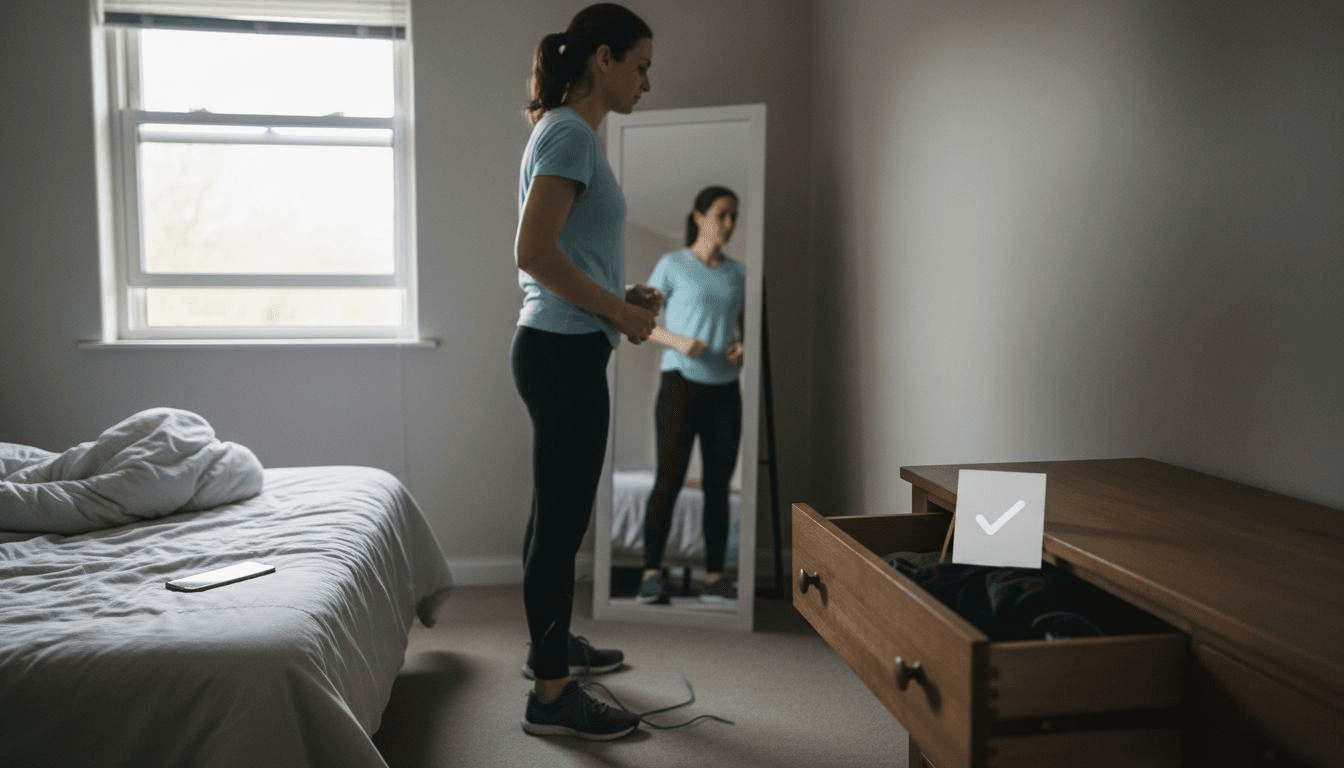
Start by standing in front of a mirror. Check that your head sits directly above your shoulders, not jutting forward like you're staring at a phone. Your shoulders should sit squarely over your hips, not hunched or rolled back unnaturally. Imagine a straight line running from the crown of your head down through your center.
Your spine has natural curves, and proper alignment respects those curves. Don't try to stand ramrod straight. Instead, engage your core muscles slightly so your midsection feels stable and supported. This awareness helps correct positioning of the spine's natural curves during your runs, which limits stress on your musculoskeletal system.
Now check your hips. They should sit neutral, not tilted forward or tucked under. Your knees should be soft and slightly bent, never locked straight. Your feet should land underneath your hips, not splayed out to the sides.
Key alignment points to verify:
- Head stacked above shoulders, eyes forward
- Shoulders relaxed and over hips
- Core engaged but not tense
- Knees slightly bent and aligned with ankles
- Feet parallel, about hip-width apart
This posture might feel strange at first if you're used to slouching or leaning. That's normal. Your body needs a few days to recognize what balanced alignment actually feels like. Once it clicks, you'll notice less strain and more power in your runs.
Proper alignment reduces injury risk by minimizing strain on your joints and muscles during movement.
Pro tip: Take a photo of yourself from the side while standing in alignment, then use it as a reference before runs. Visual feedback helps your brain lock in the correct position faster than memory alone.
Step 2: Practice Key Running Form Basics
Now that your body is aligned, it's time to focus on the mechanics that make running efficient and injury-free. Running form is learnable, and the good news is that small adjustments pay off quickly. You'll feel faster, lighter, and less sore once these basics become automatic.
Start with your arm swing. Your arms should move naturally at your sides, not across your body. Bend your elbows at roughly 90 degrees and let them swing from your shoulders, not your wrists. Keep your shoulders relaxed and avoid clenching your fists. Tight arms waste energy and create tension that travels up into your neck and shoulders.

Next, focus on your foot strike. The most common mistake beginners make is overstriding, where your foot lands far in front of your hips. This brakes your forward momentum and stresses your knees. Instead, land with your foot underneath your hips, not in front. Aim for a midfoot or forefoot strike rather than heavy heel striking. Your foot should land, push off, and propel you forward in one fluid motion.
Your cadence matters too. Most runners do best at 170 to 180 steps per minute. If you're taking fewer steps, you're likely overstriding. Increase your cadence gradually to feel lighter on your feet.
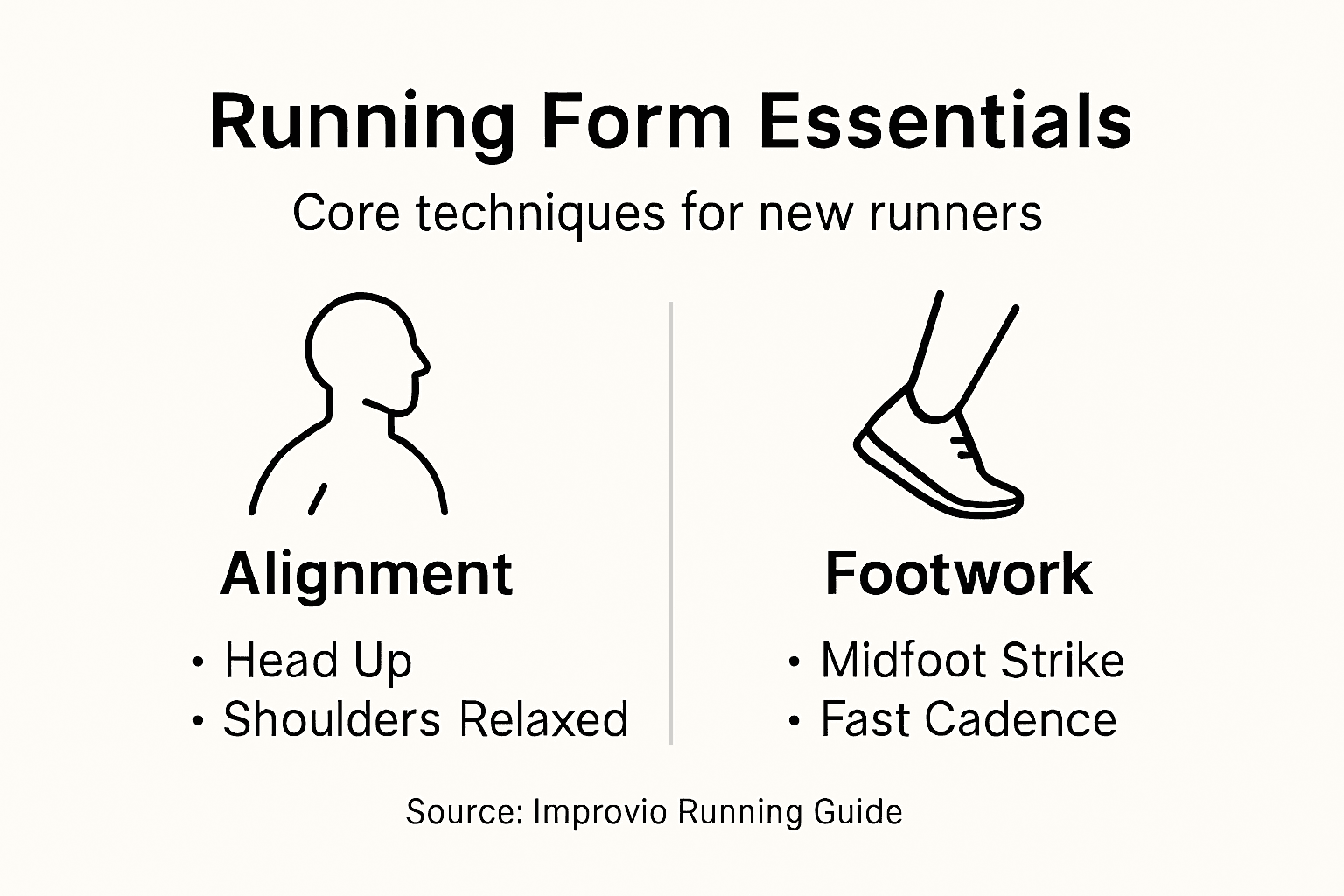
These form elements work together, not separately. Practice them one at a time during short runs, then let them blend together naturally.
Form checklist for every run:
- Arms swinging forward and back, not side to side
- Relaxed shoulders, not hunched or tense
- Foot landing under your hips, midfoot first
- Upright posture, not leaning forward from the waist
- Steady breathing, rhythmic and controlled
Poor form creates injury risk, but small corrections in your foot strike and arm swing prevent pain before it starts.
Pro tip: Record yourself running from the side on your phone, then watch it back. Seeing your actual form versus what you think you're doing reveals blind spots instantly.
Step 3: Integrate Form Drills into Your Routine
Form drills are the secret weapon that separates runners who improve quickly from those who plateau. These focused exercises build the neuromuscular connections your body needs to run efficiently without thinking about it. Adding just 10 to 15 minutes of drills twice a week transforms your running.
Start with high knees. Run in place while driving your knees up to hip height with each step. Move forward slowly, focusing on lifting rather than speed. This drill strengthens your hip flexors and teaches your body to drive power from your core instead of just your legs.
Next, try bounding. These are exaggerated running strides where you emphasize the push-off phase. Land on one foot, immediately drive the opposite knee up high, and propel yourself forward with force. Bounding builds explosive power and improves stride extension and momentum for better overall running mechanics.
Butt kicks target your hamstrings and teach quick leg turnover. Jog slowly while kicking your heels up toward your glutes. Keep your arms moving naturally and maintain an upright posture throughout.
Form drills work best when you're fresh, so practice them early in your run or on dedicated drill days. Keep the pace controlled and focus on quality movement, not speed. Running drills at non-competitive pace allows your nervous system to learn proper patterns without fatigue breaking down your form.
Essential drills to practice:
Here's how different running form drills develop specific skills:
| Drill Type | Primary Benefit | Muscle Focused |
|---|---|---|
| High Knees | Improves knee lift and posture | Hip flexors, core |
| Bounding | Builds power and stride length | Glutes, calves |
| Butt Kicks | Enhances leg turnover speed | Hamstrings |
| Walking Lunges | Increases stability and flexibility | Quadriceps, glutes |
| Lateral Shuffles | Boosts balance and hip strength | Hip abductors |
- High knees for 30 seconds
- Bounding for 20 to 30 meters
- Butt kicks for 30 seconds
- Walking lunges for 10 to 12 steps per leg
- Lateral shuffles for balance and hip strength
Consistent drill practice rewires your running patterns, making good form automatic even when you're tired.
Pro tip: Practice drills on days when you're not running hard. Pair them with your easy runs or rest days so your body can focus on learning movement patterns without the fatigue of a tough workout.
Step 4: Check and Adjust Your Running Technique
Running form isn't static. As you build fitness and log miles, your body naturally adapts, sometimes picking up bad habits along the way. Regular technique checks catch problems early and keep your running efficient and injury-free.
Start by recording yourself running from the side. Film a 30-second clip at your normal easy running pace, then watch it back. Look at your foot strike position. Does your foot land under your hips or out in front? If it's in front, you're overstriding and braking with each step. Make a mental note to focus on landing under your center of mass.
Check your posture and lean. Your body should have a slight forward lean from your ankles, not your waist. Your head should stay neutral and your shoulders relaxed, not hunched or rotated. A gait analysis evaluates foot strike, stride length, and posture to identify inefficiencies that lead to injury.
Look at your arm swing. Are your arms crossing your body's centerline? Do they stay at 90 degrees or are they flailing? Arms should swing forward and back, not side to side. Minimal arm motion saves energy and protects your joints.
Assess your cadence by counting steps for 15 seconds and multiplying by four. Aim for 170 to 180 steps per minute. If you're below 170, focus on quick turnover and reducing overstriding by landing under your center of mass.
Quick self-assessment checklist:
Here is a quick comparison of beginner running form issues versus their corrections:
| Common Issue | Effect on Running | Corrective Focus |
|---|---|---|
| Overstriding | Increased joint strain | Land foot under hips |
| Locked Knees | Reduced shock absorption | Keep knees slightly bent |
| Hunched Shoulders | Upper back tension | Relax shoulders, open chest |
| Low Cadence | Less efficient movement | Aim for 170-180 steps per minute |
| Arm Crossing | Wasted energy, imbalance | Swing arms forward and back |
- Foot lands under hips, not in front
- Slight forward lean from ankles only
- Arms at 90 degrees, moving forward and back
- Shoulders relaxed and still
- Cadence between 170 and 180 steps per minute
Video feedback reveals form issues you can't feel, making it easier to make targeted corrections.
Pro tip: Film yourself monthly and compare clips side by side. Progress becomes visible, and recurring form breakdowns stand out immediately.
Master Your Running Form with Personalized Guidance from Improvio
Starting to run with proper alignment and form can feel overwhelming. This guide highlights common challenges like overstriding, poor posture, and inefficient arm swing that lead to injury and frustration for new runners. If you want to make lasting improvements and avoid these pitfalls while building confidence you can rely on, effective support is crucial.

Improvio understands that mastering running technique requires more than just information. Our digital platform offers customized training plans tailored specifically for beginners that integrate form focus alongside fitness goals. With an easy setup process and personalized workouts that adapt to your pace and schedule, Improvio helps you build the 170 to 180 steps per minute cadence and proper foot strike under your hips that the article emphasizes. Don’t wait until bad habits take hold. Start now with personalized running plans designed to guide your technique, keep motivation high, and protect you from injury. Get ready to run stronger and smarter by visiting Improvio's homepage and take the first step toward your best running form today.
Frequently Asked Questions
How can I ensure proper body alignment before running?
To ensure proper body alignment before running, stand in front of a mirror and check that your head, shoulders, spine, hips, knees, and ankles are stacked vertically. Engage your core for stability, allowing your body to recognize balanced alignment, which can reduce strain during your runs.
What are the key elements of good running form?
Key elements of good running form include proper arm swing, foot strike, and cadence. Aim to keep your arms relaxed and swinging forward and back, land your foot beneath your hips, and strive for a cadence of 170 to 180 steps per minute to enhance efficiency and reduce injury risk.
How can I practice running drills effectively?
To practice running drills effectively, allocate 10 to 15 minutes twice a week for focused exercises like high knees, bounding, and butt kicks. Performing these drills when fresh allows your body to learn proper patterns without the fatigue of a long run, improving your form.
How often should I check and adjust my running technique?
You should check and adjust your running technique regularly, ideally after making significant gains in fitness or mileage. Consider recording your runs every month to assess your form and catch any emerging bad habits, enabling you to tighten your technique over time.
What common mistakes should I avoid to improve my running form?
Common mistakes to avoid include overstriding, locked knees, and a hunched posture. Focus on landing your foot under your hips, keeping your knees slightly bent, and maintaining relaxed shoulders to create a more efficient, injury-free run.