

You've heard you need to run fast to improve, that specialized shoes prevent injury, or that rest days slow progress. These myths stop countless people from starting or cause early burnout and injury. The truth is simpler: a personalized, gradual training plan that respects your current fitness and schedule will get you to your first race safely. This guide explains what beginner running training plans are, how they work, and how to apply them effectively.
Table of Contents
- Introduction To Running Training Plans
- How Beginner Running Plans Work: The Run-Walk Method And Progression
- Essential Components Of A Beginner Running Training Plan
- Common Misconceptions About Running Training Plans
- Personalizing Your Running Training Plan
- Getting Started: Practical Tips For Absolute Beginners
- Summary And Next Steps
- Start Your Personalized Running Training Plan With Improvio
- Frequently Asked Questions
Key Takeaways
| Point | Details |
|---|---|
| Structured progression builds endurance safely | A running training plan is a structured, progressive program to improve fitness and prepare for races, minimizing injury risk for beginners. |
| Run-walk method gradually increases running time | Most plans move from 1 minute running with 4 minutes walking to 30 minutes continuous running over 10 weeks. |
| Rest days prevent injury and improve adaptation | Recovery time allows your body to strengthen and adapt, making rest essential for progress. |
| Personalization boosts motivation and results | Adapting plans to your schedule, pace, and goals increases adherence and success rates. |
| Starting with realistic goals and comfortable gear supports success | Focus on consistency and comfort over speed or expensive equipment when beginning. |
Introduction to Running Training Plans
A running training plan is a structured, progressive approach to building running fitness safely. Its purpose is to develop endurance, minimize injury risk, and prepare you for a specific race distance or fitness milestone. Beginners benefit most because these plans balance challenge with adequate recovery and gradual progression.
Key components make training plans effective:
- Consistent scheduling that fits your weekly routine
- Incremental increases in running time or distance each week
- Scheduled recovery days to allow adaptation
- Clear milestones to track improvement
- Flexibility to adjust based on how your body responds
Personalization matters because it tailors the plan to your current fitness level, available time, and specific goals. Generic plans might push too hard or too easy, reducing motivation. Personalized beginner training plans account for your unique situation, making consistency easier to maintain.
The most effective structured beginner running plans start where you are now, not where you think you should be. This realistic approach prevents the discouragement that comes from unrealistic expectations.
How Beginner Running Plans Work: The Run-Walk Method and Progression
Most beginner plans use the run-walk method, alternating short running intervals with walking breaks. This approach lets you build cardiovascular fitness and leg strength without overwhelming your body. You might start with 1 minute of running followed by 4 minutes of walking, repeating this pattern for 20 to 30 minutes total.
A well-structured beginner running plan uses the run/walk method to gradually build endurance while minimizing injury risk over 10 weeks. Here's how typical progression works:
- Weeks 1 to 2: Run 1 minute, walk 4 minutes, repeat 6 times
- Weeks 3 to 4: Run 2 minutes, walk 3 minutes, repeat 6 times
- Weeks 5 to 6: Run 3 minutes, walk 2 minutes, repeat 6 times
- Weeks 7 to 8: Run 5 minutes, walk 2 minutes, repeat 4 times
- Weeks 9 to 10: Run 10 minutes, walk 1 minute, repeat 3 times, building to 30 minutes continuous
Your pace matters more than you think. The table below shows how conversational pace compares to pushing too hard:
| Pace Type | Heart Rate | Breathing | Sustainability | Injury Risk |
|---|---|---|---|---|
| Conversational | 60-70% max | Can talk easily | High | Low |
| Moderate effort | 70-80% max | Short phrases only | Medium | Medium |
| Hard effort | 80-90% max | Cannot talk | Low | High |
Pro Tip: Focus on maintaining an effort level where you could hold a conversation. If you're gasping for air, slow down immediately.
The gradual run-walk progression ensures your muscles, tendons, and cardiovascular system adapt safely. Rushing this process is the leading cause of shin splints, knee pain, and burnout among new runners.
Essential Components of a Beginner Running Training Plan
Beyond the run-walk intervals, several components make training plans effective and sustainable. Beginner plans typically include 3-4 running days, 2-3 rest or cross-training days, plus warm-up and cool-down routines.
Your weekly structure should include:
- Three to four running days with at least one rest day between hard efforts
- Two to three rest days or low-impact cross-training sessions like swimming or cycling
- Five to ten minutes of walking or light jogging to warm up before each run
- Five to ten minutes of walking and gentle stretching after each run to cool down
- One longer run each week to build endurance gradually
Gear matters less than you think at this stage. Focus on comfort and proper fit rather than expensive or specialized equipment. A good pair of running shoes that feel comfortable and well-cushioned is essential. Breathable clothing that wicks moisture helps, but cotton works fine when starting.
Pro Tip: Visit a running specialty store for a fitting if possible, but trust your comfort over fancy technology or beginner workout routines suggesting specific shoe types.
Rest and cross-training prevent overuse injuries while still building fitness. Your body strengthens during recovery, not during the run itself. Beginner running plan components that include adequate rest lead to better long-term results than plans that push daily running.
Common Misconceptions About Running Training Plans
Several myths discourage beginners or lead to injury and burnout. Understanding the truth helps you train smarter and stay motivated.
Myth 1: You must run fast to improve. Reality: Beginners improve fitness most effectively by focusing on consistent duration at a conversational pace. Speed develops naturally over time once your aerobic base is strong.
Myth 2: Specialized shoes matched to your foot type prevent injury. Reality: Comfort is the best guide for shoe selection. Recent research shows that matching shoes to supposed foot types doesn't reduce injury rates compared to simply choosing comfortable, well-cushioned shoes.
Myth 3: Skipping rest days accelerates progress. Reality: Rest is when your body adapts and strengthens. Training every day increases injury risk and leads to plateaus or regression rather than improvement.
Myth 4: You need to stretch extensively before running. Reality: Dynamic warm-ups with light movement are more effective than static stretching before exercise. Save deeper stretches for after your run.
These beliefs cause many beginners to quit within the first month or develop injuries that could have been avoided. A patient, progressive mindset focused on listening to your body produces sustainable results. Running training myths often stem from advice meant for experienced runners, not those just starting their journey.
Personalizing Your Running Training Plan
Generic plans provide a starting framework, but personalizing your approach significantly improves outcomes. You need to adjust pace, running days, and recovery based on your individual fitness level, schedule constraints, and specific goals.
Digital apps make personalization easier by adjusting your plan dynamically as you progress. The table below compares generic versus personalized approaches:
| Feature | Generic Plan | Personalized Plan |
|---|---|---|
| Schedule flexibility | Fixed days and times | Adapts to your weekly availability |
| Pace guidance | One-size-fits-all targets | Based on your current fitness level |
| Progression rate | Standard weekly increases | Adjusts based on your response |
| Motivation tracking | None | Celebrates milestones and progress |
| Injury prevention | General advice | Accounts for your injury history |
Personalized plans improve adherence rates and performance compared to generic schedules. They account for the realities of your life rather than assuming perfect conditions.
Factors to consider when personalizing include:
- Your work and family schedule constraints
- Current fitness and comfort levels
- Target race date if you have one
- Previous injury history or concerns
- Preferred training times and locations
- Weather and seasonal considerations
Personalized running plans remove the guesswork and adjust automatically as you report your workouts and how you feel. This dynamic approach keeps you challenged without overwhelming you.
Getting Started: Practical Tips for Absolute Beginners
Taking the first steps can feel intimidating, but practical preparation builds confidence. Start with properly fitting, comfortable running shoes and minimal additional gear. You don't need expensive clothing or gadgets to begin successfully.
Implement these practices from day one:
- Begin with the run-walk method as described earlier, even if it feels too easy
- Schedule three running days per week with rest days in between
- Track your workouts in a simple log or app to visualize progress
- Set small, achievable goals like completing each week's plan rather than focusing on speed
- Celebrate each completed workout as a win regardless of how it felt
Pro Tip: Listen to your body and distinguish between normal discomfort from new activity and pain that signals potential injury. Sharp or worsening pain means you should stop and rest.
Key to success is starting slow with comfortable gear, run/walk intervals, rest days, goal setting, and body awareness. Consistency matters more than any single workout.
Tracking running progress helps maintain motivation during weeks when improvement feels slow. Most beginners see dramatic gains in the first month, then progress becomes more gradual but continues steadily.
Starting a running plan is easier when you commit to the process rather than focusing on the end goal. Each workout builds the foundation for the next, creating momentum that carries you forward.
Summary and Next Steps
Structured running training plans help absolute beginners build fitness safely and effectively by providing clear guidance on progression, recovery, and pacing. The run-walk method gradually develops endurance without overwhelming your body.
Key success factors include:
- Following a structured plan with gradual weekly progression
- Incorporating adequate rest and recovery days
- Personalizing the approach to your schedule and fitness level
- Starting with comfortable gear and realistic expectations
- Tracking progress to maintain motivation
Personalization significantly enhances motivation and race readiness because it accounts for your unique situation rather than assuming one-size-fits-all solutions work for everyone. Consistency matters more than intensity, especially in the first months.
Improvio offers fast, easy personalized planning tailored specifically to beginner needs. The platform creates personalized running training plans in about 60 seconds, adjusting to your pace, schedule, and target race date. Start your plan today and take the first confident step toward your fitness goal or first race.
Start Your Personalized Running Training Plan with Improvio
Ready to apply what you've learned? Improvio creates personalized beginner running training plans tailored to your schedule, current fitness, and race goals. The platform makes starting simple with a 60-second setup that asks about your availability, target race date, and current activity level.
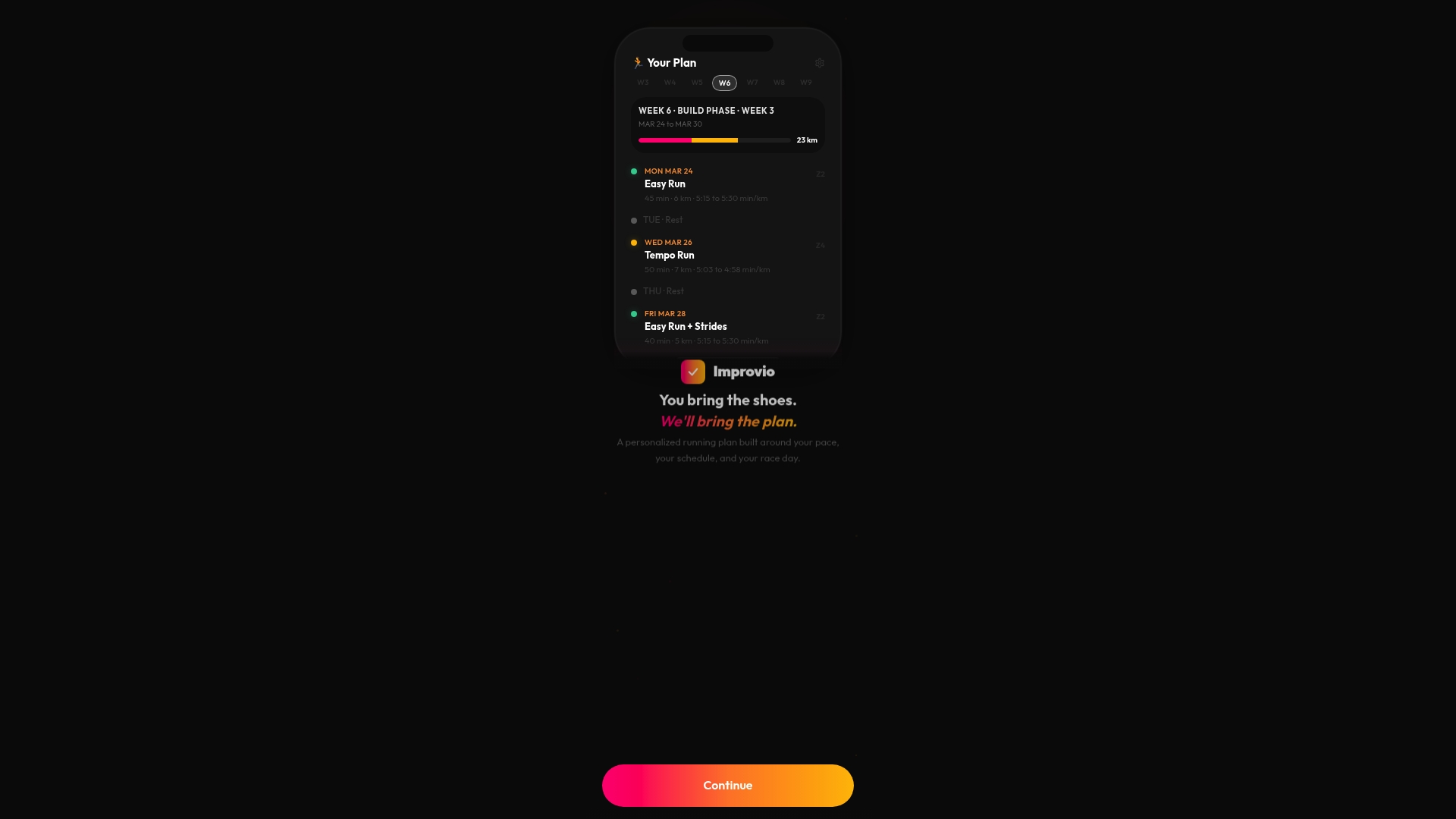
The Improvio app supports gradual progress safely by adjusting your plan as you complete workouts and report how you feel. You get customized weekly schedules that balance challenge with recovery, preventing the overwhelm that causes many beginners to quit. Digital tracking keeps you motivated by showing your improvement week by week. Get started now and build the foundation for long-term running success.
Frequently Asked Questions
What is the best pace for beginner runners?
The best pace is one where you can hold a conversation comfortably, typically 60 to 70 percent of your maximum heart rate. If you're breathing too hard to talk, slow down immediately. Speed develops naturally as your aerobic base strengthens over weeks and months.
How often should beginners train per week?
Beginners should run three to four days per week with at least one rest day between sessions. Include two to three complete rest days or low-impact cross-training activities. This schedule allows adequate recovery while building fitness consistently.
Do I need expensive shoes to start running?
No, you need comfortable, well-cushioned shoes that fit properly, not expensive specialized footwear. Visit a running store for fitting guidance if possible, but trust your comfort over technology claims. Most beginners succeed with mid-range shoes chosen for comfort.
How important are rest days in a beginner plan?
Rest days are essential because your body strengthens and adapts during recovery, not during the run itself. Training without adequate rest increases injury risk and can lead to burnout or plateaus. Schedule at least two to three rest days weekly.
Can I personalize my running plan if I have a busy schedule?
Yes, personalized plans adapt to your available days and times rather than requiring fixed schedules. Digital platforms adjust your training around work, family, and other commitments while maintaining effective progression. Flexibility increases the likelihood you'll stay consistent long-term.