

Starting your first race feels overwhelming when every step is new and every plan sounds complicated. Structured running programs break down that uncertainty, giving you clear guidance tailored to complete beginners. By focusing on progressive overload, consistent milestones, and accountability, these plans transform random effort into steady progress. Whether you are preparing for a local event in Canada or dreaming of your inaugural race in Europe, a structured approach protects you from injury and helps you build confidence every week.
Table of Contents
- What Structured Running Plans Involve
- Types of Beginner Plans Explained
- How Plans Prevent Injury And Burnout
- Role of Motivation and Accountability
- Measurable Progress And Early Results
Key Takeaways
| Point | Details |
|---|---|
| Structured Plans Enhance Progress | Follow a structured running plan to ensure gradual increases in distance and intensity, which helps develop fitness without injury. |
| Injury Prevention Through Controlled Training | A structured approach includes planned recovery and varied workouts, reducing the risk of injury and burnout. |
| Accountability Boosts Consistency | Scheduled workouts and clear goals from a structured plan maintain motivation, making skipping runs less tempting. |
| Measurable Progress Fuels Motivation | Tracking key metrics like distance and pace keeps you informed about your improvements, reinforcing commitment to your training. |
What Structured Running Plans Involve
Structured running plans aren't random workouts thrown together. They're carefully organized training frameworks designed specifically to build your fitness toward a goal—your first race.
Think of a structured plan as a roadmap with multiple levels of detail. Each level serves a different purpose, and together they create a progression that actually works.
The Three-Level Framework
A solid plan operates on three distinct time scales:
- Macrocycles focus on the big picture (months or years of training leading to peak performance)
- Mesocycles organize training into 3-6 week blocks targeting specific adaptations
- Microcycles break down your week with varied intensity and planned recovery days
This layered approach lets you see both the long-term direction and the immediate weekly action.
Core Components You'll Experience
When you follow a structured plan, you're getting several key elements working together:
- Progressive overload: Gradual increases in distance or intensity so your body adapts without breaking down
- Training cycles: Organized phases that build specific fitness qualities at the right time
- Planned recovery: Intentional easy days and rest weeks that prevent injury and burnout
- Variety in workouts: Easy runs, tempo runs, and speed work each serve different purposes
Structured training cycles help you avoid the two biggest beginner mistakes: jumping in too hard too fast, or training the same way every single day.
Why This Matters for You
Without structure, most new runners either quit from exhaustion or plateau because their body stops adapting. A structured plan prevents both by controlling the variables—how much you run, how hard, and when you rest.
Your body responds to organized stress and recovery, not random effort. That's the power of a plan.
This table highlights how structured plans benefit new runners compared to unstructured efforts:
| Feature | Structured Plan | Unstructured Approach |
|---|---|---|
| Progression | Gradual and intentional | Random and unpredictable |
| Injury Risk | Lower with built-in recovery | Higher due to overload |
| Motivation | Boosted by clear milestones | Often declines without feedback |
| Accountability | Tracked schedule & goals | Dependent on willpower alone |
A structured approach protects you from injury while building fitness faster than guesswork ever could.
Pro tip: Start your training plan at least 8-12 weeks before your target race—this gives you enough time to build endurance safely without compressing your progression timeline.
Types of Beginner Plans Explained
Not all running plans are created equal. Different plan types serve different purposes, and choosing the right one depends on your goal, available time, and current fitness level.
Beginners typically benefit from plans designed specifically for newcomers—those that account for your body's need to adapt gradually and your mind's need for clarity and motivation.

Common Plan Structures
Most beginner plans fall into a few recognizable categories:
- Couch to 5K style plans progress from walking and running intervals to continuous running over 8-9 weeks
- Base building plans focus on establishing aerobic fitness through consistent easy running before adding speed work
- Race-specific plans target a particular distance or event (5K, 10K, half marathon) with training tailored to that goal
- Time-efficient plans compress training into 3-4 days per week for people juggling busy schedules
Each type emphasizes different qualities, but all quality plans share one thing: progressive workload increases that protect your joints while building fitness.
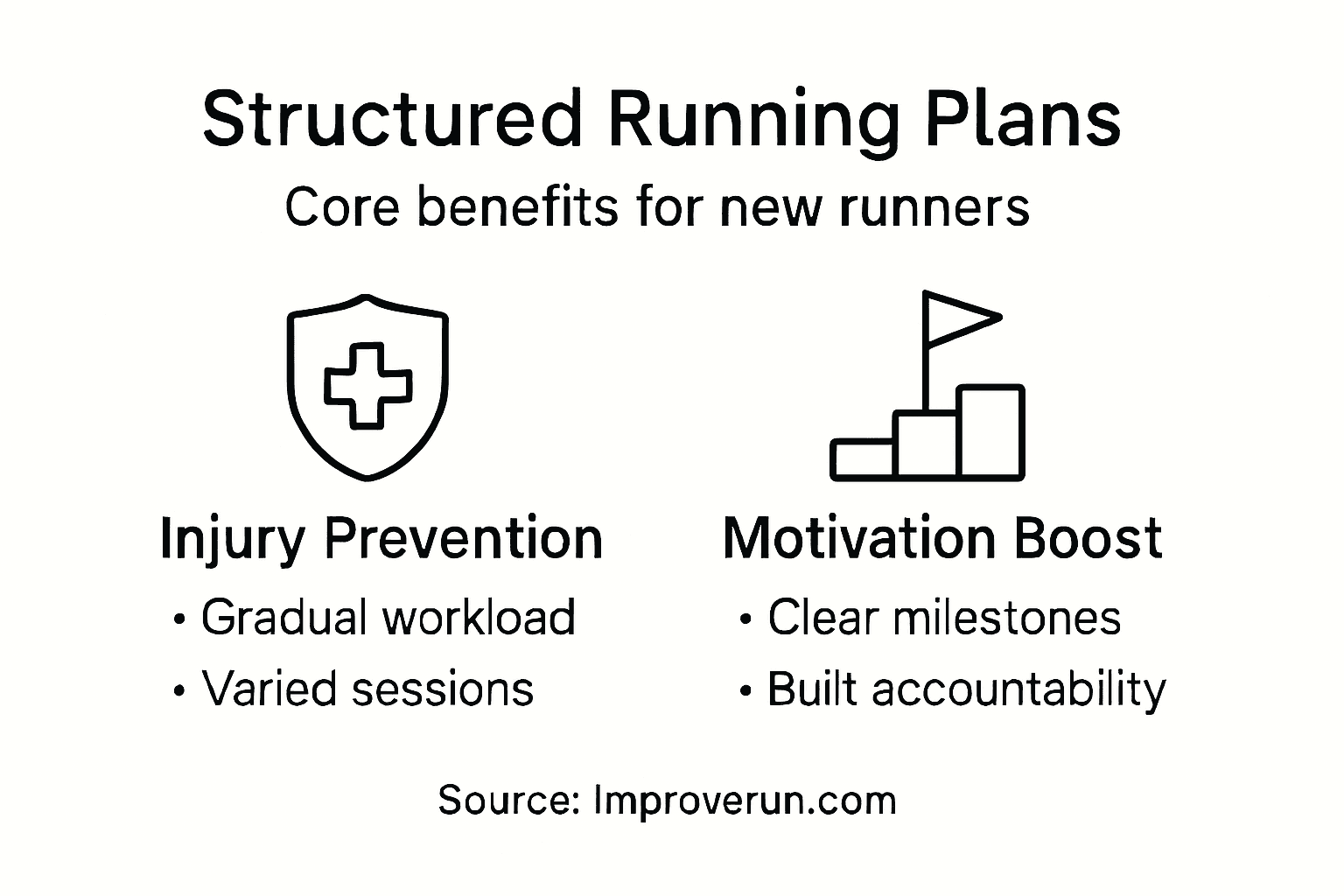
Here's a side-by-side summary of different beginner running plan types and who they're best for:
| Plan Type | Main Focus | Best For |
|---|---|---|
| Couch to 5K | Gradual running intervals | Complete beginners |
| Base Building | Aerobic endurance | Those new to consistent running |
| Race-Specific | Distance or event training | Preparing for a targeted race |
| Time-Efficient | Fitting running into busy weeks | Runners with limited time |
What Makes a Plan Beginner-Friendly
A true beginner plan accounts for reality. You're not competing yet. You're learning your body's signals and building a habit.
Effective beginner plans include clear explanations of each workout type. You should understand not just what to do, but why you're doing it.
- Simple weekly schedules showing exactly which days you run and which days you rest
- Defined effort levels (easy, moderate, hard) rather than confusing pace ranges
- Realistic time commitment that fits your actual life, not an idealized version
- Built-in flexibility for when life happens and you miss a workout
Personalization Matters
Generic plans work, but personalized plans work better. Your body runs at a different pace than your friend's body.
A plan customized to your current fitness level and race date removes the guesswork. Instead of wondering if you're doing too much, you follow a framework built for you.
The best beginner plan is one you'll actually follow—matching your pace, schedule, and goals.
Pro tip: Select a plan designed for your actual target race distance, not an easier version you think you "should" be able to handle—personalization to your specific goal ensures optimal pacing and progression.
How Plans Prevent Injury And Burnout
Injury and burnout are the two fastest ways to derail a running journey. A structured plan acts as a shield against both by controlling the variables that cause them.
Most beginner injuries don't happen from one bad workout. They accumulate from too much, too soon, without adequate recovery. A structured plan prevents this by managing load systematically.
The Overtraining Trap
Beginners often fall into the same pattern: you feel good, so you run harder or longer than planned. Your body adapts, so you push further. Eventually, something breaks.
Structured plans force restraint in the best way. The easy days stay easy. The hard days have clear limits. This prevents the creeping overload that destroys new runners.
- Gradual load increases let your bones, tendons, and muscles adapt without overwhelming them
- Recovery days are mandatory, not optional suggestions you can skip
- No two hard workouts back-to-back, which is how injuries happen
- Rest weeks built in every 3-4 weeks to let your body fully recover
How Plans Reduce Injury Risk
Exercise-based injury prevention programs significantly reduce injury risk by incorporating gradual load increases, strength training, and structured rest. When you follow a plan, you're not just guessing—you're following a framework proven to work.
Plans that include variety also protect you. Running the same pace every day creates repetitive stress in the same tissues. A mix of easy runs, tempo work, and varied intensities distributes the load.
Burnout Prevention
Burnout is different from injury. It's mental exhaustion paired with physical fatigue. It kills motivation and makes you dread what you once loved.
Plans prevent burnout by providing structure without monotony. You know exactly what to do each day, which removes decision fatigue. But variety in workout types keeps things interesting.
You also see progress clearly. A plan shows improvement week to week. That proof of progress fuels motivation when willpower fades.
Structured plans prevent injury and burnout by controlling load, building in recovery, and showing clear progress toward your goal.
Pro tip: Don't ignore early warning signs like persistent soreness, elevated resting heart rate, or loss of motivation—these signal overtraining, and adjusting your plan immediately prevents serious injury.
Role of Motivation and Accountability
Motivation doesn't last forever on its own. The initial excitement fades around week three for most new runners. That's when accountability becomes your secret weapon.
Structured plans create built-in accountability by giving you scheduled sessions and clear expectations. You're not wondering what to do—you know exactly what day requires what effort.
Why Motivation Alone Fails
You start with enthusiasm. First week feels amazing. By week four, life gets busy, motivation dips, and suddenly skipping runs feels easier than doing them.
Research shows that social support and goal setting are critical for sustaining running habits. A plan provides both by creating scheduled commitments and measurable progress.
Without structure, motivation becomes your only tool. And motivation is unreliable.
How Plans Build Accountability
Structured plans create accountability through several mechanisms:
- Scheduled workouts that show up on your calendar, creating commitment
- Clear progress markers that prove you're improving week to week
- Defined goals that transform vague desires into concrete targets
- Consistent structure that makes skipping a workout feel like breaking a promise to yourself
When you commit to a specific plan with a specific race date, you're creating a reason to show up on the tough days.
The Community Factor
Many structured plans include community elements—group check-ins, progress tracking, or shared goals with other runners. This external accountability works powerfully.
You're no longer running alone in your thoughts. Other people are counting on seeing your progress, or you're seeing theirs. This social connection makes quitting harder.
Beyond Day-to-Day Consistency
Accountability keeps you consistent when motivation fluctuates. Consistency builds the habit. Habit is what sustains long-term running.
After about 8-12 weeks of consistent training, running shifts from something you force yourself to do to something you actually want to do. That's when you've truly built the habit.
Accountability bridges the gap between motivation and habit—it keeps you consistent until running becomes part of your identity.
Pro tip: Track your workouts visually by marking completed sessions on a calendar—the growing chain of completed days creates psychological momentum that becomes its own motivation.
Measurable Progress And Early Results
One of the most powerful aspects of a structured plan is seeing concrete proof that you're improving. Not feeling better—actually seeing it in data.
Without measurement, progress is invisible. You might feel tired one day and attribute it to your run, or feel energized and forget to celebrate the win. Measurement makes progress undeniable.
What You'll Actually Track
Structured plans help you monitor tangible metrics that matter:
- Distance covered showing week-to-week increases in total mileage
- Pace improvements where the same distance gets easier over time
- Workout completion rates proving consistency and adherence
- Recovery quality through resting heart rate and how you feel on easy days
- Race-specific benchmarks like tempo run paces or long run distances
These aren't vague feelings. They're measurable data points you can track and review.
Early Results Timeline
Most new runners see early improvements within 3-4 weeks. Your body adapts quickly at first because the training stimulus is new.
You'll notice runs feel slightly easier. Distances that seemed impossible become manageable. Your breathing settles during efforts that previously left you gasping.
Setting clear milestones and using SMART goals makes these early wins feel real and actionable. You're not chasing a vague finish line—you're hitting specific targets.
Why Visible Progress Fuels Motivation
Motivation lives on evidence. When week three arrives and your motivation drops, you can look at your data and see improvement. That's when you push through.
Many new runners quit right before breakthrough moments because they can't see progress. Tracking prevents this by making invisible adaptations visible.
Building Momentum Through Checkpoints
Regular monitoring and meaningful intermediate outcomes create feedback loops that inform your next steps. Every 2-3 weeks, review your data and celebrate what's working.
This isn't obsessive tracking. It's strategic awareness that fuels both confidence and smart adjustments.
Visible progress is the difference between pushing through week four and quitting before you break through.
Pro tip: Log your runs with at least three metrics—distance, pace, and how you felt—so you can spot trends and celebrate improvements you might otherwise miss.
Empower Your Running Journey with Personalized Structured Plans
The article highlights the challenges new runners face such as injury risk, burnout, and lack of motivation often caused by unstructured or random training efforts. Key pain points include difficulty progressing safely, staying accountable, and seeing measurable improvements. Concepts like progressive overload, planned recovery, and tailored training cycles are critical to building fitness without injury or frustration. This is where Improvio steps in, offering a seamless way to create personalized beginner running plans specifically designed around your pace, schedule, and race date. Improvio’s user-friendly platform takes the guesswork out of training and ensures you follow a structured progression that protects your body while boosting your confidence.
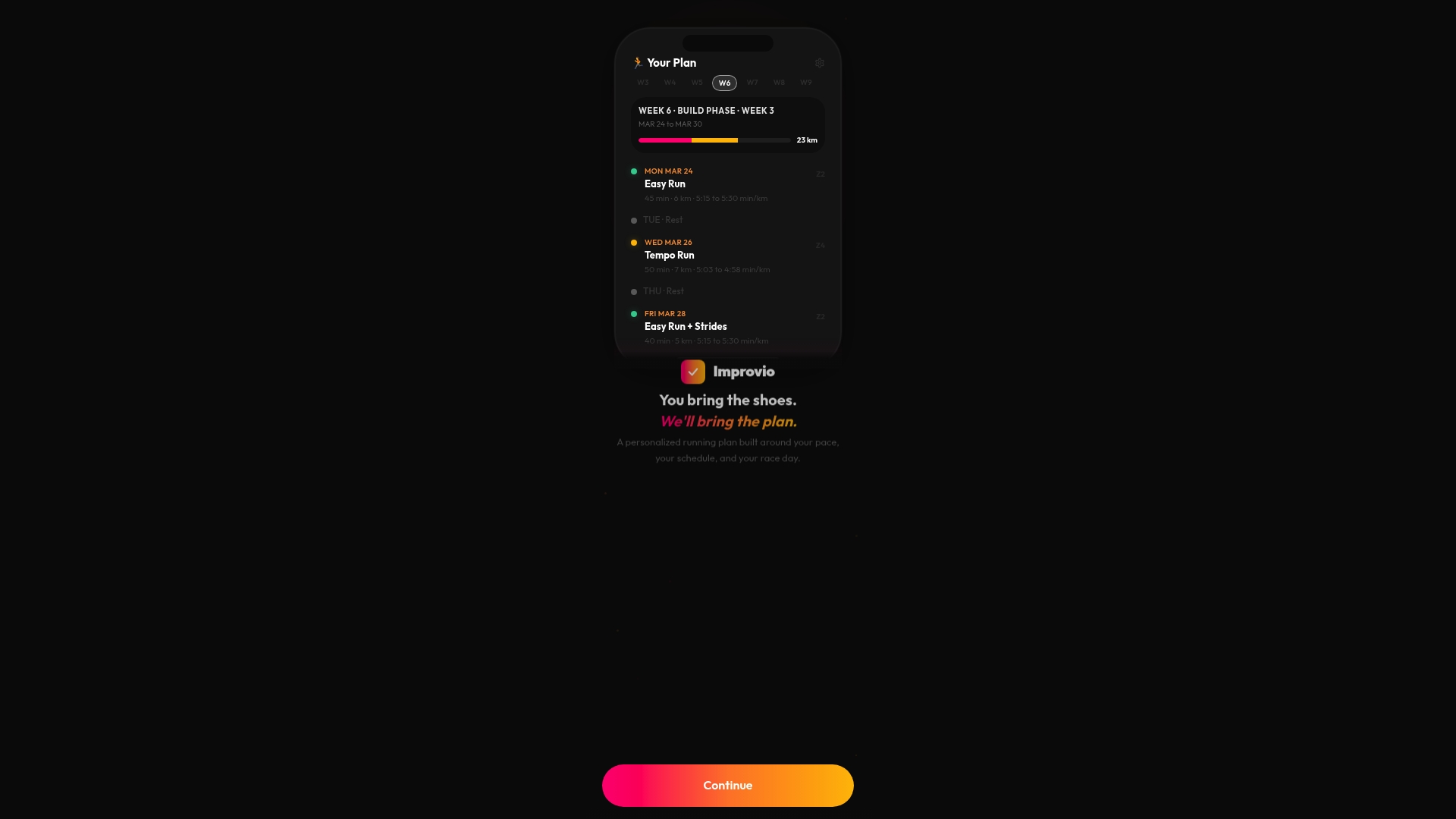
Take control of your running journey today by choosing a plan that fits your lifestyle and goals perfectly. Visit Improvio now to experience how personalized coaching and precise workload management can prevent injuries and keep you motivated every step of the way. Begin your transformation with a free custom plan that adapts to your unique needs and helps you achieve your race goals faster and smarter.
Frequently Asked Questions
What is a structured running plan?
A structured running plan is a carefully organized training framework designed to progressively build your fitness toward a specific goal, such as completing your first race.
How do structured plans prevent injuries for new runners?
Structured plans incorporate gradual load increases, mandatory recovery days, and varied workout types, helping to manage the training stress and reduce the risk of overuse injuries.
Why is accountability important in a structured running plan?
Accountability in a structured running plan helps new runners maintain consistency in their training, turning running into a habitual practice rather than a chore, even when motivation wanes.
How can I track my progress effectively while following a running plan?
You can track your progress by monitoring key metrics such as distance covered, pace improvements, workout completion rates, and recovery quality to visualize your improvements over time.