

You want to start running, but where do you even begin? Training plans online seem complicated, contradictory, or designed for experienced athletes. Running apps solve this exact problem by delivering personalized, easy-to-follow training schedules tailored to absolute beginners. Whether your goal is completing your first 5K or simply improving overall fitness, these digital tools transform confusion into clarity with structured guidance that adapts to your unique pace, schedule, and goals. This article explains what running apps are, how they work, and why they're the smartest way to launch your running journey successfully.
Table of Contents
- Key takeaways
- What is a running app and how does it work?
- Types of running apps and what features beginners should look for
- How running apps support your beginner training and race preparation
- Try Improvio for personalized beginner running plans
- Frequently asked questions
Key Takeaways
| Point | Details |
|---|---|
| Personalized training plans | These apps tailor schedules to your fitness level, goals, and available time, helping absolute beginners follow easy to follow programs. |
| GPS tracking and progress | GPS tracking records routes, pace, and distance while progress dashboards show improvements over time. |
| Motivation and accountability | Motivational alerts, badges, and reminders help sustain consistency during your training journey. |
| Test and commit approach | Testing two to three highly rated apps for a week and then sticking with one for eight weeks increases learning and plan effectiveness. |
What is a running app and how does it work?
A running app is a mobile or web-based tool designed specifically to help runners train smarter by providing personalized training plans, tracking workouts, and delivering motivational feedback. Think of it as a digital coach that lives in your pocket, guiding every step of your fitness journey without requiring you to hire an expensive personal trainer or decode complex training manuals.
Core features make these apps invaluable for beginners. GPS tracking records your routes, pace, and distance automatically during each run. Custom training plans adapt to your current fitness level, available time, and specific goals like finishing a 5K or building endurance. Progress monitoring shows improvements in speed, stamina, and consistency through easy-to-read charts and statistics. Motivational feedback celebrates milestones, sends reminders to keep you accountable, and offers tips to improve form and performance.
Personalization sets quality running apps apart from generic workout advice. When you first set up an app, you input details like your fitness background, target race distance, available training days, and goal completion date. The app then generates a schedule tailored exactly to your situation, adjusting workouts as you log runs and demonstrate progress. This customization ensures you're never underchallenging yourself or risking injury from overambitious plans.
Research confirms what experienced runners already know: structured running schedules for beginners deliver measurable improvements in fitness and performance. Consistency matters more than intensity when you're starting out, and apps excel at building sustainable habits through predictable routines.
Key features beginners should expect:
- GPS-enabled run tracking that maps routes and records pace automatically
- Personalized training calendars that specify workout types and durations
- Progress dashboards showing improvements in speed, distance, and frequency
- Motivational alerts and achievement badges to maintain enthusiasm
- Educational content explaining running terminology and proper techniques
Pro Tip: Download two or three highly rated apps and test each for a week before committing. Pay attention to which interface feels most intuitive and which motivational style resonates with your personality. Once you choose, stick with that single app for at least eight weeks to give the training plan time to work and avoid the confusion of conflicting schedules.
Types of running apps and what features beginners should look for
Running apps fall into several categories, each serving different needs and experience levels. Simple GPS tracking apps focus primarily on recording distance, pace, and routes without offering structured training guidance. Apps with beginner training plans provide preset schedules for common goals like couch-to-5K programs. Apps with integrated coaching offer real-time audio feedback during runs, analyzing your form and effort. Social community apps emphasize connecting with other runners, sharing achievements, and participating in virtual challenges.
Understanding these categories helps you identify which type aligns with your priorities. If you want accountability and structure, choose apps emphasizing personalized plans. If motivation comes from competition, social features might be essential. Different future-athletes.com running app alternatives vary significantly in their approach to customization, interface design, and community integration.
| App Type | Plan Personalization | Ease of Use | Motivational Features | Best For |
|---|---|---|---|---|
| GPS Trackers | Minimal | Very Easy | Basic stats | Experienced runners who create their own plans |
| Beginner Plan Apps | Moderate | Easy | Achievement badges, reminders | New runners wanting structure |
| Coaching Apps | High | Moderate | Real-time feedback, audio cues | Runners seeking technique improvement |
| Social Community Apps | Low to Moderate | Easy | Leaderboards, challenges, sharing | Socially motivated beginners |
Beginners should prioritize specific features when evaluating apps. Easy navigation ensures you can find workouts and log runs without frustration. Customizable beginner plans mean the app adapts to your starting fitness level rather than forcing you into a one-size-fits-all schedule. Beginner-friendly language avoids jargon like fartlek, tempo runs, or lactate threshold that intimidate newcomers. Progress tracking visualizes improvements to maintain motivation during challenging weeks. Motivational feedback provides encouragement without overwhelming you with data.
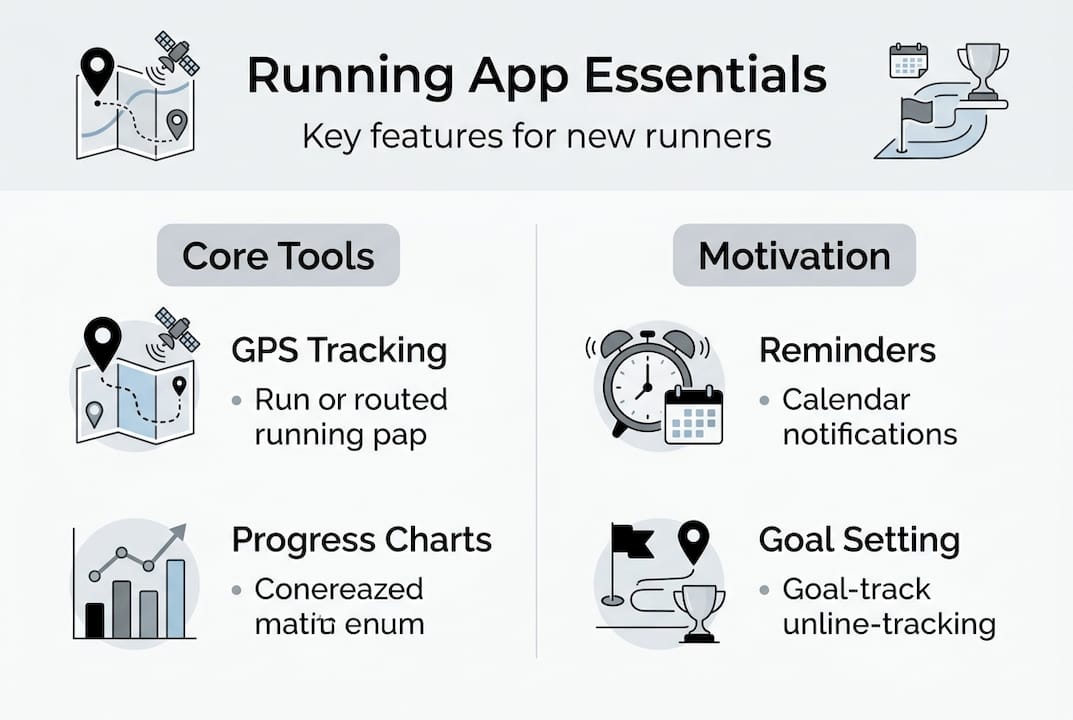
Cost matters too. Many quality apps offer free tiers with basic features, reserving advanced analytics or unlimited plan customization for paid subscriptions. Starting with free versions lets you assess whether the app's approach matches your learning style before investing money.
Pro Tip: Take advantage of free trials for premium features before subscribing. Use the trial period to test whether you actually use advanced features like heart rate zone training or nutrition tracking. Many beginners find basic features sufficient for their first few months, making expensive subscriptions unnecessary initially.
Community and social features can powerfully boost motivation, but only if they feel encouraging rather than intimidating. Some runners thrive on seeing others' achievements and participating in virtual races. Others feel discouraged comparing their beginner pace to experienced athletes' speeds. Evaluate honestly which camp you fall into. Apps like runstrong.geeksonfeet.com app alternatives offer varying levels of social integration, so you can find the right balance.
Features beginners should prioritize:
- Intuitive interface requiring minimal technical knowledge
- Adjustable training plans accommodating schedule changes
- Clear explanations of workout types and purposes
- Visual progress charts showing improvement trends
- Reminder notifications that encourage without nagging
- Reasonable pricing with functional free options
How running apps support your beginner training and race preparation
Running apps transform vague fitness intentions into concrete action through systematic support at every training stage. The process begins with goal definition, where you specify whether you're targeting a particular race distance, general fitness improvement, or weight management. The app then creates a personalized plan breaking that big goal into manageable weekly workouts, removing the paralysis of figuring out what to do each day.
Tracking progress with data provides objective evidence of improvement that subjective feelings often miss. You might feel slow during a tough run, but the app shows your average pace has improved by 30 seconds per mile over six weeks. This tangible proof builds confidence and validates your effort, especially during plateaus when motivation wavers.

Accountability features help maintain consistency, the single most important factor in beginner success. Apps send gentle reminders on scheduled workout days, celebrate when you complete planned runs, and show streaks of consecutive training weeks. Visual representations of your commitment make skipping workouts psychologically harder because you don't want to break a streak or leave gaps in your calendar.
Real-time plan adjustments based on your logged performance prevent common beginner mistakes. If you consistently finish workouts feeling exhausted, quality apps detect this pattern and recommend reducing intensity. If you're breezing through sessions, they increase challenge appropriately. This dynamic responsiveness mimics what an experienced coach provides, ensuring you're always training in the optimal zone for improvement without risking injury or burnout.
Research demonstrates the power of structure: creating effective running training plans increases race finish rates by 25%, showing how apps improve beginner runner success through systematic preparation.
"The difference between beginners who succeed and those who quit often comes down to having a clear, structured plan that adapts to their progress. Running apps democratize access to this kind of intelligent programming that used to require hiring a coach." — Exercise physiologist Dr. Sarah Chen
Mental readiness receives attention too. Apps often include race day preparation checklists, pacing strategy guides, and tips for managing pre-race anxiety. This holistic approach addresses both physical conditioning and psychological confidence, recognizing that your mindset impacts performance as much as your training volume.
Training plan phases apps guide you through:
- Building base endurance with easy-paced runs that develop aerobic capacity without injury risk
- Introducing speed work gradually through intervals or tempo runs that improve pace
- Tapering before race day by reducing volume while maintaining intensity for peak performance
- Race day execution with pacing guidance and mental strategies for pushing through challenges
- Post-race recovery protocols that prevent injury and prepare you for future goals
Alerts and reminders maintain workout discipline even when life gets busy. A notification reminding you about tonight's scheduled run makes it harder to rationalize skipping. Apps also adapt to missed workouts intelligently, adjusting future sessions rather than creating impossible catch-up scenarios that lead to overtraining.
Try Improvio for personalized beginner running plans
If you're ready to start your running journey with expert guidance tailored specifically to beginners, Improvio delivers everything you need in one streamlined platform. The app creates fully personalized training schedules based on your current fitness level, available training days, and target race date, all through a setup process taking roughly 60 seconds.
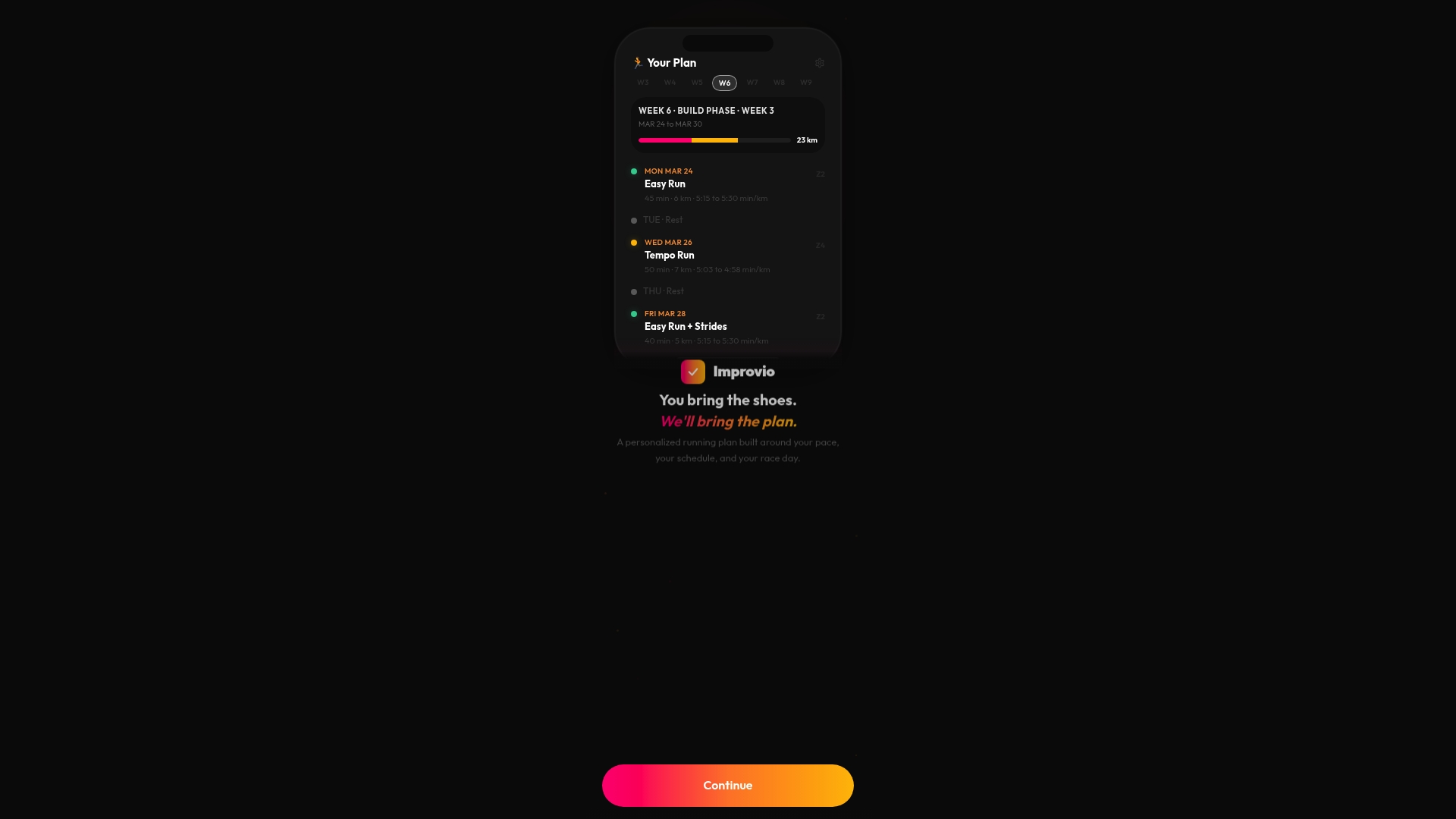
Customizable plans adapt automatically as you log runs and demonstrate progress, ensuring workouts remain challenging but achievable throughout your training cycle. Easy run tracking records your pace and distance without complicated manual entry. Reminder notifications keep you accountable to your schedule. Coaching tips explain workout purposes and proper pacing strategies in beginner-friendly language. The Improvio running app official site offers free initial planning so you can experience personalized training before committing.
Pro Tip: Download Improvio today and complete the quick setup to receive your first week's training plan immediately. Starting with a clear schedule eliminates the procrastination that derails many beginners, and seeing your structured path forward builds excitement and commitment to your fitness goals.
Frequently asked questions
What do running apps do for beginners?
Running apps provide personalized training plans, track your workouts automatically using GPS, monitor progress over time, and deliver motivational feedback to keep you consistent. They transform the overwhelming task of starting running into a simple, structured process with daily guidance.
How do running apps create personalized training plans?
Apps collect information about your current fitness level, available training days, target race distance, and goal completion date during initial setup. Using this data, they generate custom schedules that gradually increase difficulty while accommodating your specific constraints and objectives.
Are running apps suitable for absolute beginners?
Yes, many running apps specifically design programs for absolute beginners, often starting with walk-run intervals rather than continuous running. These beginner-focused plans build fitness gradually to prevent injury and discouragement while establishing sustainable habits.
Can running apps help me prepare for my first race?
Running apps excel at race preparation by creating training schedules timed to peak your fitness on race day, providing pacing strategies, offering mental preparation tips, and including tapering phases that optimize performance. Structured app-based training significantly increases finish rates for first-time racers.
Do running apps track my progress and improvements?
Apps automatically record metrics like distance, pace, duration, and frequency for every logged run, then display this data through charts and statistics showing improvement trends. This objective tracking reveals progress that might not be obvious day-to-day, maintaining motivation during challenging training periods.