

Starting your running journey feels overwhelming when you're juggling work, family, and daily responsibilities. Many new runners quit before their first race because they lack a clear, manageable plan that fits their busy schedule. This guide delivers a proven beginner running workflow designed specifically for absolute beginners preparing for their first race in 2026, transforming anxiety into confidence through simple, effective steps.
Table of Contents
- What You Need: Essential Gear And Preparation
- Step-By-Step Beginner Running Workflow
- Injury Prevention And Recovery Best Practices
- Tracking Progress And Preparing For Race Day
- Get Personalized Support For Your Running Journey
- FAQ
Key takeaways
| Point | Details |
|---|---|
| Gradual progression reduces injury risk | Increasing weekly mileage by 10% prevents common beginner injuries and builds sustainable fitness. |
| Structured warm-up and cool-down matter | Proper routines reduce injury incidence by up to 15% and improve performance. |
| Consistency beats intensity | Regular, moderate training combined with listening to your body prevents burnout and keeps you on track. |
| Proven methodologies work | Couch to 5K programs transition beginners from walking to running successfully over 9 weeks. |
What you need: essential gear and preparation
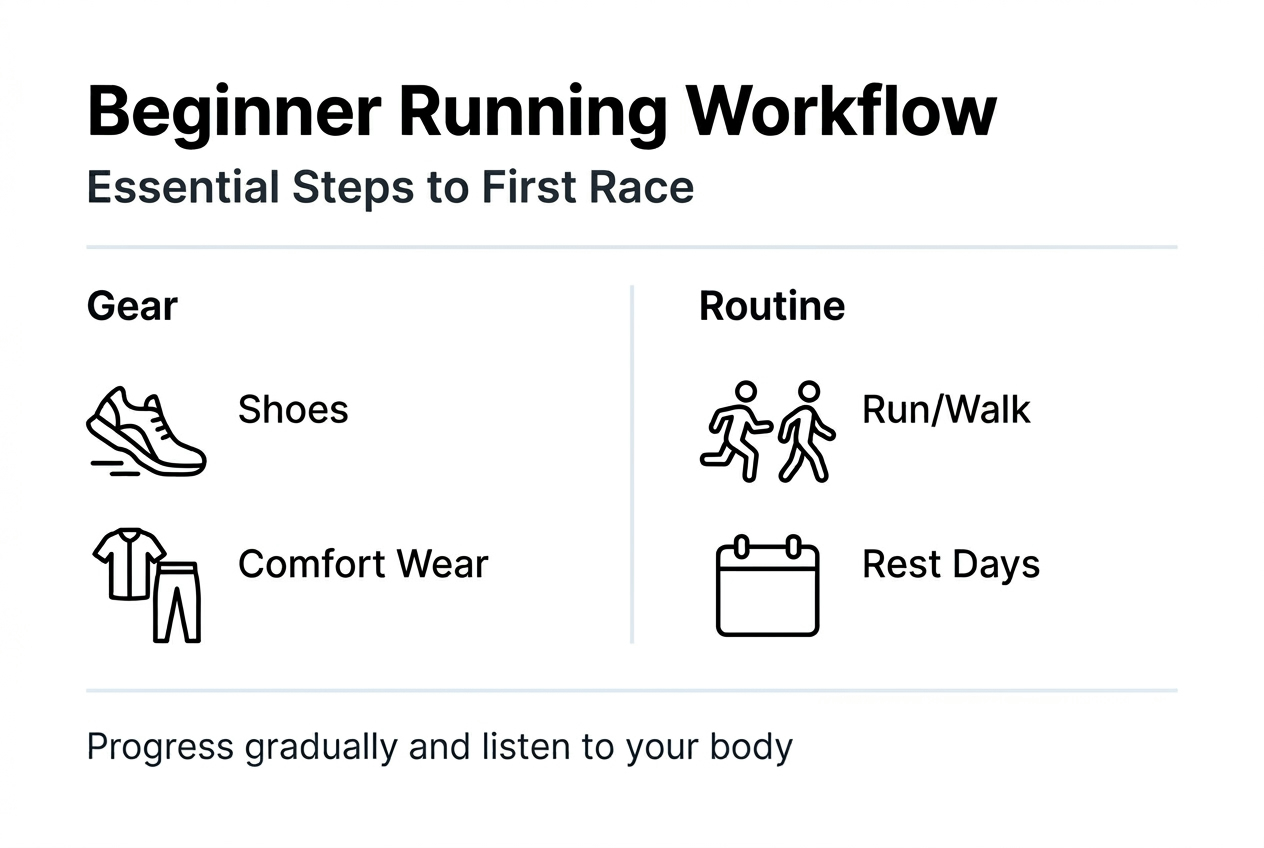
Before lacing up your shoes, gather the right equipment and check your health status. Proper running shoes top the list because they protect your feet and joints from impact stress. Visit a specialty running store for gait analysis and personalized shoe recommendations that match your foot type and running style.
Consult with your doctor before starting any new exercise program, especially if you have pre-existing health conditions. This simple step prevents complications and gives you confidence that you're ready to train safely. Your healthcare provider can identify potential risks and suggest modifications tailored to your specific situation.
Gather these essentials to support your training:
- Comfortable, moisture-wicking clothing appropriate for weather conditions
- Running watch or smartphone app to track time and distance
- Water bottle or hydration pack for runs longer than 30 minutes
- Supportive insoles if recommended by your shoe fitting specialist
- Running socks designed to prevent blisters
Pro Tip: Invest in quality shoes first, then add other gear as your training progresses. Your feet carry you through every mile, so proper footwear is non-negotiable for injury prevention and comfort.
Understanding your beginner-specific needs helps you avoid expensive mistakes. You don't need fancy gadgets or expensive gear to start running successfully. A step-by-step running plan beginners can use focuses on gradual progression, making your initial investment minimal while maximizing results.
Step-by-step beginner running workflow
Your beginner running workflow follows a proven pattern that transitions you from walking to running safely over approximately nine weeks. The Couch to 5K program is a proven methodology for beginners to transition from walking to running a 5K, with high success rates. This structured approach prevents the number one mistake new runners make: doing too much too soon.
Follow these steps to build your running foundation:
- Week 1-3: Alternate 60 seconds of running with 90 seconds of walking for 20 minutes total. Focus on completing sessions rather than speed.
- Week 4-6: Increase running intervals to 90 seconds with equal walking breaks. Your body adapts to the new demands during this phase.
- Week 7-9: Extend running segments to 3-5 minutes with shorter walking recoveries. You'll notice significant improvements in endurance and breathing control.
Increasing mileage by 10% weekly minimizes injury risk while building fitness progressively. This guideline applies to your total weekly running time, not individual sessions. Track your minutes carefully to avoid exceeding this threshold, which causes most beginner injuries.
Here's a sample weekly progression showing how your training evolves:
| Week | Session Type | Run/Walk Ratio | Total Time | Weekly Mileage Increase |
|---|---|---|---|---|
| 1 | Intervals | 1:1.5 | 20 min | Baseline |
| 2 | Intervals | 1:1.5 | 22 min | 10% |
| 3 | Intervals | 1.5:1.5 | 24 min | 9% |
| 4 | Intervals | 2:1 | 26 min | 8% |
Incorporate running workouts for beginners that include easy runs, rest days, and optional cross-training. Schedule three running sessions per week with at least one rest day between each. This pattern allows your muscles, tendons, and bones to recover and adapt.
Pro Tip: Increase your cadence (steps per minute) by 5-10% to improve your running form guide beginners recommend and reduce injury likelihood. Count your steps for 30 seconds and multiply by two to find your current cadence, then aim to add 8-10 steps per minute gradually.
Add cross-training activities like swimming, cycling, or yoga on non-running days to build overall fitness without overstressing running-specific muscles. These activities maintain cardiovascular benefits while giving your legs a break from impact forces.
Injury prevention and recovery best practices
Nearly 48% of novice runners quit due to injury, highlighting the importance of injury prevention strategies. You can avoid becoming part of this statistic by implementing smart training habits from day one. Prevention takes less effort than recovery, so prioritize safety over speed.

Never skip your warm-up and cool-down routines because they prepare your body for work and facilitate recovery. Proper warm-up and cool-down routines reduce injury incidence by up to 15%. Spend five minutes walking briskly before running to increase blood flow and raise muscle temperature. After running, walk for five minutes and perform gentle stretches targeting your calves, hamstrings, and hip flexors.
Follow these injury prevention principles:
- Listen to your body's signals and distinguish between normal training discomfort and pain that signals injury
- Include at least one full rest day weekly to allow complete recovery
- Avoid sudden spikes in training volume or intensity that stress tissues beyond their adaptation capacity
- Use running drills for beginners to enhance coordination and build strength in running-specific movement patterns
- Replace worn shoes every 300-500 miles to maintain proper cushioning and support
Recognize early injury warning signs like persistent pain that worsens during running, swelling, or discomfort that affects your gait. If you experience these symptoms, reduce your training volume by 50% or take 2-3 days off completely. Most minor issues resolve with rest, but persistent problems require professional evaluation.
Pro Tip: Apply the "talk test" during runs to ensure you're not overexerting. You should be able to speak in short sentences without gasping for air. If you can't, slow down immediately.
Targeted running drills and cadence awareness enhance your coordination and reduce injury susceptibility. These drills teach your body efficient movement patterns that become automatic during regular runs. Spend five minutes after your warm-up practicing high knees, butt kicks, or quick feet drills twice weekly.
"The best runners are the ones who stay healthy and consistent, not the ones who push too hard too fast. Patience in training pays dividends on race day." - Experienced Running Coach
Tracking progress and preparing for race day
Monitoring your improvements keeps you motivated and helps you identify what works best for your body. Use a running log or smartphone app to record distance, time, pace, and how you felt during each session. This data reveals patterns in your training and shows concrete evidence of your progress over weeks.
Set realistic goals based on your current fitness level and available training time. Structured training plans improve fitness gradually and boost race day success by 35% compared to unstructured training. Your first race goal should focus on finishing comfortably, not achieving a specific time. Speed develops naturally as your fitness improves.
Celebrate milestones throughout your journey:
- Completing your first full week of training without missing sessions
- Running continuously for 5 minutes without walking breaks
- Finishing your longest run to date
- Successfully managing a challenging weather condition
Race day preparation begins two weeks before your event. Finalize logistics like transportation, parking, packet pickup times, and gear choices. Preview the race course if possible to familiarize yourself with terrain and identify challenging sections.
Use this race day preparation checklist:
| Task | Timing | Details |
|---|---|---|
| Reduce training volume | 7-10 days before | Cut mileage by 40-50% to allow full recovery |
| Pack race gear | 2 days before | Lay out tested clothing, shoes, nutrition, and timing device |
| Hydrate consistently | 2-3 days before | Drink water regularly, avoid alcohol |
| Eat familiar foods | Race morning | Consume tested pre-run breakfast 2-3 hours before start |
| Arrive early | Race day | Allow 45-60 minutes for parking, bathroom, warm-up |
Taper your training safely in the final week by reducing volume while maintaining frequency. Continue your three weekly sessions but cut each by 30-40%. This approach keeps your body primed without accumulating fatigue. Trust that fitness built over previous weeks won't disappear during this recovery period.
Implement running training plans beginners recommend for structured progression. These plans remove guesswork and provide daily guidance tailored to your race distance and timeline. Following a guided running plan benefits include accountability, appropriate intensity distribution, and proven progression patterns.
Get personalized support for your running journey
Transitioning from reading about running to actually doing it becomes easier with the right tools. Improvio creates personalized running plans designed specifically for absolute beginners preparing for their first race. The app adapts to your schedule, current fitness level, and race date, delivering a customized workflow in about 60 seconds.
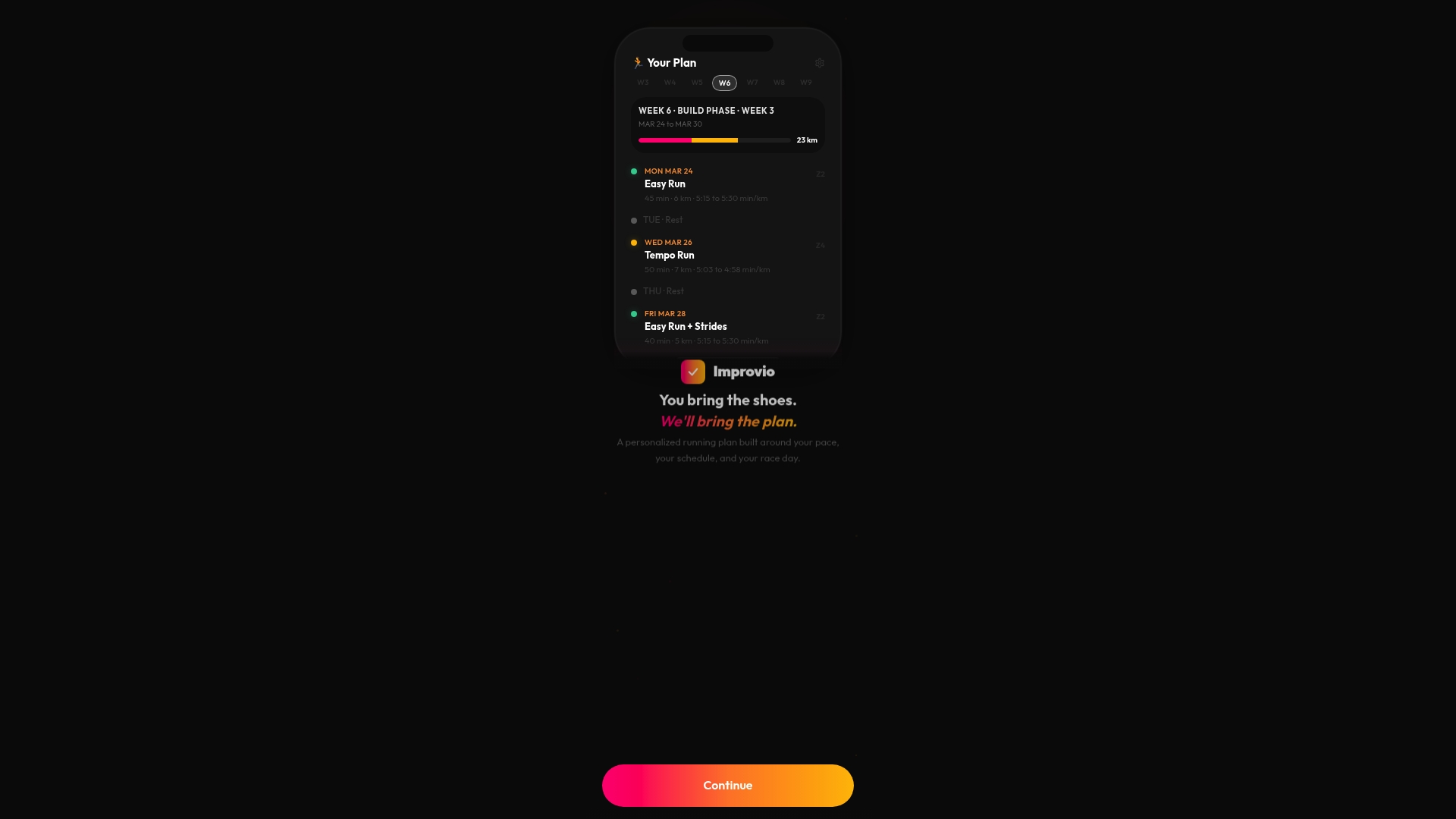
Track your runs effortlessly and receive real-time coaching tips that help you improve safely without overwhelming complexity. The platform removes the confusion of structuring your own training by providing daily guidance that evolves as you progress. You'll know exactly what to do each day, eliminating the stress of planning while building confidence through small, consistent wins.
Join a community of new runners who share your goals and challenges. Get expert support when questions arise and celebrate victories with people who understand your journey. Personalized running plans make training manageable, enjoyable, and effective, transforming your first race from an intimidating challenge into an achievable milestone.
FAQ
What is the best beginner running workflow for a first race?
The best workflow follows a gradual walk-to-run progression over 8-9 weeks, using proven methodologies like Couch to 5K. Start with short running intervals (60 seconds) mixed with walking breaks, gradually extending run time while reducing walk time. Consistency matters more than speed, so schedule three sessions weekly and listen to your body's recovery needs. Following a training plan provides structure and prevents the common mistake of doing too much too soon.
How can I avoid injuries as a beginner runner?
Preventing injuries requires consistent warm-up and cool-down routines before and after every run. Limit weekly mileage increases to 10% or less to allow your body time to adapt to new demands. Include at least one full rest day each week and pay attention to pain signals that indicate overtraining. Practice beginner running drills twice weekly to improve form and reduce injury risk through better movement patterns.
How long does it take to prepare for a first 5K race?
Most beginners need 8-12 weeks to safely prepare for a 5K race when starting from minimal running experience. This timeframe allows gradual fitness development without rushing your body's adaptation process. Your exact preparation time depends on current fitness level, training consistency, and how well you recover between sessions. Starting earlier gives you flexibility to handle missed workouts or minor setbacks without compromising race day readiness.
What should I eat before running as a beginner?
Eat a light meal containing easily digestible carbohydrates 2-3 hours before running to fuel your workout without causing stomach discomfort. Good options include toast with peanut butter, oatmeal with banana, or a small bowl of cereal with milk. Avoid high-fiber, high-fat, or unfamiliar foods that might cause digestive issues during your run. Stay hydrated by drinking water throughout the day, but limit intake in the 30 minutes before running to prevent side stitches.
How do I prepare mentally for my first race?
Build confidence by setting small, achievable goals throughout your training journey rather than focusing only on race day. Practice positive self-talk during challenging runs, reminding yourself of progress you've already made. Visualize yourself crossing the finish line successfully and plan race day logistics well in advance to reduce anxiety. Understanding guided running plan benefits helps you trust the process and approach race day with calm confidence rather than fear.