

Many beginners mistakenly believe running more miles without a plan is better for fitness gains. This misconception increases injury risk and dropout rates significantly. Sixty percent of injuries in novice runners occur from unplanned mileage increases without structured schedules. Structured running schedules provide a safer, more effective training path that improves aerobic capacity, prevents overuse injuries, and keeps you motivated all the way to race day.
Table of Contents
- Introduction To Structured Running Schedules
- Physiological Benefits Of Running Schedules
- Injury Prevention Through Structured Progression
- Psychological And Motivational Advantages
- Common Misconceptions About Running Schedules
- Components Of An Effective Beginner Running Schedule
- Personalization And Digital Tools For Beginners
- Putting It Into Practice: Start Your Running Journey With Confidence
- Get Started With Personalized Running Schedules Today
- Frequently Asked Questions About Structured Running Schedules
Key takeaways
| Point | Details |
|---|---|
| Structured schedules boost fitness safely | Gradual progression improves aerobic capacity while decreasing injury risk through controlled workload increases. |
| Variety optimizes performance | Mixing easy runs, intervals, and rest days develops multiple fitness aspects and maintains motivation. |
| Personalization increases success | Plans tailored to individual pace, schedule, and race goals improve adherence rates and race outcomes. |
| Progressive milestones build confidence | Clear weekly goals provide psychological benefits and reduce dropout rates compared to unstructured training. |
Introduction to structured running schedules
A structured running schedule is a planned training approach that progressively increases volume and intensity over weeks or months. Unlike unplanned running where you decide mileage and pace spontaneously, structured schedules follow specific weekly patterns designed to build fitness systematically. These plans balance hard training days with easier recovery sessions and rest periods.
The difference between structured and unplanned running is significant. Unplanned training lacks direction, often leading to random mileage jumps, inconsistent intensity, and inadequate recovery. Structured approaches follow proven training principles that respect your body's adaptation timeline.
The benefits of structured running schedules include:
- Improved aerobic capacity through systematic progression
- Lower injury risk from controlled workload management
- Better motivation through clear milestones and achievable goals
- Enhanced running economy and efficiency
- Increased training adherence and consistency
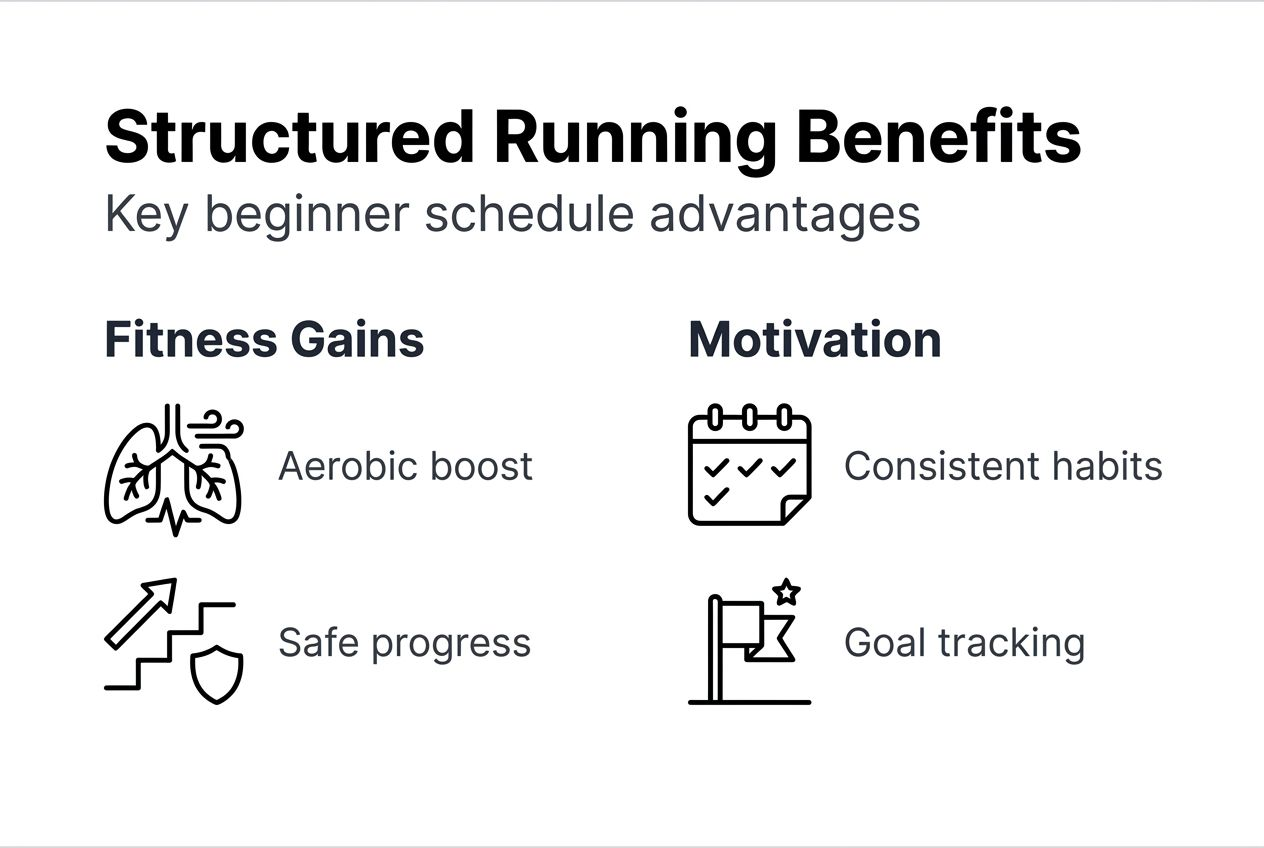
Structured running plans increase aerobic capacity and running economy through systematic progression in running volume and intensity. For absolute beginners preparing for first races, this systematic approach transforms overwhelming training confusion into manageable weekly steps. Structured plans provide clear benefits that help new runners build confidence while reducing the guesswork that often derails training efforts.
Physiological benefits of running schedules
Gradual, progressive training triggers specific physiological adaptations that improve your running performance. Your cardiovascular system responds to consistent training stress by increasing stroke volume, capillary density, and mitochondrial function. These changes enhance oxygen delivery to working muscles and improve how efficiently your body uses that oxygen.
Structured schedules typically produce VO2 max improvements by 10 to 20 percent over 8 to 12 weeks of training. This measure of aerobic capacity directly correlates with endurance performance. Running economy also improves, meaning you use less energy at the same pace, making runs feel easier over time.
Varied workouts accelerate these adaptations:
- Easy runs build aerobic base and promote recovery
- Tempo runs improve lactate threshold and sustained speed
- Interval sessions enhance VO2 max and running efficiency
- Long runs develop endurance and mental toughness
Most beginners notice tangible fitness improvements within four to six weeks of consistent structured training. You'll run the same distances with lower heart rates and less perceived effort. By eight weeks, significant aerobic gains become evident as previously challenging paces feel comfortable.
Understanding how to make a training plan helps you apply these physiological principles effectively. The science behind structured running programs demonstrates why systematic progression beats random training every time. These adaptations don't happen overnight, but structured schedules ensure they happen safely and efficiently, setting you up for race success as a beginner runner.
Injury prevention through structured progression
Overuse injuries plague runners who increase mileage too quickly or skip rest days. Common problems include shin splints, runner's knee, plantar fasciitis, and stress fractures. These injuries stem from tissues experiencing more stress than they can handle without adequate recovery time.

Sixty percent of injury cases in novice runners link to abrupt mileage increases without a plan. Structured schedules prevent this by following the 10 percent rule, which limits weekly mileage increases to 10 percent or less. This guideline gives bones, tendons, and muscles time to adapt to new training loads.
Gradual volume increases respect your body's adaptation timeline:
- Bones need 6 to 8 weeks to increase density
- Tendons and ligaments strengthen more slowly than muscles
- Connective tissue requires progressive loading to avoid breakdown
- Recovery capacity improves with consistent training patterns
Scheduled rest days play a crucial role in injury prevention. During rest, your body repairs micro damage from training and builds stronger tissues. Without adequate recovery, cumulative fatigue accumulates, increasing injury risk and diminishing training quality.
Pro Tip: Monitor your body's signals closely and avoid increasing mileage too fast even if the schedule allows it. Persistent soreness, sharp pains, or unusual fatigue warrant extra rest days. Listen to your body and adjust your plan rather than pushing through warning signs that could sideline your training for weeks.
Psychological and motivational advantages
Structured plans dramatically improve motivation and training consistency. When you know exactly what to do each day, decision fatigue disappears. You simply follow the schedule rather than debating whether to run, how far, or how fast.
Progressive milestones provide regular psychological wins. Completing your first 30 minute run, finishing a challenging interval workout, or hitting a new weekly mileage record all boost confidence. These small victories accumulate, reinforcing your identity as a runner and strengthening commitment to your race goal.
Personalized schedules aligned with your lifestyle increase sustained engagement:
- Training fits your available time slots
- Workout difficulty matches your current fitness level
- Rest days align with work and family commitments
- Race goals feel achievable rather than overwhelming
Schedule adherence rates rise by 40 percent compared to unstructured training.
Research on running adherence shows structured approaches reduce dropout rates significantly. The clarity and achievability of well designed plans keep beginners engaged through challenging training phases when motivation naturally dips.
Structured schedules also combat the common beginner mistake of doing too much too soon. Clear weekly progression prevents enthusiasm from overriding good judgment. You build fitness systematically rather than burning out in the first few weeks, which preserves long term motivation and keeps training enjoyable rather than punishing.
Common misconceptions about running schedules
Many beginners hold misunderstandings that sabotage safe training progress. Recognizing and correcting these myths helps you train smarter from day one.
Myth 1: Running more miles always improves fitness faster. Reality: Unstructured increases in mileage lead to higher injury risk and burnout. Your body needs time to adapt. Quality matters more than quantity, especially for beginners building foundational fitness.
Myth 2: Running maximum effort each session speeds race readiness. Reality: Training with alternating intensities improves speed by 15 percent with less fatigue than constant high intensity. Easy runs build aerobic base while hard workouts develop speed. Both matter.
Myth 3: Beginners don't need structured plans to improve. Reality: While untrained runners initially improve from any running, structured progression optimizes gains and prevents plateaus. Random training creates random results.
| Myth | Reality |
|---|---|
| More miles equals faster improvement | Gradual increases prevent injury while building sustainable fitness |
| Maximum effort every run is best | Varied intensity develops multiple fitness systems effectively |
| Beginners improve without structure | Structured plans optimize gains and prevent common training errors |
| Rest days slow progress | Recovery allows adaptation and prevents overtraining syndrome |
These misconceptions often stem from observing experienced runners without understanding their training history. Elite athletes run high mileage and intense workouts because years of structured progression built that capacity. Beginners attempting similar training loads without proper foundation invite injury and burnout. Understanding beginner training intensity evidence helps you train appropriately for your current fitness level.
Components of an effective beginner running schedule
Beginner schedules incorporate specific workout types, each serving distinct purposes in developing well rounded fitness.
Typical workout types include:
- Easy runs: Comfortable conversational pace building aerobic base and promoting recovery
- Tempo runs: Comfortably hard pace improving lactate threshold and sustained speed
- Interval sessions: Short fast repeats with recovery enhancing VO2 max and running economy
- Long runs: Extended duration building endurance and mental toughness
- Rest days: Complete recovery allowing adaptation and preventing overtraining
Easy runs form the foundation of beginner training, comprising 70 to 80 percent of weekly volume. They feel effortless, allowing you to hold conversations while running. This pace builds aerobic capacity without excessive fatigue.
Tempo runs teach your body to clear lactate efficiently, raising the pace you can sustain comfortably. Intervals develop top end speed and running efficiency through short bursts of faster running. Rest days allow physiological adaptations to occur and prevent cumulative fatigue.
Workout variety prevents both physical and mental burnout. Mixing different run types keeps training interesting while developing multiple fitness aspects simultaneously. This balanced approach produces better results than repeating identical workouts weekly.
Sample weekly routine for beginners:
- Monday: Rest day or easy cross training
- Tuesday: 25 minute easy run
- Wednesday: 30 minute easy run
- Thursday: Rest day
- Friday: 20 minutes with 4x2 minute intervals
- Saturday: Rest day or easy cross training
- Sunday: 40 minute long run at easy pace
Understanding running training plans for beginners helps you apply these components effectively. Exploring examples of beginner workouts shows how variety maintains engagement. Learning easy running drills adds skill development to your training mix.
Personalization and digital tools for beginners
Personalized running schedules tailored to individual circumstances dramatically improve training outcomes. Generic plans ignore crucial factors like your current fitness level, available training time, work schedule, and specific race goals. Customized approaches account for these variables, creating realistic plans you can actually follow.
Digital platforms help beginners customize plans efficiently. These tools assess your fitness level, ask about schedule constraints, and consider your race date to generate appropriate training progressions. Features like progress tracking, workout reminders, and performance analytics keep you engaged and informed.
Benefits of personalized digital schedules:
- Training adapts to your current pace rather than arbitrary standards
- Workouts fit your available time slots and weekly commitments
- Progression adjusts based on your improvement rate
- Rest days align with life demands
- Race specific preparation matches your goal distance
Retention rates increase by 30 percent for plans aligned with individual schedules. When training fits your lifestyle seamlessly, consistency becomes natural rather than forced. This alignment prevents the common scenario where rigid generic plans clash with real life demands, causing frustration and eventual abandonment.
Understanding the role of pacing in beginner running helps you appreciate why personalized pace targets matter. Research on personalization in beginner running adherence demonstrates measurable benefits of customized approaches.
Pro Tip: Choose digital tools that adapt to your feedback and schedule changes. The best platforms adjust upcoming workouts based on how you felt during recent sessions, accounting for fatigue, soreness, or unexpected life events. This dynamic adjustment keeps training challenging but manageable.
Putting it into practice: Start your running journey with confidence
Selecting or creating your personalized running schedule requires honest assessment of your current fitness and available time. Begin with these practical steps:
- Assess current fitness by noting how long you can run comfortably
- Identify realistic weekly training time based on work and family commitments
- Set a specific race goal with a target date at least 8 to 12 weeks away
- Choose a beginner plan matching your fitness level and race distance
- Schedule workouts on your calendar like important appointments
- Prepare gear and routes in advance to eliminate training day friction
Staying consistent and motivated throughout training requires strategic approaches. Track completed workouts to visualize progress and build momentum. Join online communities or find training partners for accountability and support. Celebrate weekly milestones rather than waiting until race day for validation.
Realistic goals form the foundation of sustainable training. Aim for completion rather than specific finish times for your first race. Focus on consistency over intensity, prioritizing injury free training that gets you to the start line healthy and prepared.
Tips for maintaining motivation:
- Reward yourself after completing challenging workouts
- Vary running routes to keep training interesting
- Listen to podcasts or music during easy runs
- Remember your initial reasons for starting this journey
- Connect with other beginners sharing similar goals
Pro Tip: Regularly revise goals based on progress and avoid burnout by building flexibility into your plan. If training feels consistently exhausting rather than energizing, scale back intensity or add extra rest days. Sustainable progress beats pushing through fatigue that leads to injury or dropout.
Get started with personalized running schedules today

Ready to transform your running journey with expert designed training? Personalized running plans eliminate guesswork by creating customized schedules tailored to your pace, available time, and race goals. Our platform designs progressive training that builds fitness safely while keeping you motivated through clear weekly milestones.
You'll benefit from gradual progression that respects your body's adaptation timeline, varied workouts that develop well rounded fitness, and flexible scheduling that fits your lifestyle. Track your progress, adjust intensity based on how you feel, and train with confidence knowing your plan follows proven principles that reduce injury risk. Setup takes approximately 60 seconds, and you can start your personalized plan immediately. Join thousands of beginners who've successfully reached their first race day prepared, healthy, and excited.
Frequently asked questions about structured running schedules
How do I personalize a running schedule for my fitness level?
Start by honestly assessing how long you can currently run comfortably without stopping. Choose plans designed for your baseline fitness rather than aspirational levels. Quality platforms adjust workout intensity and volume based on your current pace and weekly availability, creating realistic progression that matches your starting point.
What should I do if I miss a scheduled workout?
Skip the missed workout and continue with the next scheduled session rather than trying to make up lost training. Attempting to cram missed workouts creates excessive fatigue and injury risk. One or two missed sessions won't derail your progress if you maintain overall consistency.
What are the main workout types in beginner running schedules?
Beginner schedules include easy runs at conversational pace for base building, tempo runs at comfortably hard effort for lactate threshold improvement, interval sessions with short fast repeats for speed development, long runs for endurance, and essential rest days for recovery. Each type serves specific fitness purposes.
How do I know if I'm running at the right pace during training?
Easy runs should allow comfortable conversation throughout. Tempo runs feel comfortably hard where speaking full sentences becomes difficult. Intervals feel challenging but sustainable for the prescribed duration. Most beginners benefit from running slower than instinct suggests, especially during easy and long runs.
How do structured schedules improve race day confidence?
Following a complete training plan proves you can handle race distance through progressive long runs. Consistent training builds physical fitness and mental toughness simultaneously. Arriving at race day having completed your structured preparation eliminates doubt about your readiness and allows you to focus on enjoying the experience.