

Starting your running journey means facing a flood of workout names and conflicting advice. Easy runs, intervals, tempo sessions, long runs—each promises different benefits, but which ones actually matter for your first race? This guide cuts through the confusion and shows you exactly which workout types to prioritize, how to combine them safely, and why personalized plans tailored to your pace and schedule make all the difference in reaching your fitness goals without injury.
Table of Contents
- How To Choose Running Workouts: Key Criteria For Beginners
- Easy Runs: Building Your Aerobic Base Safely
- Interval Training: Boosting Speed And Cardiovascular Fitness
- Tempo Runs: Enhancing Sustained Pace And Metabolic Fitness
- Long Runs: Developing Endurance And Time On Feet
- Combining Workouts: Crafting A Balanced Weekly Plan
- Considerations And Precautions For Beginner Workouts
- Personalization And Simple Plans: Keys To Beginner Success
- Summary Comparison And Best Workout Recommendations For Beginners
- Start Your Personalized Running Journey With Improvio
Key takeaways
| Point | Details |
|---|---|
| Easy runs build aerobic base | These foundation runs reduce injury risk and should form 70-80% of your weekly training. |
| Interval training boosts speed | Short, fast efforts with recovery periods improve cardiovascular fitness and race pace capability. |
| Tempo runs enhance sustained effort | Running at comfortably hard pace for 20-40 minutes develops metabolic fitness for longer races. |
| Long runs develop endurance | Weekly extended runs build mental toughness and prepare your body for race distance challenges. |
| Balanced weekly plans maximize progress | Mixing workout types strategically improves overall fitness while minimizing injury risk for beginners. |
How to choose running workouts: key criteria for beginners
Before diving into specific workout types, you need a framework for selecting runs that match your current fitness level and goals. The right mix depends on several personal factors.
Workout variety forms the backbone of effective training. You need different stimulus types to develop speed, endurance, and recovery capacity simultaneously. Your individual pace and fitness level determine the intensity of each session, and understanding the role of pacing for beginners helps you avoid the common trap of running too hard too often.
Balancing intensity prevents injury while still driving fitness gains. Start with a foundation of easy runs before adding harder efforts. Your weekly schedule matters too, consistency beats intensity every time, so choose a plan you can actually stick to rather than an aggressive program that looks impressive on paper.
Consider these selection criteria:
- Match workout intensity to your current fitness, not your goals
- Prioritize schedule feasibility over ideal volume
- Build gradually from easy runs before adding speed work
- Align training with your target race distance and timeline
- Allow recovery time between hard efforts
Pro Tip: Spend your first 4-6 weeks doing only easy runs to build a safe aerobic foundation before introducing any intensity workouts.
Following structured running schedules that incorporate these criteria reduces guesswork and keeps you progressing safely toward your race day goals.
Easy runs: building your aerobic base safely
Easy runs form the foundation of every successful beginner training plan. These comfortable pace sessions occur at 1-2 minutes per mile slower than your target race pace, slow enough that you can hold a conversation throughout.

The aerobic adaptations from easy running drive all future performance gains. Your body builds capillary networks, strengthens tendons and ligaments, and teaches muscle fibers to use oxygen efficiently. These changes happen during lower intensity efforts, not brutal speed sessions that leave you gasping.
Easy runs should comprise 70-80% of weekly mileage for beginners because they carry minimal injury risk while delivering maximum aerobic benefit. The low impact nature allows frequent training without overwhelming your musculoskeletal system.
Practical easy run guidelines:
- Use the talk test: you should speak full sentences comfortably
- Slow down if breathing becomes labored
- Focus on time on feet rather than distance covered
- Run these sessions the day after harder workouts for active recovery
- Never feel pressure to hit specific paces on easy days
Most beginners struggle with running easy enough. Your ego wants faster times, but your body needs comfortable efforts to adapt safely. The cardiovascular and structural benefits compound over weeks and months, creating the resilience needed for harder training later.
Pro Tip: Schedule easy runs as active recovery between harder sessions to maintain consistency and prevent burnout while your fitness builds.
Incorporating easy running drills for beginners during these sessions can improve form without adding significant fatigue or injury risk.
Interval training: boosting speed and cardiovascular fitness
Interval workouts push you outside your comfort zone with short bursts of faster running followed by recovery periods. These sessions develop speed and dramatically improve cardiovascular capacity in ways easy runs cannot match.
A typical interval session includes 4-8 repetitions of 30 seconds to 2 minutes at faster than race pace, with equal or slightly longer recovery jogs between efforts. Intervals improve speed and VO2 max effectively even for beginners when programmed correctly.
The high intensity nature makes intervals the most challenging workout type, but also the most efficient for building race speed. Your heart rate spikes during work intervals, training your cardiovascular system to deliver oxygen more efficiently. Recovery periods allow partial heart rate drops before the next effort begins.
Interval training essentials:
- Start with 4-6 repetitions and gradually increase volume
- Keep work intervals short initially (30-60 seconds)
- Match recovery time to work time or go slightly longer
- Run on flat terrain or tracks to control effort level
- Limit interval sessions to once weekly for beginners
The injury risk increases when you add intervals too soon or progress too aggressively. Build your aerobic base first with 4-6 weeks of easy running before introducing any speed work. When you do start intervals, conservative progression protects against overuse injuries.
Explore beginner workout examples to see how intervals fit into complete weekly training schedules designed for new runners.
Tempo runs: enhancing sustained pace and metabolic fitness
Tempo runs teach your body to sustain faster efforts longer by running at the edge of comfortable for 20-40 minutes. This pace sits right around your lactate threshold, the intensity where your muscles begin accumulating lactate faster than they can clear it.
The lactate threshold represents a crucial metabolic tipping point. Below this pace, you can run for extended periods. Above it, fatigue accumulates rapidly and forces you to slow down. Tempo runs near lactate threshold pace enhance metabolic fitness and improve your ability to sustain race pace longer.
For beginners, tempo pace feels comfortably hard, you notice your breathing but can still speak short phrases. These runs typically last 20-30 minutes initially, building toward 40 minutes as fitness improves. The sustained moderate intensity bridges the gap between easy runs and intervals.
Tempo run guidelines:
- Find a pace you can hold steady for the entire duration
- Start with 15-20 minute efforts and add 5 minutes every 2-3 weeks
- Schedule these after building 6-8 weeks of easy run base
- Avoid going too fast and turning the session into an interval workout
- Focus especially on tempo work when training for 5K to 10K races
The pacing discipline required for tempo runs translates directly to race day performance. You learn what sustainable effort feels like and develop the metabolic efficiency to hold faster paces without burning out.
Integrating tempo runs into beginner training plans after establishing your aerobic base accelerates race preparation and builds confidence in your ability to sustain goal pace.
Long runs: developing endurance and time on feet
Weekly long runs build the aerobic endurance and mental toughness essential for completing your target race distance. These extended efforts increase your time on feet progressively, preparing both body and mind for race day challenges.
Long runs start at 30-60 minutes for beginners and increase gradually each week, typically by 10-15 minutes. The extended duration stresses your aerobic system differently than shorter runs, forcing adaptations in energy storage, fuel utilization, and muscular endurance.
These sessions should comprise roughly 20-30% of your total weekly mileage. The extended time running strengthens connective tissues, builds mental resilience, and teaches your body to run efficiently when fatigued. Mental stamina matters as much as physical capacity for race success, especially at distances like 10K and beyond.
Long run essentials:
- Keep pace easy to moderate, never push hard efforts
- Increase duration by 10-15 minutes weekly, not distance
- Cap long runs at 90-120 minutes for beginner training cycles
- Schedule these on weekends when time pressure is lower
- Practice race day fueling and hydration strategies
- Allow extra recovery the following day
The gradual progression prevents injury and burnout while building confidence. Each successful long run proves you can handle more than you thought possible, creating positive momentum toward race day.
Consistency matters more than any single heroic effort. Missing a long run occasionally won't derail your training, but attempting too much too soon often leads to injury. Apply beginner race success strategies learned during training to execute confidently on race day.
Combining workouts: crafting a balanced weekly plan
Strategically mixing easy runs, intervals, tempo sessions, and long runs across your week maximizes fitness gains while managing fatigue and injury risk. A typical beginner schedule includes 3-4 runs weekly with varied intensities.
A sample beginner week might include two easy runs, one interval or tempo session, and one long run. As your base develops over 8-12 weeks, you can add a tempo run, creating a pattern of easy, tempo, easy, intervals, easy, long run, rest. The key lies in separating hard efforts with recovery days.
Combining varied workout types weekly improves VO2 max and race times by up to 15% compared to focusing on single workout types. The synergistic effect of different training stimuli drives faster adaptation than any single workout type alone.
Weekly mileage distribution guidelines:
- 70-80% easy running for aerobic base and recovery
- 10-15% intervals and tempo combined for speed and threshold work
- 20-30% long runs for endurance (overlaps with easy percentage)
- At least one complete rest day weekly
| Workout Type | Primary Purpose | Intensity Level | Injury Risk | Weekly % |
|---|---|---|---|---|
| Easy runs | Aerobic base, recovery | Low | Very low | 70-80% |
| Intervals | Speed, VO2 max | Very high | Moderate | 5-10% |
| Tempo runs | Lactate threshold, race pace | Moderately high | Low to moderate | 5-10% |
| Long runs | Endurance, mental toughness | Low to moderate | Low | 20-30% |
Pro Tip: Always schedule easy runs immediately after hard workout days to promote recovery and prevent injury from consecutive intense sessions.
Study example beginner workout plans to see how successful runners structure their weekly training and adapt the patterns to your schedule. Understanding benefits of structured running schedules helps you appreciate why planned variety beats random running.
Considerations and precautions for beginner workouts
Safe progression principles protect you from the most common training mistakes that sideline new runners. Understanding these precautions keeps you running consistently toward your goals.
The biggest errors involve skipping easy runs to add more hard work and increasing mileage or intensity too rapidly. Both paths lead to injury far more often than race day success. The 10% rule, increasing weekly volume by no more than 10%, provides a conservative guideline that reduces injury risk significantly.
Rapid spikes in workout intensity or volume increase injury risk by 30-50% in beginner runners. Your enthusiasm often exceeds your body's current adaptation capacity, creating a dangerous gap between ambition and readiness.
Listening to your body signals prevents minor issues from becoming major setbacks. Persistent pain, extreme fatigue, or declining performance all indicate you need rest, not more miles. Rest days allow your body to absorb training stress and adapt, making you stronger for the next workout.
Safety essentials:
- Follow the 10% weekly volume increase guideline strictly
- Take at least one complete rest day every week
- Use easy runs as active recovery between hard sessions
- Address pain signals immediately with rest or medical attention
- Prioritize sleep and nutrition to support training adaptations
- Build your base for 4-6 weeks before adding intensity
Beginner runners who increase training load too quickly face 30-50% higher injury rates compared to those following gradual progression protocols.
Apply proven training plan creation tips to structure your progression safely and avoid common pitfalls that derail new runners before race day arrives.
Personalization and simple plans: keys to beginner success
Tailoring your running workouts to your individual pace, schedule, and goals dramatically improves your chances of sticking with training and reaching race day successfully. Generic plans ignore the personal factors that determine whether you'll actually follow through.
Personalized plans yield roughly 40% higher adherence rates among beginners compared to one size fits all programs. When workouts match your current fitness level, available time, and specific race goals, training feels achievable rather than overwhelming.
Customization adapts multiple plan elements to your situation. Your easy pace differs from other runners based on fitness level. Your work schedule determines which days suit hard efforts versus easy runs. Your target race distance and date dictate how much time you have to build fitness safely.
Digital tools simplify the personalization process, generating customized schedules in minutes based on your inputs. This removes the guesswork and analysis paralysis that often prevents beginners from starting at all.
Personalization steps:
- Assess your current fitness level honestly with a benchmark run
- Identify your target race distance and date
- Determine your weekly schedule and available training days
- Calculate appropriate paces for each workout type
- Select workout mix that matches race distance demands
- Adjust plan as fitness improves and circumstances change
Simplicity matters as much as personalization. Complicated plans with excessive variety create confusion and reduce adherence. Focus on mastering the four core workout types before exploring advanced variations.
Learn how structured training plans benefit new runners and explore beginner workout adherence examples to see what sustainable training looks like in practice.
Summary comparison and best workout recommendations for beginners
Understanding how each workout type serves different training purposes helps you select the right mix for your specific goals and race distance.
| Workout Type | Primary Purpose | Effort Level | Injury Risk | Typical Weekly Volume | Best For |
|---|---|---|---|---|---|
| Easy runs | Build aerobic base, active recovery | Very comfortable, conversational | Very low | 70-80% of mileage | Foundation fitness, injury prevention |
| Intervals | Improve speed and VO2 max | Very hard, breathless | Moderate | 5-10% of mileage | 5K speed development |
| Tempo runs | Enhance lactate threshold, race pace | Comfortably hard | Low to moderate | 5-10% of mileage | 5K to 10K race pace |
| Long runs | Build endurance, mental toughness | Easy to moderate | Low | 20-30% of mileage | 10K and longer distances |
For beginners targeting a 5K race, prioritize easy runs for base building, add one interval session weekly for speed, and include a weekly long run building toward 60 minutes. Tempo runs become optional additions after 6-8 weeks.
For 10K training, emphasize easy runs and long runs more heavily, with one tempo run weekly to develop sustained pace capacity. Add intervals every other week rather than weekly to manage fatigue.
The right workout mix depends entirely on your current fitness, available training time, and race distance goal. Personalization remains the key differentiator between plans that work and programs you abandon after three weeks.
Review benefits of structured schedules and apply running success tips to execute your customized plan effectively from first run through race day finish line.
Start your personalized running journey with Improvio
You now understand which workout types build fitness and how to combine them safely for race success. The next step is creating a personalized plan that fits your life and goals.
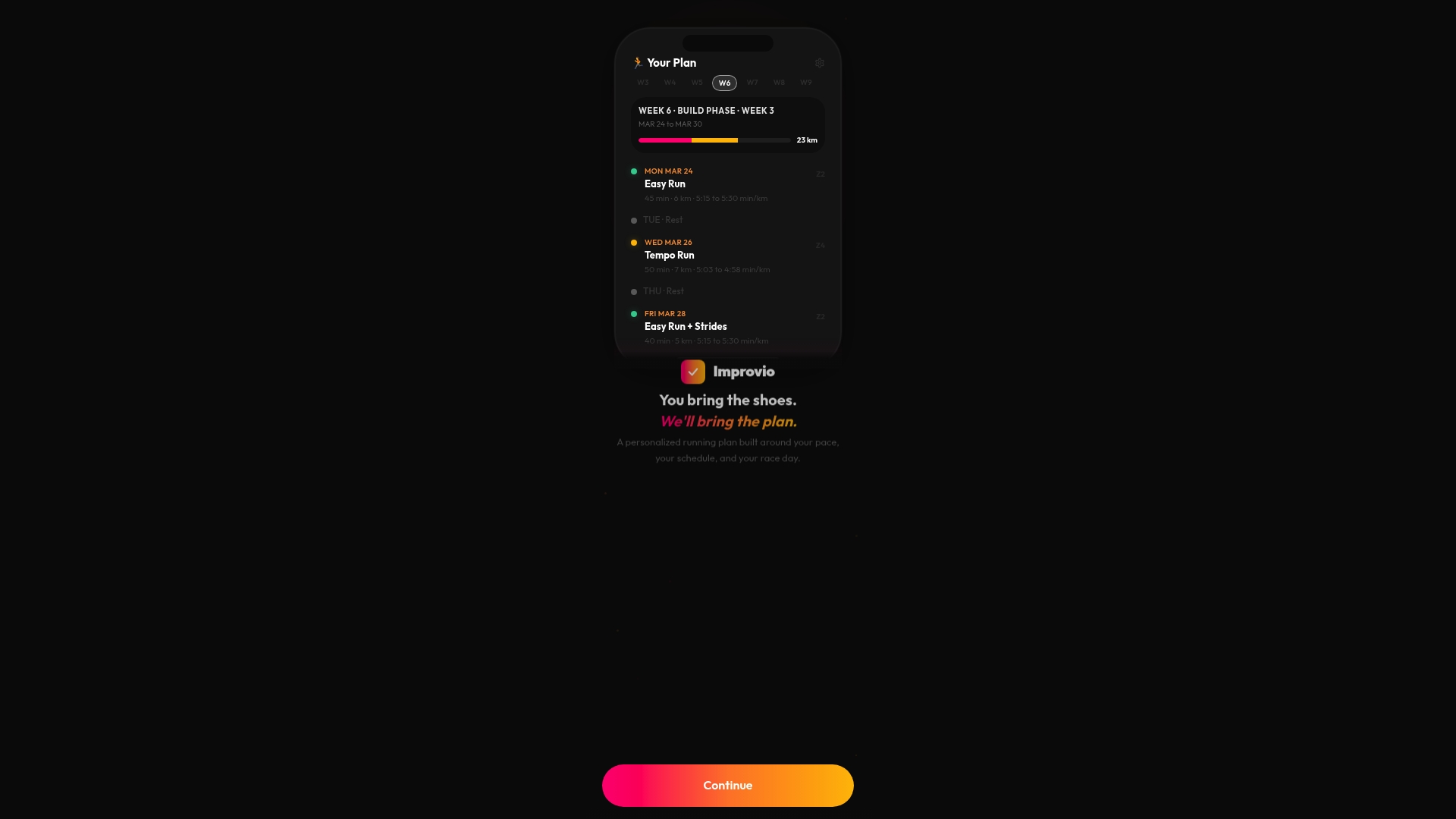
Improvio generates customized running training plans tailored to your current pace, weekly schedule, and target race date in about 60 seconds. The platform automatically balances easy runs, intervals, tempo sessions, and long runs based on your specific needs, removing guesswork and confusion from the planning process.
Personalized guidance built on proven training principles helps you build confidence and fitness simultaneously. Whether you're preparing for your first 5K or building toward a 10K challenge, structured support designed for beginners keeps you progressing safely. Get your personalized running plan and start training with clarity and confidence today.
FAQ
What is the best type of run for beginners?
Easy runs provide the best starting point for new runners to build fitness safely without overwhelming your body. These comfortable pace sessions should comprise 70-80% of your weekly training volume, creating the aerobic foundation all other workouts depend on.
How often should beginners do interval training?
One interval session per week gives beginners optimal speed development while allowing adequate recovery time. Starting with weekly intervals after building 4-6 weeks of easy run base prevents injury and ensures your body can handle the intensity safely.
Can beginners do tempo runs before building endurance?
Beginners should establish an aerobic base through 6-8 weeks of easy running before adding tempo runs to their schedule. Building foundational endurance first prevents injury and ensures you can sustain the moderate intensity tempo pace requires for 20-40 minutes.
Why are long runs important for new runners?
Long runs develop the aerobic endurance and mental toughness essential for completing your target race distance confidently. These weekly extended efforts prepare your body and mind for the sustained effort race day demands, building both physical capacity and psychological resilience.
How can I prevent injuries when starting running workouts?
Increase your weekly training volume gradually by no more than 10% each week to allow proper adaptation. Prioritize easy runs as your foundation and recovery tool between harder efforts. Rapid intensity increases raise injury risk by 30-50%, so patience and conservative progression protect your long-term running health.