

Starting your first running journey without guidance can feel overwhelming. Research shows that beginners who follow structured training plans are 20% more likely to complete their first 5K compared to those who wing it. A clear, personalized training plan removes confusion, builds fitness safely, and helps you reach race day confident and injury-free.
Table of Contents
- Understanding What A Training Plan Is
- How Training Plans Build Fitness Safely
- Preventing Injuries Through Structured Progression
- Boosting Motivation And Adherence To Running
- Common Misconceptions About Training Plans
- How To Start Your First Training Plan
- Summary And Next Steps For Beginner Runners
- Start Your Running Journey With Personalized Plans From Improvio
- Frequently Asked Questions
Key takeaways
| Point | Details |
|---|---|
| Safe progression | Training plans gradually increase running intervals to build endurance without overwhelming your body. |
| Injury prevention | Structured rest days and controlled mileage increases reduce injury risk by protecting muscles and joints. |
| Better motivation | Clear goals, varied workouts, and progress tracking keep you engaged and consistent. |
| Pace isn't everything | Early training focuses on consistency and building base fitness, not speed. |
| Personalization matters | Adapting plans to your schedule and feedback improves long-term adherence and success. |
Understanding what a training plan is
A training plan is a structured schedule that outlines specific running sessions, rest days, and workout types over several weeks. It acts as your roadmap from your first run to crossing the finish line on race day. Unlike random running, a plan provides intentional progression that prepares your body systematically.
Typical plans include several key components. Easy runs build your aerobic base at a comfortable pace. Long runs gradually extend your endurance each week. Rest days allow your body to recover and adapt. For absolute beginners, run-walk intervals form the foundation. You might start with 1 minute of running followed by 2 minutes of walking, then gradually shift the balance as fitness improves.
This structure eliminates guesswork. You know exactly what to do each day, how long to run, and when to rest. The benefits of structured running schedules for beginners extend beyond physical fitness to include mental clarity and reduced anxiety about your training. You can focus on execution rather than constantly wondering if you're doing enough or too much.
Plans also provide clear milestones. Watching your running intervals increase week by week gives tangible proof of progress. This visible improvement builds confidence and reinforces that you're genuinely preparing for your race goal.
How training plans build fitness safely
Your body adapts to running stress through a principle called progressive overload. Training plans apply this scientifically by gradually increasing your workload in manageable increments. This controlled approach triggers cardiovascular improvements and neuromuscular adaptations without overwhelming your system.
Run-walk intervals are particularly effective for beginners. They reduce impact stress while still providing training stimulus. Your heart rate elevates during running segments, then partially recovers during walking breaks. This pattern builds cardiovascular capacity efficiently while protecting joints and muscles from constant pounding.
Consistent training produces multiple fitness gains:
- Your heart becomes more efficient at pumping blood and delivering oxygen to working muscles.
- Your lungs increase capacity and improve gas exchange efficiency.
- Your muscles develop more mitochondria, the energy-producing cells that power sustained activity.
- Your running economy improves as movement patterns become more efficient and coordinated.
- Your mental resilience strengthens as you push through challenging sessions and see results.
The key is incremental increases rather than sudden jumps. Personalized training plans that adapt based on pace and schedule improve beginner runner engagement and reduce dropout rates versus generic approaches. Quality structured plans new runners benefits include built-in flexibility to match your individual response to training.
Pro Tip: Listen to your body throughout each week. If you're unusually fatigued or sore, it's okay to dial back intensity slightly or take an extra rest day. Consistency over months matters more than perfection in any single week.
Preventing injuries through structured progression
Beginners face higher injury risk when they increase mileage too quickly or skip rest days. Common injuries include shin splints, runner's knee, and plantar fasciitis. These typically result from doing too much too soon before your body adapts to running's repetitive impact.

The 10% rule provides a safe guideline. Increase your weekly running volume by no more than 10% each week. If you ran 60 minutes total this week, aim for no more than 66 minutes next week. This gradual approach allows connective tissues, bones, and muscles time to strengthen progressively.
Rest and recovery days are not optional extras. They're when adaptation actually occurs. During rest, your body repairs micro-damage from training and builds back stronger. Including at least 2 rest/recovery days weekly reduces injury risk by 25% in beginner runners. Without adequate recovery, you accumulate fatigue and increase breakdown risk.
Balanced training intensity also protects you. Most runs should feel comfortable and conversational. Avoid the temptation to run hard every session. Easy efforts build aerobic base safely while harder sessions (introduced gradually) develop speed and strength. Optional cross-training like swimming or cycling on rest days can maintain fitness without running's impact stress.
Structured plans build in these protections automatically. They schedule appropriate rest, control mileage increases, and balance workout intensities. This framework helps you avoid the common beginner mistake of enthusiasm-driven overtraining. Quality structured plans new runners benefits include injury prevention as a core design principle.
Boosting motivation and adherence to running
Starting a new habit is hard. Training plans provide psychological scaffolding that helps you stay committed when motivation wavers. Having a specific race goal with a set date creates accountability. You're not just running aimlessly; you're preparing for something meaningful.
Workout variety keeps training interesting and prevents mental burnout. Instead of identical runs every session, plans include different types of workouts. Easy runs, longer weekend sessions, and eventually tempo or interval work provide fresh challenges. This variation engages you mentally and develops different aspects of fitness simultaneously.
Tracking progress delivers powerful positive reinforcement. Recording completed sessions, increasing run intervals, and hitting weekly mileage goals provides concrete evidence of improvement. This visible progress counters doubts and motivates continued effort. Many runners find that checking off completed workouts becomes deeply satisfying.
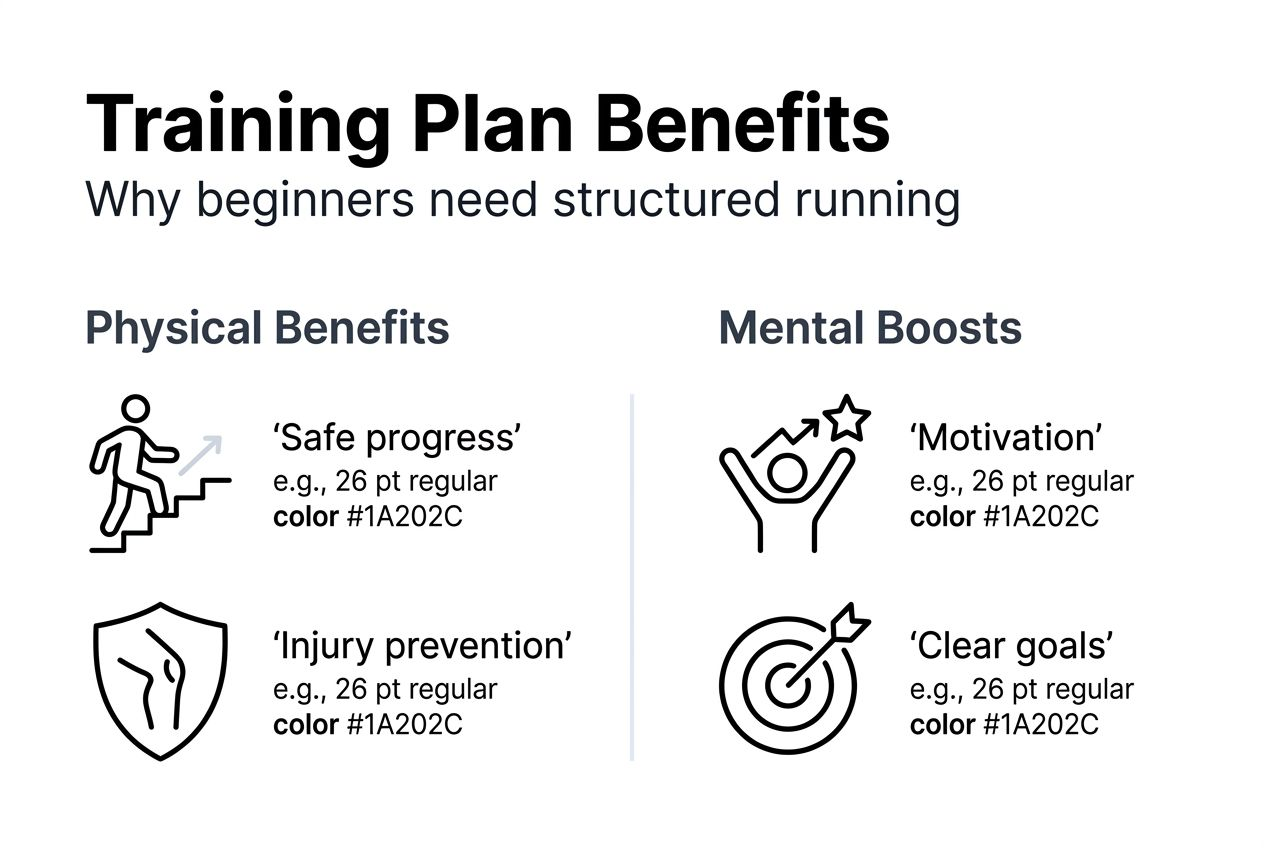
Scheduled sessions help establish consistent habits. When your plan says Tuesday is a run day, it removes daily decision-making. You don't debate whether to run; you simply execute what's planned. This automation reduces friction and builds routine. Over weeks, running becomes a normal part of your schedule rather than a constant negotiation.
Key motivational benefits include:
- Clear targets reduce ambiguity and decision fatigue
- Milestone achievements provide regular wins and confidence boosts
- Community connection when following popular race-specific plans
- Reduced intimidation through manageable daily tasks
The structured running schedules motivation they provide helps transform running from a sporadic activity into a sustainable practice.
Pro Tip: Celebrate small victories along the way. Completed your first week? Ran for 5 minutes straight? Hit your longest run yet? Acknowledge these milestones. They fuel continued commitment and make training more enjoyable.
Common misconceptions about training plans
Many beginners hesitate to use training plans based on misunderstandings about who they're for and how they work. Let's clear up these myths so you can approach training with accurate expectations.
First, training plans aren't only for serious or competitive runners. Plans exist for every goal and fitness level, from complete beginners targeting a 5K to experienced marathoners. A beginner-focused plan emphasizes safe progression and building base fitness, not chasing fast times. It's designed specifically for people starting from scratch.
Second, walking breaks are not signs of failure or weakness. Run-walk methods are evidence-based training tools that help beginners build endurance safely. Elite coach Jeff Galloway popularized this approach precisely because it works. Walking intervals reduce injury risk while still developing fitness. As you progress, you naturally shift toward more running and less walking.
Third, pace obsession is counterproductive early in training. Your initial focus should be consistency and time on feet, not speed. Running slowly enough to hold a conversation builds your aerobic foundation effectively. Speed develops naturally as fitness improves. Chasing pace too early typically leads to burnout or injury.
Fourth, training plans aren't rigid one-size-fits-all prescriptions. Quality plans include flexibility for personalization. You can adjust based on how you feel, your schedule constraints, and your individual response to training. The structure provides guidance, not a strict mandate you must follow perfectly regardless of circumstances.
Understanding these realities helps you choose and follow a guided running plan for first race with appropriate expectations. Plans are tools to support your success, not intimidating requirements reserved for elite athletes.
How to start your first training plan
Beginning with a training plan requires a few simple steps. Follow this practical approach to set yourself up for success.
-
Assess your starting point honestly. What's your current activity level? Can you walk comfortably for 30 minutes? Have you done any running before? Choose a plan that matches your actual fitness, not where you wish you were. Most beginner plans assume you can walk continuously but have limited or no running experience.
-
Select your race distance and timeline. Common first races are 5K (3.1 miles). If your race is 12 weeks away, look for a 12-week beginner 5K plan. Allow adequate preparation time rather than rushing.
-
Start with run-walk intervals. Your first sessions might be 1 minute running, 2 minutes walking, repeated for 20-30 minutes total. This gentle introduction protects your body while building fitness foundation.
-
Gradually increase running portions. Each week or two, slightly extend running intervals and reduce walking breaks. You might progress from 1:2 run-walk ratio to 2:2, then 3:1, and eventually continuous running.
-
Build in flexibility from the start. Life happens. Work deadlines, family obligations, or unexpected fatigue will occasionally conflict with scheduled runs. Allow yourself to shift workouts within the week or take an extra rest day when needed. Rigid perfection isn't required.
-
Use tracking tools to personalize your approach. Apps and platforms help you log runs, monitor progress, and adjust plans based on actual performance. Personalized training plans that adapt based on pace and schedule improve beginner runner engagement compared to static generic programs.
Learning how to make a training plan work for your specific situation increases adherence and enjoyment. The best plan is one you'll actually follow consistently.
Pro Tip: Reassess your plan every few weeks. Are workouts feeling too easy or overwhelmingly hard? Adjust the difficulty level accordingly. Training should challenge you appropriately without crushing you.
Summary and next steps for beginner runners
Following a training plan transforms your running journey from confusing experimentation into structured progress. Plans provide safe progression that builds fitness while protecting against injury. They deliver psychological benefits through clear goals, varied workouts, and trackable progress that sustain motivation when enthusiasm alone fades.
Research consistently shows that beginners who follow structured plans experience better outcomes. They're more likely to reach race day prepared, confident, and injury-free. The framework removes guesswork and provides daily clarity about what to do.
Starting with a personalized plan matched to your fitness level and schedule maximizes both adherence and enjoyment. Rather than fighting against a generic program that doesn't fit your life, you follow guidance tailored to your actual situation and goals.
Improvio personalized plans adapt dynamically to your pace, schedule, and race timeline. The platform specializes in supporting absolute beginners through their first race preparation with flexible, intelligent training schedules. You can begin your structured running journey today with confidence that your plan will adjust as you progress.
Start your running journey with personalized plans from Improvio
Ready to move from understanding training plans to actually using one? Improvio creates personalized running training plans designed specifically for beginners preparing their first race. The platform adapts your training schedule dynamically based on your current pace, available days, and race date.
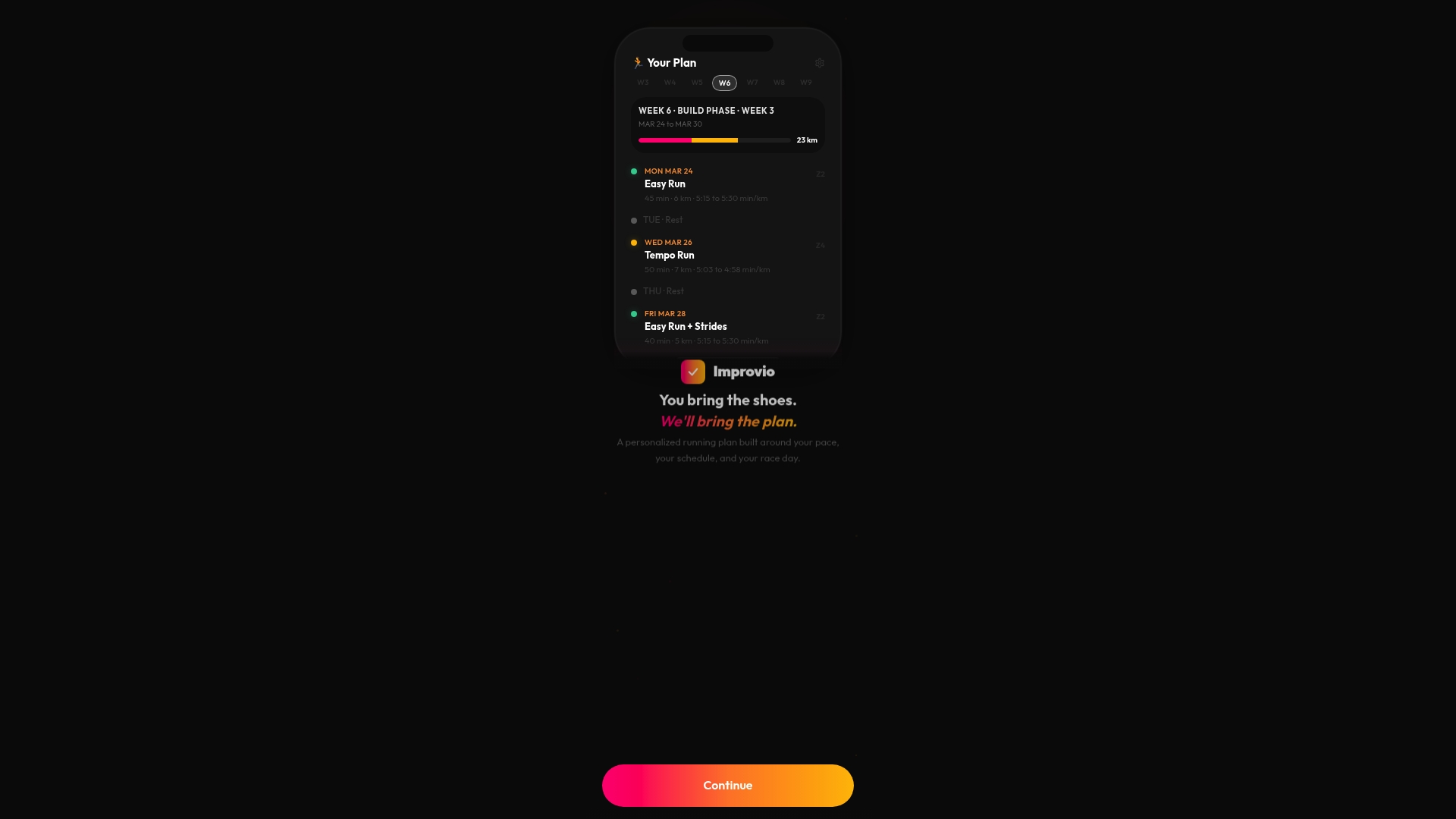
You'll get structured progression that safely builds fitness, prevents injury through appropriate rest and mileage increases, and sustains motivation with clear goals and progress tracking. Setup takes about 60 seconds. The platform handles complexity while you focus on running. Whether you're targeting a 5K, 10K, or longer distance, Improvio personalized training plans provide the flexible structure beginners need to succeed. Start your confident journey to race day today.
Frequently asked questions
How long does a beginner running training plan usually last?
Most beginner plans span 6 to 12 weeks depending on your race distance and starting fitness level. A 5K plan typically runs 6-8 weeks, while 10K plans often extend to 10-12 weeks. Shorter plans emphasize gradual run-walk progressions to build endurance safely without rushing adaptation.
Can I follow a training plan if I can only run three days a week?
Yes, many beginner plans are designed specifically for 3 days of running weekly with adequate rest days between sessions. This schedule provides sufficient training stimulus while allowing proper recovery. Balance between running, rest, and optional cross-training is key for steady progress without overtraining.
Is it normal to include walking breaks in my training plan?
Walking breaks are a vital part of early training that helps beginners build endurance without injury. They reduce impact stress while still developing cardiovascular fitness. Gradually reduce walking intervals as your fitness improves, shifting toward more continuous running over weeks.
What if I miss a planned run during my training?
Missing a run occasionally happens and isn't a disaster. Simply resume with the next scheduled session rather than trying to make up missed workouts. Avoid doubling sessions or adding extra mileage to compensate, as this often leads to overtraining and injury risk.