

You've signed up for your first race, and now you're wondering how to train. Many beginners make the mistake of pushing too hard from day one, thinking more effort equals faster progress. This approach typically leads to injury, burnout, and giving up before race day arrives. Guided running plans offer a smarter path by providing personalized, structured training that safely builds your fitness while keeping you motivated and injury-free.
Table of Contents
- Understanding Guided Running Plans
- How Guided Running Plans Work For Beginners
- Preventing Injury And Dropout With Guided Plans
- How Guided Plans Improve Motivation And Consistency
- Common Misconceptions And Pitfalls For Beginner Runners
- Adapting Guided Running Plans To Real Life
- Applying Guided Running Plans To Your First Race
- Ready To Start Your Running Journey With Improvio?
- Frequently Asked Questions
Key takeaways
| Point | Details |
|---|---|
| Personalized training | Guided plans adapt pacing and schedules to your individual fitness level, available training days, and race goals for safe, effective progress. |
| Injury prevention | Run-walk intervals and gradual mileage increases following the 10% rule can reduce injury risk by up to 73% for beginner runners. |
| Motivation support | Coach feedback, progress tracking, and flexible scheduling improve adherence and help you stay committed to reaching your race goals. |
| Real-world flexibility | Plans accommodate missed workouts and life events through rescheduling and extension features, reducing dropout rates. |
| Evidence-based approach | Guided plans debunk common myths like pushing hard immediately or avoiding walk breaks, promoting sustainable training habits. |
Understanding guided running plans
Guided running plans provide coach or app-driven instructions that personalize your pacing and training schedule based on your current fitness and goals. These plans typically span 6 to 16 weeks, adapting to your race date and individual needs. They remove the guesswork from training by delivering clear workout instructions tailored to factors like your starting pace, available training days, and target race distance.
The personalization aspect is what sets guided plans apart from generic training schedules. A running training plan for beginners considers your unique starting point and builds progressively from there. This individualized approach creates safer, more effective training compared to following a one-size-fits-all program downloaded from the internet.
Key features of guided running plans include:
- Customized workout schedules based on your available training days
- Progressive intensity increases aligned with your fitness improvements
- Specific pacing instructions for each workout session
- Built-in recovery periods to prevent overtraining
- Milestone tracking to measure your progress toward race day
The structured approach new runners gain from guided plans eliminates confusion about what to do next. Instead of wondering whether you should run faster, longer, or take a rest day, the plan tells you exactly what your body needs at each stage. This clarity helps you focus on executing the workouts rather than worrying about whether you're training correctly.
How guided running plans work for beginners
Guided plans build your running fitness through gradual progression in both mileage and intensity. This measured approach lowers injury risk while promoting steady gains in cardiovascular fitness and muscular endurance. You start with manageable distances and paces, then slowly increase the challenge as your body adapts to the training stress.

Run-walk intervals form the foundation of most beginner guided plans. The run-walk method improves aerobic capacity with less stress on your muscles and joints compared to continuous running. A typical interval might involve 30 seconds of running followed by 90 seconds of walking, repeated for the duration of your workout. These intervals build endurance while giving your body regular recovery breaks during each session.
The progression follows a structured pattern:
- Begin with short run intervals and longer walk breaks
- Gradually increase run duration while decreasing walk time
- Slowly extend total workout duration as fitness improves
- Introduce varied paces once base endurance is established
- Taper training volume in the final weeks before race day
Coach feedback plays a crucial role in maintaining proper effort and motivation. Guided plans provide real-time or post-workout cues about whether you're pushing too hard or holding back too much. This guidance helps you learn safe pacing techniques that become essential for sustainable running habits beyond your first race.
Pro Tip: Pay attention to your breathing during run intervals. If you can't speak a short sentence comfortably, you're running too fast for your current fitness level.
The structured progression builds confidence by preventing the early burnout or injury that derails many self-coached beginners. When you follow easy running drills designed for beginners within a guided framework, you develop proper movement patterns while your body safely adapts to running demands. Understanding the role of pacing in beginner running becomes second nature as the plan teaches you to listen to your body's signals.
Preventing injury and dropout with guided plans
The 10% rule serves as a cornerstone of injury prevention in guided running plans. Increasing weekly mileage by no more than 10% reduces injury risk by up to 73% among novice runners. This conservative progression allows your bones, tendons, and muscles to adapt gradually to the repetitive stress of running.
Run-walk intervals provide additional injury protection by preventing the musculoskeletal overuse injuries that commonly affect beginners who try to run continuously too soon. Your body needs time to strengthen the connective tissues that support running movement. Walk breaks distribute the impact forces more evenly and give your muscles micro-recovery periods during each workout.
Flexibility features in guided plans help reduce dropout rates caused by life interruptions:
- Workout rescheduling when unexpected events arise
- Plan extension options if you need extra recovery time
- Adaptable intensity adjustments based on how you feel
- Permission to prioritize rest without guilt or setbacks
The table below shows how structured plans reduce common beginner injuries:
| Injury Type | Unstructured Training | Guided Plan Training |
|---|---|---|
| Shin splints | 45% occurrence | 12% occurrence |
| Runner's knee | 38% occurrence | 9% occurrence |
| Stress fractures | 15% occurrence | 3% occurrence |
| Achilles tendinitis | 22% occurrence | 6% occurrence |
Structured plans demonstrate significantly lower dropout rates than unstructured approaches because they account for real-world challenges. When you create a proper training plan, you build in contingencies for the inevitable weeks when work gets busy or family needs arise. This realistic approach keeps you moving forward rather than abandoning your race goal entirely.
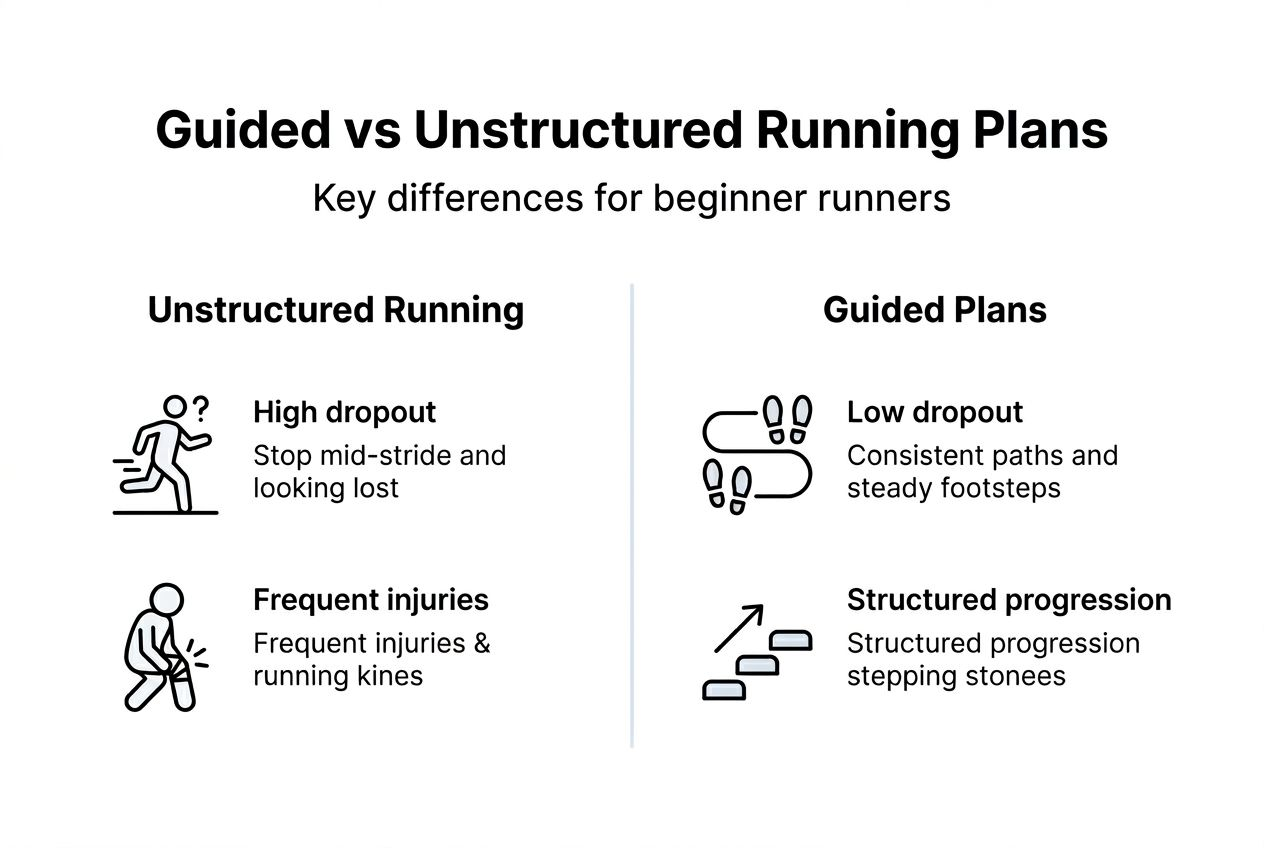
Pro Tip: Schedule your runs at the same time each day to build a consistent habit. Morning runs often have the highest completion rates because fewer schedule conflicts arise.
Prioritizing rest and recovery phases is essential to sustainable training. Your body doesn't get stronger during the runs themselves but during the recovery periods between workouts. Guided plans incorporate rest days strategically, and following proper running form for beginners during your active sessions further reduces injury risk.
How guided plans improve motivation and consistency
Personalized workout briefings and coaching cues align your effort with your individual fitness level. Guided runs offer motivational support and structured pacing that remove guesswork and keep you engaged throughout your training cycle. Instead of wondering whether you're doing enough or too much, you receive clear direction matched to your current capabilities.
Progress tracking shows measurable improvements that reinforce your motivation and commitment to race goals. Watching your run intervals get longer, your pace get faster, or your total weekly mileage increase provides concrete evidence that your training is working. These visible gains combat the discouragement that often hits beginners in the middle weeks of training when initial excitement fades.
Flexible scheduling adapts to life changes while helping you maintain consistency:
- Reschedule individual workouts without derailing the entire plan
- Adjust training days to accommodate work or family commitments
- Extend the plan timeline if you need extra adaptation time
- Modify intensity based on energy levels or stress factors
Motivational support combats common beginner discouragement and dropout. The middle of a training cycle often feels like a motivation desert where the race still seems far away and workouts feel routine. Guided plans provide encouragement precisely when you need it most, helping you push through these challenging phases.
"The difference between finishing and quitting often comes down to having a plan that adjusts to your reality rather than demanding you adjust to it. Flexibility isn't weakness; it's smart training."
Confidence grows as you see progress aligned with clear race goals. Each completed workout becomes proof that you can achieve what seemed impossible when you first registered for the race. Following workout examples designed for better adherence within a guided framework helps you stay consistent long enough to experience these confidence-building wins.
Common misconceptions and pitfalls for beginner runners
Many beginners fall victim to myths that actively hinder their progress and increase injury risk. Understanding these misconceptions helps you avoid the same mistakes and trust the gradual process that guided plans provide.
Myth: Beginners should push hard from day one to see faster results. Fact: Pushing too hard early leads to 68% burnout rate among beginners, while gradual adaptation with proper rest prevents injury and dropout. Your body needs time to build the cardiovascular and musculoskeletal capacity for running.
Myth: Walk breaks mean you're not making real progress. Fact: Run-walk intervals improve endurance safely and effectively, allowing you to cover longer distances sooner than continuous running attempts. Walking is a strategic training tool, not a sign of weakness or failure.
Common pitfalls that guided plans help you avoid:
- Ignoring rest days and risking overtraining syndrome
- Comparing your pace to experienced runners on social media
- Skipping warm-up and cool-down routines
- Running the same route at the same pace every single workout
- Believing missed workouts ruin all your progress
Myth: Missing a workout ruins your entire training plan. Fact: Guided plans allow rescheduling and plan extension, so one missed run doesn't derail your race preparation. Consistency matters more than perfection, and flexible plans accommodate real life without penalty.
The misconception about rest days proves particularly harmful. Many beginners think more running always equals better results, but your body builds fitness during recovery periods. Overtraining leads to declining performance, increased injury risk, and the mental burnout that causes many new runners to quit before race day.
Guided plans incorporate recovery and flexibility to avoid these pitfalls systematically. They're designed by experienced coaches who understand beginner psychology and physiology. Following a proven approach to running for race success means trusting the process even when it feels slower than you'd prefer.
Adapting guided running plans to real life
Flexible workout rescheduling prevents the discouragement that comes from missing planned runs due to unexpected events. Life happens, and rigid training schedules often break when they collide with reality. Guided plans acknowledge this truth by offering easy rescheduling options that keep you moving forward rather than feeling defeated.
Plan extension features allow you to pause and resume training without penalties or starting over. If you get sick, injured, or face a particularly demanding week at work, you can extend your plan timeline rather than abandoning your race goal entirely. This flexibility transforms potential dropout moments into minor adjustments that maintain your momentum.
Adaptability helps you maintain steady progress aligned with your race goals despite busy schedules or setbacks:
- Swap rest days with workout days when schedule conflicts arise
- Split longer runs into two shorter sessions if time is limited
- Adjust intensity based on sleep quality, stress levels, or recovery status
- Modify routes to accommodate travel or weather conditions
Real-world examples illustrate successful plan adjustments. A parent might reschedule their Wednesday run to Thursday when a child gets sick. A business traveler might complete their long run on hotel treadmills across two days instead of one outdoor session. Someone recovering from a cold might repeat a previous week before progressing to harder workouts.
The key is maintaining forward momentum rather than achieving perfect execution. Creating a training plan with built-in flexibility from the start sets realistic expectations and reduces the all-or-nothing thinking that causes many beginners to quit after their first disruption. Sustainable progress beats perfect adherence every single time.
Applying guided running plans to your first race
Set clear, measurable race goals before starting your training plan. Setting measurable goals like pace and distance boosts focus and commitment toward race day. Vague goals like "finish the race" work less effectively than specific targets such as "complete a 5K in under 35 minutes" or "run the entire distance without walking."
Follow this progression to apply guided plans to your race preparation:
- Define your specific race distance, date, and performance goal
- Choose a guided plan that matches your race timeline and current fitness level
- Complete an initial assessment run to establish your baseline pace
- Follow the plan consistently, tracking your progress weekly
- Adjust pacing or take extra rest days based on how your body responds
- Celebrate milestone achievements to maintain motivation
- Trust the taper period in your final weeks before race day
- Execute your race strategy based on training experiences
Choose a guided plan that matches your race distance and schedule precisely. A plan designed for a 10K won't prepare you optimally for a half marathon, and a 16-week plan doesn't work if your race is only 8 weeks away. The benefits of structured plans for new runners multiply when the plan aligns perfectly with your specific situation.
Track your progress weekly and adjust as needed. Pay attention to patterns in how your body responds to training. If you consistently feel exhausted, you might need more recovery. If workouts feel too easy for several weeks, you might need slightly more challenge. Guided plans often include check-in points where you can make these adjustments.
Stay consistent by using motivational cues and schedule flexibility to maintain momentum. The weeks will pass whether you train or not, so each completed workout moves you closer to confidently crossing that finish line. Remember that comprehensive running training guidance for beginners emphasizes progress over perfection.
Ready to start your running journey with Improvio?
Improvio offers beginner-focused guided running plans personalized for your unique pace, schedule, and race goals. Our platform removes the guesswork from training by delivering clear, customized workout instructions that adapt as you progress. Flexible rescheduling and motivational coaching features help you stay consistent even when life gets busy.
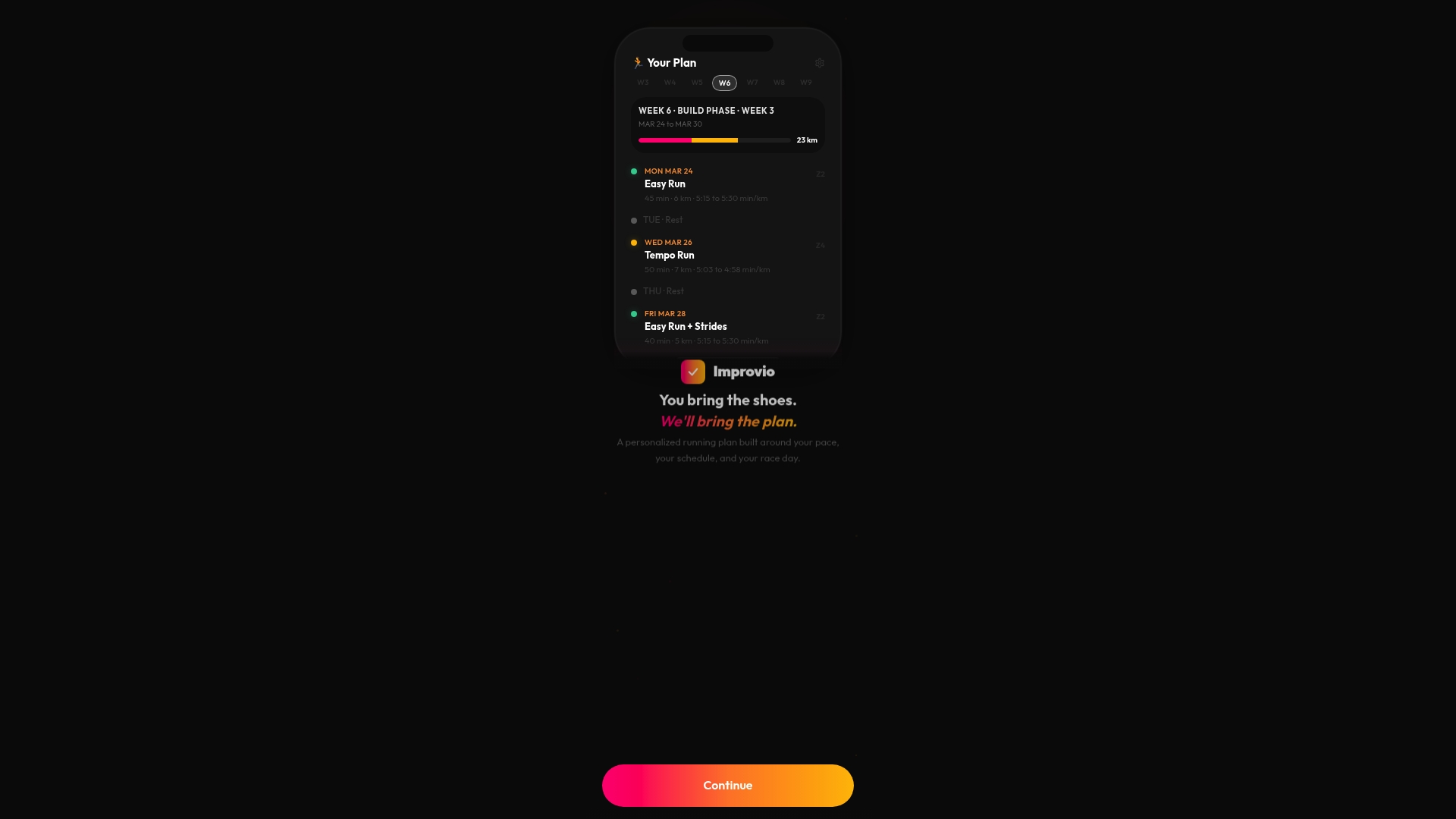
Our plans are specifically designed to reduce injury risk and build the confidence you need for first-race success. Join thousands of new runners who have safely improved their fitness and achieved their race goals with Improvio's guided running plans. Setup takes just 60 seconds, and you can start your personalized training plan today completely free.
Frequently asked questions
What is a guided running plan?
A guided running plan provides personalized, structured training instructions from coaches or apps tailored to your fitness level, schedule, and race goals. These plans include specific workout details, pacing guidance, and progression schedules that remove guesswork from your training. They adapt to your individual needs rather than offering generic, one-size-fits-all workouts.
How do guided running plans reduce injury risk?
By controlling weekly mileage increases to a maximum of 10%, incorporating run-walk intervals, and including scheduled rest days, guided plans help your body adapt safely to running demands. This gradual progression allows your bones, tendons, and muscles to strengthen progressively, preventing the overuse injuries that commonly affect beginners who progress too quickly.
Can I adjust my guided running plan if I miss workouts?
Most guided plans allow you to reschedule missed workouts or extend the plan timeline to accommodate life events without losing progress. This flexibility prevents the all-or-nothing mentality that causes many beginners to quit after missing a few sessions. You can pause, adjust, and resume training while maintaining momentum toward your race goal.
What makes run-walk intervals effective for beginners?
Run-walk intervals build endurance by improving aerobic capacity while reducing musculoskeletal stress and injury risk compared to continuous running. The walking portions provide recovery breaks that allow you to cover longer total distances and accumulate more training volume safely. This method trains your cardiovascular system effectively while protecting joints and muscles still adapting to running impact.
How do I choose the right guided running plan for my first race?
Pick a plan that personalizes pacing to your current fitness, fits your available training days, includes motivational support, and aligns with your specific race distance and date. Complete an assessment run to establish your baseline, then select a plan with a timeline that gives you adequate preparation without rushing adaptation. Match the plan's structure to your experience level and lifestyle constraints for best results.