

You don't need to be fit before starting 5K training. That's the myth holding back countless aspiring runners. A structured running plan for beginners prepares anyone, regardless of current fitness level, to complete 3.1 miles comfortably. This guide explains what 5K training involves, breaks down the essential components of beginner-friendly programs, and shows you how to create a personalized plan that fits your schedule and goals. Whether you've never run before or just want guidance, you'll discover exactly what it takes to cross that finish line.
Table of Contents
- Key takeaways
- What is 5K training and why is it ideal for beginners?
- Core components of a beginner's 5K training plan
- How to create a personalized 5K training plan that works for you
- Common challenges beginners face and how to overcome them
- Find the perfect 5K training support with Improvio
- Frequently asked questions
Key Takeaways
| Point | Details |
|---|---|
| Structured 5K plan | A beginner friendly program provides a clear, progressive path to complete 3.1 miles without guesswork. |
| Gradual run walk | Start with short run and walk intervals and gradually increase running time to build endurance safely. |
| Rest days essential | Rest days are mandatory to allow recovery and reduce injury risk as you progress. |
| Race day confidence | Following a well designed plan helps you finish strong and with confidence on race day. |
What is 5K training and why is it ideal for beginners?
5K training is a structured running program that prepares you to complete a 3.1-mile race. Unlike random jogging sessions, these plans follow a specific progression designed to build your endurance safely over several weeks. You start with manageable intervals of running and walking, then gradually increase running time as your body adapts.
This approach works perfectly for beginners because it removes guesswork. You know exactly what to do each day, whether that's a 20-minute run/walk session or a complete rest day. Proper 5K training plans help improve fitness progressively while minimizing injury risk, which matters tremendously when you're just starting out.
The beauty of 5K training lies in its accessibility. You don't need expensive equipment beyond decent running shoes, and most sessions take 30 minutes or less. The distance itself is challenging enough to feel like a real accomplishment but achievable enough that beginners can realistically prepare in two to three months.
Key benefits include:
- Structured progression that prevents doing too much too soon
- Built-in recovery days that let your body adapt and strengthen
- Clear milestones that keep you motivated throughout the process
- Race day readiness that gives you confidence to finish strong
- Improved cardiovascular fitness that carries over to daily life
Pro Tip: Start your training at least 8 weeks before race day. This gives you enough time to build endurance without rushing the process, which often leads to burnout or injury.
Most beginner plans assume zero running experience. They begin with intervals as short as 60 seconds of jogging followed by walking breaks. Over time, these running intervals lengthen while walking breaks shrink. By race day, you'll comfortably run the entire distance or use minimal walking as needed.
The psychological benefits match the physical ones. Following a plan creates accountability and routine. You're not deciding whether to run today, you're simply executing the scheduled workout. This removes the mental barrier that stops many people before they even start. Each completed session builds confidence and proves you're capable of more than you thought.
Core components of a beginner's 5K training plan
Every effective beginner program includes specific workout types that serve different purposes. Understanding these components helps you see why each session matters and how they work together to prepare you for race day.
Run/walk intervals form the foundation of beginner training. You alternate between running and walking, typically starting with more walking than running. A first-week session might look like 1 minute running, 2 minutes walking, repeated 8 times. As weeks progress, running intervals increase while walking decreases. This method builds endurance without overwhelming your cardiovascular system or joints.

Easy runs become more frequent as you advance. These are comfortable-pace runs where you could hold a conversation. They teach your body to use oxygen efficiently and strengthen running muscles gradually. Never push hard on easy run days. The goal is time on your feet, not speed.
Rest days are mandatory, not optional. Your body adapts to training stress during recovery, not during the workout itself. Skipping rest days invites injury and fatigue. Balanced weekly schedules include easy runs, walk breaks, rest days, and gradual mileage increases to optimize adaptation while preventing overuse injuries.
A typical weekly structure looks like this:
| Day | Activity | Duration/Details |
|---|---|---|
| Monday | Rest or cross-training | Complete rest or 20-30 min walking/cycling |
| Tuesday | Run/walk intervals | 25 minutes total, alternating run and walk |
| Wednesday | Rest | Full recovery day |
| Thursday | Easy run | 20 minutes at conversational pace |
| Friday | Rest or cross-training | Light activity or complete rest |
| Saturday | Long run/walk | 30-40 minutes, mostly running by week 6+ |
| Sunday | Rest | Full recovery day |
Cross-training options include cycling, swimming, or strength training. These activities improve overall fitness without the impact stress of running. One or two cross-training sessions per week complement your running nicely, especially early in the program when you're not running daily.
Progression happens in small increments. Most plans increase weekly mileage by no more than 10% to prevent injury. You might run 6 miles total in week one, then 6.5 miles in week two. This conservative approach feels easy at first but prevents the sudden jumps that sideline beginners.
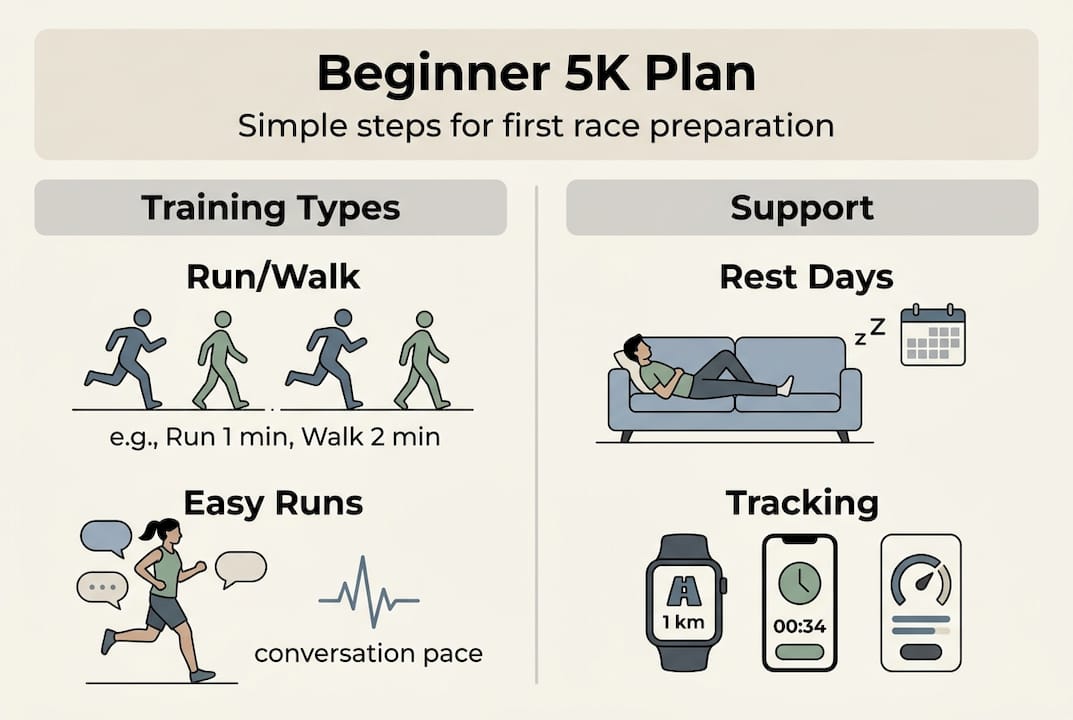
Pro Tip: Track every workout in a simple log or app. Seeing your progress accumulate over weeks provides powerful motivation when training feels tough. You'll notice patterns in how you feel and can adjust accordingly.
Recovery strategies extend beyond rest days. Quality sleep, proper hydration, and adequate nutrition all support your training. Beginners often underestimate how much energy training requires. Eating enough protein and carbohydrates fuels your workouts and repairs muscle tissue afterward.
Stretching and foam rolling help manage muscle tightness. Spend 10 minutes after runs doing basic stretches for calves, hamstrings, and hip flexors. This simple routine reduces soreness and maintains flexibility as your mileage increases.
How to create a personalized 5K training plan that works for you
Generic plans provide a starting point, but personalizing your approach dramatically improves your chances of success. Personalized plans increase motivation and race finish rates for beginners by accounting for individual circumstances and goals. Follow these steps to build a plan that fits your life.
-
Assess your current fitness level honestly. Can you walk briskly for 30 minutes without stopping? Have you done any running in the past six months? Your starting point determines which week of a training plan you should begin. Complete beginners start at week one. Those with some fitness might skip ahead to week three or four.
-
Determine your available training time. Count how many days per week you can realistically commit to workouts. Most plans require three to four running days plus optional cross-training. If you can only manage three days, choose a plan designed for that frequency. Trying to squeeze four workouts into three days leads to skipped sessions and guilt.
-
Set a clear race day goal. Do you want to simply finish, or do you have a time goal in mind? Beginners should prioritize finishing comfortably over speed. Racing too aggressively on your first 5K often backfires, leaving you exhausted or injured. Save time goals for your second or third race after you understand what racing feels like.
-
Choose your plan length based on race date. Standard beginner plans run 8 to 10 weeks. Count backward from your race to determine when you need to start. Add an extra week as buffer in case life interrupts your training. Starting with more time than you need reduces pressure and allows for occasional missed workouts.
-
Map out your weekly schedule in advance. Decide which days you'll run and which you'll rest. Consider work commitments, family obligations, and energy levels. Many people run Tuesday, Thursday, and Saturday, resting on other days. Others prefer Monday, Wednesday, Friday, and Sunday. Pick what works for your life, then stick to it consistently.
-
Track progress and adjust as needed. Keep notes on how each workout feels. If you're consistently exhausted or sore, you're pushing too hard. If workouts feel too easy week after week, you might progress faster. Listen to your body's signals. Mild muscle fatigue is normal. Sharp pain, extreme exhaustion, or persistent soreness means you need more recovery.
-
Build in flexibility for real life. You'll miss workouts occasionally due to illness, travel, or unexpected events. Don't panic. One missed workout won't derail your training. Simply resume with the next scheduled session. If you miss an entire week, repeat the previous week's workouts before moving forward.
Pro Tip: Schedule workouts in your calendar like important appointments. Treat them as non-negotiable commitments to yourself. This simple mental shift dramatically improves consistency.
Incorporate strength training once or twice weekly if possible. Bodyweight exercises like squats, lunges, and planks strengthen muscles that support running. Stronger legs and core reduce injury risk and improve running efficiency. Even 15 minutes twice a week makes a difference.
Common challenges beginners face and how to overcome them
Starting a 5K training program brings predictable obstacles. Understanding these challenges beforehand helps you develop strategies to push through when motivation wavers or difficulties arise. Most beginners struggle with consistency, overtraining, and balancing recovery, but structured approaches address each issue effectively.
Motivation dips happen to everyone. The initial excitement fades around week three or four when training becomes routine. Combat this by setting mini-goals beyond race day. Celebrate completing your first continuous 10-minute run or your first full week of training. Small victories maintain momentum when the finish line feels distant.
Overtraining tempts beginners who feel great early on. You finish a workout feeling strong and think more is better. It's not. Doing extra runs or skipping rest days depletes your energy reserves and increases injury risk. Trust the plan's prescribed rest days. Your body needs them to adapt and strengthen.
Time management challenges arise when life gets busy. Work deadlines, family needs, and social commitments compete for your training time. Solve this by running early morning before daily chaos begins, or treat workouts as non-negotiable appointments. Even 25 minutes three times per week keeps you progressing.
Physical discomfort discourages some beginners. Initial muscle soreness is normal as your body adapts to new demands. Distinguish between normal adaptation discomfort and injury pain. Dull muscle aches that improve with movement are fine. Sharp, localized pain that worsens with activity signals a problem requiring rest or medical attention.
"Structure and balance transform beginners from hoping to finish into confident runners who know they will. The difference lies not in natural talent but in following a proven progression that respects both effort and recovery."
Use the run/walk technique strategically. Many beginners think they must run continuously to be "real runners." That's nonsense. Walking breaks during training and even during the race itself are smart strategies. They extend your endurance, prevent burnout, and often result in faster overall times than pushing too hard and crashing.
Key strategies for staying on track:
- Join a local running group or find a training partner for accountability
- Lay out your running clothes the night before to remove morning friction
- Reward yourself after completing each week with something you enjoy
- Take progress photos or track metrics to see tangible improvement
- Remember your why: the reason you signed up for this challenge
Develop a support system that understands your commitment. Tell friends and family about your race goal. Their encouragement helps during tough weeks. Some beginners find online communities or apps that connect them with other new runners. Sharing struggles and victories with people who understand makes the journey less lonely.
Weather presents another common obstacle. Rain, heat, cold, and wind all challenge outdoor training. Invest in basic weather-appropriate gear. A lightweight rain jacket and moisture-wicking clothes handle most conditions. On extreme weather days, move your workout indoors to a treadmill or reschedule rather than skipping entirely.
Find the perfect 5K training support with Improvio
You now understand what 5K training involves and how to structure your preparation. Putting this knowledge into action becomes easier with the right tools. Improvio's platform creates personalized running plans that adapt to your fitness level, schedule, and race date in about 60 seconds.
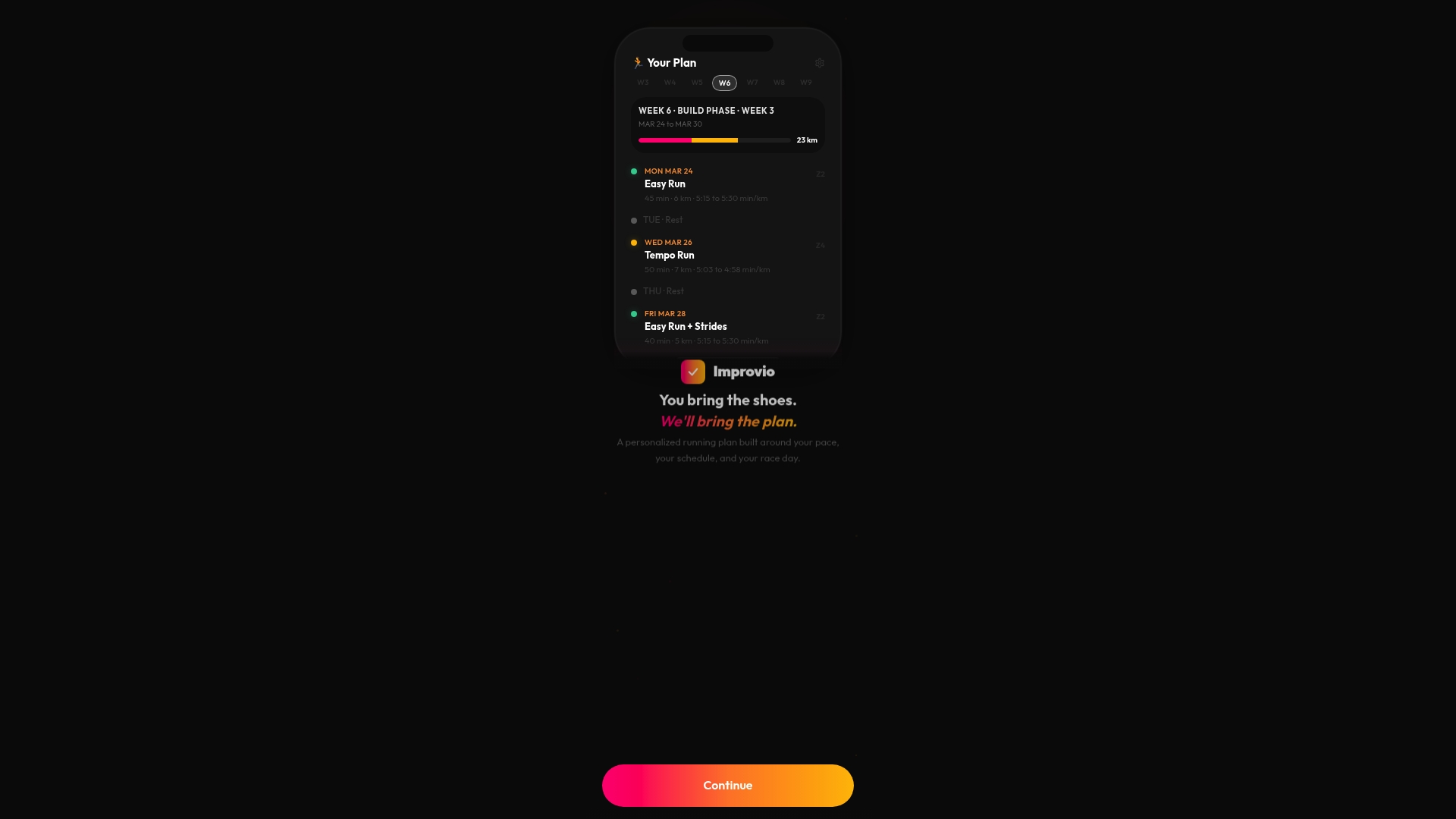
The app tracks your progress automatically, showing how far you've come and what's next. You'll access expert tips tailored to beginners, removing guesswork from your training. Instead of wondering if you're doing enough or too much, you follow a plan designed specifically for your situation. Built-in features keep you motivated through the inevitable rough patches, and the Improvio training app adjusts as you progress, ensuring you're always challenged but never overwhelmed. Transform your 5K goal from intimidating to achievable with structured support that grows with you.
Frequently asked questions
What is the ideal duration to train for a 5K as a beginner?
Most beginner-friendly 5K training plans span 8 to 10 weeks. This timeframe provides enough progression to build endurance safely without rushing adaptation. Your muscles, joints, and cardiovascular system need time to strengthen gradually. Shorter plans work if you already have a fitness base from other activities, but true beginners benefit from the full 8 to 10 weeks. This duration balances effective preparation with injury prevention.
Can walking be part of a 5K training plan for beginners?
Absolutely. Walk/run intervals are the most popular approach for beginners building endurance. These intervals reduce injury risk by limiting continuous impact stress on joints and muscles. Walking breaks also help you manage fatigue during longer sessions, letting you complete the full workout distance. Many beginners use strategic walking during the actual race too. There's no shame in walking; it's a smart training tool that often leads to better results than pushing too hard too soon.
How important is rest and recovery during 5K training?
Rest days are critical, not optional. Your body repairs and strengthens muscle tissue during recovery, not during the workout itself. Training breaks down muscle fibers slightly; rest allows them to rebuild stronger. Skipping recovery leads to accumulated fatigue, declining performance, and increased injury risk. Beginners especially need adequate rest because their bodies aren't accustomed to running's impact stress. Plan at least two to three complete rest days weekly, more if you feel persistently tired or sore.
What should I wear during my training runs?
Choose lightweight, moisture-wicking fabrics that pull sweat away from your skin. Avoid cotton, which stays wet and causes chafing. Most importantly, invest in proper running shoes suited to your foot type and gait. Visit a running specialty store for gait analysis if possible. Shoes matter more than any other gear because they absorb impact and support your feet through thousands of steps. Replace running shoes every 300 to 500 miles to maintain cushioning and support. Comfortable, technical clothing and good shoes prevent most common beginner discomforts.