

Starting to run without a clear plan might seem freeing, but 60% of beginner runners experience injuries in their first year without structure. Compare that to just 30% who follow structured plans. That dramatic difference reveals why a well-organized training approach isn't optional for first-time racers. It's the foundation of safe progress. This guide explains exactly why structure matters, how it prevents common beginner mistakes, and what elements make a training plan effective for your first race.
Table of Contents
- Why Structured Training Is Essential For Beginners
- How Structured Plans Guide Safe Progress And Boost Performance
- Personalizing And Applying Structured Training For Your First Race
- Get Personalized Running Plans To Reach Your Goals
- Frequently Asked Questions
Key takeaways
| Point | Details |
|---|---|
| Injury prevention | Structured plans reduce injury risk from 60% to 30% through gradual progression and built-in rest. |
| Flexible consistency | Following 80% of scheduled workouts yields nearly identical gains to 100% adherence with less stress. |
| Smart progression | The 10% rule and periodization optimize volume increases while preventing overtraining and plateaus. |
| Recovery integration | Rest days and cross-training support adaptation, with bone remodeling requiring up to 12 weeks. |
| Personalization matters | Plans matching your experience level and goals produce better results than generic approaches. |
Why structured training is essential for beginners
New runners face unique physical challenges that make unstructured training especially risky. Your body hasn't developed the neuromuscular patterns needed for efficient running yet. Beginners have less stable gait and coordination, which increases susceptibility to injury when training loads jump unpredictably.
Without a plan, most beginners make three critical mistakes:
- Running too hard too often without recovery
- Increasing weekly distance too quickly
- Skipping rest days when motivation peaks
These patterns lead directly to overuse injuries like shin splints, stress fractures, and runner's knee. A structured running schedule removes guesswork by prescribing specific workouts, intensities, and crucially, rest periods. The plan acts as a buffer against your enthusiasm, preventing you from doing too much before your body adapts.
Pro Tip: Think of your first 12 weeks as building a foundation, not chasing speed. Your bones, tendons, and muscles need time to strengthen before handling intense training loads.
"The biggest mistake beginner runners make is neglecting rest and recovery. Structured plans build these essential elements in from day one, supporting the body's natural adaptation process."
Structured approaches also combat motivation fluctuations. When enthusiasm wanes, the plan keeps you consistent. When you feel invincible, it prevents overtraining. This balanced approach develops proper running form gradually while your neuromuscular system learns efficient movement patterns. Research on neuromuscular control in novice runners confirms that systematic progression allows coordination improvements that reduce injury risk over time.
Neglecting rest ranks among the most common beginner errors. Your body doesn't get stronger during runs. It strengthens during recovery when tissues repair and adapt. Structured plans schedule recovery deliberately, ensuring you don't sabotage your own progress.
How structured plans guide safe progress and boost performance
The science behind effective training reveals why structure outperforms random effort. Three principles drive results: periodization, progressive overload, and flexible consistency.
Periodization means varying your training intensity and volume in planned cycles. You don't run the same pace and distance every day. Periodization training improves performance by 10 to 15% compared to non-periodized approaches. Here's how it works:
- Easy weeks build aerobic base with comfortable pace runs
- Moderate weeks add tempo runs or hills for strength
- Hard weeks incorporate intervals or longer distances
- Recovery weeks reduce volume for adaptation
This cycling prevents plateaus and keeps your body adapting. Different types of running workouts stress various energy systems, creating well-rounded fitness.
Progressive overload follows the famous 10% rule. Weekly volume increases should stay under 10% to minimize injury risk. A structured plan calculates this automatically. If you run 10 miles this week, next week maxes out at 11 miles. This measured approach gives connective tissue time to adapt without breaking down.

| Training Approach | Injury Rate | Performance Gain | Adherence Difficulty |
|---|---|---|---|
| Unstructured | 60% | Variable | Low structure |
| Structured rigid | 35% | High | Very difficult |
| Structured flexible | 30% | Nearly identical to rigid | Moderate |
Flexible consistency might be the most liberating finding for beginners. Research shows 80% workout adherence produces nearly the same gains as 100% completion. Missing one workout weekly won't derail your race preparation. This removes the guilt spiral that causes many beginners to quit entirely after missing a few sessions.
Pro Tip: When life forces you to skip a workout, resume with your next scheduled session. Don't try cramming two workouts into one day. The plan's progression already accounts for rest.
Structured plans also incorporate cutback weeks every third or fourth week. These deliberate volume reductions allow supercompensation, where your body overcompensates for training stress by becoming stronger. Without these breaks, you risk accumulating fatigue that leads to injury or burnout.
Understanding how to make a training plan work for your schedule helps you see why structure doesn't mean rigidity. The framework provides direction while allowing real-world adjustments. The proven benefits of periodized training come from the overall pattern, not perfection in every single workout.
Personalizing and applying structured training for your first race
Not all structured plans work equally well for everyone. Your training history, current fitness, and race goals should shape your approach. Training experience predicts effectiveness, with novices benefiting more from pyramidal training that emphasizes high-volume easy running with smaller amounts of moderate and high-intensity work.
For your first race, allow at least 12 weeks of preparation. This timeline isn't arbitrary. Bone remodeling from running stress takes up to three months or longer. Rushing this process invites stress fractures and other skeletal injuries. Your cardiovascular system adapts faster than your musculoskeletal system, creating a dangerous mismatch if you progress too quickly.
Key elements every beginner plan should include:
- Three to four running days per week maximum
- At least one full rest day weekly
- Easy pace runs comprising 70 to 80% of weekly volume
- One slightly longer run each week
- Cross-training options for active recovery
Cross-training deserves special attention. Including rest and cross-training supports faster improvements and injury prevention. Swimming, cycling, or strength training on non-running days maintains fitness while reducing impact stress. This variety also prevents the mental burnout that comes from doing the same activity daily.
| Training Phase | Duration | Weekly Runs | Long Run Distance | Key Focus |
|---|---|---|---|---|
| Base building | Weeks 1 to 4 | 3 runs | 20 to 30% of weekly volume | Establish consistency |
| Development | Weeks 5 to 8 | 3 to 4 runs | 30 to 40% of weekly volume | Gradual distance increase |
| Peak | Weeks 9 to 11 | 4 runs | 40 to 50% of weekly volume | Race-specific preparation |
| Taper | Week 12 | 2 to 3 runs | 50% reduction | Recovery for race day |
Pro Tip: Your easy pace should feel conversational. If you can't speak in complete sentences, you're running too fast for easy days. Most beginners run their easy runs too hard, compromising recovery and adaptation.
Foot strike patterns matter less than most beginners think, but gradual adjustments can reduce joint loads if done carefully. Don't force dramatic changes. Let your form evolve naturally as your neuromuscular system adapts. Focus instead on cadence, aiming for 170 to 180 steps per minute to reduce impact forces.
Adapting a step-by-step running plan to your schedule requires honest assessment of your available time and current fitness. Skipping the assessment and jumping into an advanced plan guarantees problems. Understanding why following a training plan matters helps maintain commitment when motivation dips.
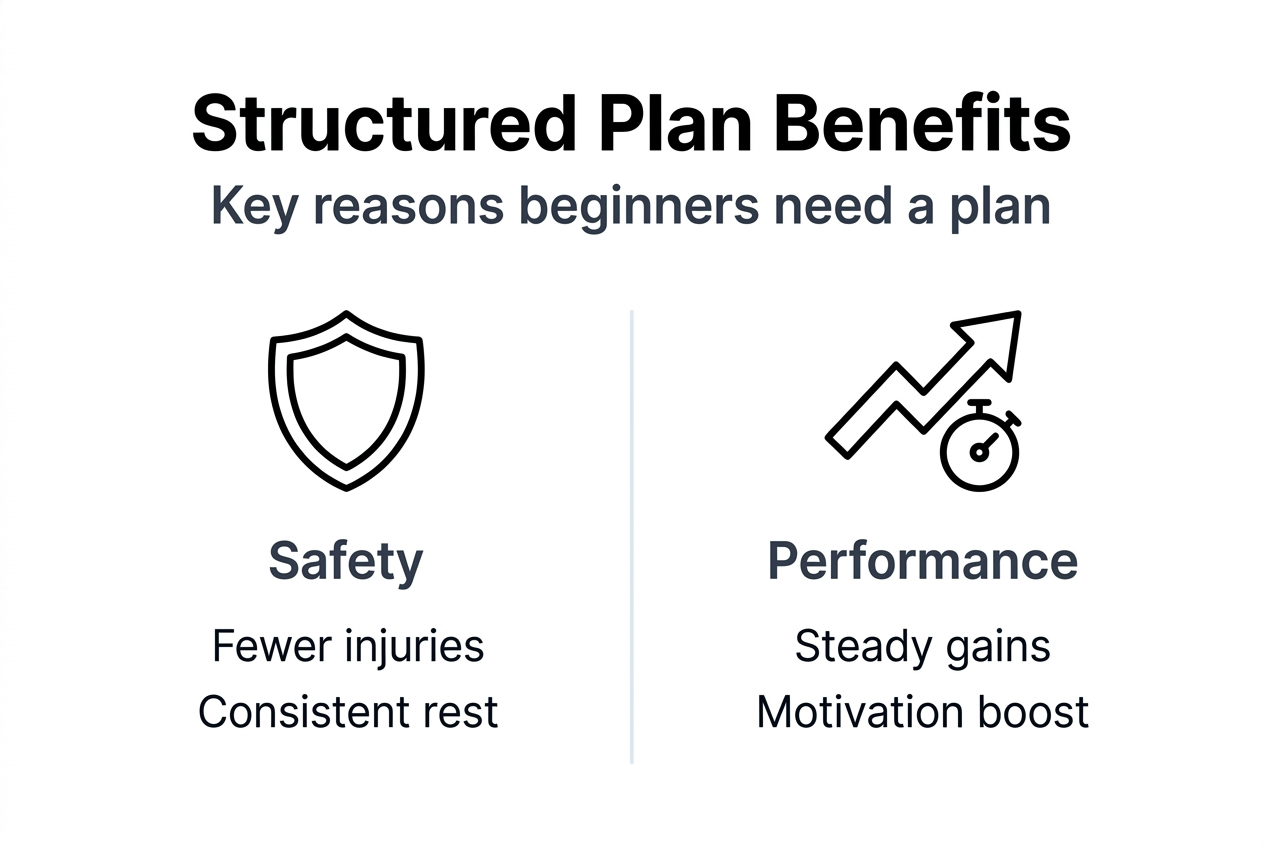
The proven training methodologies show that matching plan intensity to experience produces better outcomes than generic approaches. Your body responds to stress based on its current adaptation level. A workout that challenges an experienced runner might overwhelm a beginner's recovery capacity.
Get personalized running plans to reach your goals
You've learned why structure transforms beginner training from risky experimentation into systematic progress. But creating an effective plan requires balancing multiple variables: your current fitness, available training time, race distance, and target date. That's where personalized running plans remove the complexity.

Improvio builds customized training schedules in about 60 seconds. The platform considers your individual pace, weekly availability, and race goals to create a realistic progression. Unlike generic plans, personalized approaches adapt to your actual progress and constraints. You get easy-to-follow weekly schedules that incorporate the progression principles, rest days, and workout variety you've learned about here. The platform tracks your improvement and adjusts recommendations as you build fitness, maintaining that crucial balance between challenge and recovery that prevents injury while driving results.
Frequently asked questions
How does structured training prevent injuries in beginner runners?
Structured plans incorporate gradual progression and mandatory rest days that allow tissues to adapt before increasing stress. The 10% rule limits weekly volume increases, preventing the sudden jumps that cause overuse injuries. Built-in recovery weeks every three to four weeks enable supercompensation and prevent accumulated fatigue.
What happens if I miss workouts in my training plan?
Missing up to 20% of scheduled workouts has minimal impact on race day performance. Simply resume with your next scheduled session rather than trying to make up missed work. The overall training pattern matters more than perfect adherence. Attempting to cram missed workouts into fewer days increases injury risk significantly.
How long before my first race should I start training?
Allow at least 12 weeks for proper preparation. Your skeletal system needs this timeframe for bone remodeling in response to running stress. Starting with less time forces rushed progression that dramatically increases injury risk. Longer preparation periods produce better outcomes and safer adaptation for absolute beginners.
Why include cross-training in a running plan?
Cross-training maintains cardiovascular fitness while reducing cumulative impact stress on joints and bones. Activities like swimming or cycling provide active recovery that promotes blood flow without additional running load. This variety also prevents mental burnout and develops complementary muscle groups that support better running form.
Should beginner runners focus on speed or distance first?
Distance comes first for beginners. Building aerobic base through easy-paced volume creates the foundation for later speed work. Attempting speed training before establishing this base increases injury risk and limits long-term development. Focus 70 to 80% of early training on comfortable conversational pace runs that build endurance safely.