

Starting your first race training feels exciting until you face dozens of conflicting weekly running schedules online. Some promise rapid progress while others emphasize caution, leaving you wondering which approach actually works for beginners. The truth is that different schedule types serve different needs, and understanding these options helps you choose a plan that matches your fitness level, lifestyle, and injury risk tolerance. This article breaks down the main types of beginner running schedules, explains what makes each effective, and shows you how to select the right fit for your first race goals.
Table of Contents
- Run/Walk Schedules: Gentle Start With Injury Prevention
- Cross-Training And Rest: Balancing Fitness And Recovery
- Progressive Overload Schedules: Safe Mileage And Intensity Increase
- Comparing Beginner Weekly Running Schedule Types: Finding The Best Fit
- Start Your Running Journey With Improvio
Key takeaways
| Point | Details |
|---|---|
| Five schedule types exist | Run/walk, cross-training focused, progressive overload, continuous running, and hybrid approaches each offer unique benefits for beginners. |
| Run/walk reduces injury risk | Alternating running and walking intervals builds endurance gradually while minimizing impact stress on joints and muscles. |
| Cross-training supports recovery | Swimming, cycling, and strength work maintain fitness while giving running-specific muscles time to adapt and repair. |
| 10% weekly increase rule | Limiting mileage growth to 10% per week allows safe adaptation and prevents overuse injuries common in new runners. |
| Consistency beats intensity | Regular moderate training produces better long-term results than sporadic hard efforts for beginners building their foundation. |
How to choose your beginner weekly running schedule: key criteria
Before diving into specific schedule types, you need clear criteria for evaluation. The best beginner running schedule balances three elements: frequency (how many days you run), intensity (how hard each session feels), and recovery (rest between efforts). Beginners should prioritize consistency over intensity to avoid injury and burnout, which means choosing a schedule you can actually maintain week after week.
Injury prevention ranks as the top priority when selecting your schedule type. Gradual progression allows your bones, tendons, and muscles to adapt to running's repetitive impact. A schedule that increases mileage too quickly or skips rest days sets you up for shin splints, runner's knee, or stress fractures that derail your training completely. Look for plans that build volume slowly and incorporate recovery periods.
Your lifestyle constraints matter just as much as training principles. A schedule requiring six days per week won't work if you travel frequently for work or have unpredictable family commitments. Consider your available time blocks, preferred training times, and how running fits around other responsibilities. The perfect schedule on paper fails if it doesn't match your real life.
Run/walk intervals, continuous running, cross-training integration, and progressive overload represent the main approaches you'll encounter. Each serves different fitness levels and goals. Run/walk schedules suit absolute beginners or those returning after injury, while continuous running works for people with existing cardio fitness. Cross-training schedules appeal to athletes wanting full-body conditioning, and progressive overload plans target steady improvement through calculated increases.
Pro Tip: Track how you feel after each run for two weeks before committing to a schedule type. If you're consistently exhausted or sore, you need more recovery built into your plan.
Understanding following beginner training plans helps you appreciate why structure matters more than random running. The right schedule type provides a framework that removes guesswork while adapting to your progress.
Run/walk schedules: gentle start with injury prevention
Run/walk schedules alternate short running intervals with walking breaks, making them ideal for absolute beginners. You might start with one minute of running followed by two minutes of walking, repeating this pattern for 20 minutes total. Over subsequent weeks, you gradually increase the running portions while decreasing walk breaks until you can run continuously.
This approach delivers multiple benefits beyond just building endurance. Run/walk intervals reduce impact stress by up to 30%, lowering injury risk in novice runners whose bodies haven't adapted to sustained running yet. Walking breaks allow your heart rate to recover slightly while maintaining forward motion, teaching your cardiovascular system to handle varying intensities. Your muscles get micro-recovery periods that prevent the deep fatigue causing form breakdown and injury.

Typical run/walk progression follows a predictable pattern. Week one might feature 1:2 run-to-walk ratios (one minute running, two minutes walking). Week three shifts to 2:2 ratios, then 3:2 by week five. By week eight, many beginners reach 5:1 or continuous running for their target race distance. This gradual shift gives your body time to strengthen connective tissues and improve running economy without overwhelming your system.
Run/walk schedules particularly suit several groups: complete beginners who haven't run since childhood, people carrying extra weight that increases joint stress, individuals recovering from injury, and anyone who tried running before but got hurt. If you've experienced knee pain, shin splints, or excessive soreness from previous running attempts, this method offers a safer entry point.
"The beauty of run/walk training lies in its flexibility. You control the progression speed based on how your body responds, making it nearly impossible to push too hard too soon."
Pro Tip: Use landmarks rather than constantly checking your watch during run/walk intervals. Run to the next mailbox, walk to the stop sign. This mental approach makes intervals feel more natural and less tedious.
Exploring beginner training plans with run/walk shows you specific weekly structures that incorporate this method effectively. The key is patience with the process rather than rushing to eliminate walk breaks.
Cross-training and rest: balancing fitness and recovery
Cross-training schedules integrate non-running activities throughout your week to build overall fitness while managing running-specific stress. A typical week might include three running days, two cross-training sessions, and two complete rest days. This variety prevents overuse injuries while maintaining cardiovascular progress and strengthening supporting muscle groups.
Common cross-training activities complement running beautifully:
- Swimming provides zero-impact cardio that builds lung capacity and upper body strength
- Cycling strengthens quadriceps and improves leg turnover without pounding pavement
- Strength training develops core stability and glute power that improve running form
- Walking maintains active recovery while giving running muscles a break
- Yoga enhances flexibility and body awareness that prevent compensatory movement patterns
Cross-training can improve running economy by up to 5% while reducing injury risk, making it valuable even for runners focused solely on race performance. Your running-specific muscles get adequate recovery between sessions while other activities maintain your fitness trajectory. This approach prevents the staleness and burnout that come from doing the same activity daily.
Rest days deserve equal importance in your weekly schedule. Complete rest allows physiological adaptations to occur. Your muscles repair microtears, your cardiovascular system builds new capillaries, and your nervous system consolidates movement patterns learned during training. Skipping rest days interrupts these processes and leads to accumulated fatigue that eventually causes injury or performance decline.
Balancing running and non-running days requires strategic planning. Space your running days throughout the week rather than clustering them together. Follow hard running sessions with easy cross-training or rest. Save intense cross-training (like high-resistance cycling) for days when you're not running, treating it as a workout rather than recovery.
Pro Tip: Use cross-training days to target muscle groups that support running form but don't get worked during runs. Glute bridges, planks, and hip strengthening exercises build the stability that prevents common running injuries.
The benefits of structured schedules become obvious when you see how strategic cross-training and rest accelerate your progress while keeping you healthy.
Progressive overload schedules: safe mileage and intensity increase
Progressive overload applies a fundamental training principle: gradually increasing training stress over time to stimulate adaptation. For beginner runners, this typically means adding small amounts of weekly mileage or slightly increasing workout intensity on a planned schedule. The approach transforms random running into systematic improvement.
The classic guideline suggests increasing weekly mileage by no more than 10% reduces injury risk while supporting adaptation. If you run 10 miles total this week, next week's maximum becomes 11 miles. This conservative progression gives your musculoskeletal system time to strengthen before facing greater demands. Violating this rule by jumping from 10 to 15 miles dramatically increases injury probability.
Progressive overload schedules follow predictable patterns:
- Establish a baseline week of comfortable running volume
- Add 10% total weekly mileage the following week
- Maintain the new level for one week to consolidate gains
- Add another 10% in week four
- Include a recovery week every fourth week with 20% reduced volume
- Resume progression after the recovery week
This systematic approach prevents the common beginner mistake of doing too much too soon. You might feel capable of running farther in any single session, but your bones and connective tissues need weeks to adapt to new stress levels. Progressive overload schedules build in the patience your body requires.
| Week | Total Miles | Weekly Increase | Injury Risk |
|---|---|---|---|
| 1 | 10 | Baseline | Low |
| 2 | 11 | 10% | Low |
| 3 | 12 | 9% | Low |
| 4 | 10 | Recovery | Very Low |
| 5 | 13 | 8% | Low |
| 8 | 15 | Gradual | Low |
The advantages extend beyond injury prevention. Steady improvement builds confidence as you consistently achieve new milestones. Your body adapts efficiently when stress increases predictably rather than randomly. Mental resilience develops as you learn to trust the process rather than chasing immediate results.
"Progressive overload works because it respects biology. Your body adapts to stress when given adequate stimulus and recovery time. Too little stress produces no adaptation, too much causes breakdown."
Understanding step-by-step running plans reveals how progressive overload integrates with other training principles to create comprehensive beginner programs.
Comparing beginner weekly running schedule types: finding the best fit
Now that you understand individual schedule types, direct comparison helps you choose the right approach. Each type offers distinct advantages and limitations depending on your situation, goals, and preferences. No single schedule works for everyone, so matching features to your needs produces the best results.
| Schedule Type | Injury Risk | Fitness Gains | Complexity | Time Commitment | Flexibility |
|---|---|---|---|---|---|
| Run/Walk | Very Low | Moderate | Simple | Low | High |
| Cross-Training Focus | Low | High | Moderate | Medium | Medium |
| Progressive Overload | Low | High | Simple | Medium | Low |
| Continuous Running | Medium | Moderate | Very Simple | Low | High |
Your personal goals should guide schedule selection. Training for a 5K finish (not time) favors run/walk schedules that prioritize completion over speed. Aiming for overall fitness improvement points toward cross-training focused plans. Targeting steady running performance gains suggests progressive overload approaches. Consider what success looks like for your first race.
Lifestyle factors often determine which schedule you can actually maintain. Limited time availability works better with simple continuous running or run/walk schedules requiring minimal planning. Access to pools, bikes, or gyms enables cross-training schedules. Unpredictable work schedules need flexible approaches rather than rigid progressive plans.
Injury history matters significantly. Previous running injuries indicate you need conservative approaches like run/walk or cross-training heavy schedules. Clean injury history allows more aggressive progression. Current aches or pains require schedules with built-in recovery rather than daily running.
Consistency and listening to your body are more important than intensity for new runners, regardless of schedule type chosen. Watch for these red flags when selecting:
- Schedules requiring daily running without rest days
- Plans jumping mileage more than 10% weekly
- Programs lacking variety in workout types
- Schedules ignoring your current fitness level
- Plans with no flexibility for missed workouts
- Approaches dismissing pain as normal
The right schedule feels challenging but sustainable. You should finish most runs feeling accomplished rather than destroyed. Soreness should decrease as weeks progress, not accumulate. If your chosen schedule leaves you dreading runs or constantly exhausted, switch to a more conservative approach.
Pro Tip: Start with a more conservative schedule type than you think you need. You can always progress faster if it feels too easy, but recovering from injury caused by overly aggressive training costs weeks or months.
Recognizing importance of structured running helps you commit to your chosen schedule type rather than randomly mixing approaches and losing the benefits of systematic training.
Start your running journey with Improvio
Choosing the right weekly running schedule represents just the first step toward race day success. Improvio takes the guesswork out of beginner training by creating personalized running plans tailored to your current fitness, available schedule, and race goals. The platform builds your custom weekly schedule in about 60 seconds, incorporating the principles discussed here while adapting to your unique situation.
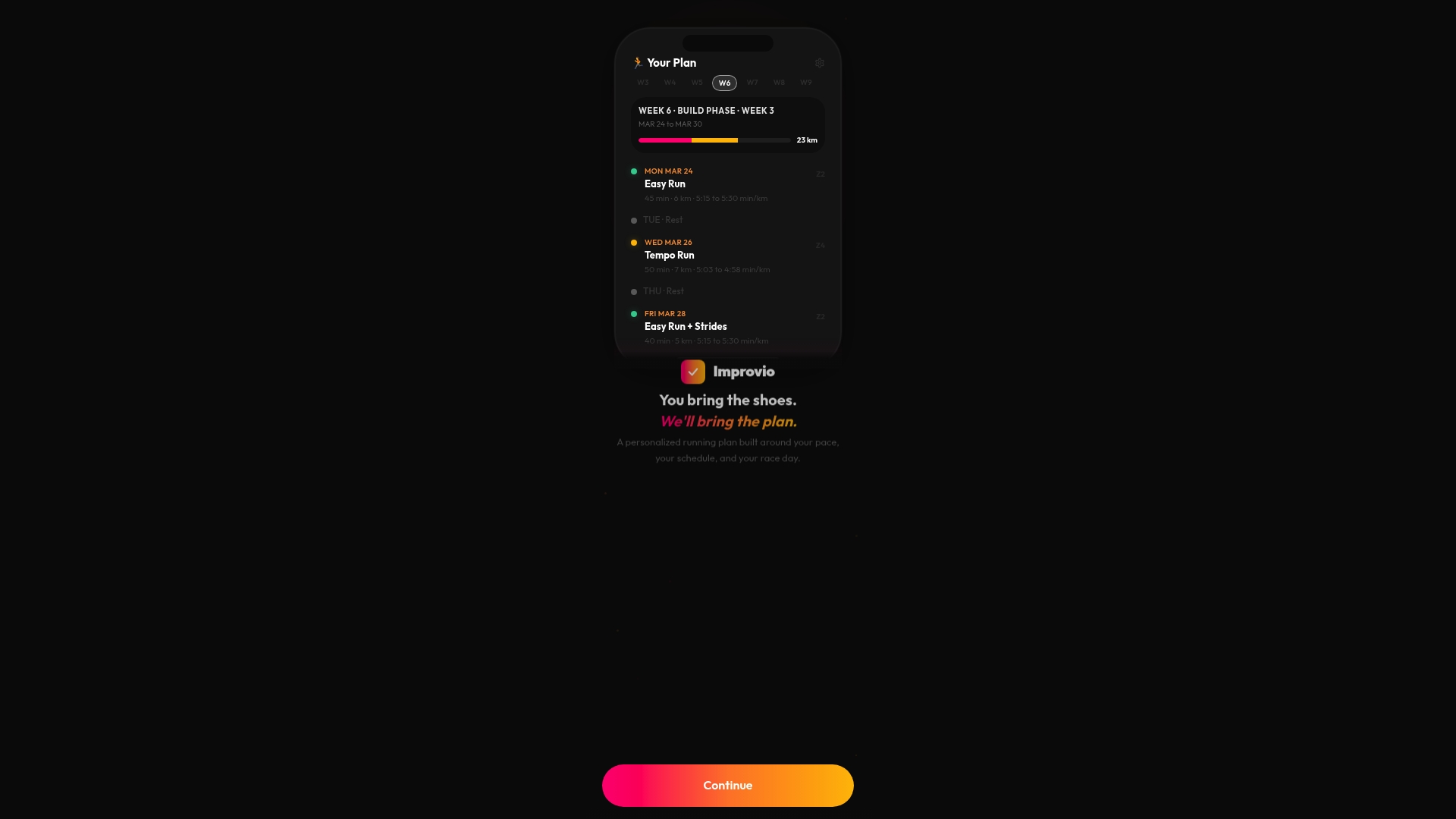
The Improvio running app provides more than just workout schedules. You get progressive training that automatically adjusts based on your feedback, ensuring you build fitness safely without overtraining. Detailed guidance on running form and technique helps you develop efficient movement patterns that prevent injury. The beginner running plans guide walks you through setup and shows how personalized scheduling accelerates your progress. When you're ready to refine your technique, the running form techniques resource offers practical tips for improving efficiency and reducing injury risk. Start your free plan today and experience how structured, personalized training transforms your running journey.
FAQ
What is the best weekly running schedule for a beginner?
No single schedule works for everyone because individual fitness levels, injury history, and lifestyle constraints vary significantly. However, run/walk schedules prove ideal for most absolute beginners due to their injury prevention benefits and gradual progression. These plans reduce impact stress while building endurance systematically, making them the safest starting point for new runners.
How many days a week should a beginner run?
Most beginners should run three to four days per week, spacing sessions throughout the week rather than consecutive days. This frequency provides enough stimulus for cardiovascular and musculoskeletal adaptation while allowing adequate recovery between efforts. Fill non-running days with cross-training activities or complete rest to support overall fitness development and injury prevention.
Can beginners run every day without injury?
Beginners should avoid daily running because their bodies need recovery time to adapt to training stress and repair tissue damage. Running every day dramatically increases overuse injury risk, particularly stress fractures, tendonitis, and muscle strains. Scheduled rest days and cross-training sessions allow physiological adaptations to occur while maintaining fitness progress safely.
How do I know if my running schedule is too hard?
Watch for persistent fatigue that doesn't improve with rest, declining performance despite continued training, increased irritability or mood changes, and pain that worsens during runs rather than improving after warmup. These signs indicate your schedule exceeds your current recovery capacity. Reduce mileage by 20 to 30 percent and add an extra rest day when these symptoms appear.