

Starting to run can feel overwhelming when you don't know how to build stamina safely or structure your training. Many beginners jump in too fast, risking injury and burnout before their first race. A personalized running schedule removes the guesswork, gradually building your endurance while protecting your body from overuse. This guide walks you through creating an effective 2026 running plan tailored to your fitness level, teaching you proper form, and preparing you mentally and physically for race day success.
Table of Contents
- Why A Structured Running Schedule Matters For Beginners
- Choosing And Personalizing Your Beginner Running Schedule
- Mastering Running Form And Injury Prevention Strategies
- Preparing For Race Day And Tracking Progress Effectively
- Get Started With A Personalized Running Schedule Today
- Frequently Asked Questions About Running Schedules For Beginners
Key takeaways
| Point | Details |
|---|---|
| Couch to 5K works | This popular 8-9 week plan uses run/walk intervals to safely build endurance three times weekly. |
| Gradual progression prevents injury | Increasing weekly mileage by no more than 10% protects beginners from overuse injuries. |
| Strength training matters | Adding 1-2 weekly strength sessions improves running mechanics and reduces injury risk. |
| Proper form boosts efficiency | Midfoot striking, 170-180 cadence, and ankle lean optimize energy use and prevent pain. |
| Tapering maximizes race performance | Reducing volume the final week before your race ensures you arrive fresh and strong. |
Why a structured running schedule matters for beginners
Jumping into running without a plan sets you up for frustration and injury. Novices face up to a 53% injury rate, highlighting the need for gradual progression and structure. Your body needs time to adapt to the repetitive impact of running. Muscles, tendons, and bones strengthen through consistent, measured stress followed by recovery.
Structured schedules solve this problem by incorporating three critical elements. First, they use the 10% rule, limiting weekly mileage increases to prevent overload. Second, they balance running days with rest days, giving your body time to rebuild stronger. Third, they integrate run/walk intervals that let beginners build cardiovascular fitness without overwhelming their joints.
Cross training and strength work amplify these benefits. Swimming, cycling, or elliptical sessions on non-running days maintain fitness while reducing impact stress. Strength training twice weekly targets your core, glutes, and legs, the foundation of efficient running mechanics. Strong glutes stabilize your pelvis during each stride. A solid core prevents excessive rotation and energy waste.
Consider this reality check: running places forces of 2-3 times your body weight on each leg with every footstrike. Without proper preparation, your body rebels. Shin splints, runner's knee, and stress fractures sideline unprepared runners within weeks. A structured plan respects your body's adaptation timeline.
"The difference between an injured runner and a successful one often comes down to patience with progression. Your cardiovascular system adapts faster than your musculoskeletal system, creating a dangerous mismatch if you follow how you feel rather than a proven plan."
Beginners who follow structured schedules report higher completion rates and greater confidence. You know exactly what to do each day. No second guessing whether you should run longer or take an extra rest day. The plan decides for you based on proven training principles. This clarity eliminates decision fatigue and builds momentum through small, consistent wins.
Understanding why schedule matters for runners transforms your approach from random effort to strategic preparation. Each run serves a specific purpose in your development. Easy runs build aerobic base. Interval sessions improve speed. Long runs extend endurance. Rest days facilitate recovery and adaptation. This systematic approach turns running from a chaotic experiment into a predictable path toward your race goal.
Choosing and personalizing your beginner running schedule
The Couch to 5K runs 8-9 weeks with run/walk intervals advancing to continuous running three times a week. This proven program starts with 60-second running intervals alternating with 90-second walking breaks. Each week, the running portions lengthen while walking decreases. By week 8, you're running 30 minutes continuously.

Couch to 5K works because it respects your body's adaptation timeline. The gradual progression prevents the overuse injuries that derail enthusiastic beginners. Three runs per week provide enough stimulus for improvement while allowing adequate recovery. The simplicity removes barriers, you need only 30 minutes three times weekly.
Alternatives include 6 to 12-week plans varying in intensity and run types, all with 3 runs per week. Shorter plans suit those with some fitness base. Longer schedules benefit complete beginners or those wanting extra preparation time. Some programs incorporate tempo runs or hill work for variety. Others stick strictly to easy pace running.
| Plan Type | Duration | Weekly Runs | Key Focus | | --- | --- | --- | | Couch to 5K | 8-9 weeks | 3 | Run/walk intervals progressing to continuous running | | Conservative Beginner | 10-12 weeks | 3 | Extended adaptation period with gentle progression | | Active Beginner | 6-8 weeks | 3-4 | Faster progression for those with fitness base | | Hybrid Approach | 8-10 weeks | 3 plus cross-training | Integrates strength and cardio variety |
Personalization makes any plan work better for you. Repeat weeks if you're struggling with a progression jump. Feeling winded during week 5's longer intervals? Repeat week 4 until those feel comfortable. This patience prevents injury and builds genuine fitness rather than just checking boxes.
Adjust rest days to fit your schedule and recovery needs. The standard Monday, Wednesday, Friday pattern works for many. Others prefer Tuesday, Thursday, Saturday to keep weekends flexible. Listen to persistent soreness or fatigue. Add an extra rest day rather than pushing through warning signs.
Incorporate strength training on non-running days or after easy runs. Two 20-minute sessions weekly targeting squats, lunges, planks, and glute bridges strengthen running-specific muscles. This investment pays dividends in injury prevention and improved running economy.
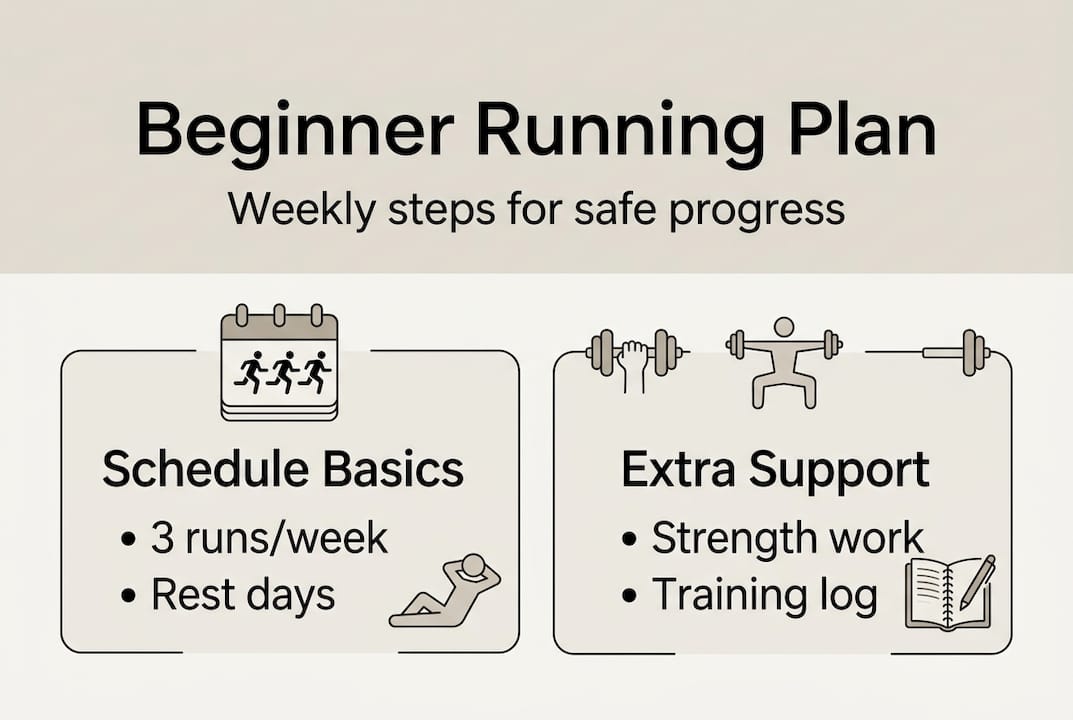
Pro Tip: Keep a simple training log noting how each run felt, not just the distance and time. Patterns emerge that help you recognize when to push and when to back off. Feeling sluggish three runs in a row signals you need more recovery, not harder effort.
Exploring weekly running schedules for beginners reveals options beyond Couch to 5K. Some emphasize time-based running over distance. Others use heart rate zones to regulate intensity. The best schedule matches your lifestyle, fitness level, and learning style. A step-by-step running plan removes decision paralysis and keeps you moving forward consistently.
Mastering running form and injury prevention strategies
Proper running form includes leaning from ankles, midfoot strike, cadence 170-180, relaxed shoulders, and avoiding crossing arms. These elements work together to minimize energy waste and injury risk. Your body position determines how efficiently you convert effort into forward motion.
Ankle lean means tilting your entire body slightly forward from the ankles, not bending at the waist. This position uses gravity to assist forward momentum. Midfoot striking, landing on the middle of your foot rather than your heel, reduces braking forces and distributes impact more evenly. Heel striking sends shock waves up your leg with each step.
Cadence refers to steps per minute. The 170-180 range keeps your feet under your body rather than reaching out in front. Shorter, quicker steps reduce impact forces and improve efficiency. Count your steps for 30 seconds and multiply by two. If you're below 170, focus on quicker turnover rather than longer strides.
Arm mechanics matter more than most beginners realize. Bend elbows at 90 degrees. Swing arms forward and back, not across your body. Crossing arms wastes energy through unnecessary rotation. Keep shoulders relaxed and down, not hunched near your ears. Tension in your upper body steals energy from your legs.
Avoiding rapid mileage increases and adding strength training reduces injury risk in new runners. The 10% rule provides a simple guideline. If you ran 10 miles this week, don't exceed 11 miles next week. This conservative approach gives your body time to adapt to increasing demands.
Strength training twice weekly protects against common running injuries. Focus on these key areas:
- Glutes: Single leg deadlifts, hip thrusts, and clamshells stabilize your pelvis
- Core: Planks, dead bugs, and bird dogs prevent excessive rotation
- Quads and hamstrings: Squats and lunges build leg strength for hill climbing
- Calves: Calf raises strengthen the muscles and tendons absorbing landing impact
Cross training on rest days maintains cardiovascular fitness without running's impact. Cycling, swimming, or elliptical work keeps your heart and lungs adapting while giving your legs a break from pounding pavement. This variety prevents overuse injuries common when running is your only activity.
Pro Tip: Record yourself running from the side using your phone. Watch for heel striking, overstriding, or excessive vertical bounce. Small form corrections compound over thousands of steps, dramatically improving efficiency and comfort. Check your form every few weeks as fatigue can cause technique to deteriorate.
Pay attention to pain signals. Sharp pain demands immediate attention. Stop running and assess. Dull aches that disappear after warmup often resolve with continued easy running. Pain that worsens during a run or persists afterward needs rest and possibly professional evaluation. Ice, compression, and elevation help acute issues.
Learning about types of running workouts for beginners expands your understanding beyond just logging miles. Easy runs, tempo efforts, and long slow distance each serve distinct purposes in your development. Varying your training stress prevents adaptation plateaus and keeps running interesting.
Preparing for race day and tracking progress effectively
Experts recommend tapering the week before the race to maximize freshness and performance. Tapering means reducing your training volume and intensity to arrive at the starting line rested and energized. Your last hard workout should occur 10-12 days before race day. The final week features shorter, easier runs that maintain fitness without accumulating fatigue.
A typical taper week includes two or three short easy runs of 20-30 minutes. Skip any speed work or long runs. Your body uses this reduced stress period to fully recover from training, repair micro-damage, and supercompensate. Glycogen stores replenish. Muscles rebuild stronger. Mental energy returns.
Rest days throughout your training matter as much as running days. Adaptation happens during recovery, not during the workout itself. Running breaks down muscle fibers and depletes energy stores. Rest allows your body to rebuild stronger than before. Skipping rest days interrupts this cycle, leading to chronic fatigue and declining performance.
Tracking your runs provides motivation and reveals patterns. Apps automatically log distance, pace, and route. Manual journals capture how you felt, weather conditions, and energy levels. Both approaches work. The key is consistency. Reviewing your log shows progress that daily effort obscures. You ran 10 minutes continuously in week 3. Now you're running 25 minutes in week 7. That's real, measurable improvement.
| Week Phase | Running Focus | Cross Training | Rest Days | Key Tasks |
|---|---|---|---|---|
| Weeks 1-3 | Run/walk intervals, building base | 1-2 sessions | 2-3 days | Establish routine, focus on consistency |
| Weeks 4-6 | Longer continuous runs | 1-2 sessions | 2-3 days | Build endurance, monitor form |
| Weeks 7-8 | Peak training volume | 1 session | 2 days | Longest runs, maintain intensity |
| Race Week | Taper, short easy runs | Optional light activity | 3-4 days | Rest, prepare gear, visualize race |
Race day preparation extends beyond physical training. Follow these steps for a successful first race experience:
- Pick up your race bib and timing chip at packet pickup, usually the day before
- Lay out your running clothes, shoes, bib, and any fuel the night before
- Eat a familiar breakfast 2-3 hours before the race start, nothing new or experimental
- Arrive at the race venue 45-60 minutes early to park, use the bathroom, and warm up
- Start in the appropriate corral for your pace, toward the back to avoid going out too fast
- Run the first mile slower than you think you should, saving energy for the final push
- Focus on your own race, not keeping up with faster runners around you
- Celebrate crossing the finish line, you earned it through weeks of dedicated training
Mental preparation matters as much as physical readiness. Visualize yourself running strong throughout the race. Picture handling challenging moments when you want to slow down. Imagine the satisfaction of crossing the finish line. This mental rehearsal builds confidence and prepares you for race day emotions.
A beginner race preparation guide covers logistics like transportation, parking, and what to bring. These practical details reduce race morning stress. Knowing exactly what to expect lets you focus on running your best. Understanding the complete beginner running workflow for first race transforms anxiety into excitement.
Get started with a personalized running schedule today
You've learned why structure matters, how to choose a plan, and what it takes to run safely and effectively. Now comes the exciting part: putting this knowledge into action with a training schedule built specifically for you.
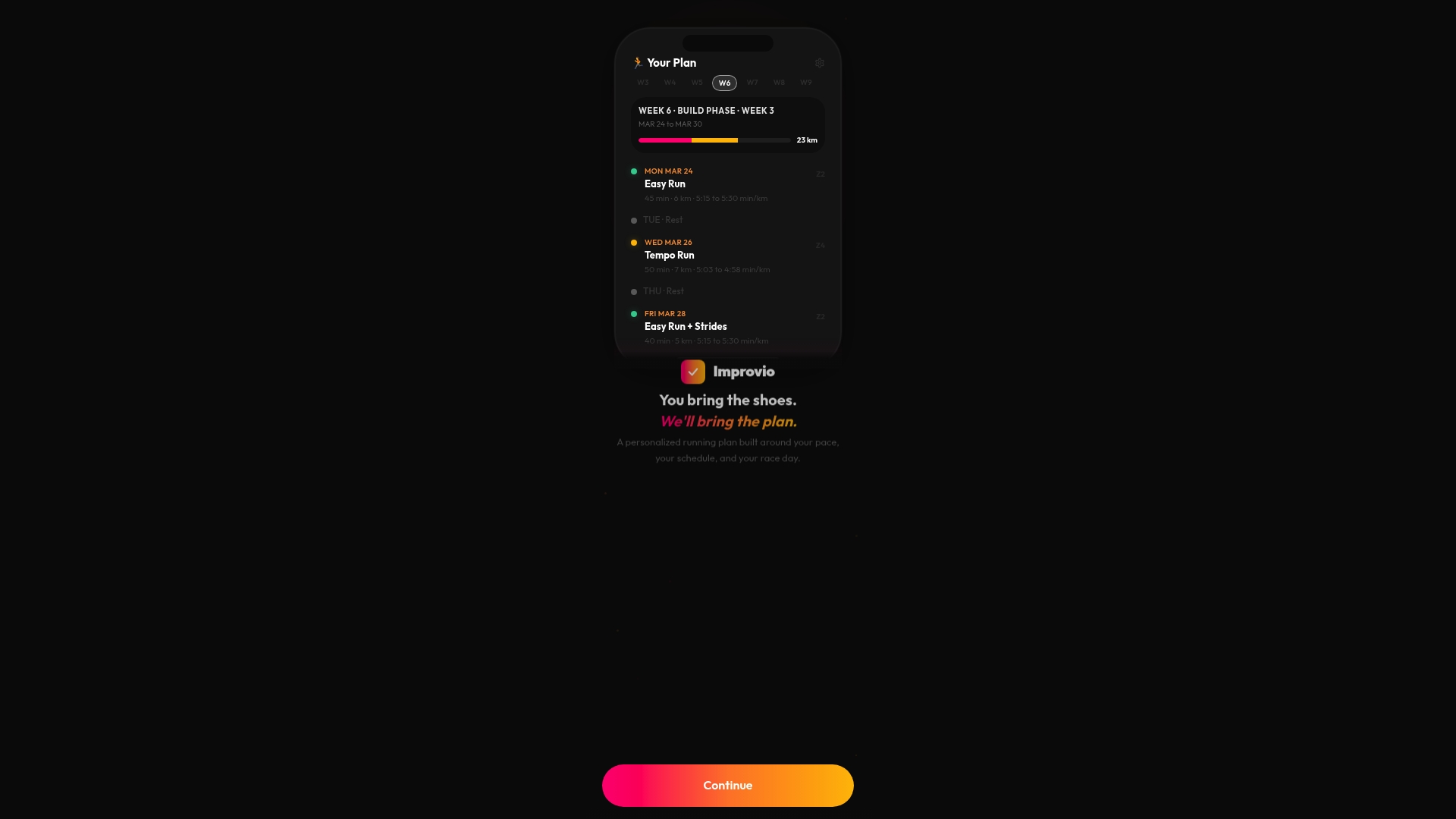
The Improvio app creates personalized running schedules that adapt to your pace, available training days, and race date. Instead of following a generic plan, you get a custom roadmap matching your current fitness and goals. The app integrates with your wearable devices, tracking your progress automatically and adjusting your plan based on how your body responds to training.
Smart scheduling prevents the injury patterns that sideline beginners. Improvio monitors your training load, flagging when you're at risk of overtraining. It balances hard efforts with recovery, ensuring you build fitness sustainably. The interface makes tracking effortless, you see your progress at a glance and know exactly what each day requires.
Pro Tip: Beginners who use structured apps maintain consistency 40% better than those following paper plans. The accountability and progress visualization keep you motivated through challenging weeks. Seeing your completed workouts pile up creates momentum that carries you through the inevitable tough days.
Frequently asked questions about running schedules for beginners
How often should beginners run each week?
Three times per week provides optimal stimulus for improvement while allowing adequate recovery between sessions. This frequency builds fitness without overwhelming your body's adaptation capacity. Space runs throughout the week rather than clustering them together.
Can I repeat weeks in my running plan if I'm struggling?
Absolutely, repeating weeks builds genuine fitness rather than just checking boxes. If a progression feels too challenging, step back and repeat the previous week until it feels comfortable. Patience prevents injury and creates sustainable progress.
What cross training works best for beginner runners?
Strength training targeting your core, glutes, and legs provides the most benefit. Add cycling, swimming, or elliptical work for cardiovascular maintenance without impact stress. Two strength sessions and one cardio cross training session weekly complement three runs perfectly.
How do I know when I'm ready to race?
You're ready when you can run 30 minutes continuously at an easy, conversational pace without pain or excessive fatigue. Completing your training plan's longest run comfortably indicates race readiness. Trust your preparation rather than last-minute doubts.
What's the best way to avoid injury as a new runner?
Follow the 10% rule for weekly mileage increases, prioritize rest days equally with running days, and maintain proper form throughout your runs. Add strength training twice weekly. Listen to pain signals and address issues immediately rather than running through them.