

Many new runners believe they can build fitness by simply lacing up and running whenever they feel motivated. This approach might work for a week or two, but without structure, progress stalls and injuries creep in. A running schedule transforms scattered effort into focused, consistent training that prepares you for race day while fitting your busy life. Whether you're juggling work deadlines, family commitments, or social obligations, a structured plan gives you the roadmap to reach your first race finish line with confidence and strength.
Table of Contents
- Why Consistency Is Crucial For Beginner Runners
- How Structured Schedules Accommodate Busy Lifestyles
- The Types Of Workouts And Their Role In A Running Schedule
- Creating Your Personalized Running Schedule For Your First Race
- Get Started With Your Personalized Running Schedule Today
Key takeaways
| Point | Details |
|---|---|
| Consistency reduces injury | Scheduled training balances effort and rest to prevent overuse injuries common in beginners. |
| Structure fits busy lives | Clear priorities help you slot workouts around work and family without stress. |
| Progress becomes measurable | Weekly schedules let you track improvements and adjust intensity for race readiness. |
| Confidence grows naturally | Knowing what to do each day removes guesswork and builds mental preparation. |
Why consistency is crucial for beginner runners
Consistency separates runners who finish their first race from those who quit halfway through training. When you follow a schedule, your body adapts gradually to running stress, building the aerobic base needed for endurance without shocking your system. Random training sessions create unpredictable loads that increase injury risk, especially for beginners whose muscles, tendons, and joints haven't adapted to repetitive impact yet.
Structured running schedules help prevent common beginner injuries by moderating training load. Your schedule acts as a governor, preventing you from doing too much on motivated days and ensuring you don't skip too many sessions when life gets hectic. This balance is critical because your cardiovascular system adapts faster than your connective tissues, creating a dangerous gap where you feel strong enough to run hard but your tendons aren't ready.
For busy beginners, planning sessions in advance dramatically increases adherence. When you know Tuesday is your easy run day and Thursday includes intervals, you can mentally prepare and arrange your schedule accordingly. This removes the daily decision fatigue of figuring out whether to run, what to do, and for how long.
Pro Tip: Track your weekly mileage and how you feel after each run in a simple notebook or app. If fatigue persists beyond normal post-workout tiredness, it's your body signaling you need an extra rest day before injury develops.
Schedules also balance hard efforts with recovery, preventing the burnout that kills motivation. New runners often make the mistake of running hard every session because they associate effort with progress. A good schedule includes easy runs that feel almost too comfortable, allowing your body to absorb training stress and come back stronger.
- Easy runs build aerobic capacity without excessive fatigue
- Rest days allow muscle repair and adaptation
- Gradual progression prevents sudden spikes in training load
- Consistent timing helps establish running as a habit
How structured schedules accommodate busy lifestyles
The beauty of a structured schedule lies in its ability to work with your life, not against it. Busy professionals, parents, and students all face competing demands that make spontaneous training nearly impossible. When you map out your training week in advance, you identify realistic windows for running and protect those times from other commitments.
Running structure for race success starts with honest assessment of your availability. Maybe mornings before work offer 45 minutes three times weekly, while weekends provide longer blocks for extended runs. Once you identify these windows, you can assign specific workout types to each slot based on your energy levels and time constraints.

Structured plans reduce overwhelm by breaking race preparation into manageable weekly chunks. Instead of staring at a 12-week training block and feeling intimidated, you focus on this week's three runs. Each completed session builds momentum and confidence, making the next week feel achievable rather than daunting.
Prioritizing key workouts within your schedule ensures you hit the most important sessions even during chaotic weeks. Not all runs carry equal weight. Your long run and one quality session (like intervals or tempo) matter more than squeezing in every planned easy run. When work explodes or family needs arise, you can skip or shorten an easy run without derailing progress, as long as you protect your priority sessions.
- Assess your weekly availability honestly, accounting for work, family, and other commitments
- Allocate your longest time blocks to long runs, typically on weekends
- Schedule quality workouts when you're freshest, often early in the week
- Place easy runs in shorter windows or after stressful days
- Build in at least one complete rest day, preferably two for beginners
- Include flexibility by marking backup days for missed sessions
This stepwise approach transforms training from an abstract goal into concrete action items. You're not just hoping to get fitter; you're executing a plan that accounts for real-world constraints. The step-by-step running plan beginners 2026 guide provides additional frameworks for building schedules that stick.
- Morning runs work well for consistent schedules but require evening preparation
- Lunch runs offer midday energy breaks but need workplace flexibility
- Evening runs fit after-work routines but compete with family time and fatigue
- Weekend long runs provide unhurried training but require planning around social events
The types of workouts and their role in a running schedule
Understanding workout types helps you appreciate why your schedule includes variety rather than just running the same pace every day. Each workout targets specific physiological adaptations that collectively prepare you for race demands. Easy runs form your training foundation, building aerobic capacity and allowing recovery between harder efforts.
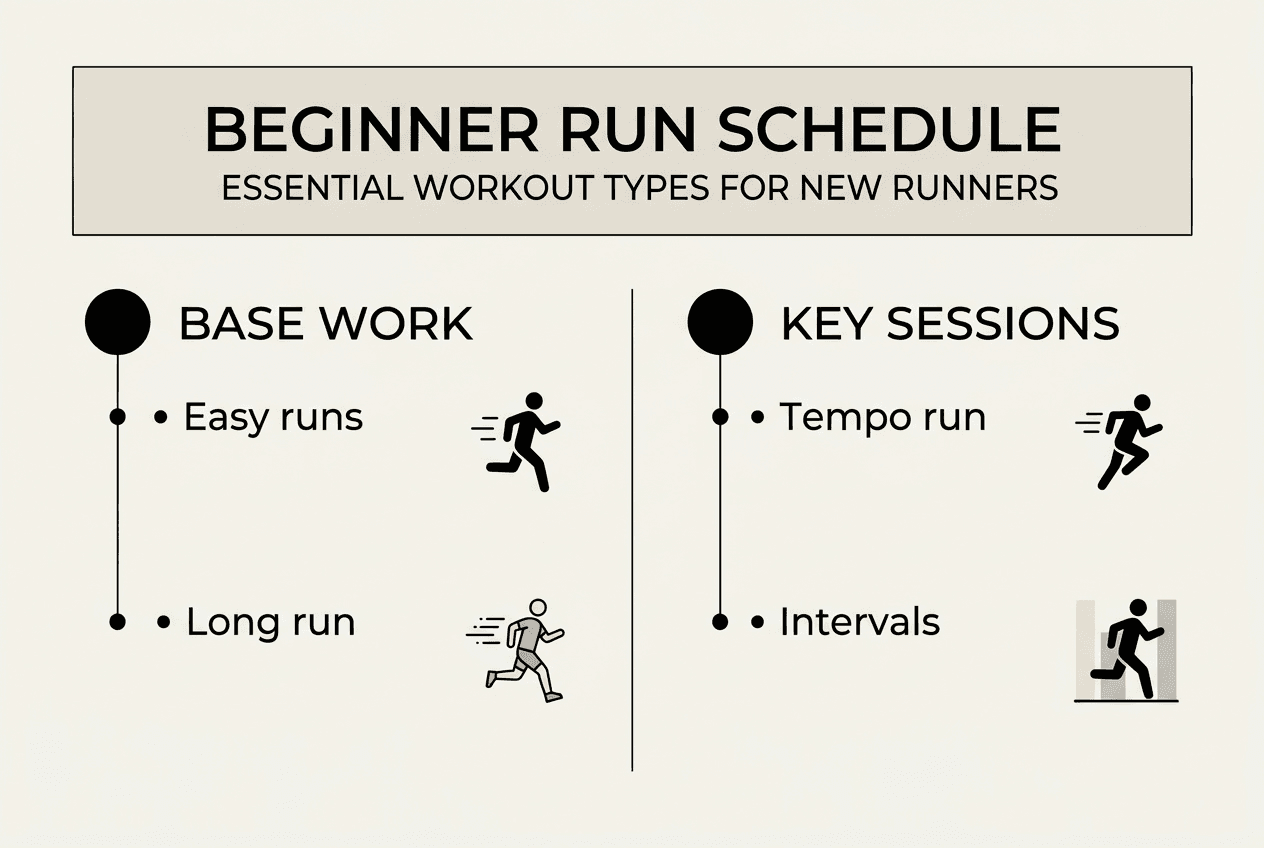
Intervals and tempo runs develop speed and lactate threshold, teaching your body to sustain faster paces without accumulating fatigue. Long runs build endurance and mental toughness, preparing you for the sustained effort required on race day. Incorporating diverse workouts systematically improves overall fitness and running economy.
Scheduling variety prevents both physical plateaus and mental boredom. Running the same route at the same pace becomes monotonous, draining motivation over weeks of training. When your schedule rotates through different workout types, each week feels fresh and purposeful. You're not just accumulating miles; you're developing different aspects of fitness in a logical sequence.
| Workout Type | Primary Benefit | Weekly Frequency | Effort Level |
|---|---|---|---|
| Easy runs | Aerobic base, recovery | 2-3 times | Conversational pace |
| Long runs | Endurance, mental toughness | Once | Comfortable but sustained |
| Intervals | Speed, VO2 max | Once | Hard, with rest breaks |
| Tempo runs | Lactate threshold | Once (optional for beginners) | Comfortably hard |
| Rest days | Recovery, adaptation | 1-2 times | Complete rest or cross-training |
Pro Tip: Schedule your hardest workouts (intervals or tempo runs) after a rest day or easy run. Your body performs best when fresh, and quality matters more than quantity for these sessions.
Cross-training activities like cycling, swimming, or strength work complement running by building fitness without additional impact stress. Many beginner schedules include one cross-training day, providing cardiovascular benefits while giving your running muscles and joints a break. This approach reduces injury risk while maintaining training consistency.
- Easy runs should feel almost too easy, allowing full conversation throughout
- Long runs gradually increase distance, typically adding 10% weekly
- Intervals alternate hard efforts with recovery periods, building speed safely
- Rest days are active training components, not wasted time
The running workouts for beginners guide explains each type in detail, helping you understand what each session accomplishes toward your race goal.
Creating your personalized running schedule for your first race
Building your schedule starts with defining your goal and working backward from race day. If you're targeting a 5K in 12 weeks, your schedule needs to progress from your current fitness to race-ready conditioning within that timeframe. Personalized training plans significantly increase first race finish rates compared to unstructured training, with structured approaches showing 25% higher completion rates.
- Set your specific race goal (distance and target finish time if applicable)
- Choose your race date and count back to determine available training weeks
- Assess your current fitness level honestly, including weekly running volume
- Identify your weekly availability for running, including time of day preferences
- Select workout types appropriate for your experience and race distance
- Plan progressive increases in volume and intensity, respecting recovery needs
- Schedule rest days strategically to prevent overtraining
- Build in cutback weeks every 3-4 weeks to allow adaptation
Here's an example 10-week beginner schedule for someone preparing for their first 5K, currently running 2-3 times weekly:
| Week | Monday | Tuesday | Wednesday | Thursday | Friday | Saturday | Sunday |
|---|---|---|---|---|---|---|---|
| 1-2 | Rest | 20 min easy | Rest or cross-train | 20 min easy | Rest | 30 min easy | Rest |
| 3-4 | Rest | 25 min easy | Rest or cross-train | 20 min intervals | Rest | 35 min easy | Rest |
| 5 (cutback) | Rest | 20 min easy | Rest | 20 min easy | Rest | 30 min easy | Rest |
| 6-7 | Rest | 30 min easy | Cross-train | 25 min intervals | Rest | 40 min easy | Rest |
| 8-9 | Rest | 30 min easy | Cross-train | 25 min tempo | Rest | 45 min easy | Rest |
| 10 (race week) | Rest | 20 min easy | Rest | 15 min easy | Rest | Race day | Celebrate |
Regular evaluation helps refine your plan for optimal results. After each week, assess how you felt during runs, whether you recovered adequately, and if the training load felt appropriate. If you're consistently exhausted, scale back volume or intensity. If workouts feel too easy and you're recovering quickly, you might progress slightly faster.
The running training plans for beginners guide offers additional templates and customization strategies. Remember that plans aren't rigid contracts; they're flexible frameworks that adapt to your responses and life circumstances. The goal is consistent progress toward race readiness, not perfect adherence to every scheduled minute.
Get started with your personalized running schedule today
Now that you understand how schedules transform scattered training into focused race preparation, it's time to build your own plan. Improvio creates personalized running schedules tailored to your specific race date, current fitness level, and weekly availability. The platform takes about 60 seconds to set up and immediately generates a complete training plan that adapts to your lifestyle.
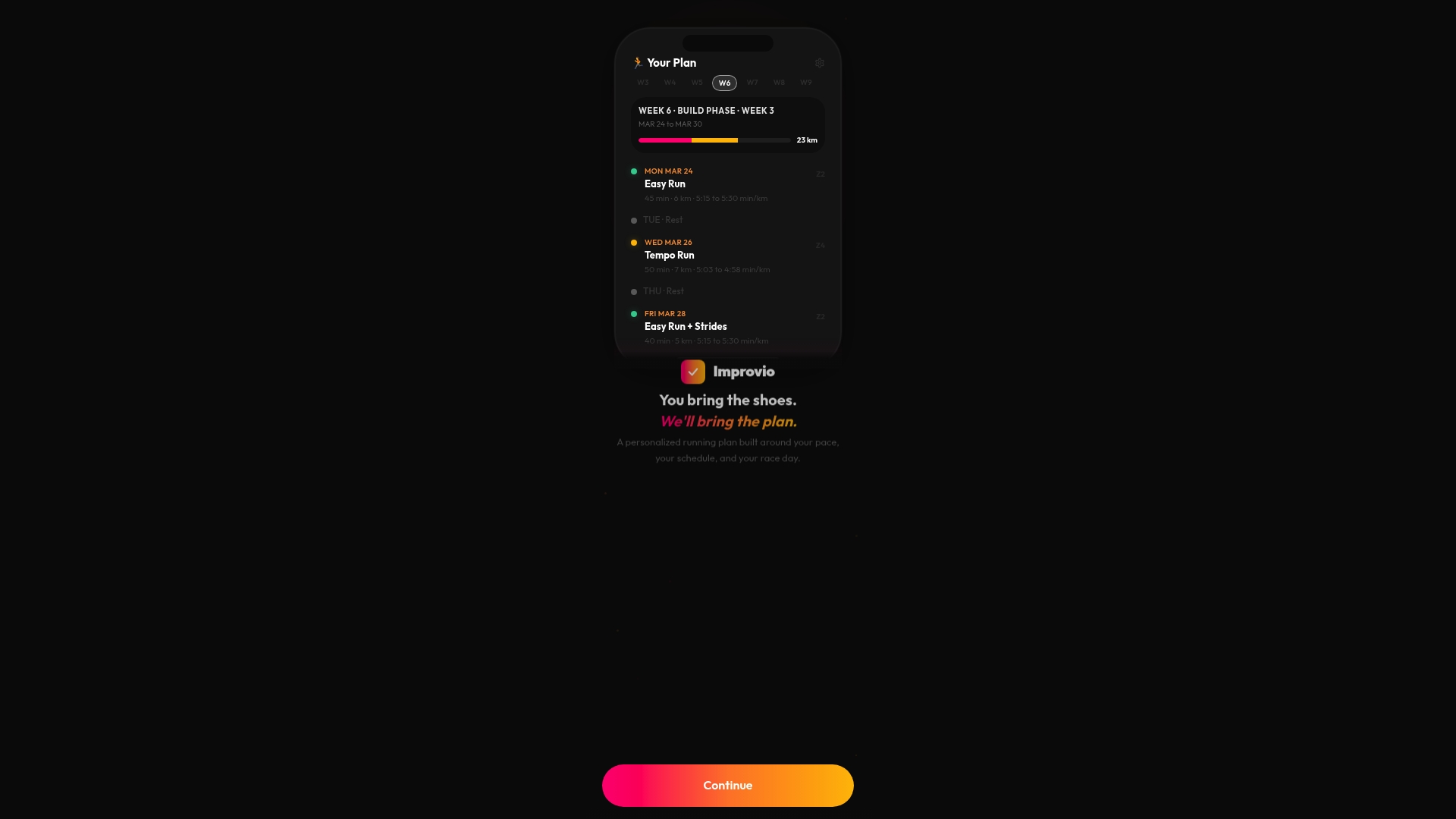
Track each completed workout, monitor your progress, and adjust your plan as needed through the user-friendly interface. The system accounts for missed sessions and busy weeks, automatically recalibrating your schedule to keep you on track for race day success. You'll receive clear guidance on what to do each day, removing guesswork and building confidence as you check off completed runs. Start your journey from beginner to race finisher with a schedule designed specifically for your goals and constraints.
FAQ
Why is a running schedule important for beginners?
A schedule provides the structure beginners need to build fitness gradually without injury. It removes daily decision-making about whether to run, what type of workout to do, and how long to go. Consistent training guided by a schedule improves both physical conditioning and mental confidence, preparing you thoroughly for race day demands.
Can I adjust my running schedule if life gets busier?
Absolutely, flexibility is essential for long-term success. When unexpected demands arise, prioritize your key workouts like long runs and quality sessions while being willing to skip or shorten easy runs. You can also swap rest days with training days to accommodate schedule changes. The goal is maintaining overall training consistency, not perfect adherence to every planned session.
How do I know if my running schedule is working?
You'll notice gradual improvements in endurance, with runs that once felt hard becoming more comfortable. Recovery between sessions should feel adequate, leaving you ready for the next workout rather than chronically fatigued. If you're consistently exhausted, struggling to complete planned workouts, or experiencing persistent soreness, your schedule may be too aggressive and needs adjustment. Progress feels challenging but sustainable, not overwhelming.
What if I miss a scheduled workout?
Missing occasional workouts won't derail your training if you respond appropriately. Don't try to make up missed sessions by doubling up or adding extra mileage suddenly. Simply continue with your next scheduled workout and maintain your overall weekly pattern. If you miss multiple sessions due to illness or injury, consider extending your training plan by a week or two rather than rushing to catch up.
Should my running schedule include cross-training?
Cross-training provides cardiovascular benefits without additional running impact, making it valuable for beginners whose bodies are adapting to running stress. Activities like cycling, swimming, or elliptical work complement running by building aerobic fitness while giving your running muscles and joints recovery time. One or two cross-training sessions weekly can reduce injury risk while maintaining training consistency.