

Starting your running journey means figuring out how often to run, when to rest, and what kind of workouts actually help you reach your first race. Choosing the right weekly running routine can feel overwhelming for beginners, especially when every plan seems different. Personalized, simple routines help build fitness and confidence for your first race without burning you out or causing injury. This article offers easy-to-follow weekly training routine ideas and criteria to help you pick the best plan that fits your schedule, fitness level, and goals so you can start running with clarity and purpose.
Table of Contents
- Key Takeaways
- How to choose the right weekly training routine
- Simple weekly training routine ideas for beginners
- Comparison of beginner weekly training routines
- How to tailor your weekly routine for your goals and lifestyle
- Get started with easy-to-use training tools
- FAQ
Key Takeaways
| Point | Details |
|---|---|
| Assess baseline fitness | Evaluate your current fitness level to set a safe weekly volume and intensity that minimizes injury risk. |
| Define clear goals | Clarify whether you want a specific race distance or overall fitness to guide workouts and rest days. |
| Choose a sustainable schedule | Select a workout frequency you can consistently maintain, such as three days for beginners or four to five days for a larger base. |
| Prioritize recovery and cross training | Incorporate recovery days and light cross training to support adaptation and prevent overtraining. |
| Progress gradually each week | Increase running volume by about ten percent weekly to safely build endurance and reduce injury risk. |
How to choose the right weekly training routine
Before jumping into any training plan, you need to assess where you are right now. Evaluate your current fitness level honestly to set realistic weekly volume and intensity that won't leave you injured or exhausted. If you can walk briskly for 30 minutes without stopping, you're ready to start mixing in short running intervals. If that feels tough, begin with walking and gradually introduce jogging segments over several weeks.
Define your goal clearly. Are you preparing for a specific race distance like a 5K, or do you simply want to improve overall fitness and feel stronger? Race preparation requires building endurance systematically with longer runs each week, while fitness improvement can focus more on consistency and enjoyment. Your goal shapes everything from workout types to rest day frequency.
Consider how many days a week you can commit consistently without sacrificing work, family, or sleep. Three days per week works well for absolute beginners, giving your body time to adapt between sessions. Four or five days suits those with more time and a solid fitness base. Personalizing your running schedule based on your current fitness and goals leads to better adherence and results.
Account for recovery days and cross-training preferences in your weekly structure. Recovery isn't laziness; it's when your muscles rebuild stronger. Some beginners prefer complete rest days, while others enjoy light activities like yoga or cycling. Both approaches work as long as you're not running hard every single day.
Pro Tip: Start with a manageable schedule and gradually build up to avoid injury and burnout. Adding just 10% more running volume each week gives your body time to adapt safely. If you feel persistent soreness or fatigue, scale back rather than pushing through.
Simple weekly training routine ideas for beginners
Here are five beginner-friendly weekly routines that balance running, rest, and gradual progression. Each routine suits different schedules and experience levels, so you can pick one that matches your current situation.
Three-day walk-run routine: Perfect for absolute beginners or those returning after a long break. Run easy for 1-2 minutes, then walk for 2-3 minutes, repeating for 20-30 minutes total. Schedule these sessions on Monday, Wednesday, and Friday with rest or gentle stretching on other days. This routine builds aerobic base without overwhelming your joints and muscles.
Four-day easy run routine: For beginners comfortable running continuously for 15-20 minutes. Include three easy runs of 20-30 minutes at a conversational pace, plus one slightly longer run of 30-40 minutes on the weekend. Rest completely or do light cross-training on the remaining three days. This routine develops endurance steadily while maintaining recovery time.
Five-day varied routine: Suits beginners ready to add workout variety after a few months of consistent running. Include three easy runs, one session with short hill repeats or pickups, and one longer weekend run. Example beginner workouts that are varied yet manageable increase adherence by 20%. Take two complete rest days to prevent overtraining.

Race-focused 5K routine: Designed for beginners training for their first 5K race in 8-12 weeks. Run four days per week with one easy run, one tempo run at comfortably hard pace, one interval session with short fast segments, and one long run building toward 5-6 kilometers. Rest or cross-train three days. This routine balances speed work with endurance building.
Fitness-first routine: For those prioritizing health over racing. Run three days per week at easy, enjoyable pace for 20-40 minutes, then add two days of strength training or other activities you love like swimming or hiking. This routine keeps running sustainable long-term without pressure or rigid structure.
Pro Tip: Mix in walking intervals if needed to build endurance comfortably. There's no shame in walk breaks; they're a smart training tool that prevents fatigue and keeps your heart rate in the optimal zone for building aerobic capacity. Many experienced runners still use them strategically.
Comparison of beginner weekly training routines
| Routine Type | Days per Week | Workout Types | Time Commitment | Best For | Key Benefit |
|---|---|---|---|---|---|
| Walk-run | 3 | Walk/run intervals | 60-90 min/week | Complete beginners | Gentle progression |
| Easy run | 4 | Easy runs only | 90-120 min/week | Building base fitness | Sustainable consistency |
| Varied | 5 | Easy, hills, long run | 150-180 min/week | Intermediate beginners | Fitness gains |
| Race-focused 5K | 4 | Easy, tempo, intervals, long | 120-150 min/week | First race prep | Structured progression |
| Fitness-first | 3 running + 2 cross | Mixed activities | 150-200 min/week | Lifelong health | Enjoyment and variety |
This comparison shows how different routines balance time, intensity, and purpose. The walk-run routine requires the least weekly time and offers the gentlest entry point, making it ideal if you're starting from zero running experience. Easy run routines step up volume slightly while keeping everything comfortable, perfect for building the habit without stress.
Varied routines introduce different workout types that challenge your body in new ways, accelerating fitness improvements once you've established a solid base. Structured schedules with tailored workload balance improve beginner race preparation success by giving your training clear direction and progressive overload.
Race-focused routines concentrate specifically on preparing you to complete a 5K comfortably, with workouts designed to build both speed and endurance. Fitness-first routines prioritize long-term health and enjoyment over performance metrics, reducing pressure while still delivering cardiovascular benefits.
Choose based on your primary motivation. If you want to cross a finish line, pick a race-focused plan. If you want to feel healthier and more energetic, a fitness-first approach works better. You can always switch routines as your goals evolve.
How to tailor your weekly routine for your goals and lifestyle
Adjusting your training routine based on progress and life demands enhances success and reduces dropout. Here's how to modify your weekly routine safely while staying motivated.
-
Track your workouts and feelings weekly. Write down each run's distance, time, and how you felt during and after. Note energy levels, soreness, and motivation. After two to three weeks, patterns emerge showing whether you're recovering well or pushing too hard. Simple tracking reveals when to progress and when to ease back.
-
Recognize signs to increase training load. If your current routine feels easy consistently, you're recovering quickly, and you're eager for more challenge, you're ready to add volume or intensity. Increase by adding 5-10 minutes to your long run or introducing one new workout type per week. Never increase both volume and intensity simultaneously.
-
Identify signals to ease training load. Persistent fatigue, declining performance, irritability, or minor aches that won't resolve mean you need more recovery. Cut your weekly volume by 20-30% for one week, focusing on easy runs only. This rest week prevents small issues from becoming injuries.
-
Incorporate rest days realistically around your lifestyle. If weekends are busy with family, schedule your longer run on a weekday evening when you have more control. If mornings work better than evenings due to energy levels, adjust your routine accordingly. The best training plan is one you'll actually follow.
-
Build flexibility into your schedule. Life happens. Missed workouts don't ruin your progress. If you skip a run, simply continue with the next scheduled workout rather than trying to make up lost sessions. Consistency over weeks and months matters far more than perfect execution of every single workout.
Pro Tip: Incorporate flexibility to handle unexpected schedule changes without guilt. Viewing your training plan as a flexible guide rather than rigid rules reduces stress and keeps running enjoyable. If you need to swap a rest day with a run day due to weather or commitments, that's completely fine.
Get started with easy-to-use training tools
Putting these weekly training routine ideas into practice becomes much simpler with the right tools. The Improvio app helps beginners build and customize running schedules easily based on your current fitness, available time, and race goals. You input your details, and the platform generates a personalized weekly routine that progresses safely toward your target.
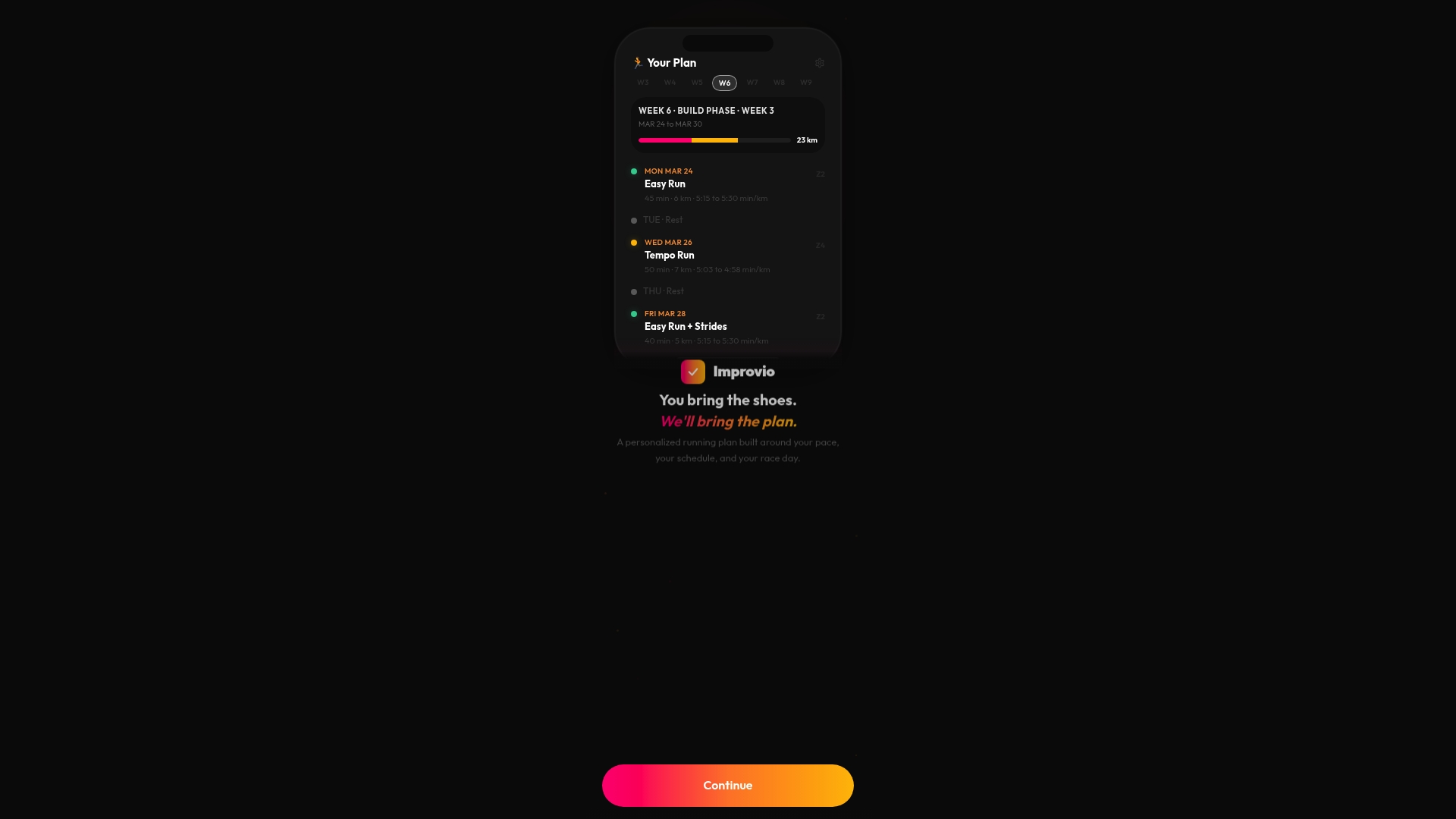
Track progress, adjust routines, and stay motivated with built-in features that remind you of upcoming workouts and celebrate completed sessions. Instead of guessing whether you're doing enough or too much, you get clear guidance tailored specifically to your situation. The app serves as a useful resource to apply the article's training ideas for better results, turning general concepts into your personal action plan.
FAQ
What is a good weekly running routine for absolute beginners?
Good routines include three days of easy runs with rest or cross-training days in between to build endurance gradually. Start with 20-30 minute sessions mixing walking and jogging, focusing on time spent moving rather than distance covered. Consistency and recovery are more important than speed or distance initially, so prioritize showing up regularly over pushing hard.
How do I know if I should increase my weekly running volume?
Increase volume only after feeling comfortable and injury-free for a few weeks at your current level. If your runs feel easy, you recover quickly, and you're eager for more challenge, add 5-10 minutes to your weekly total. Listen to your body; persistent fatigue signals need for rest or slower progression rather than more running.
What types of workouts should beginners include in their weekly routine?
Start with easy runs and walk/run intervals, gradually adding hill or short speed sessions cautiously after building a solid aerobic base. Types of running workouts for beginners should emphasize consistency and comfort before intensity. Variety helps fitness gains and keeps motivation high, but don't rush into hard workouts before your body is ready.
Why is a structured schedule important for beginner runners?
Structured running schedules improve adherence and race success for beginners by removing daily decisions about when and how much to run. Schedules build healthy habits essential for race preparation by creating predictable patterns your body and mind can adapt to. They reduce guesswork and keep motivation consistent, especially during weeks when enthusiasm naturally dips.