

Starting your first weekly running routine can feel like staring at a blank map with no directions. You want to get fit, maybe even run a 5K race, but you have no idea how many days to run, how far to go, or whether you'll hurt yourself trying. The good news? You don't need to figure it out alone. This guide walks you through everything, from lacing up your shoes for the first time to crossing the finish line of your first race, with a simple, structured approach that keeps you safe and moving forward every single week.
Table of Contents
- Why follow a structured weekly running routine?
- What you need to start: Your weekly running routine essentials
- Choose your plan: Couch to 5K and key alternatives
- How to follow your weekly running routine: Step-by-step breakdown
- Troubleshooting and staying on track: Avoiding common pitfalls
- How to measure progress and celebrate your first milestones
- Level up your routine with Improvio
- Frequently asked questions
Key Takeaways
| Point | Details |
|---|---|
| Structure prevents burnout | A set weekly routine keeps you safe, motivated, and minimizes your risk of injury as a beginner. |
| Couch to 5K is proven | Three run-walk sessions a week for nine weeks prepare most beginners to finish their first 5K race. |
| Essentials are simple | All you need are good shoes, comfortable clothes, and about 90 minutes a week to get started. |
| Progress at your pace | It’s normal to repeat weeks or slow down—consistency matters more than speed for beginners. |
| Celebrate small wins | Notice improvements each week and reward yourself as you build up to your first race. |
Why follow a structured weekly running routine?
Running without a plan feels freeing at first. Then you either push too hard and end up sore for a week, or you run randomly and wonder why you're not improving. A structured routine fixes both problems by telling you exactly what to do, when to do it, and when to rest.
The running schedule benefits for beginners go beyond just fitness. Structure removes the daily decision of "should I run today?" and replaces it with a clear answer. That alone keeps most beginners consistent far longer than motivation ever could.
Here's what unstructured running typically leads to:
- Running too far too soon, causing shin splints or knee pain
- Skipping rest days because you feel guilty, then burning out
- No sense of progress, making it easy to quit after two weeks
- Inconsistent effort, so your fitness plateaus quickly
A beginner training plan solves all of these by building your mileage gradually. The Couch to 5K model, for example, spans at least 9 weeks because avoiding too-fast progression is the single most effective way to prevent injury and burnout.
"The biggest mistake new runners make is doing too much, too soon. Your body needs time to adapt to the new stress of running. Patience in the first few weeks pays off for the rest of your training."
Pro Tip: Keep a simple weekly log, even just a note on your phone. Write down how each session felt. Watching those notes shift from "really hard" to "felt okay" is one of the most motivating things you can experience as a new runner.
What you need to start: Your weekly running routine essentials
Here's the best part about starting to run: you need almost nothing. No gym membership, no fancy equipment, no prior fitness level. Just a few basics and you're ready to go.
| Essential | Details |
|---|---|
| Running shoes | Supportive, properly fitted pair |
| Comfortable clothing | Moisture-wicking fabric preferred |
| Water bottle | Hydrate before and after each session |
| Time commitment | 3 sessions per week, about 30 minutes each |
The C25K program is suitable for all ages and fitness backgrounds, which means you don't need to be in shape to start. That's the whole point.
Beyond the basics, these optional extras can make your experience more enjoyable:
- A running app to guide your intervals and track your sessions
- A running buddy or online community for accountability
- A fitness tracker to monitor your heart rate and steps
- A foam roller for post-run muscle recovery
One important note: if you have any existing health conditions, joint problems, or you're over 60 and haven't exercised in a while, check in with your doctor before starting. It's a quick conversation that can save you a lot of trouble later.
Check out these easy running drills to add some variety to your warm-up routine once you get going.
Pro Tip: Before your first run, wear your new shoes for a full day of walking. This tells you quickly whether they fit well or need to be exchanged. Blisters on day one are completely avoidable.
Choose your plan: Couch to 5K and key alternatives
Not every beginner is the same. Some of you are starting from zero. Others can already walk briskly for 30 minutes. The plan you choose should match where you are right now, not where you hope to be.
Couch to 5K (C25K) is the gold standard for beginners. The C25K program runs 3 sessions per week over 9 weeks, using run-walk intervals that gradually shift toward continuous running. It's free, widely available, and has helped millions of people finish their first 5K.
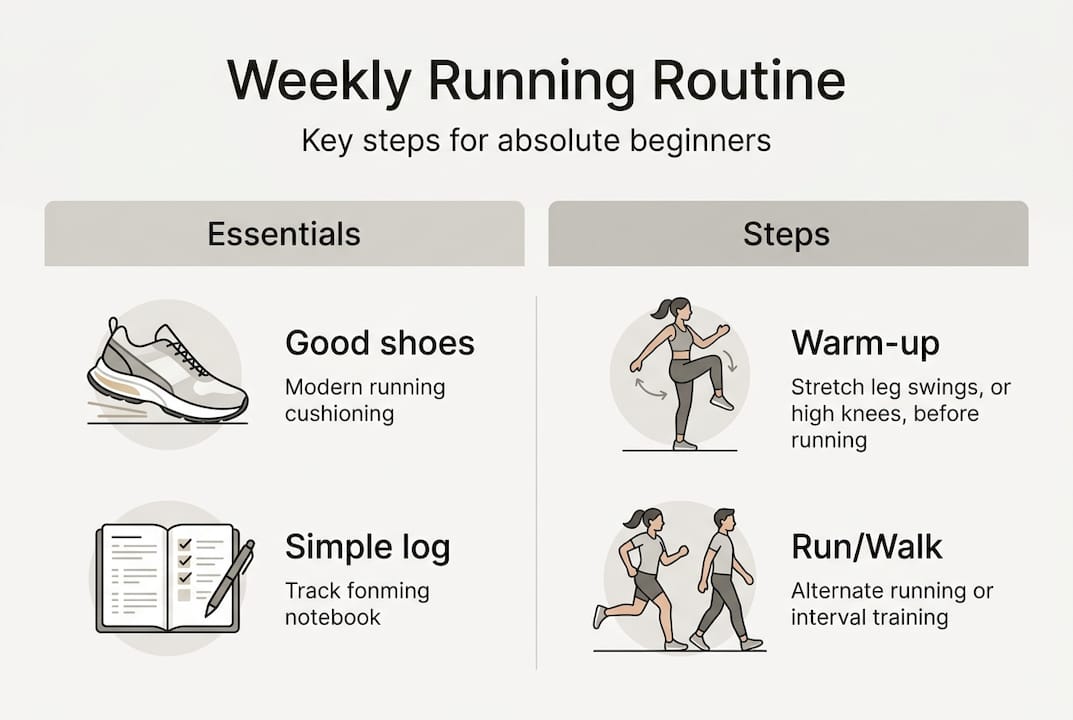
Here's how the main options compare:
| Plan | Sessions per week | Progression style | Goal |
|---|---|---|---|
| Couch to 5K | 3 | Structured intervals, 9 weeks | Run 5K continuously |
| Walk/run split | 3 | Self-paced intervals | Build base fitness |
| Time-based approach | 3-4 | Increase minutes weekly | 30 min continuous run |
Beginner 5K finish times are typically 30 to 40 minutes, so your goal isn't to run fast. It's to run the whole thing without stopping.
How to pick the right plan for you:
- Choose C25K if you want clear, day-by-day instructions with no guesswork
- Choose a walk/run split if you prefer flexibility and self-pacing
- Choose a time-based approach if you respond better to duration goals than distance
- Consider your schedule: can you commit to three specific days each week?
Browse these routine ideas for beginners and beginner weekly schedules to see what fits your lifestyle. You can also follow a step-by-step running plan if you want a more detailed breakdown.
How to follow your weekly running routine: Step-by-step breakdown
Knowing which plan to follow is one thing. Actually doing it week after week is another. Here's how a typical beginner week looks in practice.
- Session 1 (Monday or Tuesday): Start with a 5-minute brisk walk to warm up. Then alternate 1 minute of running with 90 seconds of walking, repeated 8 times. Finish with a 5-minute cool-down walk. Total time: about 30 minutes.
- Rest day (Wednesday): Full rest or gentle stretching. Your muscles are rebuilding. This day is not optional.
- Session 2 (Thursday): Repeat the same structure as Session 1. It will feel slightly easier than the first time. That's progress.
- Rest day (Friday): Another recovery day. Light walking is fine if you feel restless.
- Session 3 (Saturday or Sunday): Same structure again. By the end of Week 1, your body has started adapting.
This is exactly what C25K Week 1 looks like: three sessions of warm-up walk, then 1 minute run and 90 seconds walk repeated 8 times, then a cool-down. By Week 9, you'll be running continuously for 30 minutes.
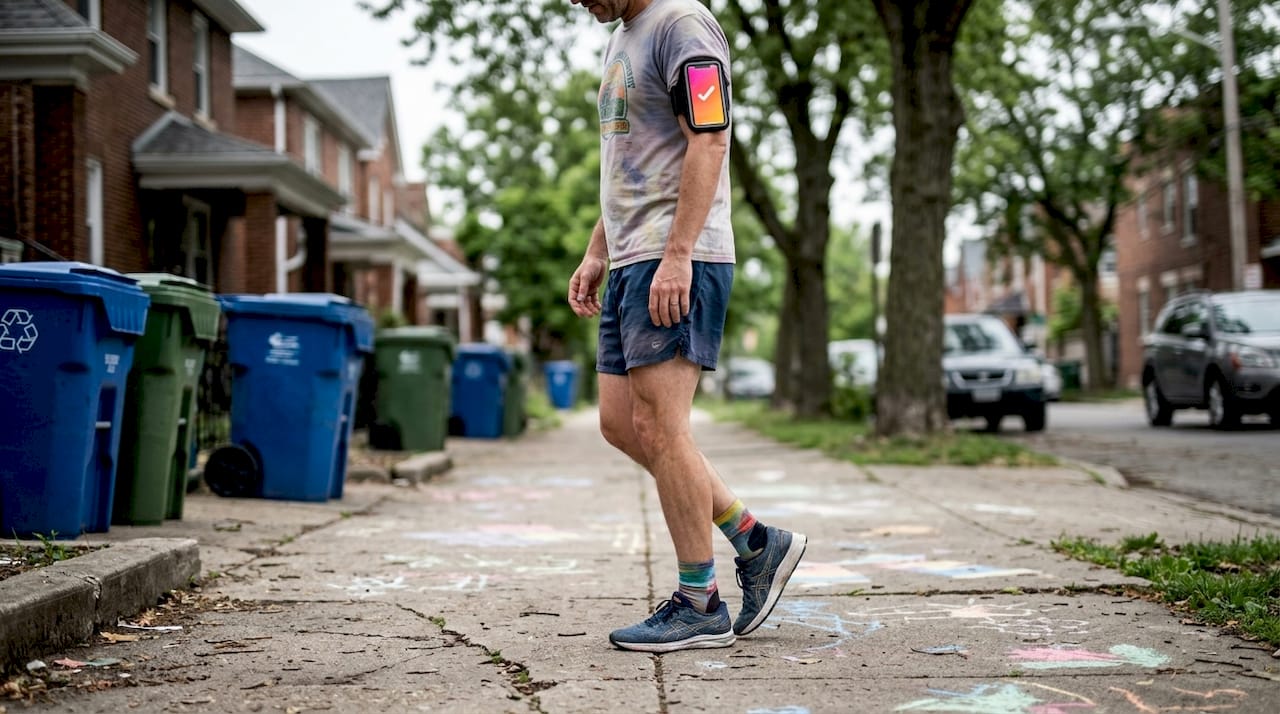
Each week, the running intervals get slightly longer and the walking intervals get shorter. You won't notice the shift week to week, but after 9 weeks, the difference is dramatic. Follow an easy running schedule to keep the progression manageable.
Here's the key insight most beginners miss: time on your feet matters far more than speed right now. Don't worry about your pace. Focus on completing each session. Explore different beginner running workout types as you build confidence.
Troubleshooting and staying on track: Avoiding common pitfalls
Even with the best plan, things go sideways. Life happens. Your knee aches. You miss three days. Knowing how to respond to these moments is what separates runners who finish their first race from those who give up in Week 4.
The most common pitfalls beginners face:
- Running too fast: If you can't hold a conversation while running, slow down. Seriously.
- Skipping rest days: Rest is when your body gets stronger. Skipping it leads to fatigue and injury.
- Obsessing over pace: Your pace right now is irrelevant. Finishing the session is the only metric that matters.
- Quitting after one missed session: Missing a day doesn't erase your progress. Just pick up where you left off.
- Ignoring discomfort: Mild muscle soreness is normal. Sharp or persistent pain is not. Stop and rest if something hurts.
Older beginners or those with slower paces can absolutely succeed with gradual progression. If you have health issues, consult your doctor before adjusting your plan. There's no shame in repeating a week if it felt too hard.
"Progress in running is rarely linear. Some weeks feel great. Others feel like you're starting over. Both are completely normal. What matters is that you keep showing up."
For a full picture of what to expect leading up to race day, check out this beginner race workflow. And if your body feels off, reviewing your beginner running form can fix a surprising number of aches before they become real problems.
How to measure progress and celebrate your first milestones
One of the hardest things about beginner running is that progress feels invisible at first. You're tired after every session, your pace hasn't changed, and race day still feels far away. But progress is happening, even when you can't see it.
Here are the best ways to track your improvement:
- Session logs: Write down the date, what you did, and how it felt. Even one sentence is enough.
- Walk interval length: Notice when your walk breaks start feeling less necessary. That's a huge sign of progress.
- Post-run recovery: Are you less winded after a session than you were two weeks ago? That's your cardiovascular system improving.
- Sleep and energy: Many beginners notice they sleep better and feel more energized within the first few weeks.
Milestones worth celebrating:
- Your first continuous mile without stopping
- Completing every session in a full week
- Running for 20 minutes straight for the first time
- Signing up for your first 5K race
Most beginners complete a 5K in 30 to 40 minutes, and steady improvement over weeks is what gets you there. Speed comes later. Right now, finishing is winning.
These confidence-building drills are a great way to add variety and feel more athletic as your fitness grows.
Pro Tip: Set a small reward for each milestone you hit. It doesn't have to be expensive. A new pair of running socks, a favorite meal, or a rest day with zero guilt. Positive reinforcement works, and you've earned it.
Level up your routine with Improvio
You now have everything you need to start and stick with a weekly running routine. But knowing the plan and having it built specifically for you are two very different things. That's where Improvio comes in.
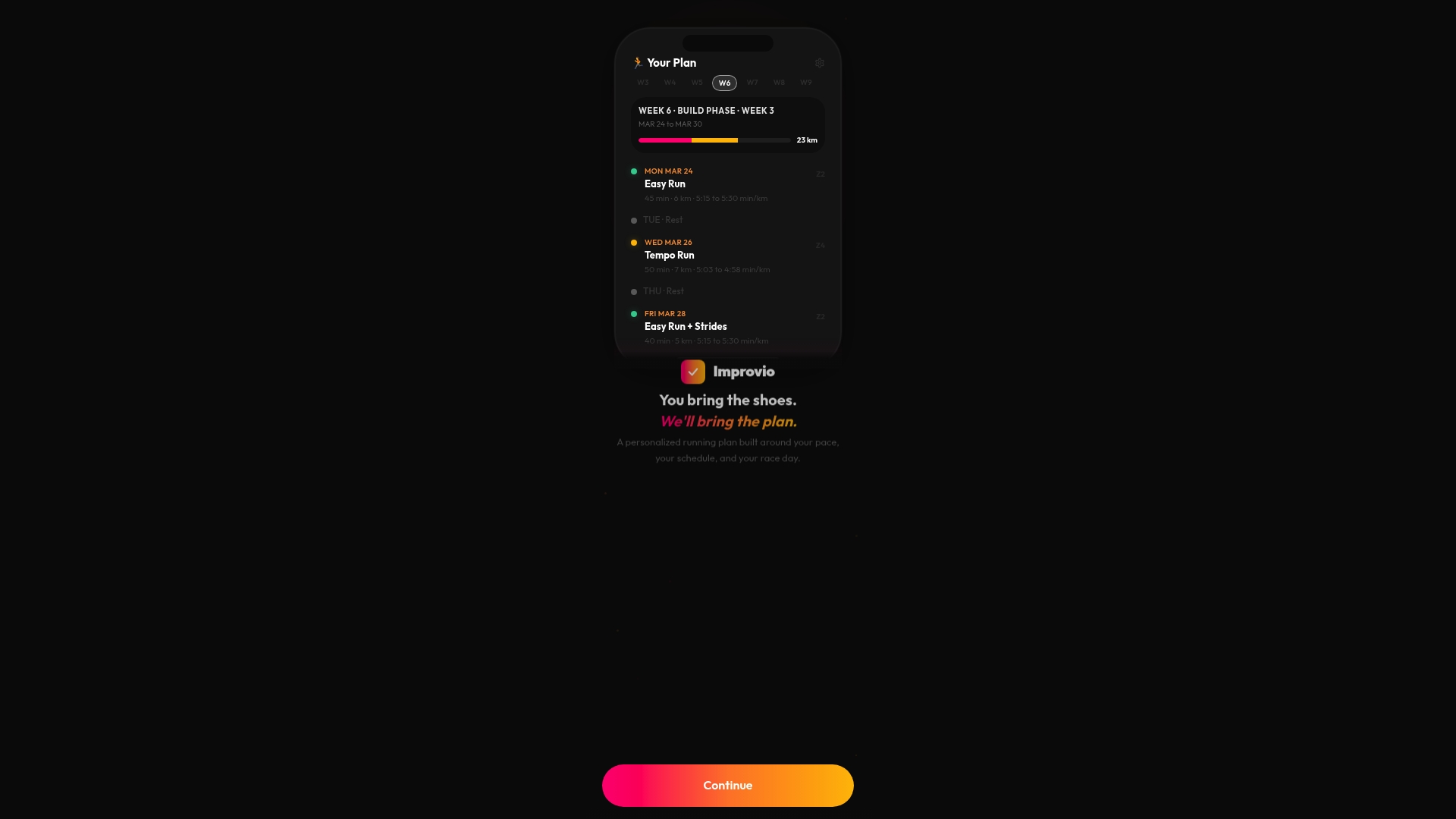
Improvio creates a personalized running training plan based on your current pace, your available schedule, and your race date. Setup takes about 60 seconds, and your first plan is free. No experience needed, no complicated settings. Just answer a few quick questions and get a weekly schedule that's built around your life, not someone else's. If you want a clear, easy-to-follow running plan for beginners that adapts as you improve, Improvio is the simplest way to get one.
Frequently asked questions
How many days per week should a beginner run?
Absolute beginners should aim for three sessions per week, which is exactly what the Couch to 5K plan recommends. This gives your body enough time to recover between runs while still building fitness consistently.
How long does it take to go from zero to running a 5K?
Most beginners can complete a 5K in about nine weeks using a structured plan. The C25K program is specifically designed to take you from no running experience to a full 5K in that timeframe.
What if I miss a running session or fall behind?
Don't skip ahead. Simply repeat the week or session you missed. Avoiding too-fast progression is more important than staying on schedule, and your body will thank you for the patience.
How fast should I run as a beginner?
Focus on effort and time on your feet, not speed. Beginner 5K pace typically falls between 9:40 and 12:50 per mile for first-timers, but finishing the race matters far more than how quickly you do it.