

TL;DR:
- Most running injuries are preventable with proper preparation and gradual training.
- Key prevention habits include proper footwear, dynamic warm-ups, strength training, and cautious mileage increases.
- Monitoring early warning signs and resting when needed helps avoid long-term setbacks and promotes consistent progress.
Starting your first race training is exciting. But nearly half of new runners get hurt before they ever cross the finish line. That's a lot of lost weeks, lost motivation, and lost momentum. The good news? Most running injuries are preventable. This guide walks you through exactly what to do before, during, and after your runs to keep your body healthy and your training on track. You'll learn which risk factors matter most, what gear and habits to prioritize, and how to spot trouble before it sidelines you for months.
Table of Contents
- Understand your injury risk as a new runner
- Prepare: Essential tools, habits, and gear for injury prevention
- Execute: Step-by-step plan to build running safely
- Verify and adapt: Early warning signs, rest, and making adjustments
- Our take: Why prevention is the new runner's best investment
- Next steps: Tools to help you prepare, prevent, and succeed
- Frequently asked questions
Key Takeaways
| Point | Details |
|---|---|
| High injury risk | Nearly half of new runners will experience an injury—prevention is crucial to avoid lost training time. |
| Gradual build is key | Following the 10% rule and using walk-run programs helps your body adapt safely. |
| Right tools help you | Proper shoes, a cadence tracker, and strength exercises reduce injury risk significantly. |
| Listen to your body | Rest and adaptation to pain signals are your best defense against persistent injuries. |
| Consistency beats intensity | Slowing down early builds habits for long-term, injury-free progress. |
Understand your injury risk as a new runner
Running is one of the best things you can do for your health. But it does come with real risks, especially when you're just starting out. Up to 70% of runners suffer at least one injury per year, and novice runners face a 48.8% yearly injury rate. That's nearly one in two beginners getting hurt.
The most common injuries include shin splints, runner's knee, stress fractures, and IT band syndrome. These aren't random. They almost always trace back to a few specific risk factors.
The biggest risk factors for new runners:
- Ramping up mileage or intensity too quickly
- Running in worn-out or poorly fitted shoes
- Skipping warm-ups and cool-downs
- Ignoring early warning signs like persistent soreness
- Having a prior injury history, which doubles your risk of a poor recovery outcome
A previous injury doesn't just hurt once. It sets you up for re-injury if you don't give your body enough time and support to fully recover. The median downtime per running injury is 8 weeks. That's two full months of missed training, right when you need consistency the most.
| Risk factor | Impact level | What to do |
|---|---|---|
| Too much too soon | High | Follow the 10% weekly increase rule |
| Poor footwear | High | Get a proper gait assessment and fitting |
| No strength training | Medium | Add 2 sessions per week |
| Prior injury | High | Ease in slowly, monitor closely |
| Skipping warm-ups | Medium | Always do a dynamic warm-up first |
The cost of injury goes beyond physical pain. Many new runners lose motivation when they're forced to stop. Some quit altogether. Understanding your risk is your first line of defense. Get a solid runner injury prevention overview and don't skip this step. You can also explore why new runner injury support matters so much in the early stages of training.
Prepare: Essential tools, habits, and gear for injury prevention
Knowing your risks is step one. Acting on them is step two. Before you run a single mile, you need the right foundation in place.
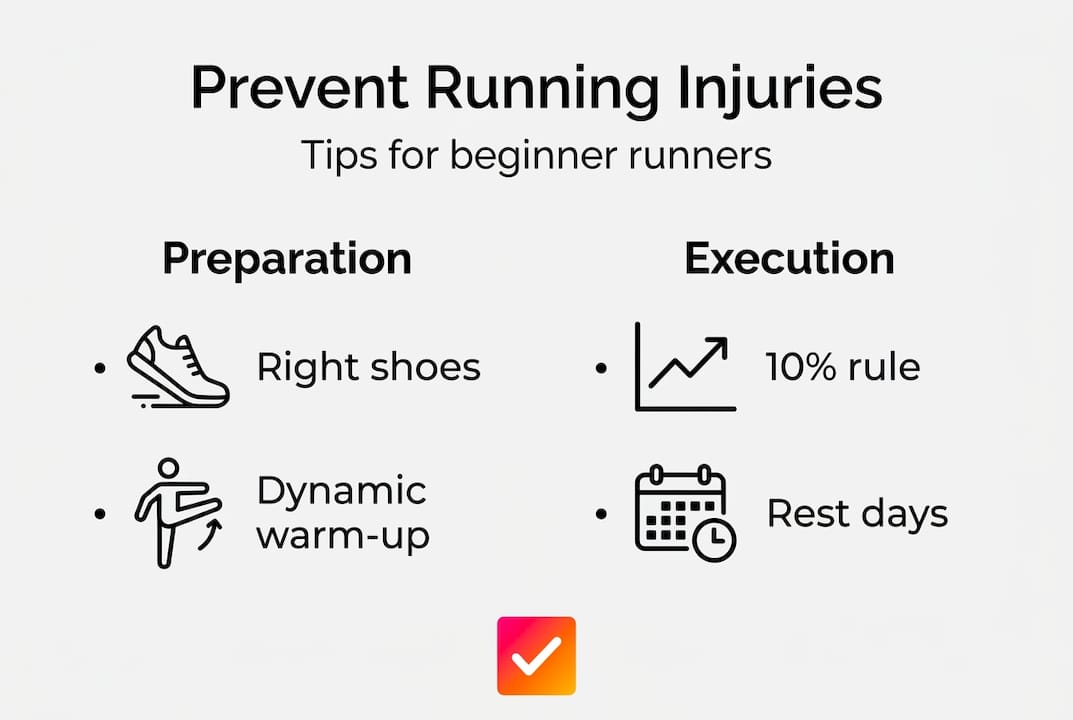
Start with your shoes. This is non-negotiable. Go to a specialty running store and ask for a gait assessment. The staff will watch how you run and recommend shoes that match your foot strike and arch. Wearing the wrong shoes is one of the fastest ways to develop a preventable injury. Replace your shoes every 300 to 500 miles.
Track your cadence. Cadence is how many steps you take per minute. Most beginner runners take too few steps and land too hard with each one. A phone app or a simple metronome can help you monitor this. You want to gradually work toward 170 to 180 steps per minute. We'll talk more about why that number matters in the next section.
Always warm up dynamically. Static stretching before a run can actually reduce performance. Instead, do leg swings, high knees, hip circles, and walking lunges for 5 to 10 minutes before each run. This prepares your muscles and joints for movement. Read more on the importance of warming up before every session.

Evidence-backed preparation includes strength and balance training at least twice a week. Exercises like single-leg squats, calf raises, and glute bridges build the muscles that protect your knees, ankles, and hips.
| Habit | Frequency | Why it matters |
|---|---|---|
| Dynamic warm-up | Every run | Reduces injury risk and improves performance |
| Strength training | 2x per week | Supports joints and stabilizes movement |
| Rest days | 3 to 4 per week | Allows tissue repair and adaptation |
| Hydration | Daily | Supports recovery and reduces cramping |
| Shoe check | Every 3 to 4 months | Worn cushioning increases impact forces |
Beginners need structured rest, running only 3 to 4 days per week to allow full recovery between sessions. Cross-training on off days with swimming or cycling keeps your fitness up without adding impact stress. Use this beginner running checklist to make sure you've covered every base before race day.
Pro Tip: Set a recurring reminder on your phone to do your strength routine. Skipping it feels easy in the moment but adds up to real injury risk over weeks of training.
Execute: Step-by-step plan to build running safely
You've got the right shoes. You've got the habits in place. Now it's time to actually run, and to do it smart.
Step 1: Start with walk-run intervals. Don't try to run a full mile on day one. Begin with a pattern like 1 minute of running followed by 2 minutes of walking. Repeat that 6 to 8 times. Walk-run programs allow your muscles, tendons, and bones to adapt to the repetitive stress of running before you push them too hard.
Step 2: Follow the 10% rule. Never increase your total weekly mileage or intensity by more than 10% from one week to the next. If you ran 10 miles this week, next week's cap is 11 miles. Simple. Consistent.
Step 3: Work on your cadence. Aiming for 170 to 180 steps per minute sounds like a lot. Start by increasing your current cadence by just 5%. Raising cadence by 5 to 10% cuts patellofemoral (kneecap) load significantly, reducing one of the most common sources of knee pain in new runners.
Step 4: Add strength work twice a week. Strength training isn't optional. Strength programs reduce injury risk by 30 to 50%. Focus on your glutes, core, and lower legs. These are the muscles doing the most work every time your foot hits the ground.
"Consistency beats intensity every time. A steady, gradual plan done week after week will always outperform a burst of hard training followed by injury and rest."
Pro Tip: Use a beginner running plan that maps out every week for you. Guessing your weekly mileage is one of the most common reasons new runners accidentally overtrain. You can also follow a structured first race workflow to stay on track all the way to race day.
Verify and adapt: Early warning signs, rest, and making adjustments
Even with the best plan, your body will send signals. Learning to read them is what separates runners who make it to race day from those who don't.
Warning signs you must never ignore:
- Sharp or localized pain (not general muscle fatigue)
- A new limp or change in your running form
- Pain that worsens as you run, rather than warming up and going away
- Swelling or tenderness that doesn't resolve after 24 hours
- Bone pain or recurring aches, especially if you have a history of past injuries
Never run through pain. This is the most important rule in injury prevention. Pain is your body communicating a problem. Pushing through it doesn't make you tougher. It makes the injury worse and the recovery longer.
"Rest is not the enemy of training. Rest is part of training. Every adaptation your body makes happens during recovery, not during the run itself."
When something feels off, take two to three days off from running. Switch to swimming or cycling to maintain your aerobic fitness without loading the injured area. If the pain persists for more than a few days, see a sports medicine professional or physical therapist early. Early intervention consistently leads to faster return to running.
Pro Tip: Keep a simple training log. Note how each run felt, any soreness, and your sleep quality. Patterns in the data help you spot problems before they become injuries. Using a structured approach through following a training plan gives you that built-in structure. A solid fitness plan for new runners will also include built-in rest days so you don't have to guess.
Our take: Why prevention is the new runner's best investment
Here's something most new runners don't want to hear: slowing down now is what gets you to the finish line faster.
Every week you spend building gradually, warming up properly, and doing your strength work feels like a small thing. But those small things compound. They build a body that can handle the stress of race training week after week. And that consistency is the biggest race-day advantage you can have.
Most new runners overestimate what they can do in a month and underestimate what they can sustain in a year. We've seen this pattern over and over. The runners who skip rest days and jump ahead in mileage are often the same ones who end up sidelined for 8 weeks, right before their target race.
Prevention habits may feel slow. They may feel boring. But they're what keep you in the game. Injury-free running is consistent running, and consistent running is what actually builds fitness. The long-term benefits of running only show up when you stick with it long enough to earn them. Build the habit of prevention now, and your future self will thank you.
Next steps: Tools to help you prepare, prevent, and succeed
Injury prevention works best when it's built into your plan from day one, not added as an afterthought.
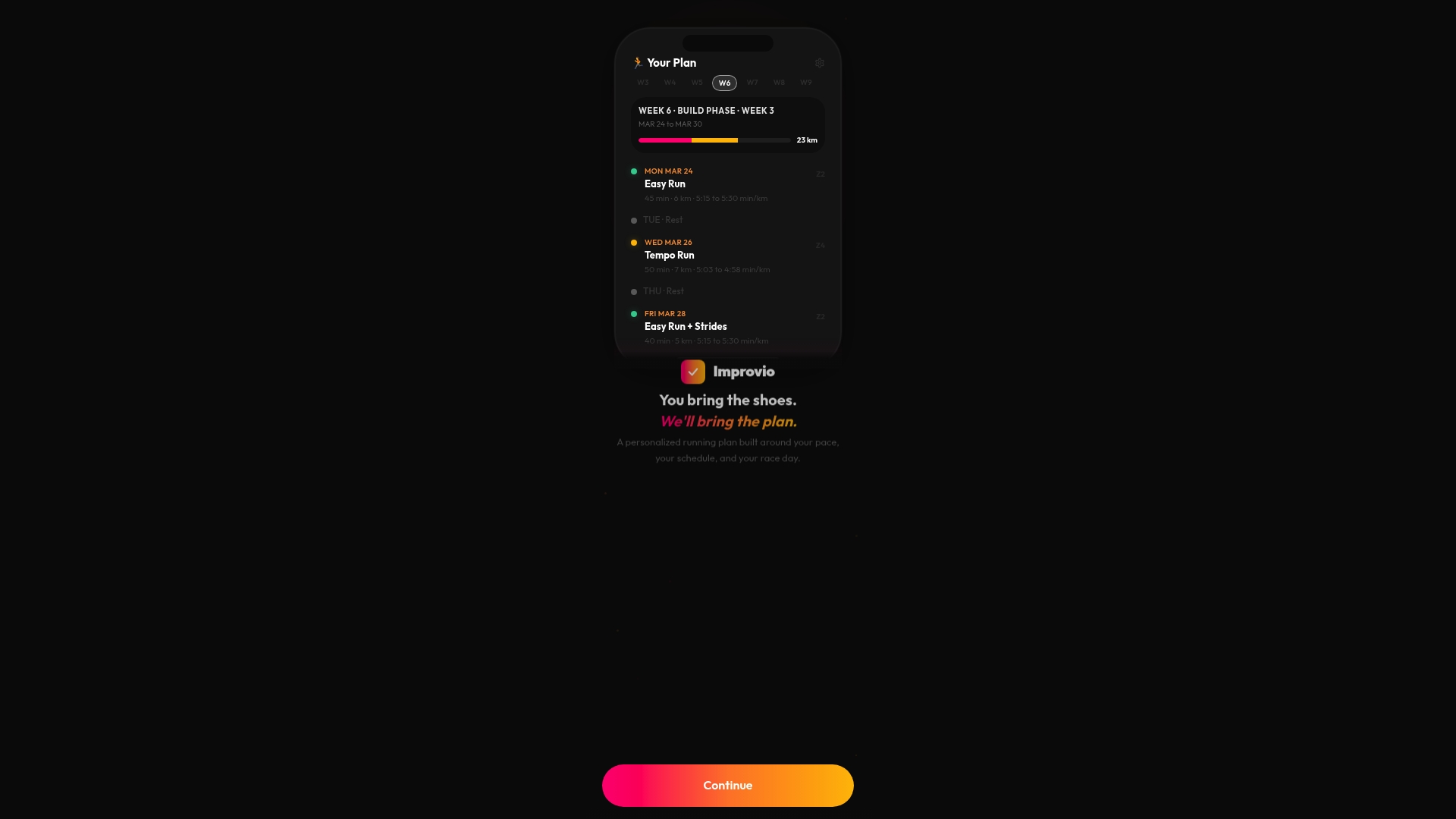
That's exactly what Improvio is designed for. The app creates a personalized running plan based on your current pace, your schedule, and your race date. Every week is mapped out for you, including rest days, cross-training, and gradual mileage increases that follow safe progression guidelines. You don't need experience to use it. Setup takes about 60 seconds, and your first plan is free. It's a practical way to make injury prevention automatic, so you spend less time worrying about doing it right and more time actually running.
Frequently asked questions
What is the 10% rule and why is it important for new runners?
The 10% rule means you should never increase your weekly running mileage or intensity by more than 10%, giving your body enough time to adapt and avoid overuse injuries.
Is cadence really that important for injury prevention?
Yes. Raising your cadence by 5 to 10%, aiming for 170 to 180 steps per minute, reduces the load on your knees and lowers your overall injury risk significantly.
How many rest days should a beginner runner take each week?
Beginners should run 3 to 4 days per week and use the remaining days for rest or active recovery like walking, swimming, or easy cycling.
What should I do if I start to feel pain while running?
Stop and rest immediately. Do not push through pain. Cross-train on low-impact activities and see a sports medicine professional if the pain does not improve within a few days.