

TL;DR:
- Nearly half of beginner runners get injured in the first year, but most injuries are preventable.
- Proper gear, gradual mileage increases, warm-up routines, and listening to your body are key to injury prevention.
- Personalized training plans and early professional consultation help new runners stay healthy and reach their goals.
Starting your first race journey is exciting. But here's something most beginner guides skip: nearly half of new runners get hurt within their first year of training. That's a sobering number. The good news? Most running injuries are preventable. They don't happen because running is dangerous. They happen because new runners often don't know what to watch for. This guide gives you simple, research-backed steps to protect your body, build your confidence, and cross that finish line feeling strong. You bring the motivation. We'll help you stay healthy enough to use it.
Table of Contents
- Understanding injury risk: Why new runners get hurt
- Gear up right: Shoes and equipment that keep you safe
- Warm-up, stretch, and recover: Your injury prevention routine
- Build your base: Training smart to avoid overuse injuries
- Our take: Personalization beats perfection every time
- Take the next step: Smarter, safer running with Improvio
- Frequently asked questions
Key Takeaways
| Point | Details |
|---|---|
| Injury is common but preventable | Up to half of new runners get injured, but most injuries can be prevented with the right strategy. |
| Proper shoes make a difference | Getting shoes fitted for your feet and gait at a specialty store helps prevent the most common running injuries. |
| Routine matters | Consistent warm-ups, stretching, and recovery routines cut injury risk dramatically. |
| Smart training is key | Gradual mileage increases and listening to your body keep you healthy and progressing toward your race. |
| Personalize your approach | No single plan fits everyone—learn to adjust and seek help early if injury signs appear. |
Understanding injury risk: Why new runners get hurt
Running feels natural. You lace up, head out, and go. So why do so many beginners end up sidelined? The answer isn't bad luck. It's biology, habit, and a few common myths.
Your body needs time to adapt. Bones, tendons, and muscles all respond to new stress at different rates. When you ramp up too fast, the weakest link breaks down first. That's usually where injury starts.
Research on novice runners shows an injury incidence rate of nearly 48.8% in the first year. These aren't freak accidents. They're predictable patterns.
Most common injuries for new runners
| Injury | Where it hurts | Typical cause |
|---|---|---|
| Shin splints | Front of lower leg | Too much too soon |
| Runner's knee | Around the kneecap | Weak hips, overstriding |
| Achilles tendinitis | Back of ankle | Tight calves, sudden mileage jumps |
| Plantar fasciitis | Bottom of foot | Poor shoes, hard surfaces |
| Stress fractures | Foot or shin | Overtraining without recovery |
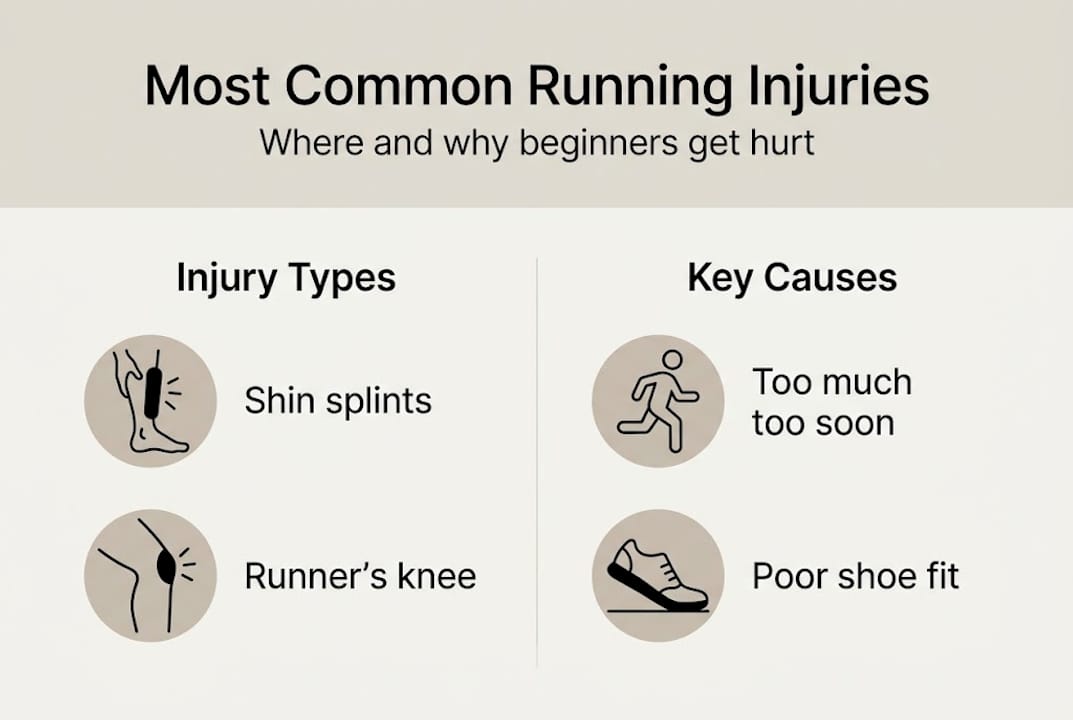
Learning about common injuries in new runners early gives you a head start on avoiding them.
Key risk factors include:
- Prior injuries: A previous injury significantly raises your risk of a new one
- Rapid mileage increases: Adding too many miles too fast overwhelms your body
- Poor biomechanics: Overstriding or heel striking puts extra stress on joints
- Skipping rest days: Recovery is where adaptation actually happens
- Wrong footwear: Shoes that don't match your gait create compensations
"The injury incidence rate among novice runners approaches 48.8%, with shin splints, runner's knee, and Achilles tendinitis being the most frequently reported conditions."
One big myth? That pain is just part of the process. It's not. Discomfort from effort is normal. Sharp or persistent pain is a signal, not a badge of honor. Understanding the value of a training plan is one of the fastest ways to reduce your injury risk before you even start.
Gear up right: Shoes and equipment that keep you safe
Your shoes are your most important piece of equipment. Not your watch. Not your playlist. Your shoes. And yet most new runners grab whatever's on sale or looks good. That's a fast track to plantar fasciitis or shin splints.
Properly fitted running shoes based on gait analysis at a specialty store can prevent the most common running injuries before they start. A trained staff member will watch you walk or jog and recommend shoes based on your foot shape, arch, and how your foot lands.
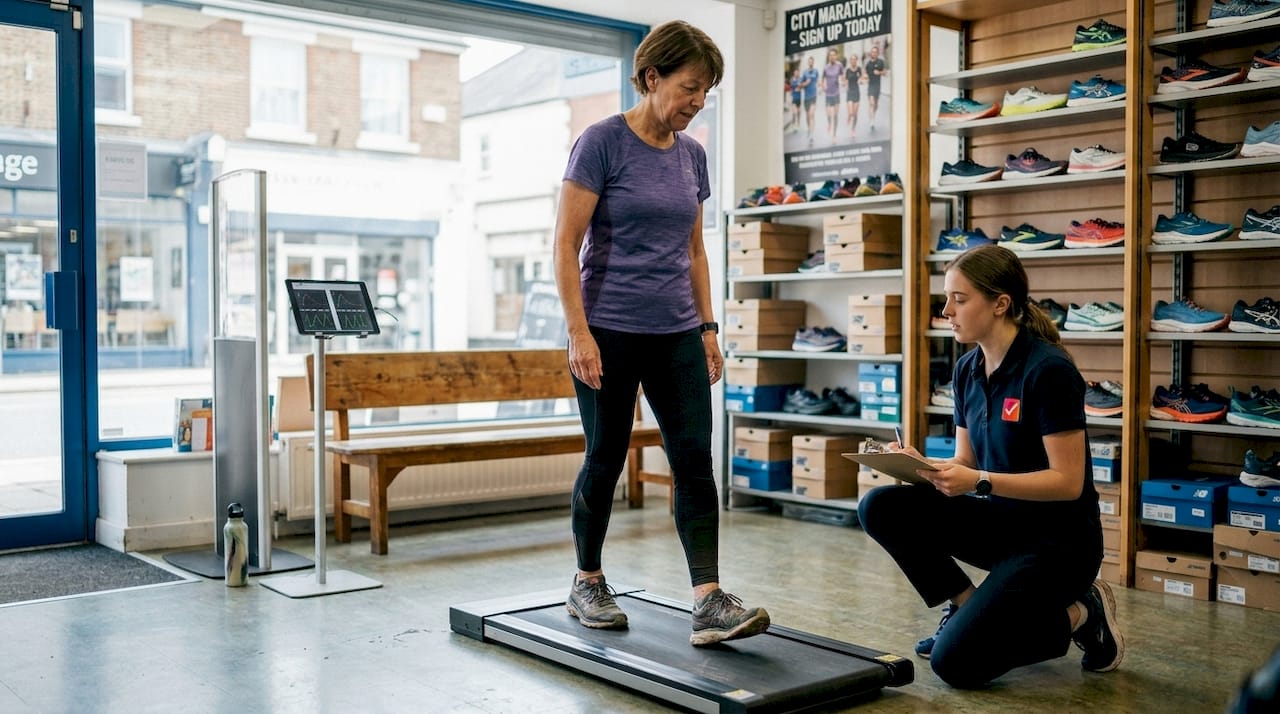
Generic vs. specialty-fitted shoes
| Factor | Generic shoes | Specialty-fitted shoes |
|---|---|---|
| Injury risk | Higher | Significantly lower |
| Comfort during runs | Variable | Tailored to your gait |
| Cost | Lower upfront | Moderate, worth the investment |
| Longevity | Often shorter | Built for running-specific wear |
Beyond shoes, a few other gear choices matter:
- Moisture-wicking socks: Prevent blisters that throw off your stride
- Reflective clothing: Essential if you run early morning or at night
- Supportive insoles: Can help if you have flat feet or high arches
- Comfortable shorts or tights: Reduces chafing on longer runs
Pro Tip: Replace your running shoes every 300 to 500 miles. The cushioning breaks down before the outsole wears out visibly. If your legs feel more tired than usual after a run, your shoes might be the reason.
Your beginner running workflow should start with a shoe fitting, not a training schedule. Get the foundation right first. You can also check out this beginner running checklist to make sure you have everything you need before your first training week.
Good gear won't make you fast. But the wrong gear will make you hurt. That's a trade-off you don't want to make.
Warm-up, stretch, and recover: Your injury prevention routine
Most new runners skip the warm-up. They feel fine, so they just start running. Then three weeks in, something tightens up and doesn't go away. A consistent pre-run and post-run routine is one of the simplest things you can do to stay healthy.
A 5-minute warm-up with a brisk walk or easy jog followed by dynamic stretches prepares your muscles and joints for the work ahead. After your run, static stretching helps your body recover and stay flexible.
Your step-by-step routine
- 5-minute brisk walk or easy jog to raise your heart rate and warm up your muscles
- Dynamic stretches for 5 minutes: leg swings, hip circles, high knees, butt kicks
- Your run at your planned pace and distance
- 5-minute easy walk to bring your heart rate down gradually
- Static stretches held for 20 to 30 seconds each: calves, hamstrings, hip flexors, quads
Focus especially on these muscle groups:
- Calves: Tight calves pull on the Achilles and plantar fascia
- Hamstrings: Stiffness here affects your stride and stresses the knee
- Hip flexors: Weak or tight hips cause overcompensation all the way down the chain
Pro Tip: Add foam rolling after your static stretches. Roll slowly over tight spots for 30 to 60 seconds. It increases blood flow and breaks up tension in the muscle tissue. Your legs will thank you the next morning.
On busy days when you're short on time, do the minimum: a 3-minute walk, two dynamic stretches, and a 2-minute cool-down walk. Skipping it entirely is where common running mistakes start to pile up.
For more guidance, explore these simple stretching routines built specifically for beginners, or read about the benefits of warming up before each session.
Build your base: Training smart to avoid overuse injuries
Overuse injuries are the number one problem for new runners. They don't happen in a single session. They build up slowly over weeks of doing too much, too soon, without enough recovery.
The fix is structure. Not perfection, just a plan that respects how your body adapts.
Start with walk-run intervals and build your base gradually over 20 to 24 weeks, prioritizing strength and consistency over pure mileage. This approach gives your tendons and bones time to catch up with your cardiovascular fitness.
Signs of overuse to watch for
- Pain that gets worse as you run, not better
- Swelling or tenderness that lingers after 48 hours
- Fatigue that doesn't improve with a rest day
- A "niggle" (a small, nagging pain) that keeps returning in the same spot
- Changing your stride to avoid discomfort
Strength training is your secret weapon. Cross-training and rest days reduce your injury risk significantly, especially in the weeks leading up to your race. Exercises like squats, lunges, and single-leg deadlifts build the hip and glute strength that stabilizes your entire stride.
Sample 8-week mileage progression
- Week 1 to 2: Walk 20 min, run 10 min, alternating days
- Week 3 to 4: Run 15 to 20 min with walk breaks as needed
- Week 5 to 6: Run 25 to 30 min, add one strength session per week
- Week 7 to 8: Run 30 to 35 min, reduce walk breaks, rest day between runs
Never increase your weekly mileage by more than 10% from one week to the next. This is the most widely supported rule in multifactorial injury research for runners at all levels.
"A prior injury more than doubles the risk of a poor outcome. Seek physical therapy early for gait analysis and a personalized plan."
Understanding the need for structure in training is what separates runners who make it to race day from those who don't. Track your beginner milestones as you go, and use this guide on how to start running if you're still figuring out your first steps.
Our take: Personalization beats perfection every time
Here's something we've seen over and over with new runners: they find a solid plan, follow it rigidly, and then get hurt anyway. Not because the plan was bad. Because they ignored what their body was telling them.
No guide, including this one, knows your body better than you do. The best injury prevention strategy is one you actually adjust when life happens. Missed a run? Don't double up tomorrow. Feeling unusual tightness? Swap a run for a walk. Feeling great? Still don't add extra miles mid-week.
Learning to tell the difference between normal soreness and a real warning sign takes time. Soreness fades within 48 hours and feels dull and general. Injury pain is sharp, localized, and tends to worsen with activity.
Previous injury doubles your risk of a poor outcome. If something doesn't feel right, don't wait. See a physical therapist early. They can spot gait issues before they become injuries.
Flexibility in your approach isn't weakness. It's smart training. Use your race preparation guide as a compass, not a contract.
Take the next step: Smarter, safer running with Improvio
You now have the knowledge to train smart, gear up right, and protect your body every step of the way. The next move is putting it all into a plan that fits your schedule, your pace, and your race date.

Improvio's injury prevention tools give you a personalized training plan built around your goals, not a generic template. Setup takes about 60 seconds. Your first plan is free. Whether you're targeting a 5K or your first half marathon, Improvio builds a week-by-week schedule that keeps your mileage smart and your body healthy. You bring the drive. We'll build the plan that gets you to the start line, and across the finish.
Frequently asked questions
What's the single most important thing new runners can do to avoid injuries?
Gradually build your mileage and listen to your body's signals, like pain or swelling, to catch problems before they become injuries. Rest days aren't optional, they're part of the training.
How do I know if I need new running shoes?
Replace your running shoes every 300 to 500 miles, or when you notice less support and more discomfort on your runs. Specialty-fitted shoes matched to your gait are the most effective first step in injury prevention.
Should I run through minor pain or soreness?
Mild muscle soreness is normal, especially in the first few weeks. But if you feel sharp or persistent localized pain, stop running and consult a professional before it becomes a bigger problem.
Do warm-ups and stretching really help prevent injuries?
Yes. A 5-minute warm-up with dynamic stretches before your run and static stretching after significantly reduces your injury risk and helps your body recover faster between sessions.