

TL;DR:
- Nearly half of new runners experience injuries, leading to many quitting the sport.
- Proper support, structured plans, and body awareness can prevent injuries and boost success.
- Guidance from experts or tailored plans improves motivation, consistency, and safe progression for beginners.
Nearly half of all new runners stop running because of injury. That's not a small number. Up to 53.1% of novice runners experience a running-related injury each year, and almost 48% quit the sport entirely as a result. If you're just starting out, that statistic might feel alarming. But here's the good news: most of those injuries are preventable. The right support, a structured plan, and a little body awareness can make the difference between crossing your first finish line and sitting on the sideline. This guide breaks down exactly why beginners are vulnerable, what the research says, and how to set yourself up for success.
Table of Contents
- Understanding the unique challenges new runners face
- The impact of injuries and how support can prevent them
- Comparing self-coaching, community, and expert guidance
- How structured support boosts motivation and fitness
- Our fresh take: Why most new runners miss out without structured support
- Get started with personalized support
- Frequently asked questions
Key Takeaways
| Point | Details |
|---|---|
| High injury risks | Over 48% of new runners stop due to injury, underscoring the need for proactive support. |
| Structured plans matter | Guided coaching and training plans help prevent injuries and boost motivation. |
| Self-coaching pitfalls | Unless highly knowledgeable, beginners are at greater risk without personalized guidance. |
| Community and expert help | Professional or peer support increases fitness and race completion rates for new runners. |
| Personalized solutions | Tailored support empowers absolute beginners to safely prepare for races and improve their health. |
Understanding the unique challenges new runners face
Starting running feels simple. Lace up, head out the door, and go. But your body tells a very different story. New runners face a set of physical challenges that most people don't see coming, and those challenges are a big reason why injury rates are so high.
Research shows that novice runners show greater biomechanical variability, larger joint ranges of motion, weaker proximal muscle control, and lower dynamic stability compared to experienced runners. In plain terms: your muscles, joints, and coordination haven't adapted to running yet. Your body is learning a brand-new movement pattern, and that takes time.
Here's what that looks like in practice:
- Weaker hip and glute muscles mean your knees absorb more impact than they should
- Poor running coordination leads to uneven stride patterns and unnecessary stress on tendons
- Limited body awareness makes it hard to notice when something feels off before it becomes a real problem
- Overconfidence in early weeks pushes beginners to do too much, too soon
These aren't character flaws. They're normal beginner challenges. But they do explain why jumping into running without a plan is risky.
"Novice runners show greater spatiotemporal variability and weaker proximal muscle control than experienced runners, making them significantly more vulnerable to injury during the early stages of training."
The most common runner injury prevention mistakes beginners make come down to three things: ramping up mileage too fast, skipping rest days, and ignoring early warning signs. Without guidance, it's easy to fall into all three traps at once.
The good news is that understanding these risks is the first step. Once you know why your body is vulnerable, you can train smarter. That means building a base slowly, prioritizing recovery, and getting support that's matched to where you actually are, not where you think you should be.
Running is a skill. Like any skill, it takes structured practice to build correctly. The beginners who stay healthy and keep improving are almost always the ones who treat their training that way from day one.
The impact of injuries and how support can prevent them
Injuries don't just hurt physically. They derail your entire training timeline and chip away at your motivation. When you're forced to stop running for weeks, it's hard to stay committed to a goal that suddenly feels out of reach.

The numbers back this up. A study of 7,660 novice runners found that nearly 48.8% sustained a running-related injury during follow-up, with a median recovery time of 8 weeks. That's two full months of lost training. For a beginner preparing for their first race, that's often the difference between starting and finishing.
Here's a quick look at how injuries affect new runners at different stages:
| Stage | Common issue | Impact |
|---|---|---|
| Weeks 1 to 4 | Shin splints, sore knees | Missed runs, early discouragement |
| Weeks 5 to 8 | IT band tightness, tendon pain | Extended rest, motivation drop |
| Weeks 9 to 12 | Stress fractures, plantar issues | Race withdrawal, long recovery |
The pattern is clear. The longer you train without proper structure, the more serious the potential setback. But structured support changes this picture completely.
Here's how a well-designed plan reduces your injury risk:
- Gradual mileage increases give your muscles and tendons time to adapt
- Built-in rest days prevent overuse injuries before they start
- Pace guidance keeps your Easy Runs actually easy, protecting your joints
- Cross-training options maintain fitness while reducing repetitive stress
- Progress tracking helps you spot warning signs early
Pro Tip: Add one cross-training day per week, like swimming or cycling, to build fitness without the impact load of running. This alone can cut your injury risk significantly in the first 12 weeks.
Learning about running structure for beginners and following structured plans for new runners gives you a real safety net. You're not guessing at how much to do. You're following a path that's been designed with your body's limits in mind.
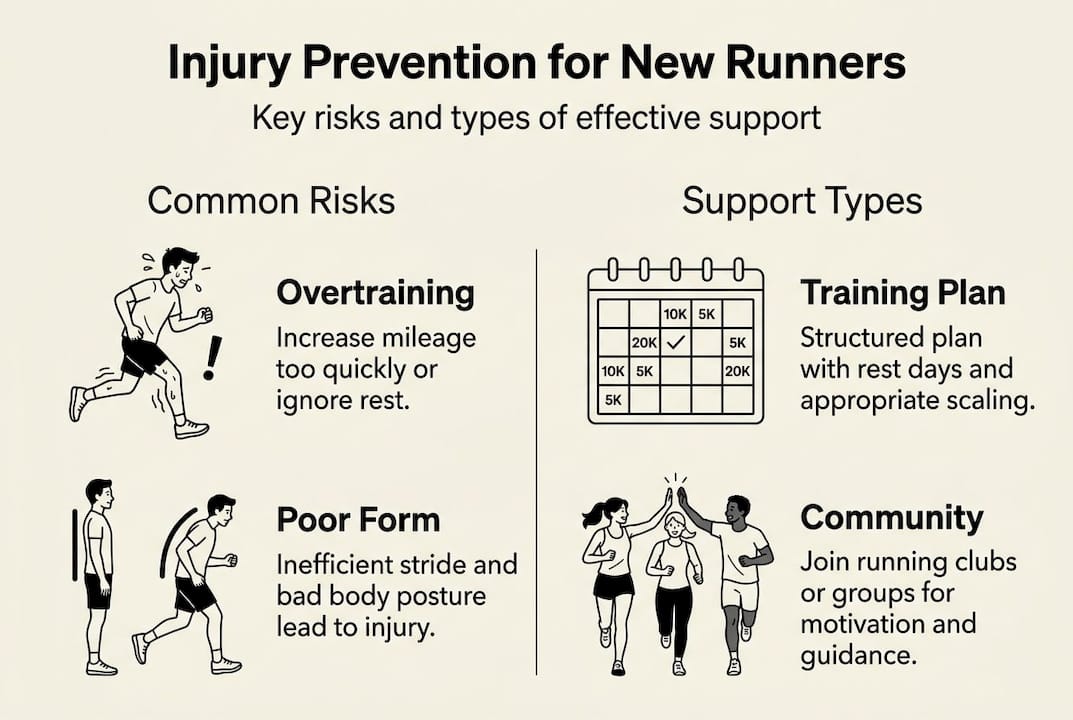
Comparing self-coaching, community, and expert guidance
Not every beginner needs the same level of support. But most underestimate how much they actually need. Let's break down the three main options and who each one works best for.
| Support type | Best for | Limitations |
|---|---|---|
| Self-coaching | Runners with strong body awareness and training knowledge | High injury risk without experience |
| Community or peer support | Social motivation, accountability | No personalized plan or injury guidance |
| Expert or structured guidance | Most beginners, especially those with race goals | Requires commitment to follow the plan |
Self-coaching can work, but only under specific conditions. Self-coaching is viable only with strong body awareness, solid training knowledge, and consistent discipline. Most brand-new runners don't have all three yet. That's not a criticism. It's just reality.
Community support, like running clubs or online groups, is great for motivation. You show up because others are counting on you. But a running group can't tell you whether your knee pain is serious or adjust your weekly mileage based on how your body is responding.
Expert guidance, whether through a coach or a structured running schedule, gives you both accountability and personalization. It's the option that addresses the actual root causes of beginner struggles.
Runners who benefit most from expert support include:
- Beginners with a specific race goal (5K, 10K, half marathon)
- Anyone with a previous injury or chronic pain history
- Runners with low body awareness who struggle to gauge effort levels
- People with limited time who need an efficient, focused plan
Pro Tip: Before deciding on a support level, ask yourself honestly: Do I know the difference between normal soreness and injury pain? Can I judge my own pace accurately? If the answer to either is no, structured guidance is the smarter choice.
Following a training plan for beginners isn't about admitting weakness. It's about giving yourself the best possible start.
How structured support boosts motivation and fitness
Here's something that surprises a lot of new runners: the biggest benefit of structured support isn't injury prevention. It's consistency. And consistency is what actually builds fitness.
When you have a clear plan, you don't waste mental energy deciding what to do each day. You just follow the schedule. That removes one of the biggest barriers beginners face, which is decision fatigue. Should I run today? How far? How fast? A good plan answers all of those questions for you.
Structured support boosts success and reduces dropout for runners focused on race preparation and fitness improvement. The contrast is stark. Beginners without structure often start strong, hit a wall around week three or four, and quietly stop. Beginners with a plan keep going because the plan keeps them moving forward.
Here's what structured support does for your fitness over time:
- Builds aerobic base gradually, so your cardiovascular system adapts without burnout
- Introduces Tempo Runs and Strides at the right time, not too early, not too late
- Balances hard days with easy days, which is where real fitness gains happen
- Tracks your progress, so you can see how far you've come even on tough days
Pro Tip: Write down your race goal and your "why" before you start training. On the days when motivation dips, that reminder is more powerful than any training tip.
Learning how training plans transform beginners goes beyond just following a schedule. It's about building a habit, a rhythm, and a real sense of progress. An easy running schedule for beginners gives you a starting point that feels manageable and builds from there.
The runners who reach their first finish line aren't always the most athletic. They're the ones who stayed consistent. Structured support makes consistency possible.
Our fresh take: Why most new runners miss out without structured support
We've seen hundreds of beginners start their running journey. The ones who struggle most aren't the ones who are out of shape or slow. They're the ones who try to figure it all out on their own.
Self-coaching feels empowering at first. But without a framework, most beginners end up repeating the same mistakes week after week. They run too hard on easy days. They skip rest. They ignore small pains until those pains become injuries.
The uncomfortable truth is that running looks simple but it isn't. Your body needs a specific kind of stress, followed by a specific kind of recovery, in a specific order. Getting that sequence right is what separates runners who improve from runners who burn out.
Understanding the importance of running plans and following beginner schedule guidance isn't just helpful. It's the foundation. Support doesn't slow you down. It's what actually gets you to the start line healthy and ready to run.
Get started with personalized support
You've learned why new runners get injured, how structured support prevents it, and what kind of guidance actually makes a difference. Now it's time to put that knowledge to work.
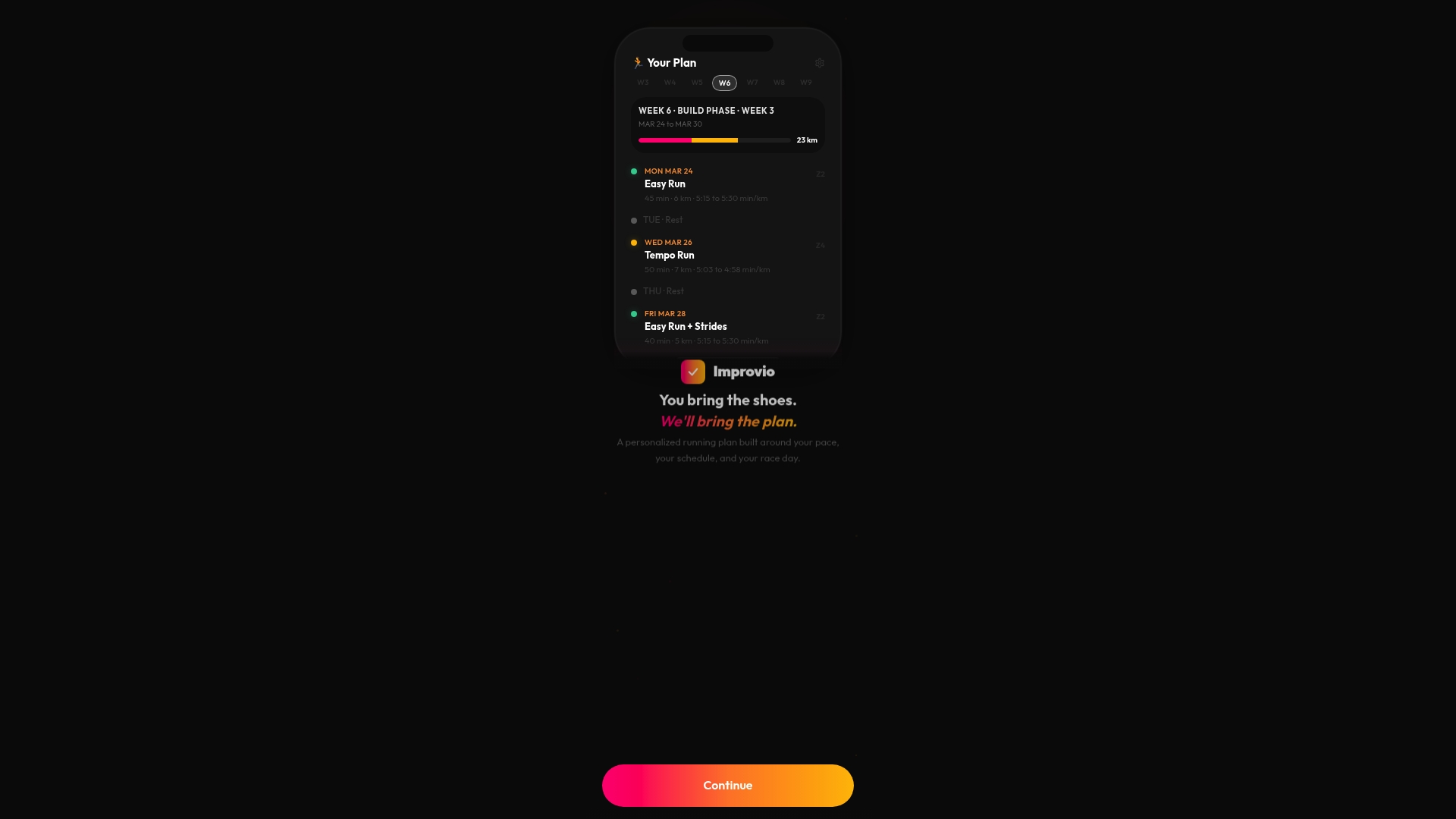
At Improvio, we build personalized running support plans designed specifically for absolute beginners. Your plan is based on your current pace, your schedule, and your race date. Setup takes about 60 seconds, and your first plan is free. No experience needed. No complicated setup. Just a clear, structured path from where you are now to your first finish line. You bring the shoes. We'll bring the plan.
Frequently asked questions
What types of support are most effective for new runners?
Structured plans and coaching are proven to reduce injury risk and improve outcomes, especially for beginners targeting a race or specific fitness goals.
How common are injuries among new runners?
Nearly 48.8% of novice runners sustain a running-related injury, and up to 48% stop running entirely as a result.
Are self-coached runners at greater risk than those with support?
Yes. Self-coaching is only viable when a beginner has strong body awareness, solid training knowledge, and consistent discipline, which most new runners haven't yet developed.
How can new runners stay motivated?
Structured support reduces dropout by removing guesswork, building consistent habits, and giving runners clear progress milestones to work toward.