

TL;DR:
- Running offers significant health benefits, including increased lifespan and mental well-being, regardless of fitness level.
- Beginners should start with run-walk intervals, gradually progressing over weeks to build confidence and prevent injury.
- Personalizing a running plan and focusing on consistency over perfection help sustain motivation and long-term progress.
Running is not just for elite athletes or people who've been training for years. If you've been putting it off because you think you're not fit enough, here's the truth: you don't need to be. Research shows that running delivers a 27% lower all-cause mortality risk and real mental health improvements for people at every fitness level. Whether you're eyeing your first 5K or simply want to feel better in your body, this guide walks you through everything you need to start safely, build confidence, and actually enjoy the process.
Table of Contents
- The real benefits of running for fitness
- How to start running as a total beginner
- Mastering form, mechanics, and injury prevention
- Personalizing your plan: Keys to confidence and consistency
- The uncomfortable truth most beginners miss about running
- Take the next step with Improvio: Your running journey starts here
- Frequently asked questions
Key Takeaways
| Point | Details |
|---|---|
| Running boosts longevity | Even 5-10 minutes a day can extend life expectancy and reduce disease risk. |
| Start slow and personalize | Gradually build endurance with run-walk intervals adapted to your fitness level. |
| Proper form prevents injuries | Focusing on safe running mechanics and incremental progress lowers your risk of injury. |
| Consistency matters most | Showing up regularly, not perfection, is what leads to lasting fitness and confidence. |
The real benefits of running for fitness
Running does more for your body than almost any other activity you can start today. And the best part? You don't need to run far or fast to see results.
The physical benefits are well-documented. Running lowers your risk of death from all causes, cardiovascular disease, and cancer. Your heart gets stronger. Your lungs work more efficiently. Your blood pressure drops. These aren't small gains.
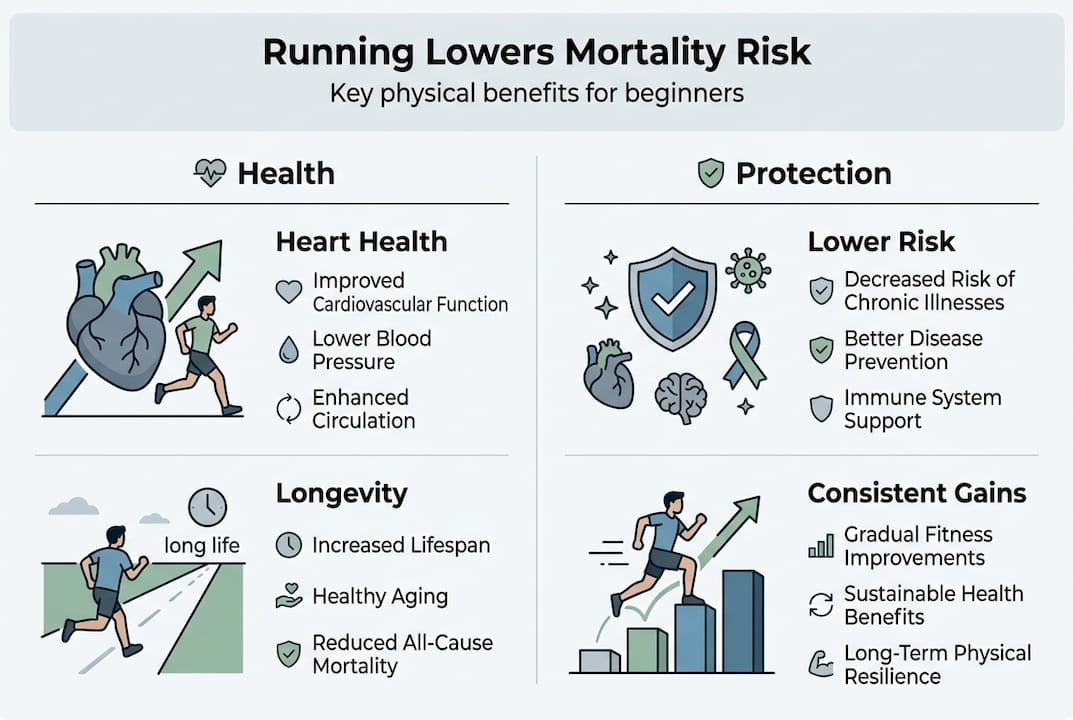
Here's a number that might surprise you: runners live 3 years longer on average, and even running just 5 to 10 minutes per day at a slow pace lowers mortality risk significantly. You don't need to log marathon miles to get there.
The mental health benefits are just as powerful:
- Reduced anxiety and depression through endorphin release after every run
- Better sleep quality within the first few weeks of consistent training
- Improved focus and mood that carries into your workday
- A stronger sense of accomplishment after completing each session
"Running changed how I feel about myself. I started with 30-second jogs. Now I'm training for my second 5K." This kind of transformation is common. And it starts with a single step.
Running is often called "medicine in motion" by fitness researchers, and for good reason. The reasons to run go beyond weight loss. You're building a healthier heart, a calmer mind, and a body that moves better every single week.
The key insight for beginners is this: low-volume running still yields big rewards. You don't need to suffer through long runs to benefit. Three short sessions per week, done consistently, will change your fitness more than one intense session ever could.
Using structured running schedules from the start helps you build this consistency without guessing. And learning about different running workout types early on means you can vary your sessions to stay engaged and avoid burnout.
Now that you understand why running is worth considering, let's look at how absolute beginners can safely start a running routine.
How to start running as a total beginner
Understanding the benefits is motivating, but getting started is often the toughest step. Here's exactly how to make it manageable.
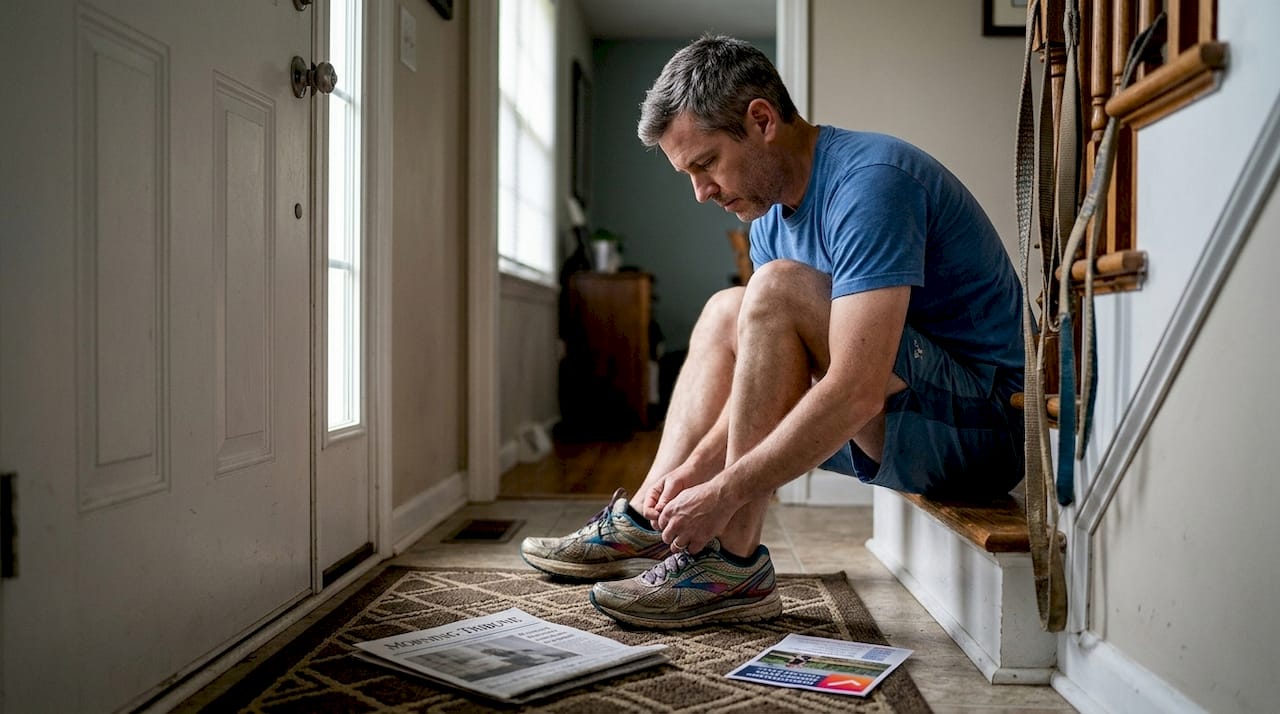
The single best method for new runners is the run-walk interval approach. Instead of trying to run continuously from day one, you alternate short bursts of running with walking recovery. Beginners should start with something like 30 seconds of running followed by 30 seconds of walking, three times per week. Over several weeks, you gradually shift the ratio toward more running and less walking.
Here's a simple progression to follow:
- Weeks 1 to 3: 30 seconds run, 30 seconds walk. Repeat for 20 minutes.
- Weeks 4 to 5: 1 minute run, 1 minute walk. Repeat for 20 to 25 minutes.
- Weeks 6 to 7: 3 minutes run, 1 minute walk. Repeat for 25 minutes.
- Weeks 8 to 10: 5 minutes run, 1 minute walk. Aim for 30 minutes total.
- Weeks 11 to 12: Continuous running for 30 minutes at an easy pace.
This approach mirrors the Couch to 5K plan, which builds beginners to a continuous 5K in 8 to 12 weeks. It's proven, practical, and works for almost every fitness level.
| Method | Best for | Recovery | Injury risk |
|---|---|---|---|
| Run-walk intervals | Total beginners | High | Low |
| Continuous running | Some base fitness | Moderate | Moderate |
| Daily easy runs | Consistent runners | Lower | Higher |
Pro Tip: Don't measure success by speed. Measure it by showing up. If you complete your three sessions this week, that's a win. Your pace will improve naturally over time.
A solid beginner running plan takes your current fitness, schedule, and race date into account. Before your first event, use a racing checklist to make sure you're ready on race day.
Mastering form, mechanics, and injury prevention
With a basic plan in place, mastering form is crucial for avoiding injuries and feeling confident during every run.
Good form doesn't mean running like a professional. It means running in a way that protects your body. Key running mechanics include:
- Upright posture with a slight forward lean from the ankles
- Relaxed shoulders dropped away from your ears
- Arms swinging forward and back, not across your body
- Mid-foot strike landing under your hips, not in front
- Cadence of 170 to 180 steps per minute for efficient movement
- Short, quick steps rather than long, reaching strides
These mechanics work together. When your foot lands under your hips instead of out in front, you absorb impact more efficiently. When your arms move in a straight line, your whole body stays balanced.
Pro Tip: Shorter steps protect your knees. If you feel joint pain, try taking quicker, smaller steps. This simple adjustment reduces impact force with every stride.
Injury prevention is mostly about smart habits. Following the 10% rule means never increasing your weekly mileage by more than 10% from one week to the next. Pair that with a dynamic warmup before each run and a gentle cooldown after.
| Common mistake | Quick fix |
|---|---|
| Overstriding | Shorten your step, increase cadence |
| Heavy heel strike | Focus on landing under your hips |
| Tight shoulders | Shake out your arms every few minutes |
| Skipping warmup | 5-minute brisk walk before every run |
| Ramping up too fast | Follow the 10% weekly mileage rule |
Strength training twice per week also makes a big difference. Exercises like squats, lunges, and single-leg deadlifts build the hip and glute strength that keeps your knees and ankles stable. Learn more about beginner running form and try some easy running drills to reinforce good habits early.
Personalizing your plan: Keys to confidence and consistency
One size does not fit all. Personalizing your approach makes the journey enjoyable and sustainable.
Every runner starts from a different place. Your age, current fitness, schedule, and goals all shape what a good plan looks like for you. Novice runners show greater movement variability and higher injury risk than experienced runners, which is exactly why a personalized plan matters more than a generic one.
Here's how to personalize your approach:
- Assess your starting point. Can you walk briskly for 30 minutes without stopping? That's your baseline.
- Set a realistic first goal. A 5K in 10 to 12 weeks is achievable for almost anyone starting from scratch.
- Schedule your runs like appointments. Three days per week works well. Pick days that fit your life.
- Track how you feel, not just your pace. Energy levels, sleep, and mood are all data points.
- Adjust when needed. If a session feels too hard, slow down or shorten it. That's not failure. That's smart training.
Common setbacks and how to handle them:
- Missed sessions: Don't try to make up for lost time. Just resume your plan.
- Shin pain: Rest for two days, then return with shorter runs.
- Motivation dips: Revisit your race goal. Sign up officially if you haven't.
- Feeling too slow: Remember that consistency beats speed every time for beginners.
"There is no ideal form. Focus on soft, quiet steps and listen to your body."
This is especially true for older beginners. Fitness benefits persist even at slower velocities. Your pace doesn't determine your progress. Your consistency does.
Understanding the importance of running plans helps you stay on track. Celebrate your beginner milestones along the way, and follow a clear beginner running workflow as you approach your first race.
The uncomfortable truth most beginners miss about running
Here's what experienced runners wish someone had told them at the start: progress matters far more than perfection.
Most beginners obsess over pace, form, and gear before they've even completed their first month. That energy is better spent just showing up. Consistent physical activity reduces mortality risk even when it falls below official guidelines. Showing up imperfectly still beats not showing up at all.
The myth of "ideal form" trips up a lot of new runners. There is no single correct way to run. What matters is that your body moves efficiently and without pain. Quiet, soft footfalls and relaxed breathing are better signals than any technical checklist.
Self-compassion is not a soft concept. It's a training strategy. Runners who forgive missed sessions and bad runs come back more often. And coming back more often is what builds lasting fitness.
The real reason running plans work is not because they're perfectly designed. It's because they give you something to return to, even after a rough week.
Take the next step with Improvio: Your running journey starts here
You now have the knowledge. You understand the benefits, the mechanics, and the mindset. The next step is putting it all into motion with a plan built specifically for you.
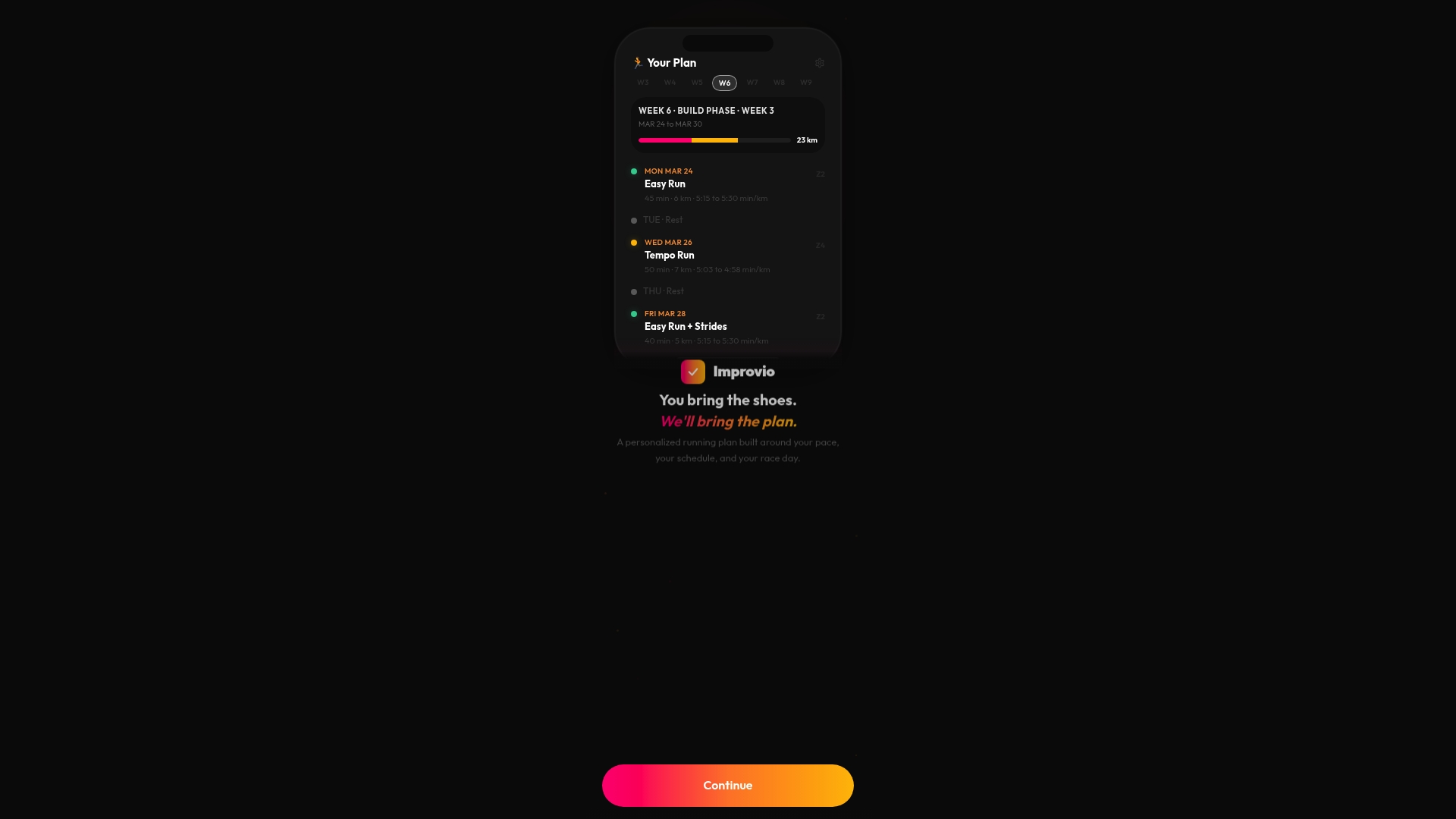
Improvio creates personalized running training plans for absolute beginners in about 60 seconds. You enter your current pace, your schedule, and your race date. We build a plan around your life, not someone else's. No experience needed. No guesswork. Just clear, structured sessions that move you forward every week. Start your free plan today and show up to your first race ready and confident. You bring the shoes. We'll bring the plan. 🏃
Frequently asked questions
How much running should a beginner do each week?
Beginners should start with run-walk intervals three times per week and maintain that frequency for at least three weeks before increasing time or distance. Consistency at a low volume builds the foundation you need.
What is the safest way to avoid injuries when starting running?
Follow the 10% mileage rule, wear proper shoes, do a dynamic warmup before each run, and add strength training twice per week. These four habits prevent the majority of beginner running injuries.
Is it better to run every day or stick to a schedule?
Daily running is safe if your volume stays low and you listen to your body, but most beginners benefit more from a structured schedule that builds in recovery days. Three days per week is the sweet spot.
How can running plans be personalized for older beginners?
Adapt your volume and pace to your current fitness level and progress gradually. Fitness benefits persist even at slower speeds, so there is no age at which starting to run stops being worthwhile.
Recommended
- Step-by-step running plan for beginners: your 2026 guide
- How to start running: simple steps for your first race
- Running checklist for beginners: Your essential race prep guide 2026
- Master your beginner running workflow for your first race
- How to Enhance Endurance for Optimal Performance – MyGymSupplements
- Outdoor Exercise in Toronto | Tips for Summer Exercise | Striation 6