

Starting running sounds simple. Lace up, head outside, done. But most beginners hit a wall fast, whether that's a sore knee after week two, a motivation crash, or a training plan that feels impossible to follow. The good news? With the right approach, you can go from zero to race-ready without burning out or breaking down. This guide gives you a clear, step-by-step roadmap built specifically for absolute beginners. No experience needed. Just a goal and the willingness to start.
Table of Contents
- Understanding the challenges beginners face
- How to prepare: essential gear, mindset, and assessment
- Step-by-step beginner running plan
- Troubleshooting common issues: injuries, plateau, and motivation
- What to expect: milestones and your first race
- Discover your personalized running plan with Improvio
- Frequently asked questions
Key Takeaways
| Point | Details |
|---|---|
| Start slow and steady | Gradual progression helps avoid injuries and boosts motivation when you begin running. |
| Choose the right gear | Proper shoes and comfortable clothing directly impact your running experience and injury prevention. |
| Follow a structured plan | Beginner running schedules keep you accountable and help you reach race milestones safely. |
| Monitor your progress | Tracking your achievements keeps motivation high and reveals when to adjust your running routine. |
| Celebrate every milestone | Small wins along the way build confidence and prepare you for your first running event. |
Understanding the challenges beginners face
Here's a number that might surprise you. The NHS Couch to 5K app has been downloaded over 7 million times, yet dropout rates in some studies exceed 60%, with only about 35% of users still running at the six-month mark. The two biggest reasons? Injury and loss of motivation.
This isn't a willpower problem. It's a planning problem. Most beginners start too fast, skip rest days, and follow generic plans that don't fit their schedule or fitness level. The result is pain, frustration, and a pair of running shoes collecting dust.
Here are the most common barriers new runners face:
- Going too hard, too soon. Running feels manageable at first, so beginners push harder than their body is ready for.
- No clear structure. Without a plan, it's easy to either overtrain or lose consistency.
- Ignoring rest. Rest days aren't optional. They're when your body actually gets stronger.
- Comparing yourself to others. Your pace is your pace. Progress looks different for everyone.
"The biggest mistake beginners make is treating running like a sprint instead of a long game. Slow down, build up, and you'll go much further."
Learning about staying motivated as a beginner early on can make a real difference in how long you stick with it. Now that you're aware of the main obstacles, let's set you up for success before you take your first step.
How to prepare: essential gear, mindset, and assessment
Before you run a single step, preparation matters. The right gear and the right mindset reduce injury risk and make running more enjoyable from day one.
Choosing your shoes
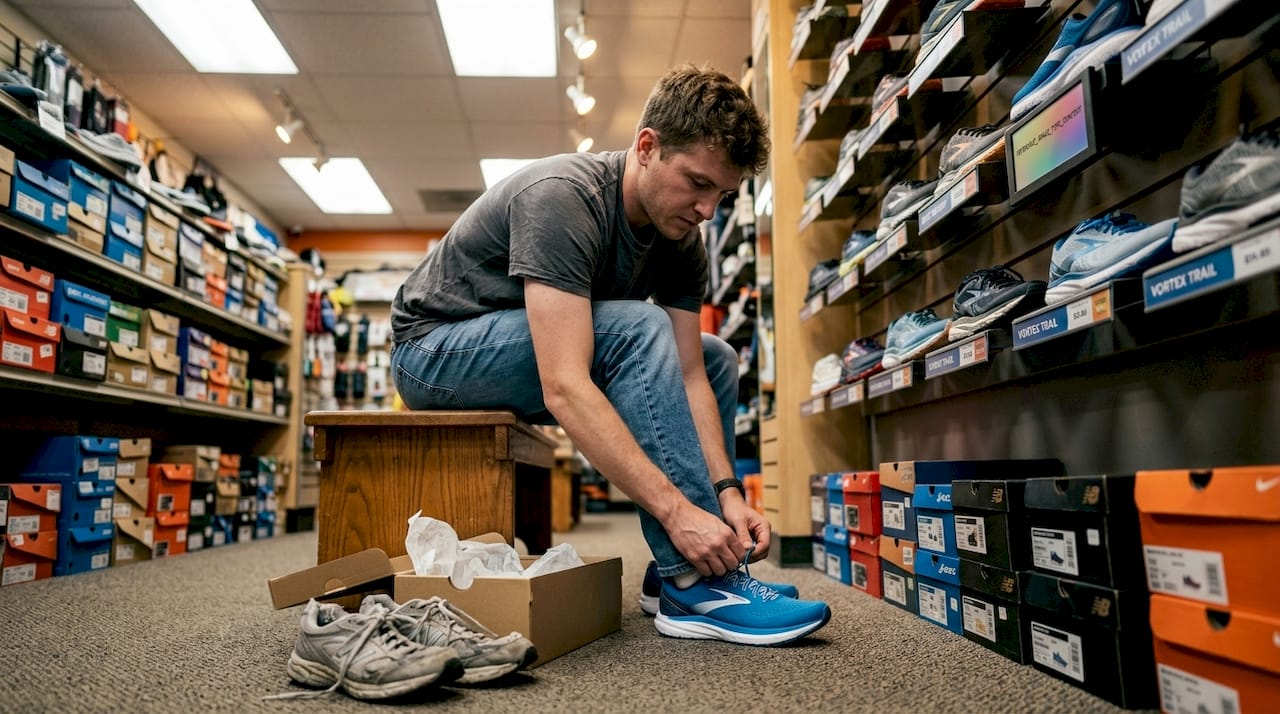
Your running shoes are your most important investment. Proper shoes and gradual progression are two of the most effective ways to lower injury risk for beginners. Visit a specialty running store and ask for a gait analysis. It takes about 10 minutes and helps match you to a shoe that supports your foot type.
Assessing your fitness level
Be honest with yourself. Can you walk briskly for 30 minutes without stopping? That's a solid starting point. If not, start with daily walks before adding any running. A step-by-step beginner running guide can help you figure out exactly where to begin.
Here's a quick comparison to help you choose the right starting point:
| Starting fitness level | Recommended first step |
|---|---|
| Sedentary (little to no activity) | Daily 20-30 min walks for 1-2 weeks |
| Lightly active (occasional walks) | Walk/run intervals, 20 min, 3x per week |
| Moderately active (regular movement) | Run/walk intervals, 25-30 min, 3x per week |
Mindset check
Set one simple goal for your first week. Not a distance goal. A time goal. Something like: "I will get outside three times this week for 20 minutes each." That's it. Small wins build real confidence. Understanding the importance of training plans from the start helps you stay on track without guessing.
Pro Tip: Don't buy the most expensive gear right away. A good pair of shoes and comfortable, moisture-wicking clothes are all you need to start.
Once you've prepared mentally and physically, it's time to move into your first running routine.
Step-by-step beginner running plan
This plan is built around one core idea: walk before you run, and run before you race. Gradual progression is the single most effective strategy for beginner runners to stay injury-free and keep moving forward.
Here's how to structure your first four weeks:
- Week 1: Walk 4 minutes, run 1 minute. Repeat 4 times. Do this 3 days with rest days in between.
- Week 2: Walk 3 minutes, run 2 minutes. Repeat 4 times. Same 3-day schedule.
- Week 3: Walk 2 minutes, run 3 minutes. Repeat 4 times. Add a fourth day if you feel good.
- Week 4: Walk 1 minute, run 4 minutes. Repeat 4 times. You're now running more than walking.
Here's a simple weekly target table to track your progress:
| Week | Total workout time | Running time per session | Sessions per week |
|---|---|---|---|
| 1 | 20 min | 5 min | 3 |
| 2 | 20 min | 8 min | 3 |
| 3 | 22 min | 12 min | 3-4 |
| 4 | 25 min | 16 min | 4 |
A solid beginner running schedule takes the guesswork out of each week. If you want a longer view, a 10-week beginner running plan maps out the full journey to your first race. You can also explore the value of structured running plans to understand why structure beats winging it every time.
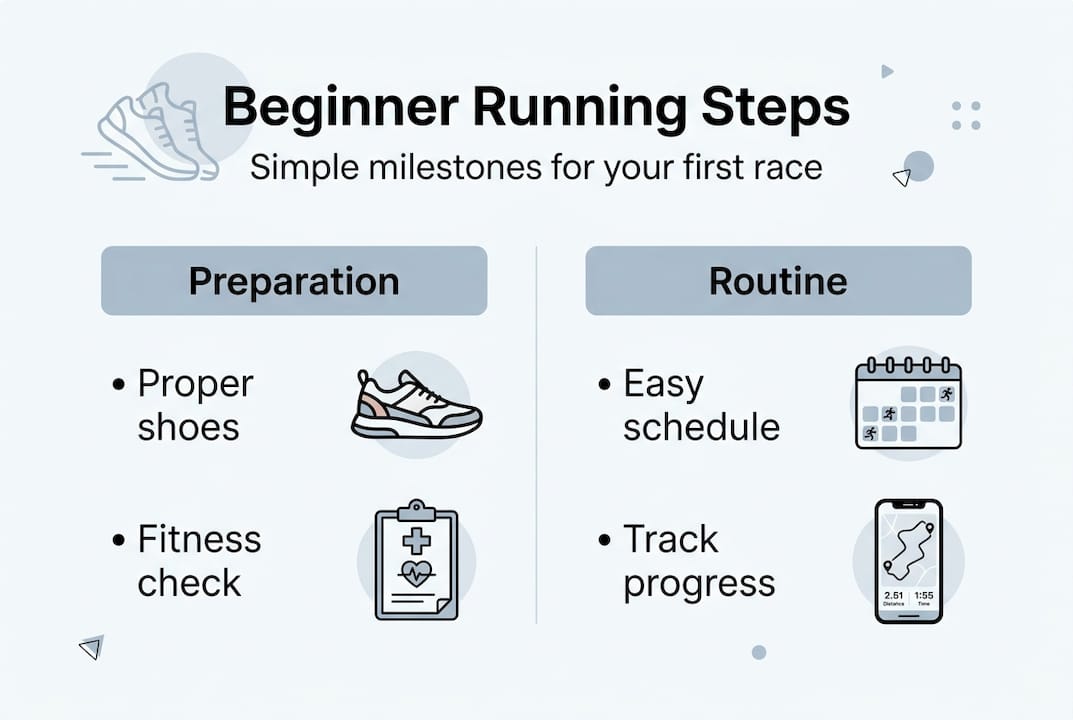
Pro Tip: Track time, not distance. Focusing on how long you run, rather than how far, keeps the pressure low and the progress steady.
With your plan in place, it's important to know how to troubleshoot problems and keep progressing.
Troubleshooting common issues: injuries, plateau, and motivation
Even with a solid plan, bumps happen. Most dropouts from running programs are linked to injury or motivation loss. Knowing what to watch for keeps you moving.
Common injuries and how to prevent them
- Shin splints: Sharp pain along the front of your lower leg. Caused by doing too much too soon. Slow down and add rest days.
- Runner's knee: Aching around the kneecap. Often from weak hips or poor form. Strengthen your glutes and shorten your stride.
- Blisters: Friction from poor-fitting shoes or cotton socks. Switch to moisture-wicking running socks.
Signs of overtraining
If you feel exhausted before a run, not just tired, that's a signal. Other signs include persistent soreness, poor sleep, and dreading your workouts. When this happens, take two full rest days and reduce your next session by 30%.
"Progress isn't always linear. Some weeks you'll feel unstoppable. Others, a 10-minute run will feel hard. Both are normal."
Staying motivated
Motivation fades. That's normal. What keeps you going is habit and small wins. Try these:
- Sign up for a local 5K race. Having a date on the calendar is powerful.
- Run with a friend or join a beginner running group.
- Track your runs in a simple notebook or app.
- Celebrate every milestone, no matter how small.
Tracking your beginner runner milestones gives you proof of progress when motivation dips. Mixing up your sessions with different beginner workout types also keeps things fresh and prevents boredom.
Pro Tip: Put your running shoes next to your bed the night before a planned run. That small visual cue makes it much harder to skip.
Once you've overcome typical stumbling blocks, you're ready to look forward to what you'll achieve.
What to expect: milestones and your first race
Progress as a beginner runner is real and it comes faster than most people expect. Motivation and gradual steps are what carry beginners from their first shaky run to crossing a finish line.
Here are the milestones you can look forward to:
- Week 1-2: Completing your first walk/run session without stopping. Bigger than it sounds.
- Week 3-4: Running for 5 full minutes without walking. A real confidence boost.
- Week 6-7: Finishing a 20-minute run. You're officially a runner.
- Week 8-10: Completing your first 5K, whether in a race or on your own route.
Here's how self-paced running compares to following a structured plan:
| Approach | Consistency | Injury risk | Race readiness |
|---|---|---|---|
| Self-paced, no plan | Low to moderate | Higher | Unpredictable |
| Structured beginner plan | High | Lower | Clear timeline |
The difference is significant. The benefits of structured running plans go beyond just finishing a race. They build habits, reduce guesswork, and keep you accountable week after week.
When you hit each milestone, take a moment to recognize it. Tell someone. Write it down. These moments matter and they fuel the next goal.
Discover your personalized running plan with Improvio
You now have the roadmap. The next step is making it personal. Every runner starts at a different fitness level, has a different schedule, and is aiming for a different race date. A generic plan only gets you so far.
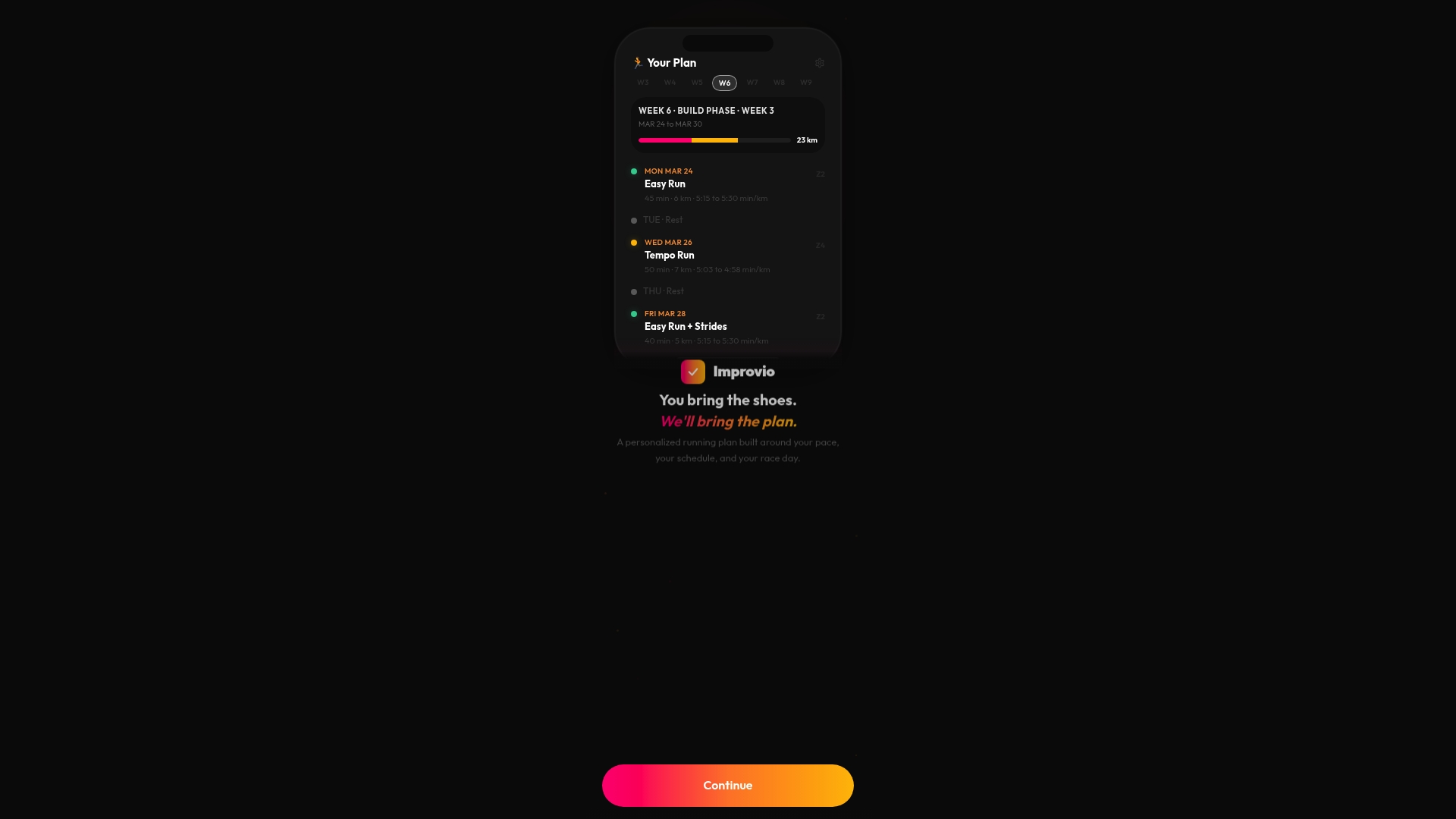
Improvio builds personalized running plans specifically for absolute beginners. In about 60 seconds, you enter your current pace, your available days, and your race date. Improvio does the rest, creating a week-by-week schedule tailored to you. No guesswork. No overwhelm. Just a clear plan that fits your life. You bring the shoes. We'll bring the plan. Get started free today and take your first step toward race day with confidence.
Frequently asked questions
What is the best way to avoid injury when starting running?
Gradually increase your running time each week, invest in proper footwear, and take rest days seriously. Listening to your body early prevents small aches from becoming real injuries.
How long does it take for a beginner to run a 5K?
Most beginners reach 5K fitness in 8-10 weeks with a consistent, gradual training plan. The key word is consistent, three to four sessions per week makes a real difference.
How can I stay motivated to keep running?
Set a race date, track your progress, and celebrate small wins along the way. Motivation in running programs is strongest when you have a clear goal and visible proof that you're improving.
What should I do if I feel pain while running?
Stop your session, rest, and monitor the pain over the next 24-48 hours. If it persists, see a healthcare professional. Injury-related dropout is common, so addressing pain early is always the right call.
Can I run if I'm overweight or out of shape?
Absolutely. Start with walk/run intervals, use supportive shoes, and build up slowly. Gradual progression helps all beginners regardless of starting fitness, and your body will adapt faster than you expect.