

Starting to run feels overwhelming when you're staring at your sneakers, wondering if you'll make it around the block. You're not alone. Most beginner runners struggle with motivation, especially when progress feels slow or the couch looks more inviting than the pavement. The good news? Research shows that simple, proven strategies can transform your running journey from a struggle into a sustainable habit. This guide breaks down actionable steps, beginner-friendly routines, and real ways to build the confidence you need to reach your first race.
Table of Contents
- How to set the right running goals
- Make running a regular habit
- Find your inner motivation: Autonomy and self-efficacy
- Get social and celebrate milestones
- Making it stick: From tips to lasting habits
- Take your next step with beginner-friendly running tools
- Frequently asked questions
Key Takeaways
| Point | Details |
|---|---|
| Start with small goals | Focusing on short, achievable targets prevents overwhelm and builds confidence. |
| Build your routine | Scheduling and tracking runs quickly forms a reliable running habit. |
| Leverage social support | Running with others or joining a community provides accountability and enjoyment. |
| Use internal motivation | Empowering yourself to choose your pace and celebrate progress keeps you going long term. |
| Combine strategies for success | Integrating multiple tips creates lasting running motivation for all beginners. |
How to set the right running goals
Huge goals sound inspiring until they crush your motivation. When you aim to run a marathon in three months without any base fitness, you're setting yourself up for burnout, injury, or quitting altogether. Your brain needs wins, not impossible targets.
Start with programs designed for absolute beginners. The Couch to 5K plan gives you a structured 9-week path to running 5K, beginning with just one-minute running intervals. Local parkruns offer free, timed 5K events every Saturday morning where walkers and runners of all speeds show up together. These goals work because they're specific, measurable, and actually achievable.
Comparison kills motivation faster than tired legs. When you scroll through social media seeing runners posting their sub-20-minute 5Ks, remember they've been training for years. Your journey is yours alone. Focus on beating yesterday's version of yourself, not someone else's highlight reel.
Pro Tip: Set a simple goal for your first week: run for one minute, walk for two minutes, repeat five times. That's it. Most Couch to 5K participants begin with exactly this pattern, three times per week. Small wins build the foundation for bigger achievements.
Stat callout: Research shows that beginner runners who start with 1-minute running intervals three times weekly have significantly higher completion rates than those who attempt longer distances immediately.
Need help staying on track? Check out our beginner runner motivation guide for more ways to keep your goals realistic. Our runner milestones guide breaks down exactly what to celebrate at each stage. For additional beginner running tips, explore expert advice on pacing and progression.
Make running a regular habit
Your calendar doesn't lie. If running isn't scheduled, it won't happen. Treat your runs like doctor's appointments or work meetings. Block the time, set reminders, and protect that slot from other commitments.
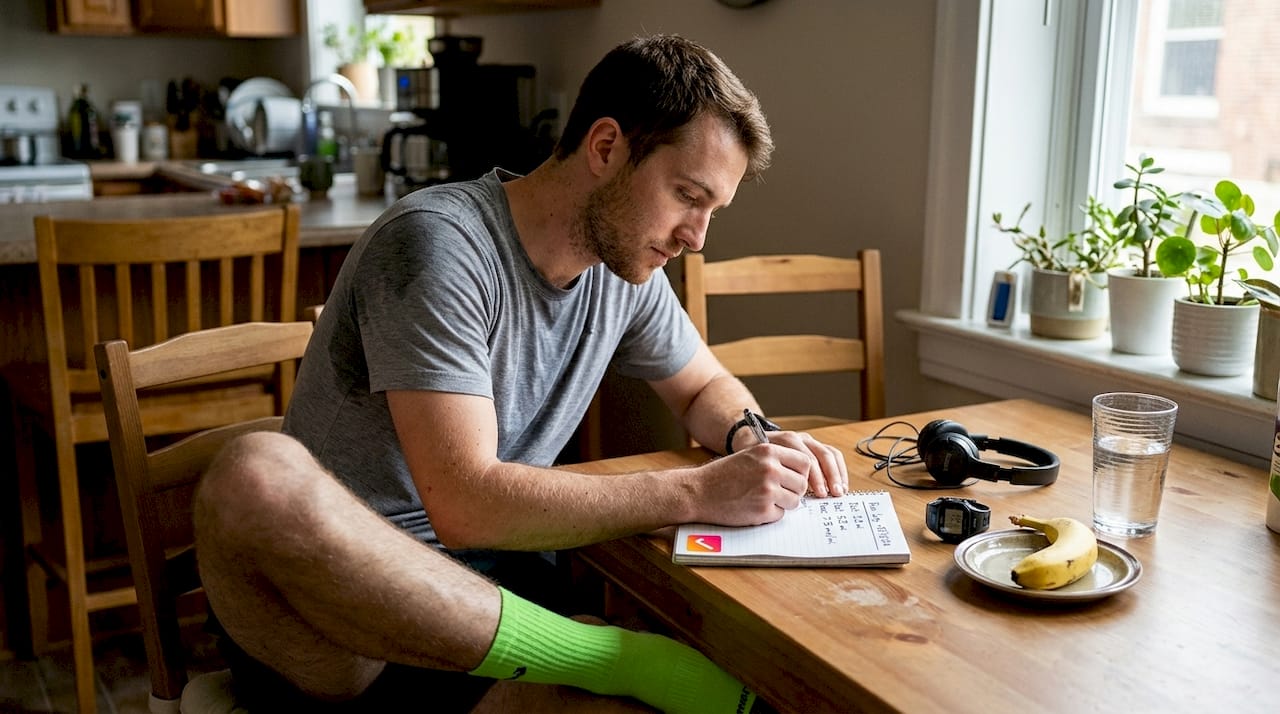
Tracking progress transforms abstract effort into visible results. You don't need fancy technology. A simple notebook where you log each run's date, distance, and how you felt works perfectly. Running apps add convenience by automatically recording your pace and route. Even a basic checklist on your fridge creates accountability. The act of marking off completed runs releases dopamine and reinforces the habit loop.
Running with others changes everything. When you commit to meeting a friend at 6 AM, you show up even when motivation is low. Joining running clubs or parkruns adds social support and accountability that solo runners miss. You'll find people at every fitness level, and the shared experience makes hard runs feel easier.
Here are proven ways to stay accountable:
- Schedule runs in your calendar with alerts 30 minutes before
- Log every run immediately after finishing, noting distance and feelings
- Invite a friend or family member to join you weekly
- Join a local running group or virtual community
- Share your weekly goals with someone who will check in
"You never regret a run. You only regret the runs you skip." This runner wisdom captures a psychological truth: the anticipation of discomfort is almost always worse than the actual experience. Once you start moving, endorphins kick in and the resistance fades.
Pro Tip: Lay out your complete running outfit the night before, including socks and shoes. Place them where you'll see them first thing in the morning. This removes decision-making friction and eliminates the "I can't find my gear" excuse.
Build your routine with our weekly running routine guide that maps out exactly when and how to train. Our step-by-step running plan takes you from zero to race-ready with daily guidance.
Find your inner motivation: Autonomy and self-efficacy
External pressure creates temporary compliance. Internal motivation builds lasting commitment. The difference matters enormously for beginner runners trying to stick with training.
Autonomy means you control your running journey. You choose your pace, your routes, your goals, and your rest days. When someone else dictates these decisions, running feels like an obligation. When you make these choices yourself, running becomes an expression of personal agency. Research demonstrates that autonomy significantly boosts motivation and improves recovery in runners.
Self-efficacy is your belief that you can successfully complete a specific task. Each time you finish a planned run, you prove to yourself that you're capable. This confidence compounds. After completing ten runs, the eleventh feels more achievable. After finishing your first 5K, a 10K seems possible. Studies show that self-efficacy directly predicts persistence in beginner runners.
| Motivation Type | Effect on Consistency | Effect on Enjoyment | Long-term Success |
|---|---|---|---|
| Internal (autonomy/self-efficacy) | High | High | Sustainable |
| External (pressure/obligation) | Low to moderate | Low | Often fails |
The psychological edge comes from combining autonomy in pace and goal-setting with self-efficacy tracking. When you join communities for social support while maintaining personal control, motivation multiplies.
Here's how to boost your internal motivation:
- Set your own pace every run, ignoring what others do
- Reflect weekly on specific improvements, no matter how small
- Record how you feel after each run to recognize the mental benefits
- Choose routes and times that fit your preferences and energy levels
Develop mental strength with our mental training for runners guide. Explore different beginner running workouts to find what energizes you most.
Get social and celebrate milestones
Humans are social creatures. Running alone works for some people, but most beginners thrive with community support. Joining running clubs or parkruns provides accountability and makes training more enjoyable.
Local running clubs welcome beginners explicitly. Many offer dedicated beginner groups with experienced runners who remember their own first steps. Virtual communities on apps and social media connect you with runners worldwide who share tips, celebrate wins, and offer encouragement on tough days. The social aspect transforms running from a solitary challenge into a shared adventure.
Celebrating small wins matters more than you think. Your brain releases dopamine when you acknowledge achievements, reinforcing the behavior that led to success. Finished your first full week of training? That deserves recognition. Ran your first mile without stopping? Celebrate it. These moments build the positive associations that keep you coming back.
| Aspect | Solo Running | Group/Community Running |
|---|---|---|
| Motivation | Self-generated only | Boosted by others |
| Fun factor | Variable | Consistently higher |
| Accountability | Depends on discipline | Built-in through commitments |
| Support | Limited | Extensive advice and encouragement |
Here are effective ways to celebrate your progress:
- Share achievements with friends or family who support your goals
- Reward yourself with new running gear after hitting milestones
- Register for your first race as a celebration of consistent training
- Take progress photos monthly to visualize your transformation
- Treat yourself to a favorite meal after completing tough training weeks
Find practical drills in our easy running drills collection. Get inspired by weekly routine ideas that keep training fresh and engaging.
Making it stick: From tips to lasting habits
Knowing strategies and implementing them are different challenges. You need a system that combines goal setting, routine building, psychological awareness, community support, and celebration into one cohesive approach.
Start by writing down your specific goal and the date you want to achieve it. Break that goal into weekly targets. Schedule three runs per week in your calendar. Join one running community, either local or virtual. Choose one method to track your progress. Decide how you'll celebrate your first milestone.
Here's your integration checklist:
- Set one clear, achievable goal for the next 8-12 weeks
- Schedule specific days and times for three weekly runs
- Choose your tracking method and commit to logging every run
- Join one running community or find one accountability partner
- Plan your first celebration for completing two weeks of consistent training
- Review progress weekly and adjust your plan as needed
Missed a run? It happens to everyone. The key is resetting without guilt or abandoning your plan entirely. Consistency beats speed for beginner runner success. One missed run doesn't erase the progress you've made. Simply return to your schedule with the next planned session.
Adopt this mindset: Running is a lifelong journey, not a one-time event. You're not training for a single race and then stopping. You're building a sustainable practice that improves your health, mental clarity, and confidence for years to come. Some weeks will feel easier than others. Some runs will feel amazing while others feel like a slog. All of it counts. All of it matters.
When motivation dips, revisit why you started. Remember the feeling after your first completed run. Look at your progress log and see how far you've come. Reach out to your running community for encouragement. Adjust your goals if they've become unrealistic. The flexibility to adapt while maintaining forward momentum separates runners who stick with it from those who quit.
Learn why structure matters in our running structure for success article. Discover the complete path in our race success for beginners guide.
Take your next step with beginner-friendly running tools
You've learned the strategies. Now it's time to put them into action with tools designed specifically for beginner runners like you.
Digital running apps eliminate the guesswork from training. Instead of wondering if you're doing enough or too much, you follow a personalized plan that adapts to your current fitness level, schedule, and race goals. Improvio creates customized training schedules in about 60 seconds, giving you a clear roadmap from your first run to race day.
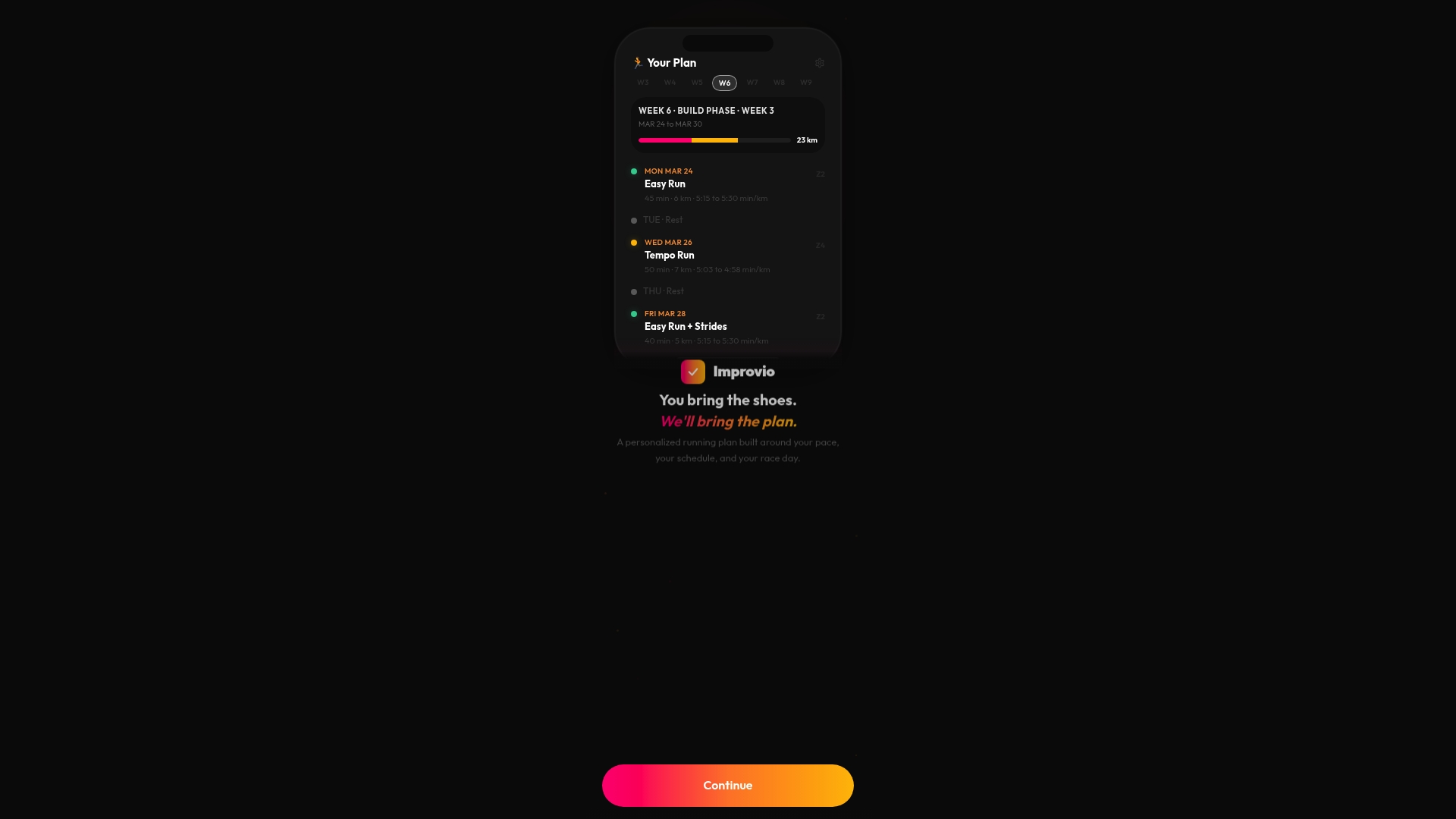
The benefits go beyond just having a schedule. You can track every run automatically, see your progress visualized over weeks and months, and join virtual communities of runners at your exact level. When you know exactly what to do each day, decision fatigue disappears. When you see your consistency building week after week, motivation becomes self-sustaining.
Start by setting up your free plan today. Input your current fitness level, your available training days, and your target race date. The app handles the rest, creating a week-by-week progression that builds your endurance safely. You'll know exactly when to run, how far to go, and when to rest.
Ready to create a running routine that actually works for your life? The strategies in this article become exponentially more powerful when combined with structured planning and consistent tracking. Your first race is closer than you think.
Frequently asked questions
How do I stay motivated to run when I'm tired?
Schedule runs ahead, lay out your gear the night before, and start with short, easy sessions. Small wins build momentum that carries you through tired days.
What is the best running goal for complete beginners?
A 5K race or Couch to 5K plan is ideal, breaking the process into small, weekly objectives that feel achievable rather than overwhelming.
How does running with a group help motivation?
Running with others provides accountability and social support, which keeps you engaged and consistent even when individual motivation wavers.
Why is self-efficacy important for beginner runners?
Believing you can achieve each step builds confidence and persistence, making you significantly more likely to stick with running long-term.
How often should beginners run each week?
Three times per week allows adequate recovery while building consistency. This frequency gives your body time to adapt without overtraining or losing momentum between sessions.