

TL;DR:
- Automated training plans personalize workouts based on individual pace, schedule, and performance data.
- They adapt in real time, helping beginners progress safely and stay motivated.
- Using smart technology reduces injury risk and offers cost-effective coaching support.
You don't need to spend hours reading training books or hire an expensive coach to prepare for your first race. That belief stops more new runners than tired legs ever will. Automated training plans use smart technology to build a custom schedule around your pace, your life, and your race date. They do the thinking so you can focus on running. This guide walks you through exactly what these plans are, why they work, and how to get the most out of them as a complete beginner. By the end, you'll feel ready to lace up and go.
Table of Contents
- What are automated training plans and how do they work?
- Top benefits of automated plans for new runners
- The science: How automation personalizes your training (and results)
- Potential drawbacks and how to get the most from your plan
- Why smart training, not just more training, wins for beginners
- Start your customized running journey today
- Frequently asked questions
Key Takeaways
| Point | Details |
|---|---|
| Simplicity for beginners | Automated training plans make getting ready for your first race easier and less intimidating. |
| Personalized progress | AI and real-time adjustments help you train at the right intensity for your unique needs. |
| Cost-effective support | Many plans provide expert guidance for free or at a low cost, saving you money while boosting performance. |
| Science-backed results | Research shows these plans improve outcomes as effectively as human coaching for new runners. |
What are automated training plans and how do they work?
An automated training plan is a workout schedule built by software. You share a few details, like your current pace, your goal race date, and how many days per week you can train. The system then creates a day-by-day plan designed specifically for you.
These plans are not the same as a generic PDF you download from a search result. Static plans treat every runner the same. Automated plans treat you as an individual. They update based on how you actually perform, not how the plan assumed you would.
Here is how technology for beginner runners powers this process step by step:
- Onboarding: You enter your details. This includes your current fitness level, available training days, target race, and sometimes your resting heart rate.
- Plan generation: The algorithm builds your weekly schedule. It assigns Easy Runs, Rest Days, and progression workouts based on your input.
- Workout delivery: You receive daily sessions via an app or calendar. Each session tells you distance, pace, and effort level.
- Data collection: As you run, the plan gathers feedback through your phone or a wearable device.
- Adaptation: The plan updates. If you ran slower than expected, it adjusts next week's sessions. If you're ahead of schedule, it might progress you faster.
Many platforms integrate with wearables for guided workouts, pace targets, and real-time adjustments. This makes the plan feel like a coaching partner on your wrist, not just a spreadsheet on your screen.
Here is a quick comparison of plan types:
| Feature | Static PDF plan | Automated plan |
|---|---|---|
| Personalized to your pace | No | Yes |
| Updates based on progress | No | Yes |
| Works with wearables | No | Yes |
| Free or low cost | Sometimes | Usually |
| Adapts if you miss a session | No | Yes |
"The best plan is the one that fits your life, not someone else's average."
Learning about structured plans for new runners shows why structure itself is so valuable at this stage. When you follow a plan that flexes with your real progress, showing up becomes easier every single week.
Top benefits of automated plans for new runners
Automated training plans were practically built for beginners. Here is why they are such a strong fit:
- Convenience: Your plan lives in your phone. You can check tomorrow's workout at breakfast, on the bus, or right before you head out the door.
- Personalization: The plan adjusts to your actual pace and schedule, not an average runner's. Your Easy Run pace is yours alone.
- Motivation: Milestone tracking, streak reminders, and visual progress charts keep you engaged between runs.
- Injury prevention: Smart progression limits how fast your mileage climbs, reducing the risk of overtraining.
- Cost savings: Free or low-cost automated plans provide coach-like structure at minimal expense. You don't need to pay hundreds of dollars for weekly coaching sessions.
Pro Tip: Start with three days of running per week. Most automated platforms let you set this as a preference. Three days builds consistency without burning you out before race day.
One thing beginners often miss is how much easier it is to stay consistent when the plan does the thinking for you. You wake up and your app tells you: "Easy Run today, 25 minutes, conversational pace." That clarity removes hesitation. You just go.
This beginner race preparation guide breaks down what a strong weekly structure looks like from week one. Following a plan with built-in rest days and gradual progression is one of the most effective ways to arrive at your first race feeling strong, not exhausted.
Building running structure for beginners matters more than raw mileage. Most new runners try to run too far too fast. Automated plans protect you from that mistake by keeping your effort appropriate for your current fitness level.

The bottom line: Automated plans give you expert structure without the expert price tag. For a beginner, that combination is hard to beat.
The science: How automation personalizes your training (and results)
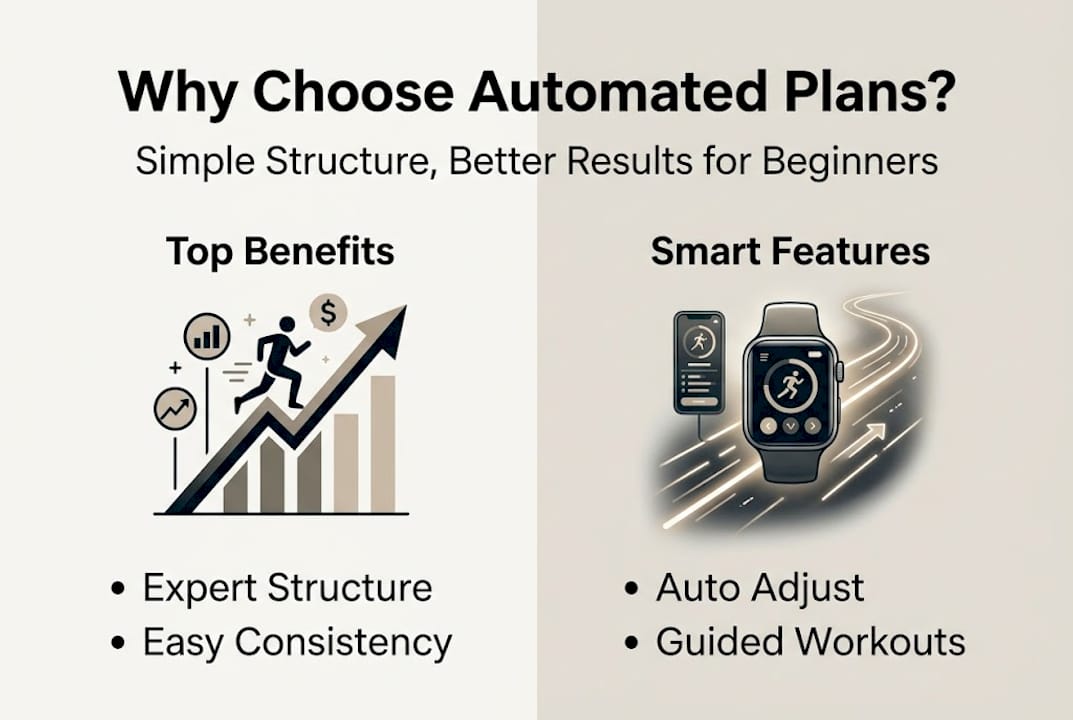
Beyond simplicity and motivation, automated plans rely on science-driven methods that actively improve your chances of race day success.
Machine learning, the same kind of technology that powers music recommendations and traffic apps, reads your training data and adjusts your plan in real time. If your pace slows on Thursday, the algorithm notices. It might reduce Friday's effort or add extra recovery before the weekend long run.
AI and machine learning personalized plans improve performance and match human coach quality. That is not a marketing claim. That is a peer-reviewed finding. New runners who follow AI-driven plans see real gains without needing to understand sports science themselves.
Automated platforms also apply advanced training concepts automatically. Two of the most effective are:
| Method | What it means | How automation uses it |
|---|---|---|
| Polarized training | 80% easy effort, 20% hard effort | Assigns correct intensity per session |
| Pyramidal training | Gradual buildup with a peak then taper | Schedules harder weeks before a rest week |
These performance-boosting plans use frameworks that elite coaches apply with their athletes. Now beginners get the same benefit.
"Automation doesn't replace effort. It directs effort so none of it goes to waste."
Pro Tip: After each run, rate your effort on a scale of 1 to 10 inside your training app. This single action helps the algorithm improve your next session significantly.
Following a clear step-by-step beginner plan from week one means your training builds logically. You won't randomly jump to a 5-mile run when your body isn't ready. The science keeps the progression safe and steady.
Potential drawbacks and how to get the most from your plan
While automated training plans offer clear benefits, it's important to be aware of where beginners might face challenges.
No tool is perfect. Knowing the limitations upfront helps you use your plan more effectively.
Common challenges for beginners using automated plans:
- Over-reliance on data: If your phone says run, but your knee aches, the algorithm doesn't feel your pain. You do. Always listen to your body first.
- Data privacy: Training apps collect personal health information. Data privacy and over-reliance are real concerns, though most users report high trust in plan quality. Read the privacy settings before connecting devices.
- Inaccurate input: The plan is only as good as the data you give it. If you enter an unrealistic goal pace, the sessions will be too hard from day one.
- Ignoring recovery: Some beginners skip rest days because the plan "looks light." Rest is where fitness actually grows. Trust the rest days.
Pro Tip: Take two minutes after each week to write down one thing that felt hard and one thing that felt good. This reflection helps you catch patterns before they become problems.
Learning the basics of run tracking early on helps you understand what the numbers mean and when to pay attention to them. You become a smarter runner, not just a faster one.
If you're unsure whether an automated plan is right for you, reading about guided plans for your first race gives you a practical framework for deciding. Most beginners find that a little human reflection paired with smart automation is the winning combination.
The good news: Research confirms that most users trust automated plans and feel satisfied with the structure they provide. You are in good hands as long as you stay engaged with your own experience.
Why smart training, not just more training, wins for beginners
Here is something most beginner running advice gets wrong: it focuses on how much to run instead of how well to run.
Adding miles without structure doesn't build fitness. It builds fatigue. Beginners who chase distance without a smart plan often get injured or burned out within the first month. They quit before race day.
Automated plans remove that guesswork. They tell you when to push and when to hold back. They track your recovery and adjust your effort. That balance, between work and rest, is where real transformation happens.
Running plans for new runners in 2026 are smarter than ever. The gap between what a beginner can access and what an elite athlete uses has never been smaller.
Our take: Trust the plan, especially when it tells you to rest. Progress is not always visible in your pace. Sometimes it's happening in your sleep, in your muscles, and in your confidence. Tune your effort. Protect your recovery. Show up consistently. That is the real path to the finish line.
Start your customized running journey today
You've got the knowledge. Now you need the plan.
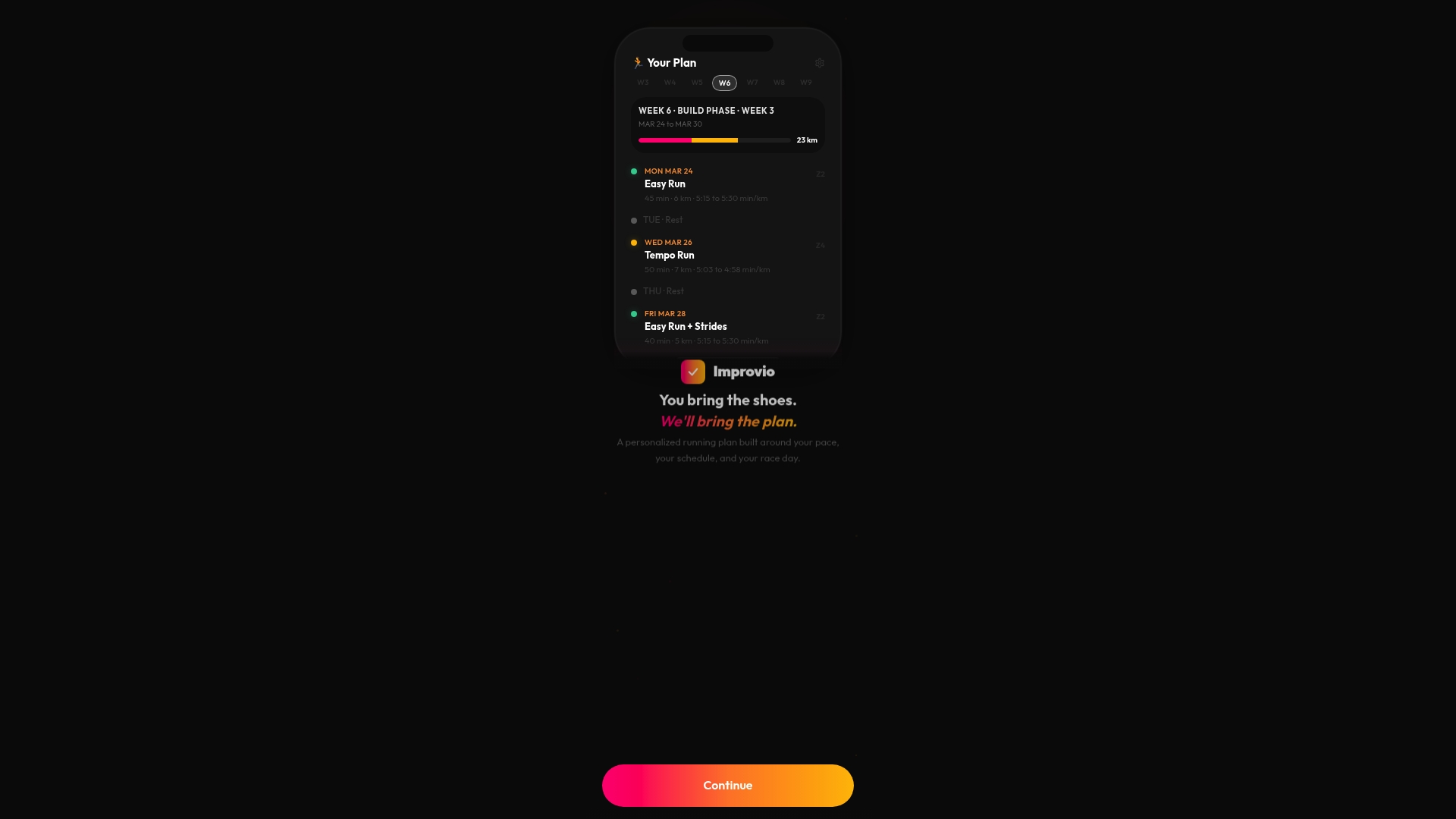
Getting started with customized training with Improvio takes about 60 seconds. You enter your pace, your race date, and how many days per week you can train. Improvio builds a personalized schedule that adapts as you grow. No coaching experience needed. No confusing spreadsheets. Just a clear, day-by-day plan built around your life. Whether your first race is 8 weeks away or 6 months out, Improvio gives you the structure to show up ready. You bring the shoes. We'll bring the plan.
Frequently asked questions
Are automated training plans accurate for beginners?
Yes, AI plans match human coach quality per expert evaluation and adapt to your unique progress as a beginner.
Do I need a smartwatch or wearable to use an automated training plan?
While smartwatches enhance tracking and feedback, many plans also work through mobile apps. Wearables add real-time adjustments but are not required to get started.
What if I miss sessions or fall behind in my plan?
Automated plans typically adjust dynamically, rescheduling workouts to keep you on track. Real-time adjustments based on recovery and performance are key features of top platforms.
Is my data safe with automated training apps?
Major platforms protect user data, though beginners should still review privacy policies. Data privacy concerns exist, but most users report high trust in how their information is handled.