
TL;DR:
- Run tracking provides beginner runners with data to improve safety and motivation.
- Tools like GPS apps and footpods help monitor keyMetrics such as distance and time.
- Focusing on simple mileage and effort perception early on fosters consistency and progress.
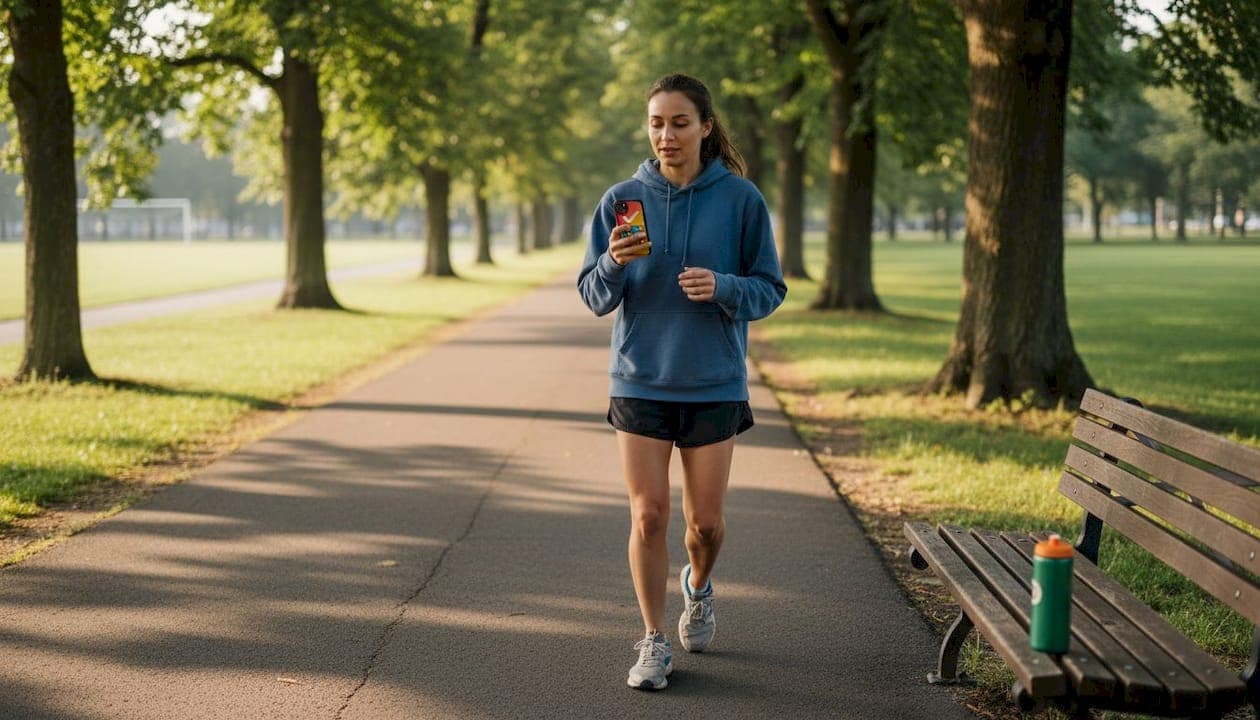
Most new runners focus on one thing: running more. That makes sense. But there's a step many beginners skip that can make progress faster, safer, and a lot more motivating. Run tracking. You might think it's only for elite athletes with expensive GPS watches and coaches in their ear. It's not. Whether you're training for your first 5K or just trying to run without stopping, tracking your runs gives you real data to work with. This guide breaks down what run tracking is, how it works, which tools fit your needs, and how to use it without getting overwhelmed by numbers.
Table of Contents
- What is run tracking? Key metrics and basics explained
- How run tracking works: Devices, apps, and accuracy
- Common pitfalls and how to track smarter
- Beginner strategies: Using run tracking for real progress
- Why simple tracking beats complex data for beginners
- Ready to make every run count? Try Improvio's simple tracking tools
- Frequently asked questions
Key Takeaways
| Point | Details |
|---|---|
| Core metrics matter | Tracking basics like distance, pace, and time are most helpful for beginners. |
| Device choice depends | GPS is best outdoors, footpods are ideal for indoor or treadmill runs. |
| Avoid data overload | Start with simple tracking to build motivation and avoid confusion. |
| Smart tracking accelerates progress | Consistent use of tracking helps personalize your training plan and improve fitness. |
| Apps make it easy | Beginner-friendly apps like Strava and Nike Run Club automate tracking and guide your plan. |
What is run tracking? Key metrics and basics explained
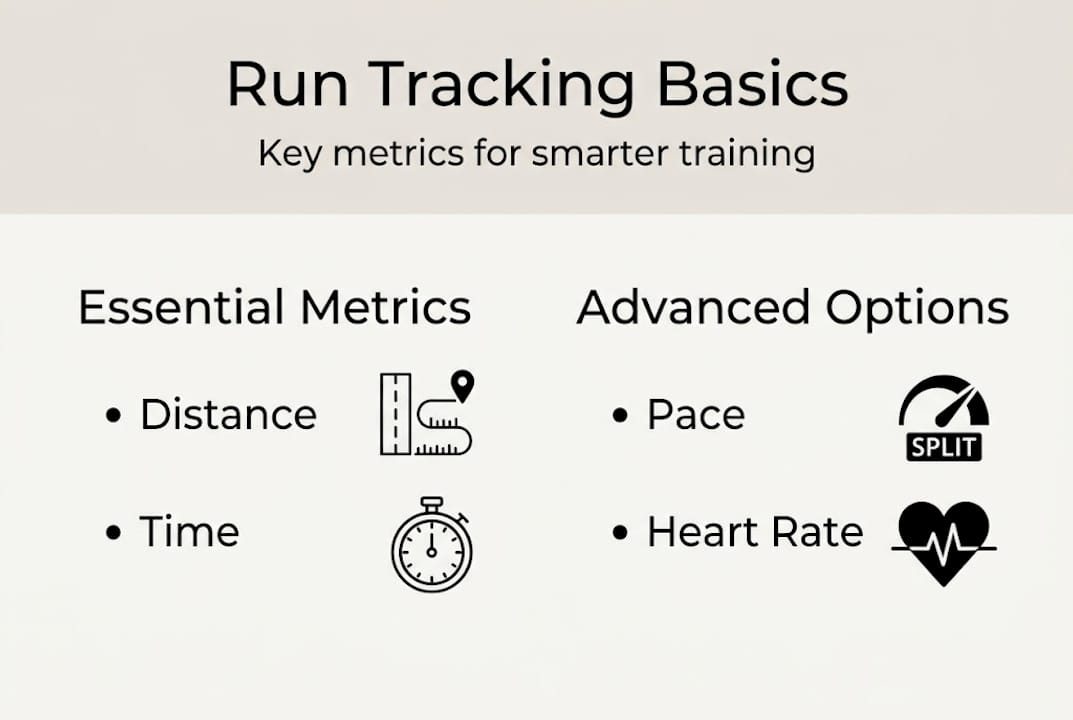
Run tracking is exactly what it sounds like. You monitor and record what happens during your runs so you can learn from them. According to Nike Run Club features, run tracking monitors metrics like distance, pace, time, elevation, heart rate, and cadence using GPS watches, smartphone apps, or footpods. That's a broad definition, but for beginners, you only need to focus on a few of those.
Here are the key metrics worth knowing:
- Distance — How far you ran, usually in miles or kilometers
- Pace — How long it takes you to run one mile or kilometer (e.g., 12:00 min/mile)
- Time — Total duration of your run
- Heart rate — How hard your heart is working, useful for avoiding overtraining
- Elevation — How much uphill or downhill you covered
- Cadence — Steps per minute, more relevant once you're past the beginner stage
As a beginner, distance and time are your two best friends. Start there. Pace and heart rate become more useful once you've built a base.
| Metric | Why it matters | Beginner priority |
|---|---|---|
| Distance | Shows weekly volume | High |
| Pace | Tracks speed progress | Medium |
| Time | Measures effort duration | High |
| Heart rate | Prevents overtraining | Medium |
| Elevation | Reflects terrain difficulty | Low |
| Cadence | Improves running form | Low |
Tracking gives you a visual record of your progress. You can look back and see that three weeks ago you could barely run 10 minutes, and now you're hitting 25. That's powerful motivation. It also helps you make smarter decisions. If your pace drops or your heart rate spikes on an easy day, that's a signal to rest.
Learning running app basics early on helps you get comfortable with these tools before your training ramps up.
"The goal of tracking isn't to judge your performance. It's to understand it so you can improve safely."
Free apps like Nike Run Club make it simple to get started without spending anything. You just press start, run, and press stop. The app does the rest.
How run tracking works: Devices, apps, and accuracy
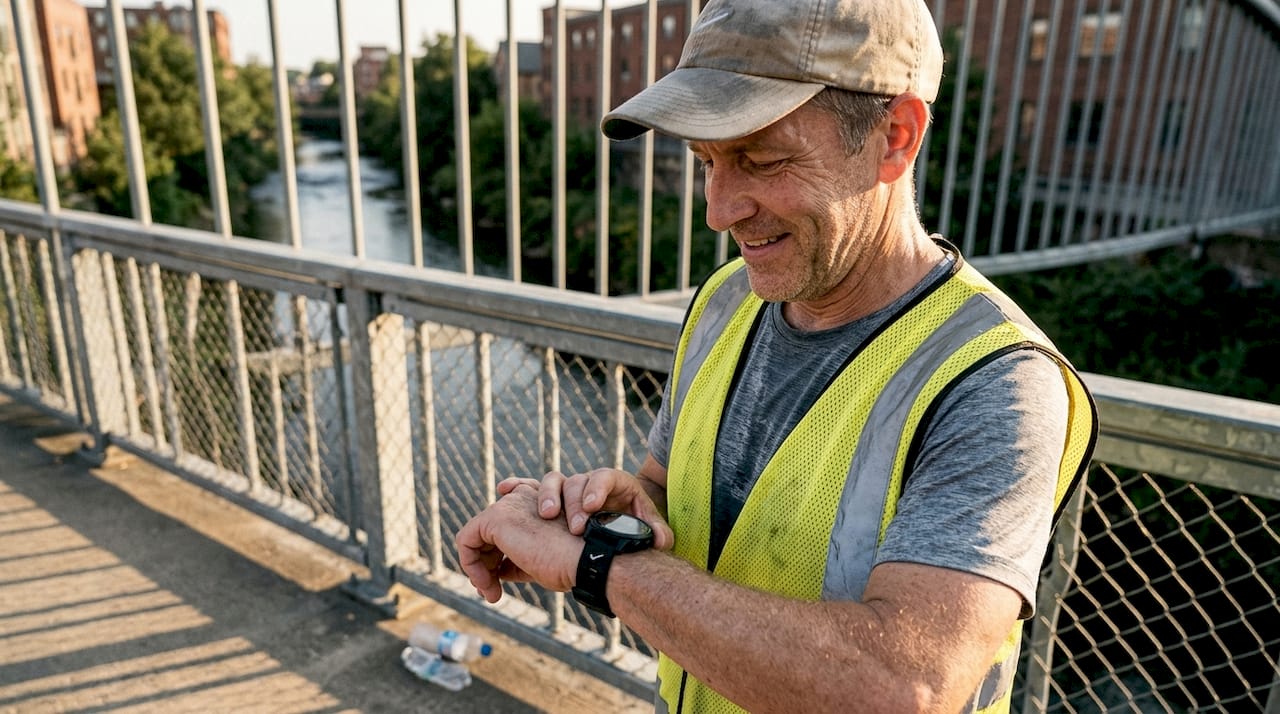
Now that you know what to track, let's look at how it actually works. There are three main methods: GPS tracking, accelerometer-based footpods, and manual logging.
Primary tracking methods include GPS-based tracking for real-time outdoor distance, accelerometer footpods for stride and foot strike measurement, and ground speed sensors. GPS assumes flat surfaces, while footpods excel indoors and on treadmills.
Here's a quick comparison to help you choose:
| Method | Best for | Accuracy | Cost |
|---|---|---|---|
| GPS watch | Outdoor runs | Very good | Medium to high |
| Smartphone app | Outdoor runs | Good | Free |
| Footpod | Treadmill/indoor | Excellent when calibrated | Low to medium |
| Manual log | Any setting | Depends on honesty | Free |
For most beginners, a free smartphone app is the right starting point. You already have your phone. Apps like Nike Run Club, Strava, and Garmin Connect use your phone's GPS to track distance and pace outdoors. No extra gear needed.
If you run on a treadmill, GPS won't help you. The signal can't track movement indoors. This is where a footpod shines. A footpod clips to your shoe and measures your stride to calculate distance. It can be calibrated for solid accuracy, making it a smart tool for indoor runners.
Manual logging is the most basic option. You write down your distance and time after each run. It's old school, but it works. The downside is that it requires discipline and doesn't give you real-time feedback.
Understanding technology for beginners can help you pick the right tool without overspending. You can also look at runner tracking devices to compare options before you buy anything.
Pro Tip: Start with a free app before investing in a GPS watch. Once you're running consistently three to four times per week, then consider upgrading your gear.
Common pitfalls and how to track smarter
Tracking is useful, but it comes with traps. Knowing what can go wrong saves you time, frustration, and even injury.
Here are the most common mistakes beginners make:
- Trusting GPS indoors — GPS signals don't work well inside buildings or in areas with tall buildings nearby. Your distance reading will be off.
- Ignoring treadmill calibration — Treadmill belt slippage can cause footpod discrepancies. Always calibrate your footpod outdoors on a known distance first.
- Obsessing over pace — Checking your pace every 30 seconds is exhausting and counterproductive. Run by feel, especially on easy days.
- Skipping rest based on data — Just because your app says you're fine doesn't mean your body agrees. Listen to both.
- Tracking too many metrics at once — More data isn't always better. Too many numbers create confusion, not clarity.
The fix for most of these problems is RPE, which stands for Rate of Perceived Effort. RPE is a simple 1 to 10 scale where 1 is barely moving and 10 is an all-out sprint. Over-reliance on data without using RPE risks burnout. Using RPE alongside your tracking data keeps you honest about how your body actually feels.
"Your GPS can't feel tired. You can. Trust both the data and your body."
For beginners working through beginner workout types, RPE is especially helpful during Easy Runs. An Easy Run should feel like a 4 or 5 out of 10. If it feels like a 7, slow down, regardless of what your pace says.
Pro Tip: Log a simple note after each run. Just one sentence: how did it feel? This habit builds body awareness faster than any metric.
If you're starting your first race, keeping your tracking simple in the early weeks gives you a cleaner picture of your real progress.
Beginner strategies: Using run tracking for real progress
Tracking data is only useful if you act on it. Here's how to turn numbers into real improvements.
Connect tracking to your training plan. Every run in your plan has a purpose. An Easy Run builds your aerobic base. A Tempo Run improves your lactate threshold. When you track each session, you can see if you're hitting the right effort levels. If your Easy Runs are too fast, your Tempo Runs will suffer. Tracking reveals these patterns early.
Use benchmarks to stay motivated. Strava data shows that 76% of marathoners use GPS watches, and higher weekly volume correlates with faster finish times. Quality sessions can add roughly 16 minutes of improvement to marathon outcomes. You don't need to run marathons to benefit from this mindset. Even at the beginner level, tracking weekly mileage and comparing it to previous weeks shows clear growth.
Here's what a simple weekly tracking habit looks like:
- 🏃 Monday — Easy Run, 20 min. Log time and how it felt.
- 🏃 Wednesday — Easy Run, 25 min. Note any pace improvement.
- 🏃 Friday — Rest or walk. Log it as active recovery.
- 🏃 Saturday — Long Run, 30 min. Track distance and total time.
Pick the right app for your goals. Nike Run Club offers audio cues and auto-pause features that are perfect for beginners. Strava is great for community motivation. Garmin syncs workouts automatically if you have a watch. Runna builds personalized plans. All of these are beginner-friendly and easy to set up.
A solid beginner fitness plan guide paired with consistent tracking gives you the feedback loop you need to improve week over week. You can also follow a beginner running schedule to structure your weeks around your tracked data.
Tracking also helps you celebrate beginner race milestones and understand the beginner fitness benefits you're already gaining, even in your first few weeks.
Why simple tracking beats complex data for beginners
Here's something most running guides won't tell you: more data can actually slow you down when you're just starting out.
When you're new, the most important thing is consistency. Showing up three times a week and running a little farther each time is what builds fitness. Complex metrics like cadence, vertical oscillation, and ground contact time are genuinely useful, but not yet. Chasing those numbers too early pulls your focus away from the habit itself.
For absolute beginners, simple mileage tracking via free apps like Strava or Nike Run Club, combined with RPE over pace, reduces overtraining risk and builds sustainable habits. That's the real goal in your first 8 to 12 weeks.
We've seen beginners quit because they felt like they were failing their data. Their pace wasn't dropping fast enough. Their cadence wasn't perfect. But they were running consistently, which is the actual win. Simple tracking keeps you focused on what matters: getting out the door and moving forward.
Learn the beginner running workflow first. Add complexity later, when your body and your habits are ready for it.
Ready to make every run count? Try Improvio's simple tracking tools
You now know what run tracking is, how it works, and how to use it without getting lost in the data. The next step is putting it into practice with a plan built around you.
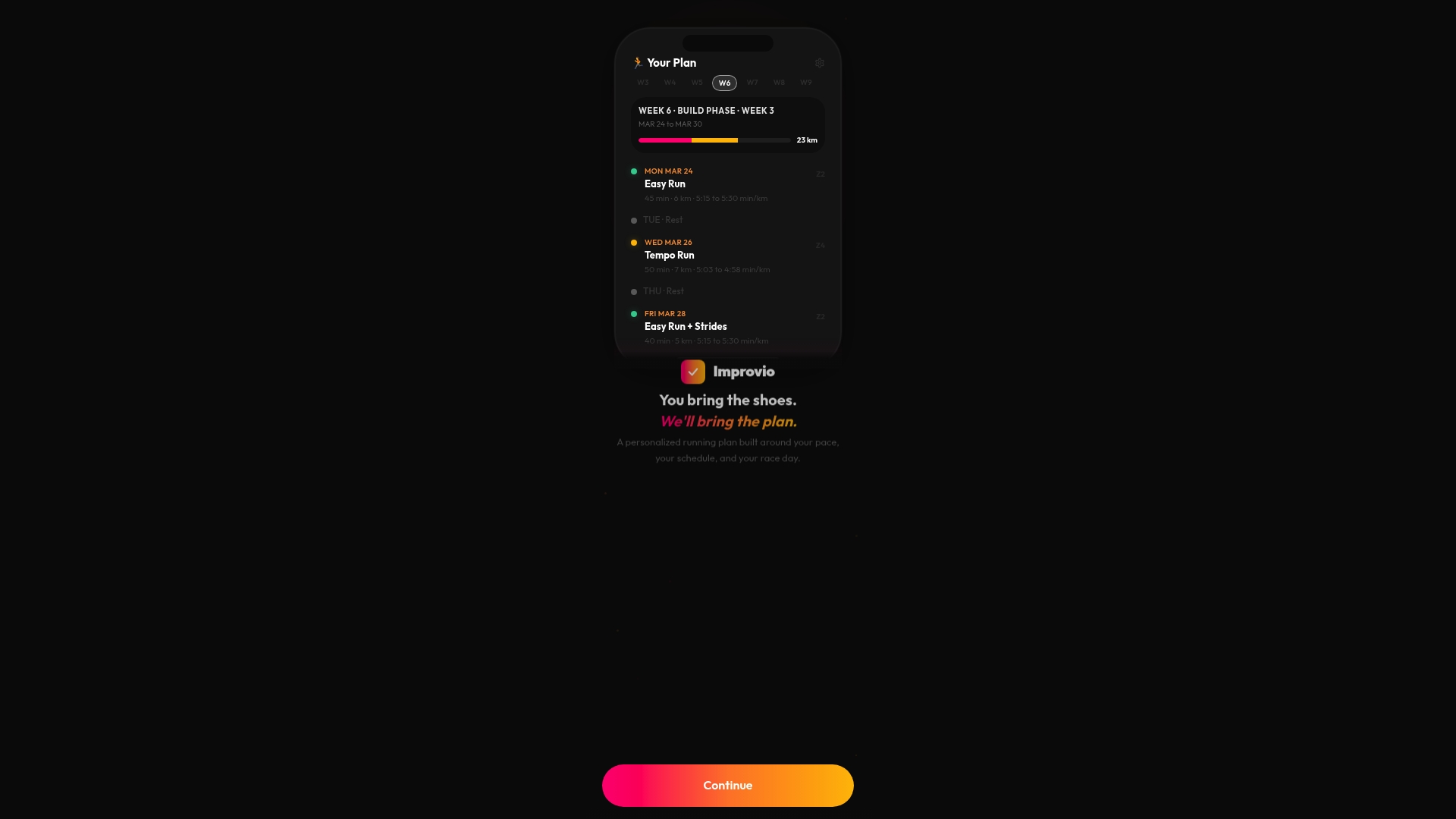
Improvio run tracking makes this easy. In about 60 seconds, you can set up a personalized training plan based on your pace, your schedule, and your race date. No experience needed. No complicated setup. Just a clear, structured plan that tells you exactly what to run, when to run it, and how to track your progress along the way. You bring the shoes. We'll bring the plan. Start free today and see how tracking turns effort into results.
Frequently asked questions
What is run tracking and why should beginners use it?
Run tracking monitors your distance, pace, and other key stats using GPS watches, smartphone apps, or footpods, so you can improve safely and stay motivated from your very first training session.
Is GPS tracking reliable for treadmill running?
GPS is unreliable indoors, so footpods excel indoors and can be calibrated outdoors for much better treadmill accuracy than any phone-based GPS app.
How do I avoid burnout when tracking my runs?
Use Rate of Perceived Effort (RPE) alongside your tracking data. Over-reliance on data without RPE risks burnout, so keep intensity checks simple and body-focused.
Which apps are best for beginner run tracking?
Strava, Nike Run Club, Garmin, and Runna are all beginner-friendly, offering personalized plans, audio cues, and automatic workout syncing to make tracking effortless.
How does run tracking connect to training plans?
Strava data shows that quality tracked sessions correlate with measurable improvements, so tracking each workout lets you measure progress, adjust effort, and make every session part of a goal-oriented plan.