

TL;DR:
- Proper running shoes significantly reduce injury risk when matched to foot type and comfort preferences.
- Beginners should prioritize comfort, support, and correct fit over technical features or style.
- Regularly replace shoes after 300 to 500 miles to maintain proper cushioning and injury prevention.
Most new runners pick their shoes based on color or style. That's completely understandable. But here's the thing: the right shoe can reduce injury risk by up to 67% when it matches your comfort preferences and fits correctly. That's a massive difference, especially when you're training for your very first race and every run counts. In this guide, you'll learn exactly what to look for in a running shoe, how to avoid the most common mistakes, and how to match your shoe to your foot type. No jargon. No guesswork. Just clear, practical steps.
Table of Contents
- Why proper running shoes matter for beginners
- How improper footwear leads to common running injuries
- Step-by-step: Picking the right running shoes for your first race
- Understanding the options: Comparing running shoe types for beginners
- Our take: The comfort-over-hype mindset for injury-free running
- Ready to run smarter? Try a guided beginner plan.
- Frequently asked questions
Key Takeaways
| Point | Details |
|---|---|
| Shoes prevent injuries | Proper running shoes reduce the risk of common injuries in new runners. |
| Comfort is essential | Choosing a shoe that feels good reduces injury risk more than high-tech features. |
| Fit and timing matter | Try on shoes late in the day and opt for a slightly larger size for best results. |
| Replace regularly | Update your running shoes every 300-500 miles for ongoing support and performance. |
Why proper running shoes matter for beginners
Shoes aren't just something you lace up and forget about. For new runners, they're actually one of the most important tools you have. Your feet absorb a huge amount of force with every step. Without the right shoe, that force travels straight into your joints.
Proper running shoes absorb impact, promote correct movement patterns, and reduce injury risk through cushioning and support. They're designed to work with your foot's natural motion, not against it.
One key concept here is pronation. Pronation is how your foot rolls inward when it hits the ground. Everyone pronates a little. But too much or too little can cause real problems over time. Shoes are built to match three main movement types:
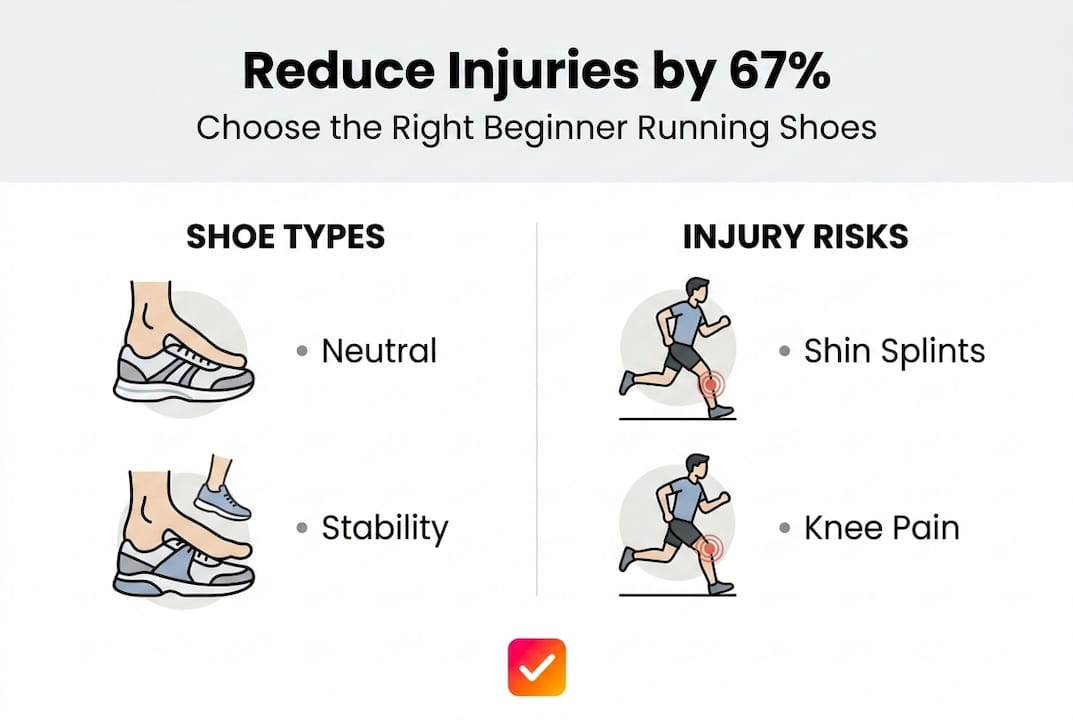
- Neutral pronation: Your foot rolls inward a normal, healthy amount. Neutral shoes work well here.
- Overpronation: Your foot rolls inward too much. Stability shoes help control this movement.
- Supination (underpronation): Your foot rolls outward. Cushioned neutral shoes with flexibility work best.
Matching your shoe to your pronation type is one of the most effective ways to support injury prevention for runners from day one.
"The right shoe doesn't just protect your feet. It sets the foundation for every run you'll ever do."
Beyond pronation, cushioning matters too. As a beginner, your muscles and tendons are still adapting to the stress of running. Good cushioning gives them the buffer they need while they build strength. Think of it as support for new runners that works silently in the background every time your foot hits the pavement.
Proper shoes also affect your running form. When your foot is well-supported, your stride naturally becomes more efficient. That means less energy wasted, better pacing, and more enjoyable runs. It's a small investment that pays off fast.
How improper footwear leads to common running injuries
Now let's talk about what happens when the shoe doesn't fit the runner. The results aren't pretty, and they're very common among beginners.
Improper shoes contribute directly to injuries like shin splints, plantar fasciitis, and runner's knee. These aren't just minor aches. They can sideline you for weeks, especially when you're building up mileage for a race.
Here are the most common injuries tied to poor footwear:
- Shin splints: Pain along the front of your lower leg, usually from too little cushioning or too much mileage too fast.
- Plantar fasciitis: Sharp heel pain caused by insufficient arch support. Very common in beginners.
- Runner's knee: Pain around the kneecap, often linked to overpronation and lack of stability support.
- Blisters and black toenails: Usually caused by shoes that are too small or too narrow.
"Many beginner injuries aren't from training too hard. They're from training in the wrong shoes."
There's another factor most new runners overlook: shoe lifespan. Your shoes might still look brand new on the outside, but the cushioning inside breaks down long before the outer sole does. Once you've logged 300 to 500 miles in a pair, the support is mostly gone. Running in worn-out shoes is almost as risky as running in the wrong ones.
Pro Tip: Track your mileage using a free running app. When you hit 300 miles, start shopping for your next pair, even if the shoes still look fine.
The good news? All of these injuries are largely preventable. Getting the right shoe, following a smart training plan for beginners, and listening to your body goes a long way. You don't need to be an expert. You just need the right information, and now you have it. For extra guidance on staying healthy while you train, check out these injury prevention tips built specifically for new runners.
Step-by-step: Picking the right running shoes for your first race
Ready to shop? Here's how to do it right.
- Visit a specialty running store. Big box stores have limited expertise. A running store will watch you walk and jog, then recommend shoes based on your actual gait. This is called a gait analysis, and it's usually free.
- Get a gait analysis. Gait analysis at a running store gives you real data on your pronation and foot strike pattern. It takes about 10 minutes and removes all the guesswork.
- Shop late in the day. Your feet naturally swell throughout the day. Shopping in the evening means you'll get a truer fit. Choose a shoe that's 1/2 to 1 size larger than your regular shoe size to allow for this.
- Try on several pairs. Don't settle on the first shoe that feels okay. Walk around. Jog in the store. The right shoe should feel immediately comfortable, not like something you need to break in.
- Prioritize cushioning and support. Skip the flashy features for now. For your first race, comfort and support beat everything else.
- Avoid minimalist shoes. Save those for later, after you've built a solid base of strength and mileage.
Here's a quick comparison to help you match your pronation to the right shoe type:
| Pronation type | Recommended shoe | Key feature |
|---|---|---|
| Neutral | Neutral cushioned | Balanced cushioning |
| Overpronation | Stability shoe | Medial post support |
| Supination | Flexible neutral | Extra cushioning |
Pro Tip: Bring your current workout socks when you try on shoes. The thickness of your socks affects fit more than most people realize.
Once you have your shoes sorted, cross-check your running gear checklist to make sure you're fully prepped. Then follow a beginner running workflow to build up your training the right way.
Understanding the options: Comparing running shoe types for beginners
Walk into any running store and the wall of shoes can feel overwhelming. Let's break them down into simple categories.
The main shoe types you'll encounter:
- Neutral shoes: Best for runners with neutral or supinating feet. Great all-around option for most beginners.
- Stability shoes: Include extra support on the inner side to control overpronation. A solid pick if you roll inward too much.
- Motion control shoes: Maximum support for severe overpronation. Heavy and stiff. Most beginners don't need these.
- Carbon-plated shoes: Designed for race-day performance. Cushioning in thicker midsoles improves running economy by 2.4 to 2.6%, but these are not ideal for beginners still building their base.
- Minimalist or barefoot shoes: Can improve efficiency long-term, but high injury risk for beginners without a very gradual transition. Experts recommend starting minimalist volume at no more than 5% of total mileage.
Here's a clear breakdown to help you decide:
| Shoe type | Good for beginners? | Main benefit | Watch out for |
|---|---|---|---|
| Neutral cushioned | Yes | Comfortable, versatile | None for most runners |
| Stability | Yes | Controls overpronation | Can feel stiffer |
| Motion control | Sometimes | Max support | Heavy, less flexible |
| Carbon-plated | No | Speed, energy return | Too aggressive for new runners |
| Minimalist | No | Long-term efficiency | Very high injury risk early on |
For most beginners, a neutral or stability shoe with moderate cushioning is the sweet spot. It gives you protection without overcomplicating things. As you log more miles and understand your body better, you can explore other options. Check out the running for beginners guide to understand how your needs will evolve, and use these milestones for beginner runners to track your progress along the way.
Our take: The comfort-over-hype mindset for injury-free running
Here's something most shoe marketing won't tell you: the technical features on the label matter less than how the shoe feels on your foot.
Retailers push motion control, stack height, carbon plates, and foam innovations. And sure, some of that matters at the elite level. But for a beginner? Comfort is your most powerful injury filter. Research now suggests that pronation control is debated among experts, with comfort being a stronger predictor of injury prevention than specific motion control features.
That's a big shift from what most shoe brands want you to believe. Many coaches and researchers now say: if the shoe feels good, it probably is good. Your body naturally adapts its movement to a comfortable shoe.
So when you're standing in the store and two shoes both check the technical boxes, pick the one that feels better. Don't let a salesperson talk you into a shoe that feels stiff or awkward just because it has the "right" features on paper. Your injury prevention starts with trusting how something feels. That's not oversimplifying. That's the evidence talking.
Ready to run smarter? Try a guided beginner plan.
You've picked the right shoes. Now it's time to build the right training around them.
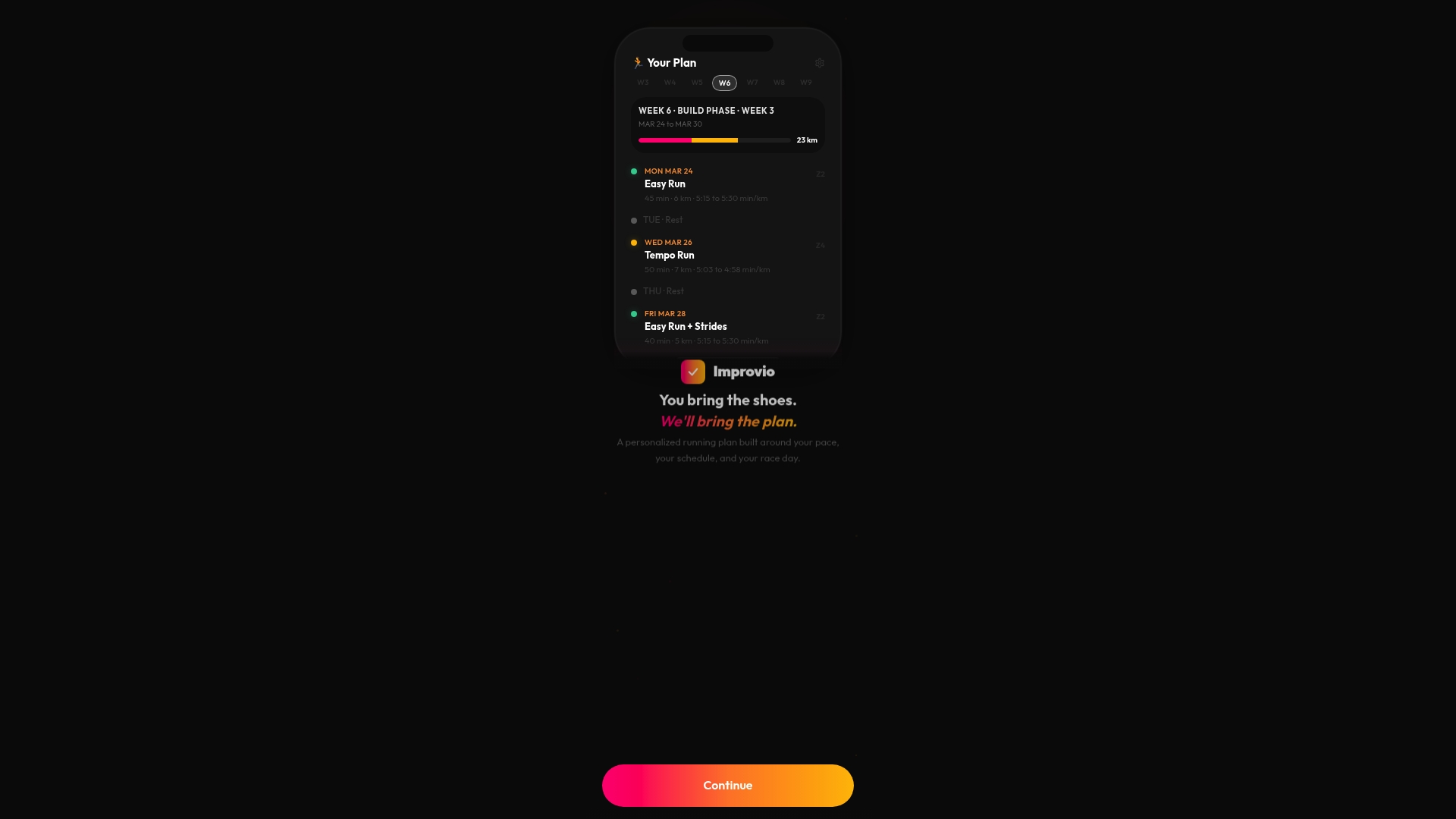
At Improvio, we pair your gear decisions with a plan that actually fits your schedule, your pace, and your race date. Setup takes about 60 seconds, and your first plan is free. No experience needed. Whether you're working up to your first 5K or aiming for something bigger, we build a week-by-week structure that keeps you moving and injury-free. Start your beginner running plan today and see exactly what your first week looks like. You can also grab our race prep checklist to make sure nothing gets missed before race day.
Frequently asked questions
How often should I replace my running shoes?
Replace your running shoes every 300 to 500 miles, even if they still look fine on the outside. The cushioning breaks down long before the sole does.
What's the best way to check shoe fit for running?
Try shoes in the late afternoon when your feet are at their largest, and choose a pair that is 1/2 to 1 size larger than your everyday shoes to account for foot swelling during runs.
Should beginners consider minimalist or barefoot shoes?
No. Minimalist shoes carry high injury risk for beginners without a very slow, gradual transition. Stick with a cushioned neutral or stability shoe until you've built a solid mileage base.
Does more cushioning always mean better shoes for beginners?
Not always. Thicker midsoles can improve running economy by 2.4 to 2.6%, but comfort is still the most important factor. Maximum padding without a good fit won't help you.