
TL;DR:
- Beginners can train for their first 5K in around eight weeks with a structured run-walk plan and proper gear. Consistent pacing, gradual progression, and adequate rest are key to success, while mental resilience helps overcome self-doubt. Personalized plans and simple milestones keep motivation high, guiding first-timers safely to race day.
Signing up for your first race is exciting. Then reality hits, and the questions pile up fast. How far is a 5K, really? How many weeks do you need? What if you can barely run for five minutes straight? You're not alone. Almost every new runner starts from that same uncertain place, wondering if they actually belong on a start line. Here's the truth: you do. And with the right structure, the right gear, and a plan built around your schedule and pace, your first 5K is absolutely within reach.
Table of Contents
- Setting your foundation: Prerequisites and gear essentials
- Building your personalized training plan
- Executing your training: Workouts, pacing, and milestones
- Race week and the big day: Final steps and troubleshooting
- The uncomfortable truth most experts won't tell beginner runners
- Take your next step with Improvio
- Frequently asked questions
Key Takeaways
| Point | Details |
|---|---|
| Start slow and steady | Begin your training with walk-run intervals and gradually build up to continuous running. |
| Gear matters | Invest in properly fitted shoes and moisture-wicking apparel to prevent injuries and stay comfortable. |
| Follow a structured plan | Use an 8-week schedule with progressive long runs and stepbacks for best results. |
| Include strength and rest | Add strength training and rest days to avoid overuse injuries and boost performance. |
| Prepare mentally for race | Set realistic goals, visualize the course, and know your pacing strategy for a confident race day. |
Setting your foundation: Prerequisites and gear essentials
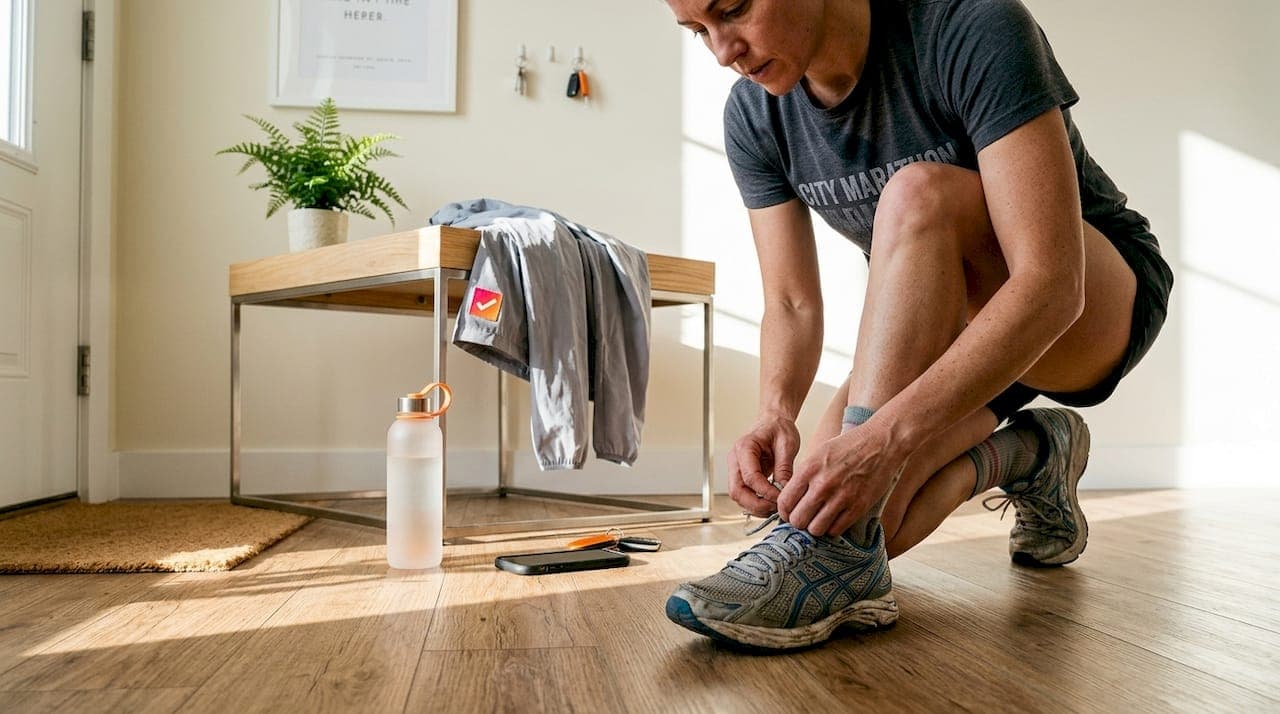
Before you lace up and hit the pavement, a few things need to be in place. Think of this section as your pre-launch checklist. Getting these basics right from day one keeps you healthy, comfortable, and motivated to keep showing up.
The minimum fitness threshold for starting a 5K training plan is simpler than most people expect. If you can walk 30 minutes briskly without stopping, you're ready to start. That's it. You don't need to be fast, thin, or athletic. You just need to move.
Gear you actually need:
- Running shoes: This is non-negotiable. Get fitted at a specialty running store. A trained associate will watch how your foot lands and recommend the right shoe for your stride. The wrong shoe is one of the top causes of beginner injuries. Don't grab whatever's cheapest on a shelf.
- Moisture-wicking clothing: Cotton holds sweat and causes chafing. Synthetic fabrics like polyester or nylon pull moisture away from your skin and dry quickly. Invest in at least two or three workout tops and a solid pair of running shorts or tights.
- Sports bra (if applicable): Fit matters here too. Bounce and friction add up fast over miles.
- Running socks: Thin, moisture-wicking socks reduce blisters. Your regular cotton ankle socks won't cut it.
- Optional extras: A fitness tracker or GPS watch, a running belt for your phone, and reflective gear if you run early morning or at night.
Pro Tip: Don't wear brand new shoes on race day. Break them in with at least four to six training runs first. Blisters at mile one of your first race are completely avoidable.
Our beginner running gear checklist breaks this down further if you want a full list before your first shopping trip.
Dynamic warm-up matters more than most beginners realize. Jumping straight into a run cold is a fast route to tight hamstrings and sore hips. Spend five minutes before each session doing leg swings, hip circles, high knees, and ankle rolls. These movements prime your joints and activate your glutes before impact begins.
For injury prevention, add simple strength work two to three times a week. Squats, glute bridges, and a basic core routine go a long way toward keeping you healthy through your training block. Our injury prevention tips cover the exact exercises we recommend for new runners.
| Gear item | Why it matters | Priority level |
|---|---|---|
| Properly fitted shoes | Prevents knee, shin, and foot injuries | Essential |
| Moisture-wicking top | Reduces chafing and overheating | Essential |
| Running socks | Prevents blisters | High |
| GPS watch or phone | Tracks pace and distance | Helpful |
| Reflective gear | Safety in low-light conditions | Situational |
Building your personalized training plan
Now that your basics are set, let's dig into how to build a personalized training plan for your race. The most important thing to understand early: your plan should fit your life, not the other way around.
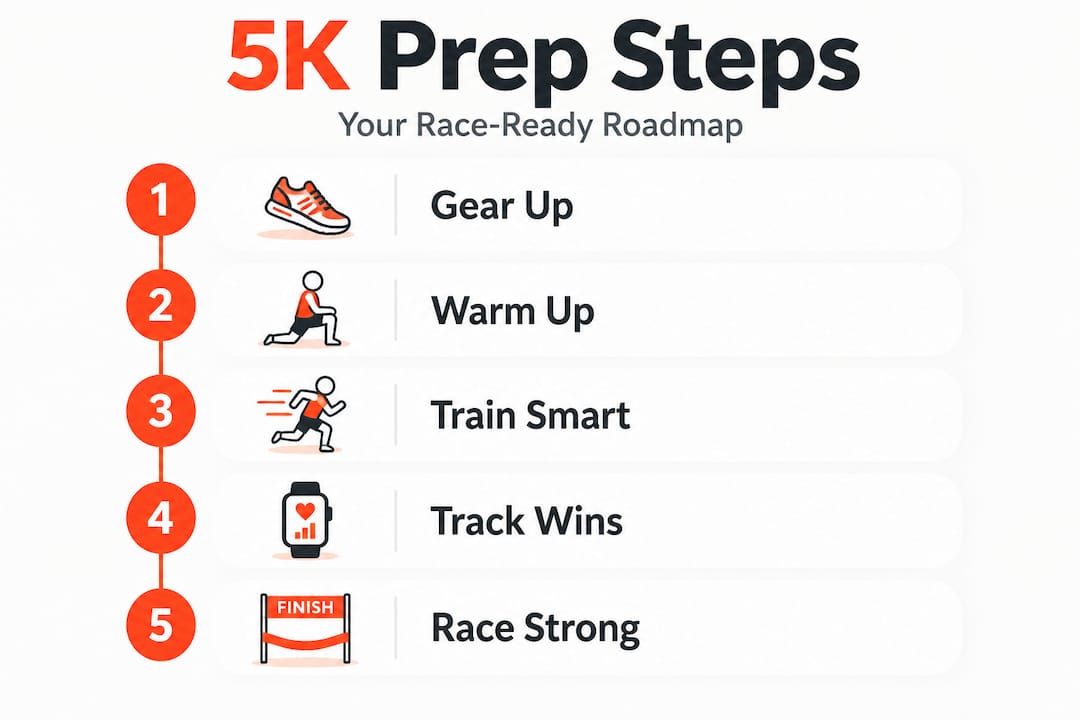
The gold standard for absolute beginners is an 8-week run-walk structure, similar to the Couch-to-5K method. You start with short run intervals mixed with walking breaks, and you gradually shift toward longer continuous running. By week eight, most beginners can run 30 minutes straight or cover the full 5K distance.
Here's what a basic weekly structure looks like:
- Week 1: Run 1 minute, walk 2 minutes. Repeat 6 to 8 times. Three sessions per week.
- Week 2: Run 2 minutes, walk 2 minutes. Repeat 5 to 6 times.
- Week 3: Run 3 minutes, walk 1 minute. Repeat 5 times.
- Week 4: Run 5 minutes, walk 1 minute. Repeat 4 times.
- Week 5: Run 8 minutes, walk 1 minute. Repeat 3 times.
- Week 6: Run 12 minutes, walk 1 minute. Repeat 2 times.
- Week 7: Run 20 to 25 minutes continuously.
- Week 8: Run 28 to 30 minutes continuously or complete a practice 5K.
This progression is evidence-backed. Personalized plans adapt to fitness levels and life schedules, which is why apps and digital tools work so well for beginners who need flexibility.
Rest and cross-training days are not optional. Schedule two rest days per week. On active recovery days, try walking, swimming, or light cycling. These keep your cardiovascular fitness building while your muscles repair.
| Week | Long run duration | Run/walk ratio | Sessions per week |
|---|---|---|---|
| 1 to 2 | 18 to 22 min | 1:2 (run:walk) | 3 |
| 3 to 4 | 22 to 26 min | 3:1 to 5:1 | 3 |
| 5 to 6 | 26 to 30 min | 8:1 to 12:1 | 3 |
| 7 to 8 | 30 to 35 min | Full run | 3 |
If life gets in the way (and it will), don't panic. Miss one run? Skip it and keep moving forward. Miss three or more in a row? Step back one week in your plan and rebuild from there. Consistency over perfection wins every time.
Check out our training workflow guide for a deeper look at how to handle schedule disruptions without losing momentum. You can also browse our weekly beginner routines for sample workout structures that fit different life schedules.
Pro Tip: Don't chase distance in the early weeks. Focus on time on your feet instead. Your body adapts to the stress of running by building stronger bones, tendons, and muscles. That adaptation takes time, and it happens whether you run fast or slow.
Executing your training: Workouts, pacing, and milestones
With your plan in hand, let's look at how to execute your workouts and track progress toward race day. Having a plan written down is step one. Executing it well is where real improvement happens.
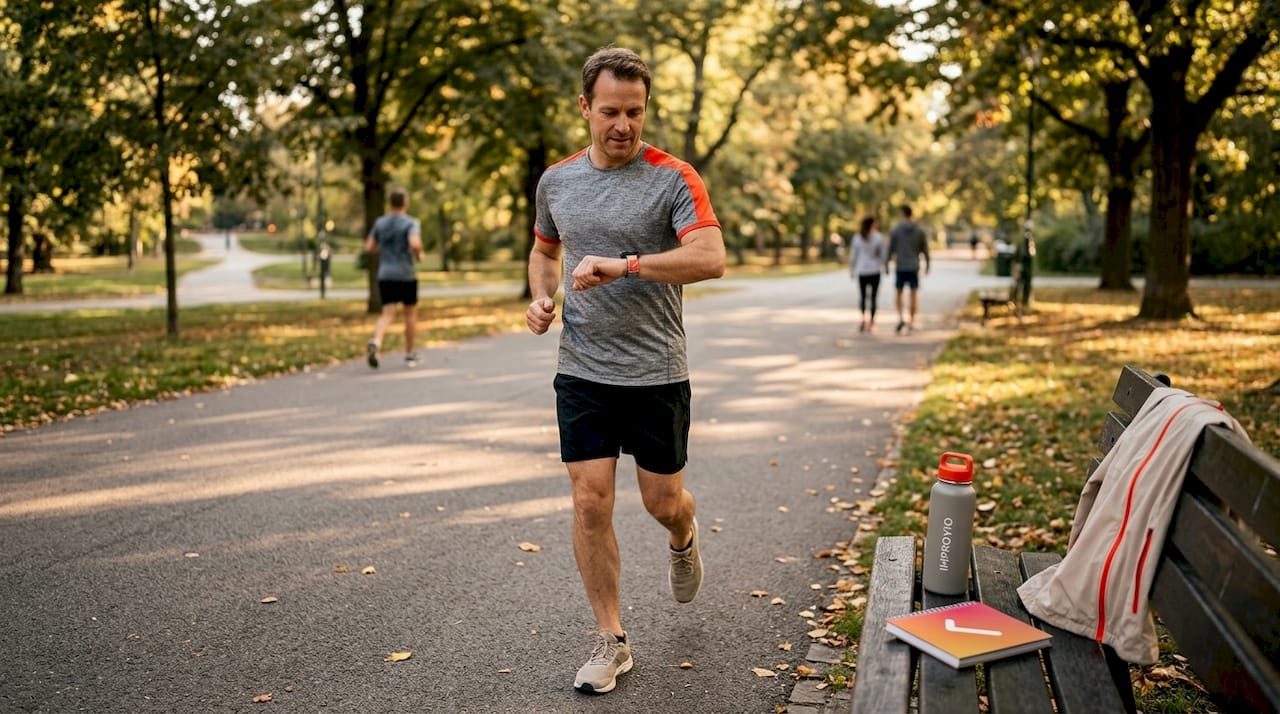
The run-walk method (developed by running coach Jeff Galloway) is your best friend early on. Run-walk intervals reduce impact stress, lower your heart rate during recovery periods, and let you cover more total distance than running straight through. Many experienced runners still use this method in races. It's not a sign of weakness. It's a smart strategy.
Pacing is where most beginners go wrong. Easy pace means conversational pace. If you can't say a full sentence out loud while running, you're going too fast. For long runs, you should be running 30 to 90 seconds per mile slower than your goal race pace. It feels almost too slow. That's normal. That's correct.
Key execution principles for beginners:
- 🏃 Easy runs: 80% of your weekly mileage should feel genuinely easy. Slow down.
- 🏃 Progressive long runs: Increase your longest run by no more than 10% each week.
- 🏃 Cutback weeks: Every third week, reduce your total mileage by 20 to 30% to allow full recovery.
- 🏃 Strength training: Two sessions per week of squats, lunges, and planks keeps you injury-free.
- 🏃 Cool down: Five minutes of walking after every run. Then stretch. Always.
Beginners finish a 5K in 30 to 40 minutes on average, which works out to roughly a 9:40 to 12:50 per mile pace. That range is wide because everyone starts from a different place. Your goal isn't to beat a time. Your goal is to finish.
Milestones to celebrate along the way:
| Milestone | When it typically happens |
|---|---|
| First full 5 minutes of running | Week 1 to 2 |
| First 10-minute continuous run | Week 3 to 4 |
| First 20-minute continuous run | Week 6 to 7 |
| First practice 5K distance | Week 7 to 8 |
Track these wins. Write them down. They matter. Progress often feels invisible during training, but looking back at where you started is one of the most motivating things you can do. Our beginner workout types guide explains each session format in detail, and our runner milestone guide helps you recognize exactly how much progress you're making week to week.
Pro Tip: Record your runs in a simple notebook or app. Note how you felt, what the weather was, and how long you went. Patterns emerge fast. You'll learn which days your body runs strong and which days you need more recovery.
Race week and the big day: Final steps and troubleshooting
Training complete. Here's how to ensure a confident, successful race week and day, with practical advice for avoiding common mistakes.
The single biggest mistake beginners make in race week is doing too much. Taper your mileage by 40% in the final week. Run two or three short, easy runs. Do not try to cram in extra miles. Your fitness is already built. Rest is what locks it in.
Race week rules to live by:
- No new shoes. Your race shoes should already have training miles on them.
- No new foods. Stick to meals you know agree with your stomach.
- No new strategies. Now is not the time to try a new warm-up routine or race tactic.
- Arrive early. Give yourself at least 45 minutes before your start time for parking, packet pickup, warm-up, and nerves.
- Dress for warmth. Dress 15 to 20 degrees Fahrenheit warmer than the temperature feels, because you warm up quickly once you start running.
Race day nutrition:
Eat a carb-focused meal about two hours before your race start. A classic option is a bagel with peanut butter and a banana. Hydrate consistently in the days leading up to the race, but just sip water or a sports drink in the last 30 to 45 minutes before the gun goes off. Overdrinking right before creates an uncomfortable run.
"Set two goals for race day: an A goal (your best case) and a B goal (simply finishing strong). When the race gets tough, your B goal keeps you moving forward."
Mental strategy matters as much as physical prep. Set clear A and B goals before race morning. Visualize yourself crossing the finish line. Focus only on what you can control: your breathing, your pace, your hydration. After you finish, recover with a meal containing carbohydrates and protein within two hours. Your muscles need that fuel to rebuild.
Our beginner race prep checklist walks you through the night-before and morning-of logistics step by step. If you're still in the early stages of training, our simple start tips can help you build confidence before you even hit the pavement.
The uncomfortable truth most experts won't tell beginner runners
Here's what most training guides gloss over. The plan is not the hard part.
The hard part is the voice in your head that says you're too slow, too out of shape, or too far behind everyone else. That voice will show up on week two when a run feels harder than week one. It'll show up when you see other runners breezing past you on the trail. And it'll whisper loudest on race morning.
Most beginner runners fall into three traps. First, perfectionism: missing one run and deciding the whole week is ruined. Second, comparison: measuring their pace against runners who have been at this for years. Third, over-planning: downloading six different apps, reading twenty training articles, and spending more time planning than actually running.
Progress is not linear. Some weeks your body adapts fast. Other weeks, nothing clicks. That's not failure. That's training. Seasoned runners know this. Beginners often don't, and they quit right before the breakthrough.
The runners who make it to the finish line aren't the ones with the most talent or the best gear. They're the ones who follow a beginner fitness workflow consistently, adjust when life gets messy, and show compassion for themselves when a run goes sideways.
A personalized plan beats any generic "one plan for all" approach. Your schedule, your pace, your race date: those details shape a plan that actually fits your life. That specificity is what keeps you on track when motivation dips.
The most successful first-time racers we see are the ones who stop trying to be perfect runners and start being consistent ones. You don't have to love every run. You just have to show up for it.
Take your next step with Improvio
You now have the framework. Gear is sorted. Your plan structure is clear. You know how to pace, how to taper, and how to handle race morning. The next move is to turn that knowledge into a schedule that fits your exact life.
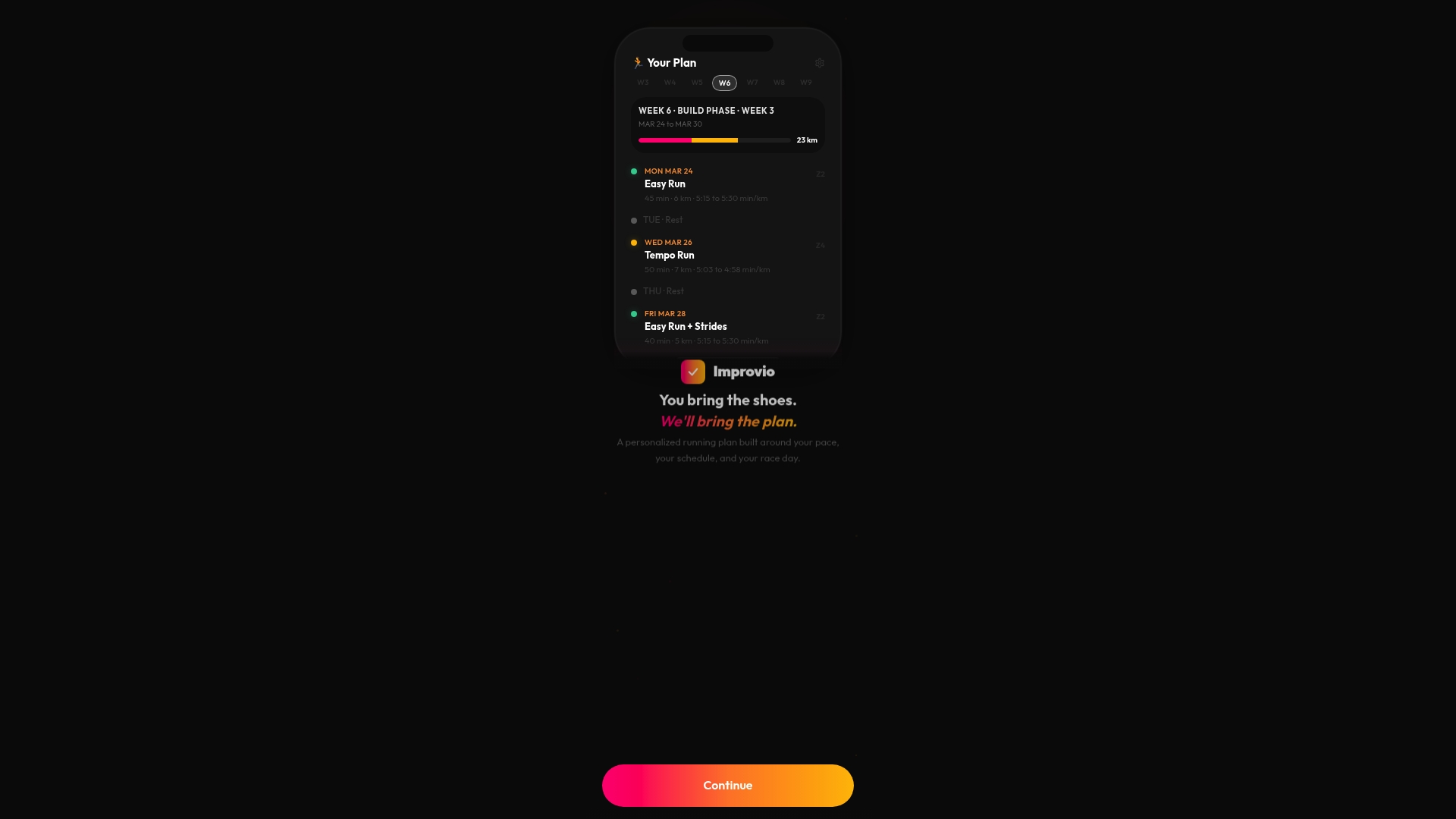
Improvio builds your personalized training plan in about 60 seconds. You enter your current pace, your race date, and how many days a week you can train. We generate a complete, week-by-week schedule built specifically for you. No guesswork. No generic plans. No experience required. If your schedule shifts or you miss a week, your plan adapts with you. You bring the motivation. We'll build the plan that gets you to the start line and through the finish. Try it free today and see your first training week laid out before you close this tab.
Frequently asked questions
How long does it take an absolute beginner to prepare for a 5K race?
Most beginners can prepare for a 5K in 8 weeks using a structured plan, but some can progress in as few as 4 weeks or as many as 12 depending on starting fitness and consistency.
What gear does a beginner need before starting race prep?
A beginner needs professionally fitted running shoes, moisture-wicking clothing, and a dynamic warm-up routine to minimize injury risk from day one.
How should I pace myself during my first race?
Start your race at a pace about 10% slower than your target, run evenly throughout, and avoid the temptation to speed up early. Most beginners finish a 5K in 30 to 40 minutes.
Should I do strength training or cross-training as I prepare?
Yes, strength training 1 to 2 times per week helps prevent injuries, improves running mechanics, and supports faster recovery between runs.
What should I eat and drink on race day?
Have a carb-focused meal like a bagel with peanut butter and a banana about two hours before the race, hydrate consistently in the days before, and avoid any new foods or drinks on race morning.