

TL;DR:
- Beginners need basic gear, realistic expectations, and flexible training plans to start running safely.
- A structured weekly routine with run, cross-training, strength, and rest days reduces injury risk.
- Simple run-walk methods and gradual mileage increases support steady progress and prevent setbacks.
Starting your first race can feel like trying to solve a puzzle with half the pieces missing. You know you need to run more, but figuring out how often, how far, and how to avoid ending up sidelined with sore knees is a whole different challenge. The good news? You don't need a coaching degree or hours of free time to build a smart training workflow. You just need a clear plan, a realistic schedule, and the confidence to follow through. This guide gives you all three, step by step.
Table of Contents
- What you need before you start: Gear, expectations, and mindset
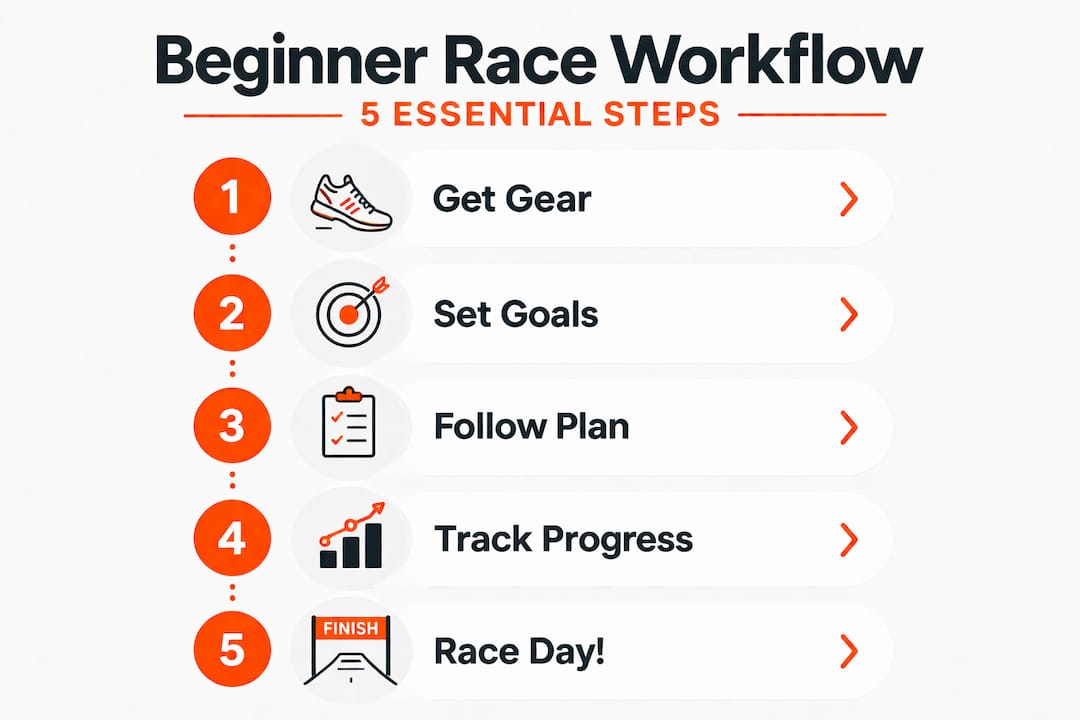
- Step-by-step beginner running workflow: Your weekly plan
- Progress pacing and injury prevention: How to avoid setbacks
- Tracking progress and preparing for race day: What to expect
- Why simple, flexible workflows outperform fancy plans for new runners
- Streamline your training with Improvio
- Frequently asked questions
Key Takeaways
| Point | Details |
|---|---|
| Focus on consistency | Sticking with a simple weekly workflow is more important than perfect execution for beginners. |
| Progress slowly | Follow the 10% rule and add strength and cross-training to reduce your risk of injury. |
| Track benchmarks | Measure your progress with realistic goals like a 30–42 minute 5K finish and milestone checks. |
| Listen to your body | Rest, stretch, and adjust your routine to stay healthy and motivated throughout your training. |
What you need before you start: Gear, expectations, and mindset
Let's keep this simple. You do not need fancy equipment to start running. What you do need are a few key basics that set you up to train safely and comfortably from day one.
Essential gear for new runners:
- Running shoes: This is your most important investment. Get fitted at a local running store if you can. The right shoe for your foot type reduces the chance of blisters, knee pain, and shin splints.
- Moisture-wicking shorts or tights: Cotton gets heavy and chafes. Synthetic fabrics keep you comfortable during longer runs.
- A water bottle or hydration plan: Even short runs demand hydration, especially in warmer months.
- Optional fitness tracker: A basic smartwatch or free app like Strava can help you log pace and distance. Not required, but helpful for tracking progress.
That's it. You are ready to run.
Now let's talk expectations. Many beginners worry they are too slow or too out of shape to even start. Here is what the data actually shows. Beginners typically complete a 5K in 30 to 42 minutes after a structured training program. That is a 9:40 to 13:30 pace per mile. If you can walk briskly, you are already in that range. Programs like Couch to 5K have guided millions of people from their couches to finish lines, and their approach is gradual and forgiving.
Realistic 5K time benchmarks for beginners:
| Training level | Estimated 5K finish time | Approx. pace per mile |
|---|---|---|
| No running background | 38 to 42 minutes | 12:15 to 13:30 |
| Some walking/activity | 33 to 38 minutes | 10:40 to 12:15 |
| Light jogging history | 30 to 33 minutes | 9:40 to 10:40 |
These numbers are not ceilings. They are starting points. Your progress will look different from anyone else's, and that is perfectly fine.
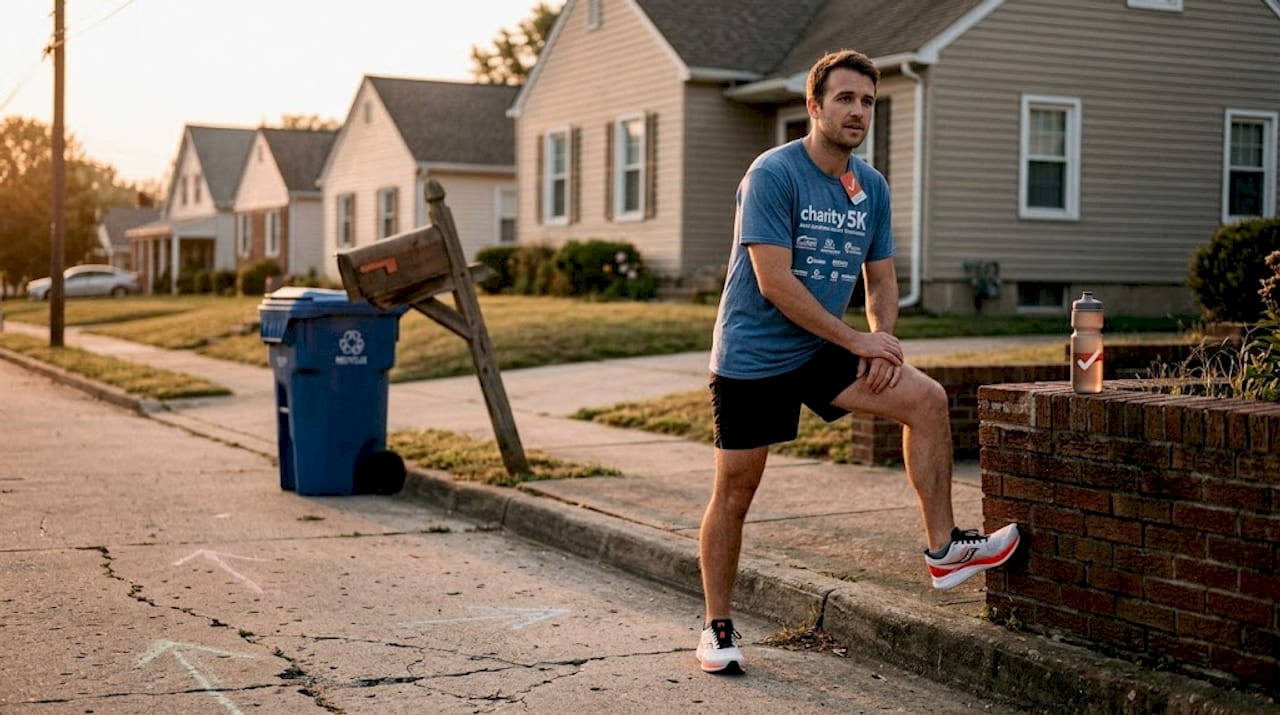
Mindset matters just as much as mileage. Flexibility in your plan prevents you from quitting when life gets in the way. Missed a Tuesday run? Move it to Thursday. Got a blister? Take an extra rest day. Rigidity leads to frustration. Flexibility leads to finish lines. For a deeper look at what to expect in your first weeks, the beginner 5K training guide is a solid starting point.
Pro Tip: Buy your running shoes at least two weeks before you start training so you can break them in on short walks. Showing up to your first run in brand-new shoes is a fast track to blisters.
Once you've gathered your basic essentials and prepared mentally, it's time to build your personalized workflow step by step.
Step-by-step beginner running workflow: Your weekly plan
A structured week removes all the guesswork. Instead of waking up and wondering, "Should I run today?" you already know the answer. Here is how to divide your week effectively as a new runner.
The core structure:
- Run days (3 per week): These are your main training sessions. Start with 20 to 30 minutes of easy running or run-walk intervals. Keep your pace conversational. If you cannot speak a full sentence, slow down.
- Cross-training days (1 to 2 per week): Think cycling, swimming, or brisk walking. These sessions build cardiovascular fitness without pounding your joints. Your legs get a break while your lungs keep improving.
- Strength days (1 to 2 per week): Bodyweight moves like squats, lunges, planks, and glute bridges protect your knees and hips. Strength training one to two times per week reduces your injury risk significantly, especially in the early weeks of training.
- Rest days (1 to 2 per week): Full rest or gentle stretching. Your body rebuilds and gets stronger during recovery, not during the run itself.
Here is a side-by-side look at two beginner-friendly weekly approaches:
Sample week comparison:
| Day | Standard run plan | Run-walk alternative |
|---|---|---|
| Monday | Easy Run 25 min | Run 1 min, Walk 2 min x 8 sets |
| Tuesday | Strength training | Strength training |
| Wednesday | Easy Run 20 min | Run 1 min, Walk 2 min x 7 sets |
| Thursday | Rest or stretch | Rest or stretch |
| Friday | Cross-training 30 min | Brisk walk or cycling 30 min |
| Saturday | Easy Run 30 min | Run 2 min, Walk 1 min x 8 sets |
| Sunday | Full rest | Full rest |
Both approaches work. The run-walk method is especially helpful if you feel winded quickly or have joint concerns. It still builds the same aerobic base as continuous running when done consistently.
One principle governs safe weekly progression: never increase your total weekly mileage by more than 10%. If you ran 10 miles this week, run no more than 11 miles next week. This rule protects you from overuse injuries like shin splints and stress fractures. Following injury prevention tips early in your training pays off big later.
"The best run plan is the one you can actually finish each week without breaking down."
For ideas on how to structure your sessions throughout the week, the weekly running routine resource offers practical templates. And if you are unsure how to prep before each session, learning about warming up before running can make a noticeable difference in how your legs feel in the first mile.
Pro Tip: Schedule your runs into your calendar like meetings. Block the time, set a reminder, and treat it as non-negotiable. Runners who plan specific training days are far more consistent than those who "run when they get a chance."
With a clear plan, let's focus on how to pace your progress and avoid common pitfalls.
Progress pacing and injury prevention: How to avoid setbacks
Injury is the number one reason new runners quit. Most of those injuries are preventable. Understanding how your body adapts to running stress is the key to staying on the road.
Your body needs time to adjust to new repetitive loads. Muscles respond faster than tendons and bones. This means you might feel aerobically ready to push harder before your connective tissue is actually ready. That disconnect is where most beginner injuries happen.
Warning signs you are progressing too fast:
- Sharp or persistent pain in the shins, knees, or feet during or after runs
- Soreness that does not fade within 48 hours
- Fatigue that carries from one run into the next
- A drop in motivation or dread before training sessions
- Increased heart rate at your usual easy pace
Any of these signals means it is time to pull back, not push through. Gradual increases of 10% per week in your training load are the most reliable way to prevent overuse injuries in new runners.
Your injury-prevention toolkit:
- Dynamic warm-up: Leg swings, hip circles, and high knees before each run activate your muscles and prepare joints for impact.
- Cool-down stretching: Hold each stretch for 20 to 30 seconds after running. Focus on your calves, hamstrings, hip flexors, and quads. Simple stretching routines for new runners can make a real difference in recovery time.
- Strength work: Two bodyweight sessions per week using moves like squats, bridges, and planks directly support your running mechanics and protect your knees and ankles.
- Cross-training on off days: Cycling or swimming keeps your cardiovascular engine running without adding pounding stress to your legs.
- Sleep and nutrition: Seven to nine hours of sleep per night and adequate protein intake are underrated recovery tools. Your body cannot rebuild without them.
Getting the right support for injury prevention early gives you a training foundation that lasts far beyond your first race. The benefits of running schedules extend beyond just fitness. A structured plan inherently manages your recovery by balancing hard days with easy ones.
Pro Tip: If you feel shin pain during a run, stop and walk home. Do not try to run through it. Early shin splints are manageable with a few days off. Ignored shin splints can become stress fractures that sideline you for months.
Taking these steps helps you build consistency and stay healthy. Now, let's talk about what your progress will look like and when you are ready for your first race.
Tracking progress and preparing for race day: What to expect
You are training consistently, staying injury-free, and feeling stronger each week. How do you know when you are actually ready to race? Clear benchmarks help you measure progress without guesswork.
Pace and time benchmarks by training week:
| Training week | Target session length | Expected pace range |
|---|---|---|
| Weeks 1 to 2 | 20 to 25 minutes | Walk/run, no pace target |
| Weeks 3 to 4 | 25 to 30 minutes | 12:30 to 14:00 per mile |
| Weeks 5 to 6 | 30 to 35 minutes | 11:30 to 13:00 per mile |
| Weeks 7 to 8 | 35 to 40 minutes | 10:30 to 12:00 per mile |
| Race week | Easy shakeout only | Comfortable, relaxed pace |
Seeing your pace improve gradually over eight to nine weeks is a clear sign the training is working. Most structured programs lead to 5K finishes in the 30 to 42 minute range, which is a meaningful and well-earned achievement for any new runner.
Hitting your race preparation milestones along the way keeps you motivated and shows you exactly how far you have come. And seeing how training plans transform beginner runners from week one to race day is genuinely motivating.
Your race week checklist:
- 🏃 Monday: Short easy run of 15 to 20 minutes at your comfortable pace
- 🧘 Tuesday: Gentle stretching and foam rolling
- 🚶 Wednesday: Light walk or full rest
- 🏃 Thursday: Short easy run of 10 to 15 minutes with a few pickups
- 🛌 Friday: Full rest, hydrate well, prep your gear
- 🥗 Saturday: Rest, light meal prep, early bedtime
- 🏁 Sunday: Race day! Warm up gently, start easy, finish strong
The week before your race is not the time to squeeze in extra miles. Trust your training. Your fitness is already there. The goal of race week is to arrive at the start line rested, hydrated, and confident.
Setting goals beyond your first race keeps the momentum going. Maybe it is shaving two minutes off your 5K time. Maybe it is signing up for a 10K in three months. Understanding why running plans matter beyond your debut race is what turns a one-time event into a lasting habit.
Pro Tip: Lay out everything you need the night before your race, including your bib, shoes, outfit, and snacks. Race day nerves are real, and having zero decisions to make in the morning keeps you calm and focused.
Why simple, flexible workflows outperform fancy plans for new runners
Here is something most training content will not tell you directly: complicated plans hurt beginners more than they help.
New runners often download elaborate training schedules with tempo runs, fartleks, and heart rate zones in week one. They last about ten days before burnout or injury forces them to stop. We see this pattern constantly. The problem is not the runner. The problem is the plan.
Research supports a simpler, more flexible approach. Both continuous slow running and the run-walk method significantly reduce injury risk compared to running at maximum effort. The run-walk method, popularized by Jeff Galloway, has helped runners of all fitness levels complete races they never thought possible. It is not a compromise. It is a smart strategy.
Rigid plans that demand a 5-mile run on day one, or that allow no flexibility for missed sessions, set beginners up to feel like failures. They are not failing the plan. The plan is failing them.
What actually works is a workflow built around your real life. Run three days this week, not four? Still a win. Walk the last half mile of a run because your legs are tired? Still a win. Habit-building is cumulative. The runner who trains consistently at 70% effort for 10 weeks will always outperform the runner who goes all-out for two weeks and then stops.
Structured running schedules work because they remove decision fatigue and build in recovery. But the best structure is one that bends without breaking when life happens. Keep it simple, keep it flexible, and keep showing up. That is the real secret.
Streamline your training with Improvio
With your training workflow in place, you may want to take advantage of digital tools that make the process even easier.
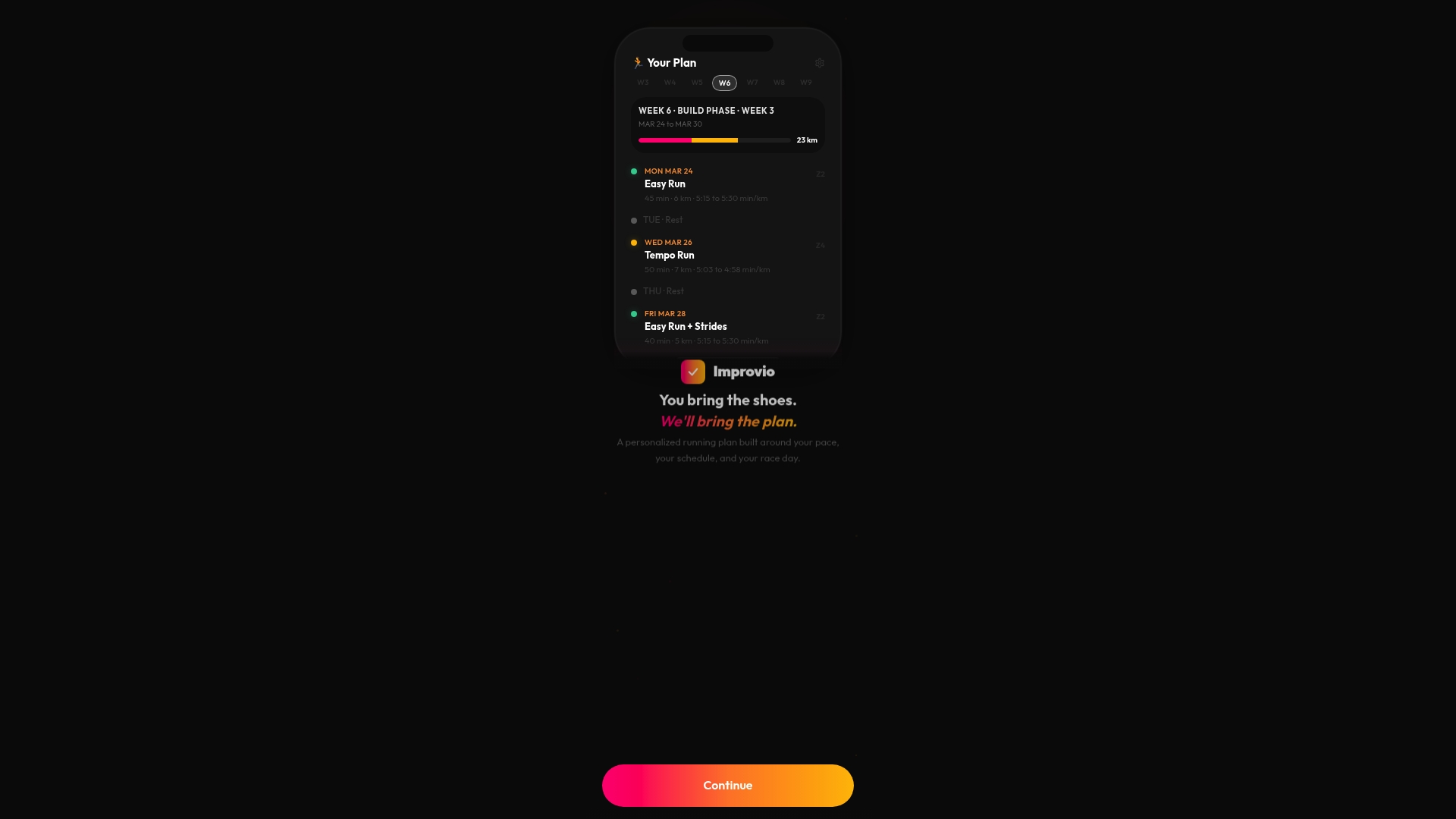
Improvio is built specifically for runners like you. No experience required. No complicated setup. Just tell us your current pace, your race date, and how many days per week you can train. In about 60 seconds, you get a fully personalized running plan built around your real schedule. Whether you are preparing for your very first 5K or just want more structure to your weekly runs, Improvio adjusts your plan as you progress. You bring the shoes. We will bring the plan. Start your free plan today and take the guesswork out of race prep.
Frequently asked questions
How many days a week should a beginner runner train?
Most experts recommend running 3 days per week, and strength and cross-training on other days supports balance and reduces the chance of injury.
What's a typical finishing time for a first 5K?
With a structured program, beginners typically finish a 5K in 30 to 42 minutes, which is a strong and achievable first-race goal.
Why is the 10% rule important in beginner running?
Keeping your weekly mileage increase to no more than 10% lets your tendons and bones adapt safely. Gradual weekly increases are one of the most evidence-backed ways to prevent overuse injuries.
Is it better to run continuously or use a run-walk method?
Both work well for beginners. Continuous slow running and run-walk methods both reduce injury compared to running all-out, so choose whichever feels more sustainable for you.
What non-running activities should I include to avoid injury?
Strength training and cross-training like walking or cycling on your off days are the most effective ways to stay healthy and keep your running consistent.