

TL;DR:
- Building endurance requires a gradual run-walk plan over several weeks.
- Focus on consistency and listening to your body rather than speed or intensity.
- Incorporating strength and cross-training enhances endurance and reduces injury risk.
Starting a running routine sounds simple until you're gasping for air after two minutes and wondering how anyone runs a 5K. You're not alone, and you're not broken. Most beginners hit that same wall. The good news is that building endurance isn't about natural talent. It's about a smart, gradual plan that fits your life. Research consistently shows that anyone, regardless of starting fitness, can progress from short walk-run intervals to a continuous 30-minute run in just a few weeks. This guide gives you exactly that: a clear, step-by-step path from your first shuffling steps to crossing a finish line with confidence.
Table of Contents
- What you need to know before starting
- Step-by-step plan to build running endurance
- Strength training and cross-training: your endurance boosters
- Mistakes to avoid and troubleshooting common problems
- What to expect: Race day readiness and long-term progress
- Our perspective: What most beginner guides miss about building endurance
- Next steps: Stay on track and keep building with Improvio
- Frequently asked questions
Key Takeaways
| Point | Details |
|---|---|
| Progress is gradual | Most beginners can reach a 30-minute continuous run or finish a 5K in 8–9 weeks with consistent effort. |
| Run-walk works | Using intervals and walk breaks helps build endurance, keeps you injury-free, and reduces fatigue. |
| Strength training helps | Adding strength or cross-training sessions each week can boost your running endurance by over 30 percent. |
| Personalization matters | Tailor your training and progression to your own pace and schedule for lasting success. |
What you need to know before starting
Now that you see lasting endurance is achievable, let's cover what you'll need and what to expect before you begin.
First, forget the idea that you need a lot of gear. A pair of well-fitting running shoes and comfortable clothes are genuinely all you need to start. Shoes matter most because poor support leads to knee and ankle discomfort. Visit a local running store and ask for a basic fit check. Everything else, the GPS watch, the foam roller, the high-tech socks, can come later.
Here's what realistic progress looks like for most beginners, based on the Couch to 5K running plan:
| Milestone | Typical timeline |
|---|---|
| First continuous 30-minute run | 8 to 9 weeks |
| Base mileage of 12 to 15 miles per week | Around 12 weeks |
| First 5K finish (average time 34 to 40+ minutes) | 9 weeks |
These numbers aren't intimidating targets. They're proof that a consistent, low-pressure approach works.
Before your first run, nail down these basics:
- Mindset first. Fitness follows consistency, not intensity.
- Track effort, not pace. Perceived effort (RPE) on a scale of 1 to 10 is more useful than staring at your GPS speed.
- Rest days are training days. Your body builds endurance during recovery, not during the run itself.
- Start with running for beginners principles to avoid early burnout.
- Learn about beginner running workout types so you know what Easy Runs, Tempo Runs, and Strides actually mean.
Pro Tip: Block your run sessions in your calendar like doctor appointments. Non-negotiable time slots build the habit faster than willpower alone.
Step-by-step plan to build running endurance
With realistic expectations and the right setup, let's look at the nuts and bolts of gradually building endurance, one week at a time.
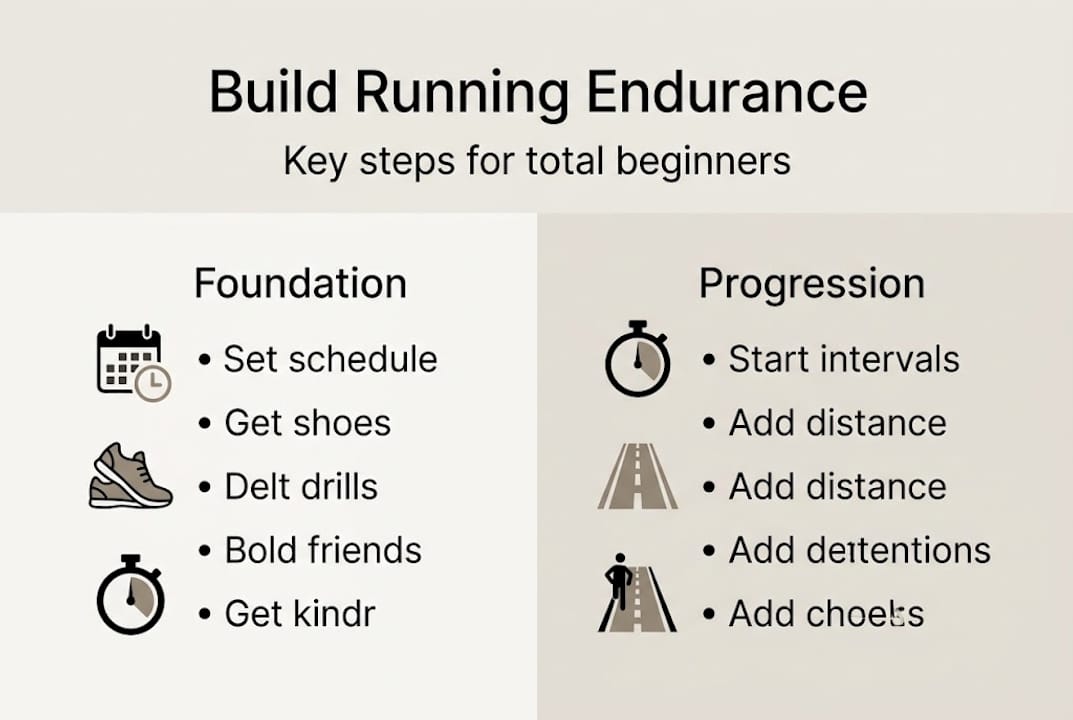
The most effective approach for beginners is the run-walk method. You alternate short running segments with walking recovery. Over weeks, you gradually extend the running parts and shorten the walking breaks. It feels almost too easy at first. That's the point.
Here's a simple week-by-week progression:
- Week 1 to 2: Run 1 minute, walk 1.5 minutes. Repeat 8 times. Total workout: about 20 minutes.
- Week 3 to 4: Run 2 minutes, walk 1 minute. Repeat 6 to 8 times.
- Week 5 to 6: Run 5 minutes, walk 1 minute. Repeat 4 to 5 times.
- Week 7 to 8: Run 10 to 15 minutes, walk 1 minute. Repeat 2 to 3 times.
- Week 9: Attempt a continuous 20 to 30-minute run at a comfortable pace.
The Couch to 5K running plan recommends adjusting intervals based on your pace. For example, if you run around a 9-minute mile, try running 2 minutes and walking 30 seconds. Track your RPE, not your GPS. If you feel like you're at a 6 or 7 out of 10 effort, you're in the right zone.
Here's how the main training approaches compare:
| Approach | Best for | Endurance benefit | Injury risk |
|---|---|---|---|
| Run-walk intervals | Absolute beginners | High | Low |
| Steady continuous runs | Intermediate runners | High | Moderate |
| High-intensity intervals | Experienced runners | Very high | Higher |
For your first race, check out simple steps for your first race and explore 5K training for beginners to understand what the full journey looks like.
Pro Tip: Adapt your intervals to how you feel that day. If you're tired or stressed, shorten the running segments. Listening to your body beats following a rigid script every time.
Strength training and cross-training: your endurance boosters
Once you're consistently building up your runs, it's time to add powerful extras that can multiply your endurance further.
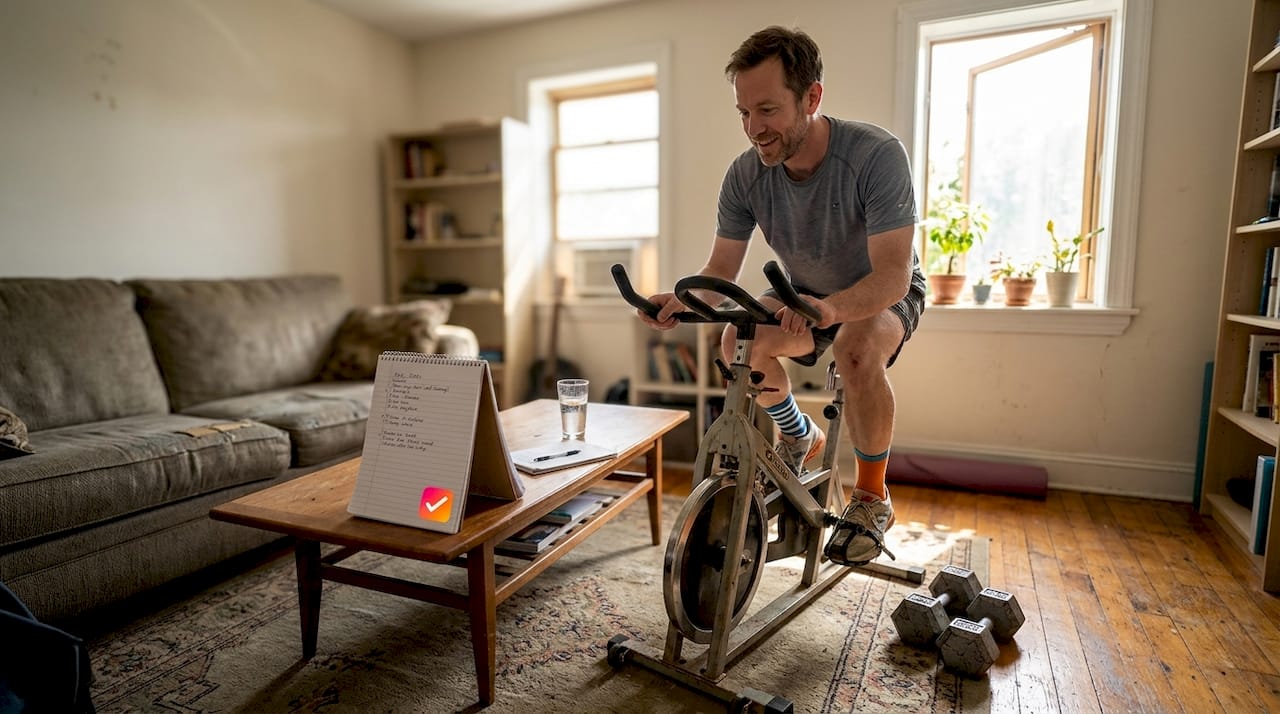
Strength training isn't just for people who want bigger muscles. For runners, it builds the durability to keep good form when you're tired. Research shows that strength training improves endurance by up to 35% in time to exhaustion, even with just one to two sessions per week. That's a significant gain for a small time investment.
You don't need a gym. Try these bodyweight exercises:
- Squats and lunges for leg power and knee stability
- Planks and dead bugs for core strength that supports your running posture
- Glute bridges to protect your hips and lower back
- Resistance band exercises for hip abductors, which reduce the risk of IT band issues
- Easy running drills to improve form and efficiency
Cross-training is equally valuable. Cycling, swimming, or brisk walking on your non-running days keeps your cardiovascular fitness building without the impact stress on your joints.
Studies show that walk-run strategies lead to similar race completion rates as continuous running, but with significantly less muscle pain and fatigue. That means you can finish your first race feeling stronger, not wrecked.
If your week is packed, count cross-training sessions as full training days. A 30-minute bike ride counts. A swim counts. The goal is consistent aerobic work, and your body doesn't care what form it takes. For a full overview of how to structure your week, the beginner fitness plan steps guide breaks it down simply.
Mistakes to avoid and troubleshooting common problems
Even with a solid plan, it's easy to stumble. Here are the pitfalls to avoid and fixes that keep you moving forward.
Most beginners don't fail because they're unfit. They fail because they make a handful of very predictable mistakes. Knowing them in advance puts you ahead of the curve.
- Doing too much too soon. Adding more than 10% mileage per week dramatically increases injury risk. Stick to gradual increases.
- Skipping rest days. Rest is when your muscles repair and grow stronger. Skipping it leads to burnout and injury.
- Ignoring pain. Soreness is normal. Sharp or persistent pain is a signal to stop and assess.
- Comparing yourself to others. Your pace is your pace. Someone else's progress is irrelevant to yours.
- Quitting after one bad run. One tough session means nothing. Consistency over weeks is what builds endurance.
If you feel sore after a run, take an extra rest day and do light stretching. If you lose motivation, revisit your why. Why did you sign up for that race? Use beginner running motivation tips to reconnect with your goal. Tracking your milestones with a runner milestones guide also helps you see how far you've come.
Missed a workout? Just pick up the next scheduled session. Don't try to make up lost runs by doubling up. That's how injuries happen.
Pro Tip: Embrace walk breaks without guilt. Walk-run strategies reduce pain compared to continuous running. Walking isn't failing. It's smart training.
What to expect: Race day readiness and long-term progress
You've learned how to avoid common pitfalls, so what does true progress look like, and how do you know you're ready for your first race?
Progress in running is rarely a straight line. Some weeks feel amazing. Others feel like you're starting over. Both are normal. What matters is the trend over time, not any single session.
Here's what week-by-week progress typically looks like:
- Weeks 1 to 2: Breathing feels hard. Legs feel heavy. This is normal adaptation.
- Weeks 3 to 4: Run intervals start to feel more manageable. Recovery between sessions improves.
- Weeks 5 to 6: You notice you can hold a conversation during easy runs. That's a great sign.
- Weeks 7 to 8: Continuous runs of 15 to 20 minutes feel achievable.
- Week 9 and beyond: You're ready for your first 5K.
You're race-ready when you can run continuously for 20 to 30 minutes, hold a light conversation while running, and feel only mild soreness the day after a long run.
First 5K average finish time: 34 to 40+ minutes. Most beginners complete their first 5K in 9 weeks of consistent training. That's a realistic, achievable goal. Plateaus will happen. A week where you feel slower or more tired than the week before is part of the process. Adjust your beginner running schedule if needed, but don't stop.
Our perspective: What most beginner guides miss about building endurance
Beyond the official plans and milestones, here's a perspective you won't often hear in traditional running guides.
Most new runners quit not because they're unfit, but because they expect progress to feel like a steady upward climb. When it doesn't, they assume something is wrong with them. It isn't. Endurance is built through habit, not heroics.
The runners who make it to race day aren't the ones who trained hardest in week one. They're the ones who showed up consistently, even when the run felt bad, even when life got busy, even when they had to walk more than they planned.
Fancy apps and GPS data are useful, but they can also become a distraction. Trust how your body feels. Celebrate every milestone, no matter how small. Running three minutes without stopping when last week you could only do two? That's real progress. Write it down.
Fitting training into a real, busy life matters more than nailing every workout perfectly. A easy fitness plan steps approach that bends around your schedule will always beat a rigid plan you abandon by week three. Small, frequent wins build the confidence that keeps you going.
Next steps: Stay on track and keep building with Improvio
With the fundamentals covered, you may be wondering how to stay on course and maximize your progress.
That's exactly where Improvio comes in. Improvio builds a personalized running plan around your pace, your schedule, and your race date. Setup takes about 60 seconds, and your first plan is free. No experience needed.
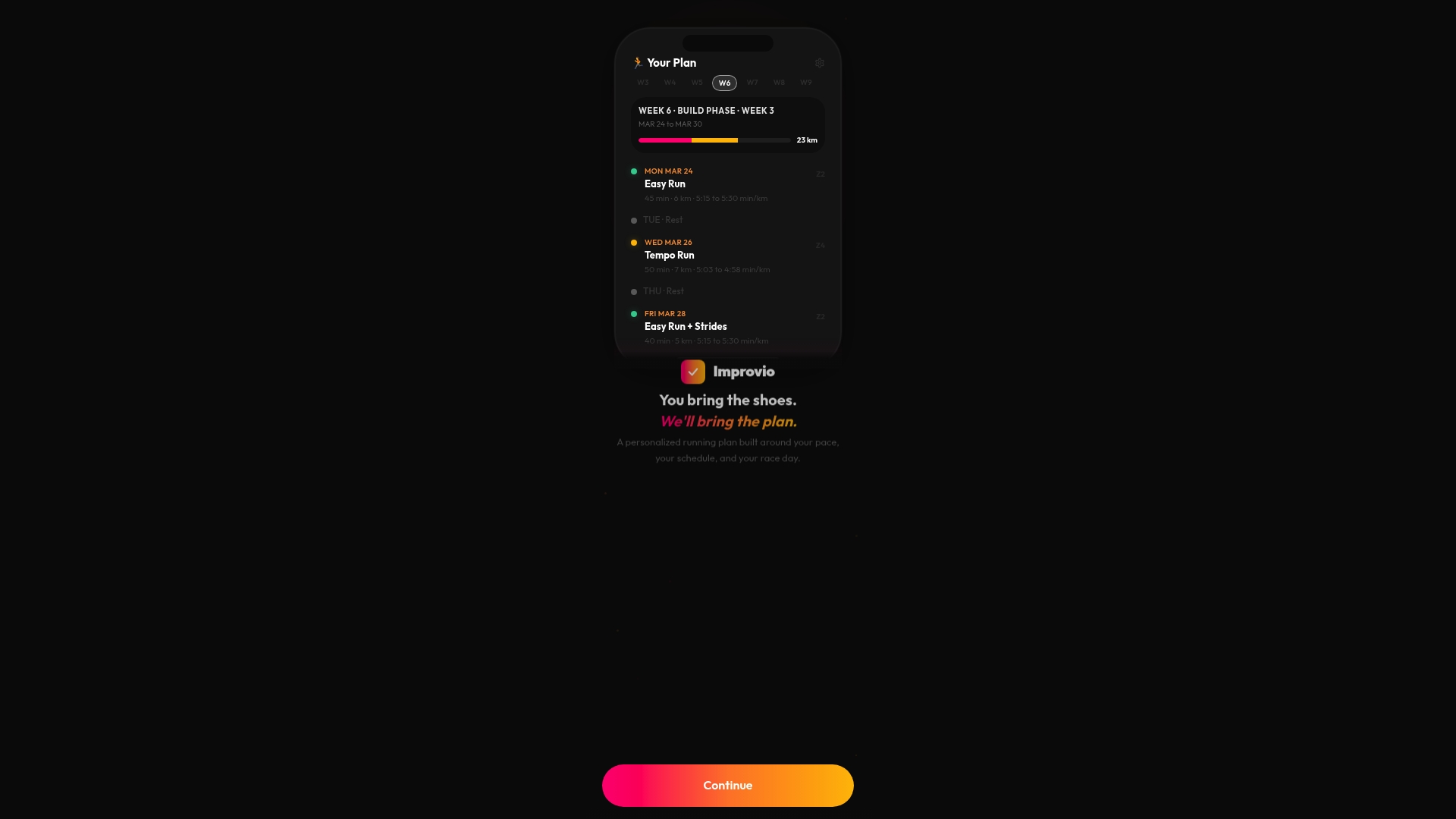
You get a structured weekly schedule that adapts as you improve. No guesswork, no generic plans that don't fit your life. Improvio keeps you consistent with reminders and progress tracking so you never lose momentum. Explore running fitness benefits to see what consistent training can do for your health, energy, and confidence. You bring the shoes. We'll bring the plan.
Frequently asked questions
How long does it take for a beginner to build running endurance?
Most beginners can run continuously for 30 minutes or complete a 5K in 8 to 9 weeks with consistent training using a structured run-walk progression.
Is it normal to feel out of breath or very tired at first?
Yes, completely normal. Using run-walk intervals and progressing gradually helps your body adapt, and walk-run strategies reduce fatigue compared to trying to run continuously from day one.
What if I miss a week or fall behind in my plan?
Missing a week is normal. Just pick up the next scheduled session and focus on consistency over perfection. Don't double up to compensate.
Should beginners add strength training to their routine?
Yes. Even one to two sessions per week of bodyweight exercises can improve endurance by 35% in time to exhaustion, making your runs feel easier and reducing injury risk.