

TL;DR:
- Setting clear, realistic goals helps new runners track progress and stay motivated.
- Tracking tools like apps or paper logs support consistency and behavior adaptation.
- Focusing on process goals and building habits prevents burnout and ensures steady progress.
Starting your running journey is exciting. But without a clear plan, it's easy to lose direction fast. Many new runners set goals like "get fit" or "run more" and then wonder why motivation fades after two weeks. The truth is, vague goals lead to vague results. What you need is a structured, realistic approach that matches your current fitness, your schedule, and your race date. This guide walks you through exactly that. From picking the right tools to building a step-by-step goal framework, you'll leave with a clear picture of how to train smart and cross that first finish line.
Table of Contents
- Why goal setting is essential for new runners
- Tools and techniques to set effective running goals
- Step-by-step process for setting achievable running goals
- How to measure progress and stay motivated
- The reality of goal setting for new runners: what most guides miss
- Get personalized support on your running journey
- Frequently asked questions
Key Takeaways
| Point | Details |
|---|---|
| Set clear beginner goals | Realistic, specific race goals prevent burnout and make results achievable. |
| Track progress consistently | Use an app or log to monitor runs, boost motivation, and see improvements over time. |
| Adapt plans as needed | Flexibility and celebrating small wins help maintain momentum and overcome setbacks. |
| Embrace the process | Success comes from building habits and adapting, not aiming for perfection from day one. |
Why goal setting is essential for new runners
Goal setting isn't just motivational fluff. It's the difference between showing up consistently and quitting after week three. New runners who skip this step often fall into a few predictable traps.
Here's what tends to go wrong:
- Vague goals: "I want to run more" gives you nothing to measure. Without a target, there's no way to know if you're making progress.
- Overestimating ability: Jumping from zero to a 10K in four weeks sounds ambitious, but it usually leads to injury or burnout.
- Skipping progress tracking: Without a log or app, small wins go unnoticed. That makes it easy to feel like nothing is working.
- No race target: A specific race date creates urgency. Without one, training stays optional.
When you set a clear, realistic goal, everything changes. You know what workouts to do, when to rest, and how to measure success. You also get a real sense of achievement each time you hit a milestone. That feeling keeps you going.
Research backs this up. Longer, structured plans allow new runners to adapt and boost motivation through consistent tracking. A 20-week plan, for example, gives your body time to adjust to new stress without breaking down. Rushing the process is one of the most common beginner mistakes.
Tracking your progress matters just as much as the goal itself. Whether you use a notebook or a running app, logging your workouts helps you spot patterns, celebrate small wins, and stay accountable. Check out these motivation tips for beginners if you need help staying consistent early on.
You should also get familiar with beginner runner milestones so you know what realistic progress looks like week by week. And if you're still figuring out how to structure your training, a solid running plan for beginners is the best place to start.
"A goal without a plan is just a wish. For new runners, a structured plan turns that wish into a finish line."
Goal setting gives your training purpose. It turns random jogs into a mission. And that shift in mindset is what separates runners who finish their first race from those who never make it to the start line.
Tools and techniques to set effective running goals
With the importance of goal setting established, it's time to look at the tools that help you succeed. The good news is you don't need expensive gear to get started. You just need something that works for you.
There are three main categories of tracking tools:
Paper logs: A simple notebook where you write down your run date, distance, time, and how you felt. Low tech, zero cost, and surprisingly effective.
Running apps: Apps like Strava, Nike Run Club, or Improvio let you log runs automatically, track pace, and visualize progress over time. Many are free. Running apps for beginners are a great way to stay accountable without overthinking it.

Smartwatches and wearables: Devices like Garmin or Apple Watch track your heart rate, pace, and distance in real time. They're the most detailed option but also the most expensive.
Here's a quick comparison to help you choose:
| Tool | Cost | Ease of use | Data detail | Best for |
|---|---|---|---|---|
| Paper log | Free | Very easy | Low | Minimalists |
| Running app | Free to low | Easy | Medium | Most beginners |
| Smartwatch | High | Moderate | High | Data-driven runners |
Using apps or logs supports new runners to track and sustain motivation over time. The key is consistency, not complexity. Pick one tool and stick with it.
Technology can also help with accountability. Sharing your runs with a friend or joining an online group adds a social layer that keeps you honest. Explore how technology for runner motivation can work for your specific situation.
Once you have your tracking system set up, pair it with a clear beginner running schedule so every logged run has a purpose.
Pro Tip: Don't choose the fanciest tool. Choose the one you'll actually open every day. A paper log you use beats an app you ignore.
Step-by-step process for setting achievable running goals
After selecting your tools, follow these steps to develop a winning goal-setting plan.
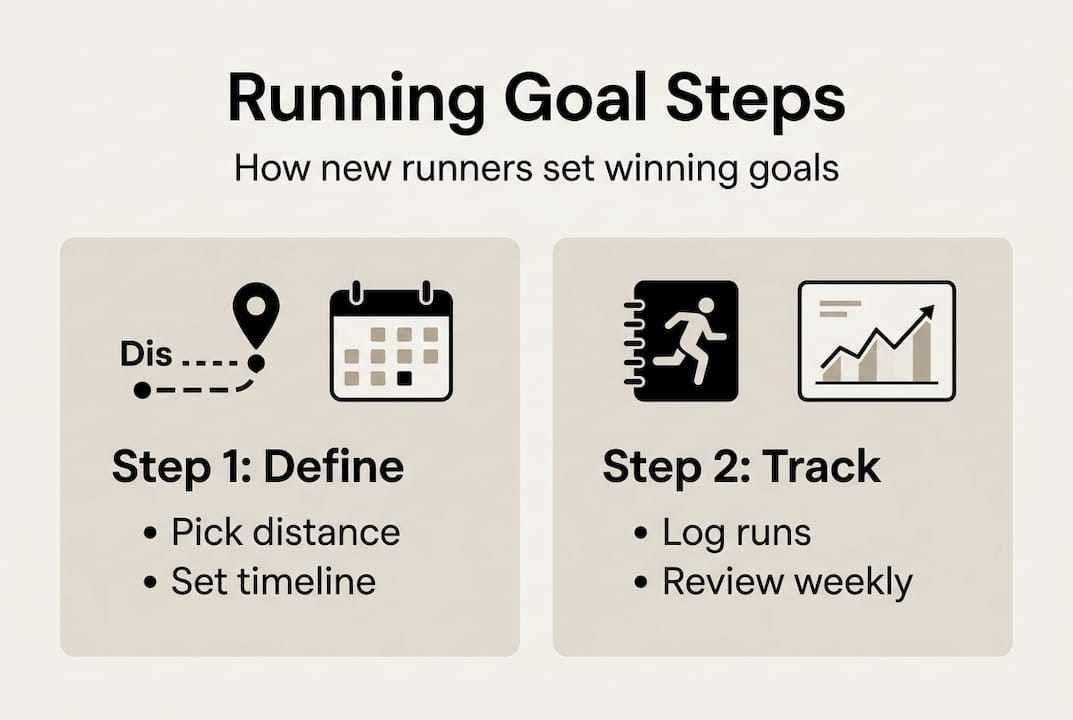
- Define your "why." Why do you want to run? Health, weight loss, stress relief, a personal challenge? Your reason fuels your commitment when motivation dips.
- Assess your starting fitness. Can you walk briskly for 30 minutes? Run for 5 minutes without stopping? Be honest. Your starting point shapes your timeline.
- Choose a target race and distance. A 5K is a perfect first goal. Pick a real race with a real date. This creates accountability and excitement. Review the steps for your first race to get oriented.
- Set process goals, not just outcome goals. "Run three times a week" is a process goal. "Finish a 5K" is an outcome goal. You need both. Process goals build the habit; outcome goals give you direction.
- Pick a training plan that fits your timeline. Empirical evidence shows that new runners benefit from longer training plans and systematic tracking for motivation. A 10-week beginner training guide is a solid starting point for most new runners.
- Schedule your runs like appointments. Put them in your calendar. Treat them as non-negotiable.
Safety first: Never increase your weekly mileage by more than 10% from one week to the next. This rule helps prevent overuse injuries that sideline new runners before they ever reach race day.
Pro Tip: Build two buffer weeks into your plan. Life happens. A missed workout shouldn't derail your entire schedule. Buffer weeks give you room to catch up without panic.
Understanding why use a training plan matters too. A structured plan removes guesswork, keeps your training balanced, and reduces injury risk. You don't have to figure it all out on your own.
How to measure progress and stay motivated
Now let's make sure you stay on track with smart measurements and motivation strategies.
Tracking your runs is more than just logging miles. You want to capture key stats that tell a real story about your improvement. For each run, record:
- Distance: How far did you go?
- Time: How long did it take?
- Pace: Minutes per mile or kilometer.
- Effort level: Did it feel easy, moderate, or hard?
- Notes: Weather, how your legs felt, anything unusual.
Here's how digital and paper logs compare for day-to-day tracking:
| Feature | Digital log (app) | Paper log |
|---|---|---|
| Auto-tracking | Yes | No |
| Visual progress charts | Yes | No |
| Easy to share | Yes | No |
| No battery needed | No | Yes |
| Personalized and flexible | Moderate | High |
Tracking progress with logs or apps sustains motivation and enables adaptation for new runners. When you can see that your pace improved by 30 seconds per mile over four weeks, that's real evidence you're getting better.
Staying motivated through the tough weeks is its own skill. Here are tactics that work:
- Celebrate small wins. Ran your longest distance yet? That deserves recognition, even if it's just a check mark on a calendar.
- Find a running buddy or community. Accountability partners make it harder to skip a workout.
- Use progress visuals. A simple chart showing your weekly mileage going up is surprisingly powerful.
- Adjust your goals when needed. If you're ahead of schedule, stretch your target. If you're struggling, scale back without guilt.
For more ideas, explore these running motivation tips and find what works best for your personality. You can also get specific motivation for your first race to keep your eyes on the prize as race day approaches.
The reality of goal setting for new runners: what most guides miss
Most goal-setting guides tell you to set SMART goals, download an app, and follow a plan. That's all useful. But here's what they rarely say: chasing a time or distance goal too soon can actually work against you.
When new runners fixate on pace or mileage from week one, every slow run feels like failure. That mindset burns people out faster than any tough workout. The real goal in your first 4 to 6 weeks isn't speed. It's building the habit of running at all.
Process goals, like "run three times this week" or "complete every scheduled workout," are what build the foundation. They're also what keep you coming back after a bad run. Tracking realistic race milestones helps you see progress without obsessing over numbers.
Setbacks are part of the process. A missed week, a sore knee, a rough run. These aren't signs you're failing. They're signs you're a runner. The runners who make it to race day are the ones who adapt, not the ones who are perfect. Build your goals around consistency and adaptation, and the results will follow.
Get personalized support on your running journey
You've got the framework. Now it's time to put it into motion. Setting goals is just the start. Having the right support structure makes all the difference between a plan that lives in your head and one you actually follow.
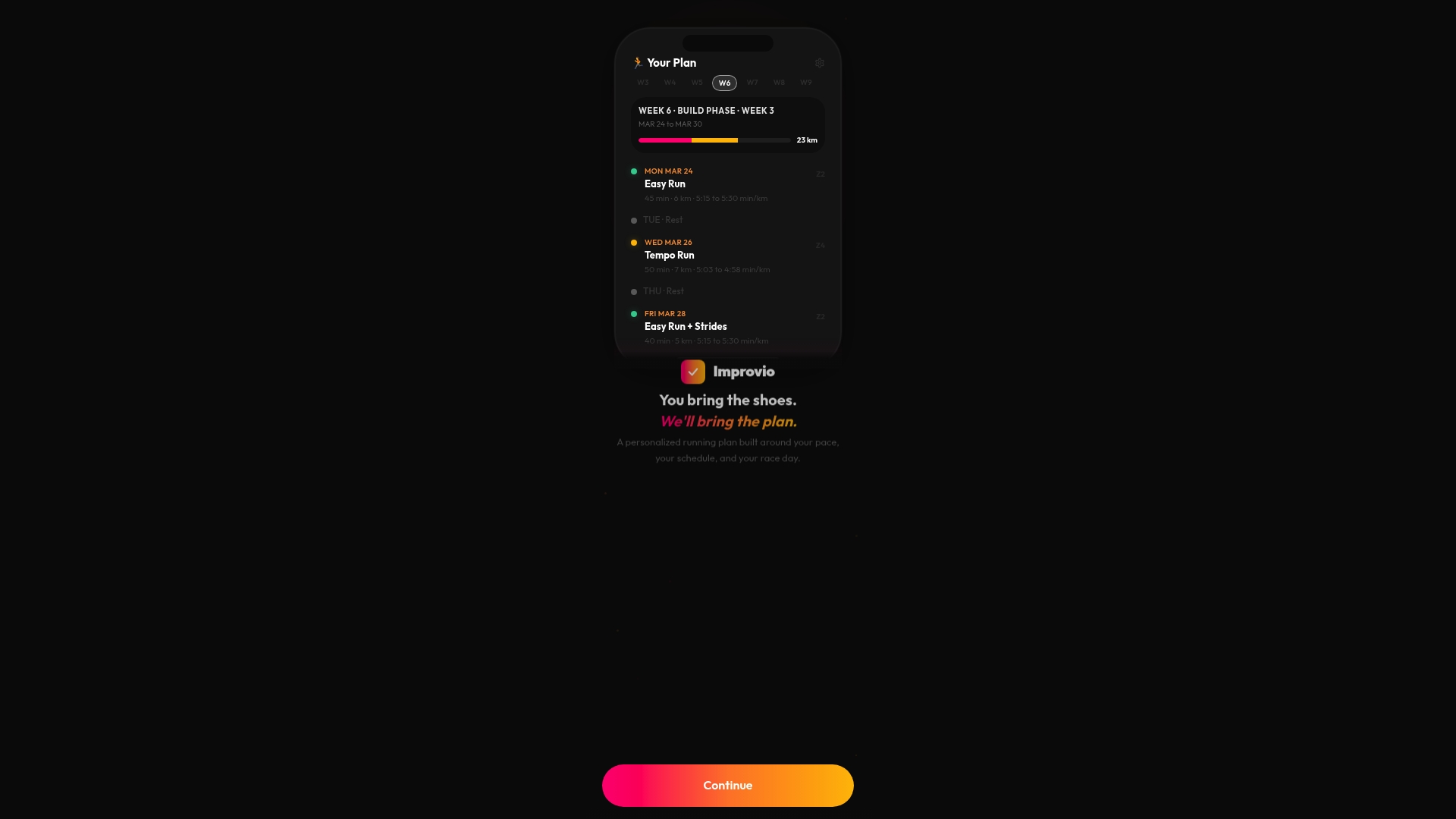
Improvio is built for exactly this moment. In about 60 seconds, you can create a personalized running goal tracker that fits your pace, your schedule, and your race date. No experience needed. No guesswork. Just a clear, beginner-friendly training plan that tells you exactly what to run each day. Start free and see how a structured plan changes everything.
Frequently asked questions
How can I choose a realistic first race goal as a new runner?
Pick a distance that challenges you without overwhelming your current fitness level. A 5K is the most popular first milestone because longer adaptation periods help novices succeed without burning out.
What is the best way to track my training progress?
A running app or simple paper log both work well. Apps and logs boost motivation and help new runners see real improvement over time.
What if I miss a workout or fall behind my plan?
Missing a session is completely normal. Just pick up where you left off and adjust your schedule slightly. Building flexibility into plans helps new runners adapt and stay on track long term.
How do I stay motivated if progress feels slow?
Focus on small wins and use your training log to spot improvements you might otherwise miss. Tracking and celebrating progress sustains motivation even when the big goal still feels far away.