

TL;DR:
- Motivation in running is built through action and routine, not just inspiration.
- Developing discipline and identity-based habits sustains long-term motivation beyond external rewards.
- Consistent training plans, tracking progress, and understanding personal 'why' are key to lasting motivation.
Most new runners believe motivation is what gets you out the door. You wait to feel inspired, and then you run. But that's actually backwards. Runner motivation is primarily built through action, routine, and a clear personal reason for running. Inspiration follows movement, not the other way around. If you're preparing for your first race and wondering why some days feel impossible, this guide is for you. We'll walk you through the science, the practical steps, and the simple planning tools that keep beginners moving forward consistently.
Table of Contents
- Understanding runner motivation: The science and the myths
- Personalizing your motivation: Finding your 'why' as a new runner
- Building consistency: Simple training plans and milestone tracking
- Overcoming setbacks: What to do when motivation drops
- Our fresh take: Building runner motivation that lasts
- Ready to build your runner motivation?
- Frequently asked questions
Key Takeaways
| Point | Details |
|---|---|
| Motivation follows action | Runners build motivation by taking consistent steps, not waiting for inspiration. |
| Personal reason matters | Identifying your personal ‘why’ fuels lasting motivation and makes routines stick. |
| Structured plans drive progress | Following a simple, personalized training plan helps beginners reach milestones and build confidence. |
| Discipline beats emotion | Staying committed on tough days is more important than relying on motivation alone. |
| Identity shift sustains running | Embracing the mindset of being ‘a runner’ leads to long-term motivation and success. |
Understanding runner motivation: The science and the myths
Now that you understand the basics, let's dig into what really affects runner motivation and the science behind it.
First, let's separate two things that often get confused: motivation and discipline. Motivation is the desire to run. Discipline is the habit that gets you out the door whether or not you feel like it. Most beginners rely too heavily on motivation and burn out fast when that feeling fades.
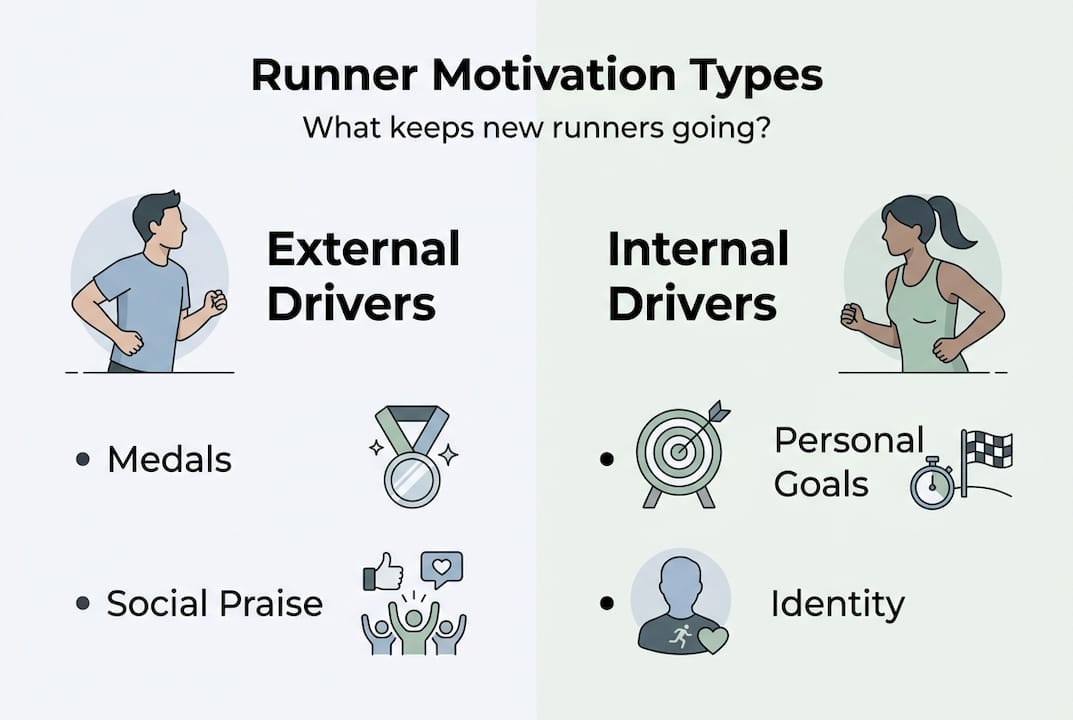
There are two types of motivation worth knowing:
- Intrinsic motivation: Running because it makes you feel good, strong, or proud.
- Extrinsic motivation: Running for medals, approval, or external rewards.
Both have value, but intrinsic motivation is what keeps you going long term. Self-determination theory shows that intrinsic motivation paired with high self-efficacy leads to better adherence to running routines. In simple terms, when you believe you can do it and you run for reasons that matter to you, you stick with it.
"Motivation is what gets you started. Discipline is what keeps you going." This is especially true for new runners who haven't yet built a running identity.
Here are the biggest myths beginners believe about runner motivation:
- Myth 1: You need to feel motivated to run. Reality: action creates motivation, not the other way around.
- Myth 2: External rewards like medals are enough. Reality: they help short term but don't sustain long-term habits.
- Myth 3: Motivation is constant for experienced runners. Reality: even elite athletes struggle with low-motivation days regularly.
Your sense of autonomy also matters. When you choose your own pace, your own schedule, and your own goals, you're far more likely to stay consistent. That's not just a feel-good idea. It's backed by beginner motivation strategies that emphasize self-chosen training as a key driver of long-term adherence.
Self-efficacy, which means your belief in your own ability to succeed, grows with every completed run. Each small win builds the next one. That's why starting simple matters so much.
Personalizing your motivation: Finding your 'why' as a new runner
With the science in mind, here's how you can tailor your motivation and support system to fit your goals.
Your personal 'why' is the anchor that holds everything together. Personal reasons for running, whether it's health, confidence, a sense of achievement, or social connection, help new runners maintain motivation far longer than generic goals like "get fit."
Here's how to find yours:
- Write down three reasons you want to run. Be specific. "I want to finish a 5K without stopping" beats "I want to be healthier."
- Identify which reason feels most personal and emotional. That's your core 'why.'
- Create a short mantra around it. Something like "I run for me" or "Strong and steady."
- Post it somewhere visible, your phone lock screen, your mirror, your running bag.
Routines reinforce motivation. When running becomes part of your daily rhythm, you stop negotiating with yourself about whether to go. It just happens.
Pro Tip: Track your runs in a simple notebook or app. Write one word about how you felt after each run. Over time, you'll see a pattern. Most runs feel better than you expected before you started.

Group runs and online communities are also powerful. Running with others creates accountability and social connection, two strong intrinsic motivators. Look for local running clubs or beginner-friendly groups on social media.
Here's a quick comparison to help you see the difference between motivator types:
| Motivator type | Example | Long-term staying power |
|---|---|---|
| Extrinsic | Finishing medal, social praise | Low to medium |
| Intrinsic | Personal pride, stress relief | High |
| Identity-based | "I am a runner" | Very high |
The goal is to move up that table. Start with whatever gets you going, but work toward identity-based motivation. Explore motivation for first races to see how other beginners have made that shift.
Building consistency: Simple training plans and milestone tracking
Personalized motivation is great, but consistency is what turns plans into real progress. Here's how to build it.
The structure of your training matters as much as your mindset. Simple base-building plans for beginners use run/walk intervals, weekly consistency, and progressive mileage to build fitness safely and sustainably.
Here's a basic framework to follow:
- Run 3 to 4 days per week. Rest days are not optional. They're part of the plan.
- Use run/walk intervals. Start with 1 minute of running, 2 minutes of walking. Adjust as you improve.
- Increase your weekly mileage by no more than 10% each week. This is called the 10% rule, and it protects you from injury.
- Track your progress. Note your distance, time, and how you felt.
Pro Tip: Follow the 80/20 rule. Do 80% of your runs at an Easy Run pace, meaning you can hold a conversation. Save only 20% for harder efforts. This builds endurance without burning you out.
Here's a sample structure for your first 4 weeks:
| Week | Run days | Workout type | Duration |
|---|---|---|---|
| 1 | 3 | Run/walk intervals | 20 min |
| 2 | 3 | Run/walk intervals | 25 min |
| 3 | 4 | Easy Run + intervals | 25 to 30 min |
| 4 | 4 | Easy Run focus | 30 min |
Milestone tracking is a game changer. When you can see that you ran 5 minutes longer than last week, motivation follows naturally. Check out beginner running benchmarks to understand what progress looks like at each stage.
For a full week-by-week breakdown, a beginner running schedule can help you stay on track without guessing. And if you want a full walkthrough from day one, a step-by-step beginner guide covers everything you need.
Overcoming setbacks: What to do when motivation drops
Even the best runners face tough days. Here's how you can push through when motivation fades.
Setbacks are not failures. They're part of every runner's journey. The most common ones for beginners include fatigue, bad weather, a busy schedule, and plain old low energy. None of these mean you're not cut out for running.
Research and coaching experience suggest that even professional athletes feel genuinely motivated to train only about 20 to 30% of the time. The rest is habit and discipline.
Here are quick actions you can take on low-motivation days:
- Apply the 2-day rule. Never skip two days in a row. One rest day is recovery. Two days becomes a broken habit.
- Start with just 5 minutes. Put on your shoes and commit to 5 minutes only. Most of the time, you'll keep going.
- Shift your identity. Instead of "I'm trying to run," say "I am a runner." That small shift changes your behavior.
- Optimize your dopamine. Prioritize sleep the night before a run. Use caffeine strategically, about 30 to 60 minutes before your workout.
- Change your route or playlist. Novelty resets your brain's reward system.
Discipline over motivation is the real long-term strategy. Mood is temporary. Habits are durable. When you build a running habit strong enough to survive a bad day, you've crossed into real runner territory.
The benefits of structured plans become especially clear during setbacks. A plan tells you exactly what to do next, which removes the mental friction of deciding. And a solid beginner fitness guide can help you build the habits that keep you going even when motivation is nowhere to be found.
Remember: motivation follows action. Start moving, and the feeling will catch up.
Our fresh take: Building runner motivation that lasts
After learning the evidence and key tactics, here's how we see lasting motivation, and what most guides miss.
Most articles focus on race day as the finish line for motivation. Get to the race. Cross the finish line. Feel great. But that framing misses the bigger picture.
The runners who keep going after their first race aren't motivated by medals. They've made a shift to identity-based habits, seeing themselves as runners, not people who ran a race once. That identity becomes self-reinforcing. Runners run. It's just what they do.
Autonomy plays a huge role here too. When you choose your own pace and your own schedule, running feels like yours. Not a chore someone assigned you. That sense of ownership is what most cookie-cutter programs ignore.
Long-term fulfillment comes from the journey, not just the outcome. Every early morning run, every tough interval, every day you showed up when you didn't feel like it, those are the wins that build a runner.
Pro Tip: Write down your reasons for running today and revisit them every two weeks. Your 'why' will evolve, and that's a good sign. It means you're growing. Explore beginner structure for race success to see how structure supports that identity shift over time.
Ready to build your runner motivation?
If you're looking to go further and take the next practical step, here's how you can use technology to boost motivation and keep your journey on track.
You've got the mindset. Now you need a plan that fits your life. Improvio builds personalized running plans tailored to your pace, your schedule, and your race date. Setup takes about 60 seconds, and your first plan is free.
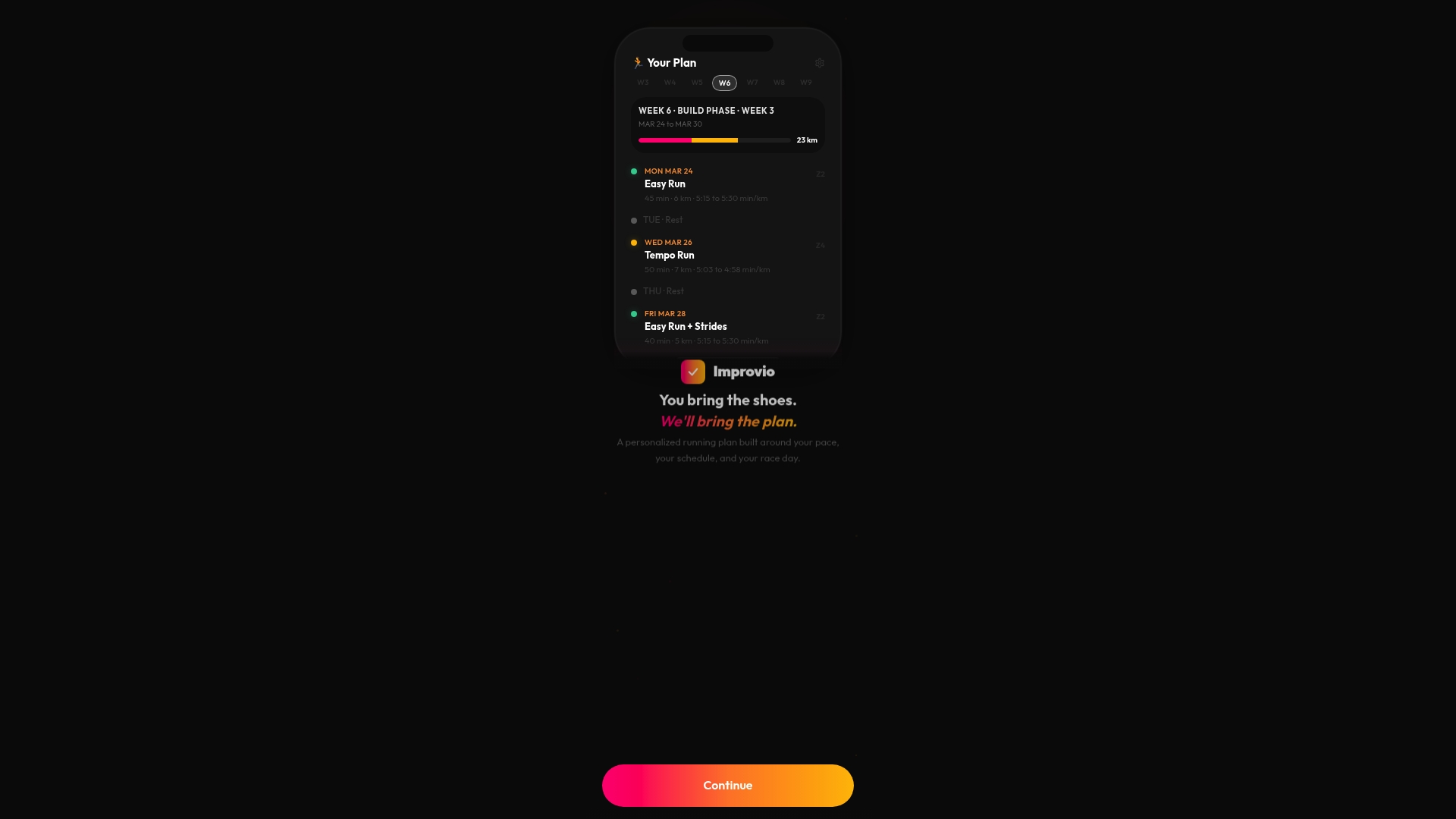
No guesswork. No generic schedules. Just a clear, structured path from where you are now to race day. You can track your milestones, monitor your progress, and stay motivated in one place. Check out beginner race milestones to see what your journey could look like. You bring the shoes. We'll bring the plan.
Frequently asked questions
What is runner motivation and how does it differ from discipline?
Runner motivation is the desire and personal reasons that drive you to run, while discipline beats motivation for sustainable progress by keeping you consistent even on days when inspiration is absent.
How can beginners stay motivated during their first training plan?
Identify your personal 'why', use run/walk intervals, and track your progress. Group runs and tracking progress help maintain motivation through the early weeks when habits are still forming.
What's the best way to recover from a setback or low-motivation day?
Apply the 2-day rule, shift your mindset to "I am a runner," and prioritize sleep to boost dopamine. Motivation follows action and neurochemical factors help habit resilience when willpower alone isn't enough.
Are structured training plans important for motivation?
Yes. Structured base-building plans are key for beginner motivation and progress because they remove daily decision-making and give you clear milestones to celebrate along the way.