

TL;DR:
- Race preparation involves physical training, mental readiness, smart planning, and the right gear.
- Suitable plans for beginners include time-based, run-walk, and longer, gradual training schedules.
- Success is about consistency, enjoyment, and crossing the finish line, not just pace or time.
Most beginners think race preparation means one thing: run more miles. But that idea leaves out everything that actually gets you to the finish line feeling strong. Real race prep is a structured mix of physical training, mental readiness, smart planning, and the right gear. It is more personal than most people expect, and it is more manageable than most people fear. This guide breaks down what race preparation actually means, how to pick the right plan type, and how to build a week-by-week schedule that fits your life and your goals.
Table of Contents
- What is race preparation? Definitions and key elements
- Types of race preparation plans: Which is right for you?
- Step-by-step: How to build your beginner race preparation plan
- Essential race readiness: Gear, mental training, and logistics
- Our perspective: Rethinking 'success' for race preparation beginners
- Get personalized support for your first race
- Frequently asked questions
Key Takeaways
| Point | Details |
|---|---|
| Race prep is holistic | True preparation includes training, gear, mindset, and planning, not just running. |
| Personalized plans work best | Choose a training approach that fits your fitness level and lifestyle for better success. |
| Run-walk is a smart start | Mixing running and walking reduces injury and helps you finish your race feeling strong. |
| Gear and mindset matter | A good pair of shoes and positive thinking are just as important as your weekly workouts. |
What is race preparation? Definitions and key elements
Race preparation is the structured process of getting your body and mind ready for an organized running event. It is not just about logging miles. It is about building fitness gradually, staying injury-free, and showing up on race day with a clear plan.
True preparation has several key elements working together:
- Training plan: A weekly schedule that builds your fitness over time
- Pacing: Learning to run at a speed you can sustain
- Recovery: Rest days and easy runs that let your body adapt
- Mental prep: Building confidence and managing nerves
- Nutrition and hydration: Fueling your runs properly
- Logistics: Registration, gear, and knowing the race route
Three common training approaches work well for beginners. Time-on-feet training focuses on how long you run, not how far. Gradual pace progression slowly increases your speed over weeks. The run-walk method alternates running intervals with walking breaks, making it ideal for absolute beginners. As a helpful beginner running workflow shows, combining these approaches with a clear weekly structure is the most effective starting point.
Polarized training and injury research confirms that some plans for beginners prioritize time-on-feet over distance and debate polarized training versus run-walk strategies.
"Effective race preparation is not about how many miles you run. It is about how consistently you prepare your body, mind, and schedule for the demands of race day."
The key takeaway here is simple. Race prep is personal. What works for someone else may not work for you. Your fitness level, schedule, and goals all shape what your plan should look like.
Types of race preparation plans: Which is right for you?
Now that you know what race preparation includes, let's look at the main plan types and how to choose the one that fits you best.
Time-based plans measure workouts in minutes, not miles. You run for 20 or 30 minutes rather than aiming for a specific distance. This approach reduces pressure and works well if you are just starting out.
Distance-based plans set weekly mileage targets. These are common in traditional training programs but can feel discouraging for new runners who are still building stamina.
Run-walk plans alternate running and walking intervals throughout each workout. Evidence shows the run-walk method reduces injury rates without sacrificing finishing times, making it one of the safest options for beginners.
Polarized training splits workouts between very easy runs and a small number of harder efforts. It is effective but better suited to runners with some base fitness already.
| Plan type | Best for | Commitment | Pros | Cons |
|---|---|---|---|---|
| Time-based | Absolute beginners | Low to moderate | Flexible, low pressure | Harder to track progress by distance |
| Distance-based | Runners with some base | Moderate | Clear targets | Can lead to overtraining |
| Run-walk | New runners, injury-prone | Low | Reduces injury risk | Slower pace progression |
| Polarized | Intermediate beginners | Moderate to high | Builds speed and endurance | Requires fitness base |
Choosing your plan comes down to three things: your current fitness, any injury history, and your race goal. If you have never run consistently before, start with a time-based or run-walk plan.
Pro Tip: Most absolute beginners benefit from longer training plans of 16 to 20 weeks. More time means more gradual progress and fewer injuries. And if you want to understand how to build your aerobic base over those weeks, learning about building running endurance will give you a strong foundation.
There is no cheating here. The right plan is the one you will actually follow.
Step-by-step: How to build your beginner race preparation plan
Choosing your plan type is just the first step. Now it is time to map out how your preparation will look week by week.
Follow these steps to build your personalized plan:
- Set your race distance. Are you running a 5K, 10K, or a longer event? Your goal distance shapes everything else.
- Assess your current fitness. Can you walk briskly for 30 minutes without stopping? That is your starting point.
- Choose your plan type. Use the comparison above to pick what fits your lifestyle.
- Set your start date. Research confirms longer preparation of 16 to 20 weeks is recommended if you are starting without a running base. If you already run occasionally, 8 to 12 weeks may be enough.
- Build your weekly schedule. Map out which days you run, which days you rest, and when you do your longest effort of the week.
- Track your progress. Note how each run feels, not just how far or fast you went.
Here is a sample week for an absolute beginner in the early phase of training:
| Day | Workout | Duration |
|---|---|---|
| Monday | Rest or light walk | 20 to 30 min |
| Tuesday | Easy Run or Run-Walk | 20 to 25 min |
| Wednesday | Rest | Full rest |
| Thursday | Easy Run | 20 to 25 min |
| Friday | Rest or cross-training | 20 to 30 min |
| Saturday | Long Run or Run-Walk | 30 to 40 min |
| Sunday | Rest | Full rest |
A solid beginner running plan will follow this kind of rhythm. Use a race prep checklist to stay organized as your race date approaches. And when you want to see how far you have come, tracking your race milestones keeps motivation high.
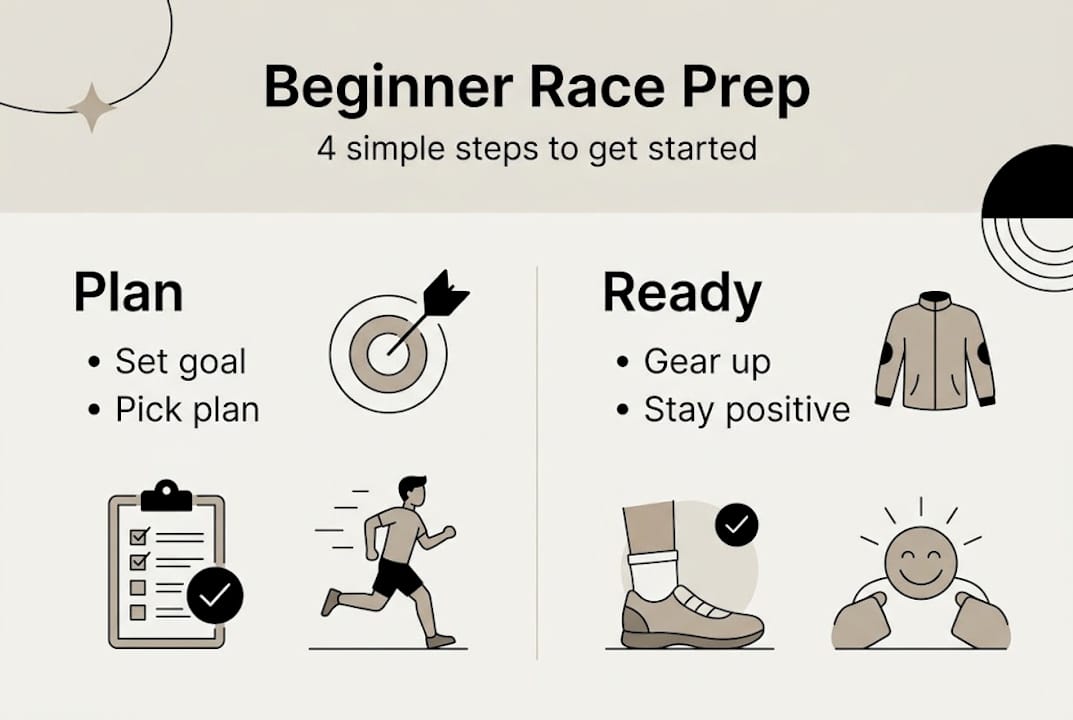
Adjust your plan every 3 to 4 weeks based on how your body feels. Progress is not always linear, and that is completely normal.
Essential race readiness: Gear, mental training, and logistics
Your training plan is set. But being truly ready for race day means covering a few more bases that many beginners overlook.
Gear: You do not need expensive equipment. You need the right equipment. Start with a pair of supportive running shoes that fit well. Wear moisture-wicking socks and comfortable running clothes. That is genuinely all you need to start.
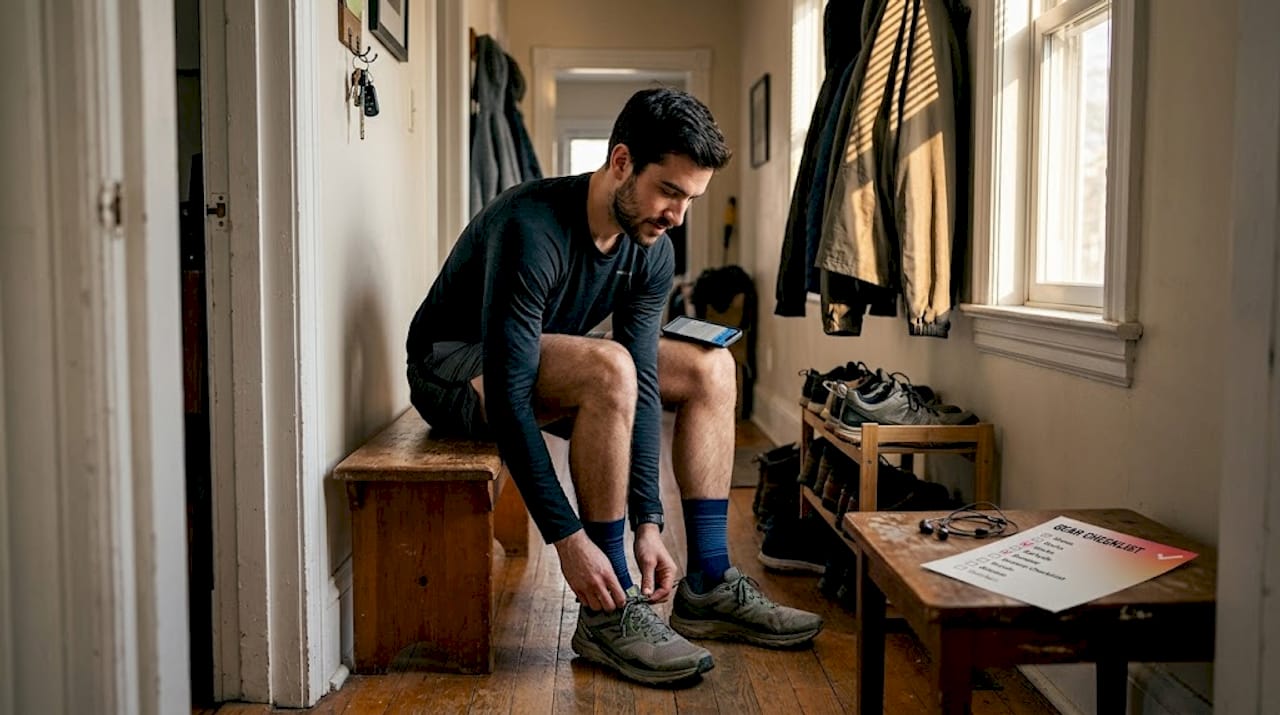
Mental preparation: Your mindset matters as much as your mileage. Visualization, where you picture yourself completing the race calmly and confidently, is a proven technique. Set realistic goals before race day. Aim to finish strong, not necessarily fast. Managing nerves is part of the process too. Learning mental training for runners can give you practical tools to stay calm and focused.
Logistics: Practical factors like rest, goal-setting, and race logistics are part of effective preparation. Register for your race early. Study the course map. Know your start time, parking, and what to bring on race day.
Here is a quick checklist for the final stretch of your prep:
- ✅ Running shoes broken in during training
- ✅ Race registration confirmed
- ✅ Course map reviewed
- ✅ Race-day outfit tested on a long run
- ✅ Hydration and nutrition plan set
- ✅ Sleep schedule protected in the final week
- ✅ Goals written down and realistic
Understanding running structure for beginners also helps you see why each of these elements connects back to your overall plan.
Pro Tip: Treat race week as a celebration of your preparation, not a last-minute cram session. Reduce your mileage, sleep more, and trust the work you have already done.
Our perspective: Rethinking 'success' for race preparation beginners
Here is something most training guides will not tell you. The biggest mistake beginners make is chasing someone else's definition of success.
We see it constantly. New runners compare their pace to friends, feel behind because they needed walk breaks, or quit a plan because it felt too slow. But a plan that fits your schedule, your body, and your motivation level will always outperform a textbook program you can barely stick to.
Real beginner race success is not about your finish time. It is about crossing that line at all. It is about the Tuesday run you did when you did not feel like it. It is about learning what your body can do.
Consistency and enjoyment are worth more than flawless execution. Celebrate every milestone, not just the finish line. When preparation feels personal and achievable, you will show up on race day ready, not just trained.
Get personalized support for your first race
You now have a clear picture of what race preparation involves and how to build a plan that works for you. The next step is putting it all into action.
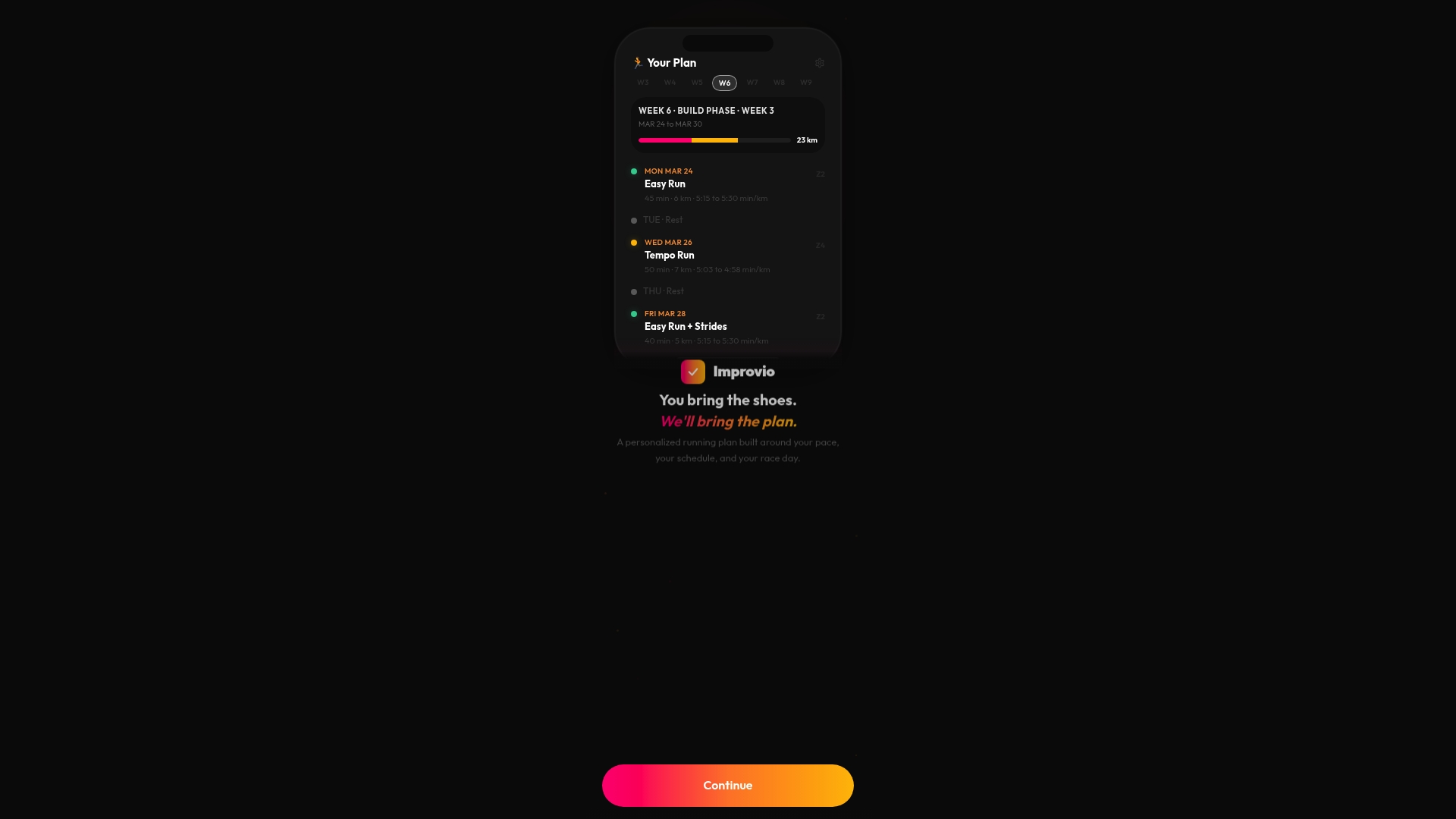
Improvio builds personalized race prep plans tailored to your pace, your schedule, and your race date. Setup takes about 60 seconds and your first plan is free. No experience needed. Whether you are figuring out how to start running or you are ready to map out your full training schedule, Improvio gives you a structured, beginner-friendly path forward. You bring the shoes. We will bring the plan.
Frequently asked questions
How early should I start race preparation as a beginner?
If you are new to running, aim to start preparing 16 to 20 weeks before your first race. Beginners thrive with longer training plans that allow for gradual, sustainable progress.
Is using the run-walk method acceptable for my first race?
Absolutely. The run-walk strategy lowers injury rates while maintaining race outcomes, making it one of the smartest choices for first-time runners.
Do I need special shoes or gear for beginner race preparation?
You mainly need comfortable, supportive running shoes and simple running-friendly clothing. Expensive gear is not required to finish your first race successfully.
Should I focus on running distance or time for my plan?
Time-based plans are often better for beginners because they reduce pressure and encourage consistent movement. Plans for new runners often prioritize time-on-feet over distance for this reason.
How do I stay motivated during race preparation?
Set small, weekly goals, track how each run feels, and reward yourself when you hit milestones. Motivation builds naturally when you can see your own progress adding up week by week.