

TL;DR:
- A running coach provides personalized plans, injury prevention, motivation, and race prep support for beginners.
- Experience and adaptability are more important than certifications when choosing a running coach.
- The run/walk method helps beginners build endurance safely while minimizing injury risk.
Most beginners lace up, head out the door, and wing it. No plan, no structure, just hope. The problem? 80% of beginners get injured in their first year without proper progression. That stat alone should shift how you think about coaching. A running coach isn't just for elites chasing podiums. Coaches are for people exactly like you: someone training for their first race, figuring out pacing, and trying not to burn out by week three. This guide breaks down what a running coach actually does, how to spot a qualified one, and what a beginner-friendly plan looks like in practice.
Table of Contents
- What does a running coach actually do?
- Certifications, qualifications, and why experience matters
- How running coaches build beginner plans: The run/walk method
- Key coaching principles: Mechanics, strength, and injury prevention
- What most new runners miss about coaching
- Get started with your personalized running plan
- Frequently asked questions
Key Takeaways
| Point | Details |
|---|---|
| Coaches give holistic support | A running coach provides motivation, accountability, advice on form, and injury prevention, not just training plans. |
| Personalized plans work best | Tailored run/walk plans promote injury-free progression and higher finish rates for beginners. |
| Experience matters most | Look for coaches with real-world experience and practical education, not just certifications or fast race times. |
| Mechanics and strength reduce risk | Proper running form and targeted strength training help beginners avoid injuries and build lasting fitness. |
What does a running coach actually do?
Most people picture a coach standing on a track, stopwatch in hand, yelling split times at serious athletes. That's not the full picture. A running coach does a lot more, especially for beginners.
At the core, a running coach creates personalized training programs, assesses your current fitness, provides motivation and accountability, and gives guidance on mechanics, injury prevention, nutrition, and race prep. That's a wide range of support, and for a first-time runner, every single one of those elements matters.
Here's what that looks like in practice:
- Training programs: Your coach builds a schedule around your pace, your availability, and your race date. Not a generic 12-week template, but something built for you.
- Mechanics feedback: They watch how you run and flag issues before they become injuries. Bad habits are easier to fix early.
- Injury prevention: Coaches know when to push and when to pull back. This is critical for beginners who tend to do too much, too soon.
- Motivation and accountability: Knowing someone is tracking your progress changes how you show up. You're less likely to skip a Tuesday run when someone will notice.
- Life integration: A good coach adjusts your plan when work gets crazy or sleep suffers. Real life happens, and your training needs to flex with it.
- Race preparation: From nutrition timing to warm-up routines, coaches prepare you for the full experience, not just the miles.
"The best coaching isn't about the workouts you do. It's about the workouts you don't skip and the injuries you never get."
For beginners, structured schedules for beginners are the foundation of safe, steady progress. And understanding why training plans matter for your first race helps you commit to the process before race day pressure kicks in.
Certifications, qualifications, and why experience matters
Not everyone calling themselves a running coach is equally qualified. Knowing what to look for protects you and your training.
The main certifying bodies are RRCA (Road Runners Club of America), USATF (USA Track and Field), ISSA (International Sports Sciences Association), and UESCA (United Endurance Sports Coaching Academy). Certifications from these organizations show foundational knowledge, but real-world experience and education matter even more than credentials alone.
Here's a simple comparison to help you evaluate potential coaches:
| Factor | What to look for | Red flag |
|---|---|---|
| Certification | RRCA, USATF, ISSA, or UESCA | No credentials at all |
| Experience | Coached beginners specifically | Only coached elites |
| Communication | Regular check-ins and feedback | Hard to reach between sessions |
| Plan flexibility | Adjusts based on your life | One-size plan for everyone |
| Personal running speed | Doesn't matter much | Claims speed = coaching ability |
That last row is worth pausing on. A fast runner is not automatically a good coach. Coaching is about communicating, observing, adjusting, and teaching. A coach who ran a 2:45 marathon but can't explain why you're overpronating isn't more useful than a 4:30 finisher who's helped 200 beginners cross their first finish line.
Pro Tip: When interviewing a potential coach, ask them: "How do you adjust a plan when a client has a bad week?" Their answer tells you everything about how they handle real beginners.
Experience with pattern recognition is what makes a great beginner coach. They've seen dozens of new runners make the same mistakes and know how to course-correct before those mistakes become injuries. For more on why structure is non-negotiable early on, check out why beginner structure drives race success.
How running coaches build beginner plans: The run/walk method
If you've never trained for a race, the idea of running continuously for miles sounds impossible. That's exactly where the run/walk method comes in.
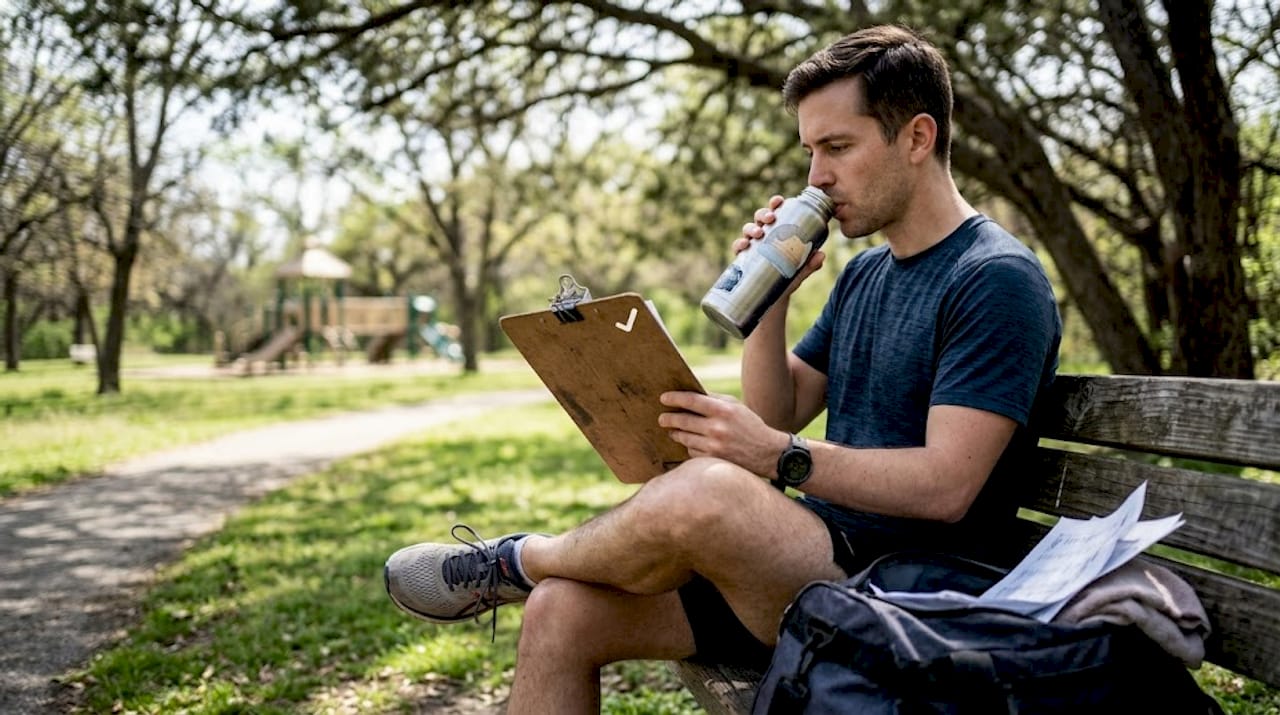
The run/walk method alternates short running intervals with walking recovery. It sounds simple, and it is. But the results are significant. Run/walk isn't a beginner cop-out. It produces faster aerobic adaptation, enables longer training sessions, and leads to lower injury rates compared to straight running from day one.
Here's how a real beginner plan might progress using this method:
- Week 1: Run 1 minute, walk 2 minutes. Repeat 6 to 8 times. Total time: 20 to 25 minutes.
- Week 4: Run 3 minutes, walk 1 minute. Repeat 5 to 6 times. Total time: 25 to 30 minutes.
- Week 8: Run 8 minutes, walk 1 minute. Repeat 3 to 4 times. Total time: 30 to 40 minutes.
Programs like Couch to 5K and Hal Higdon Novice 1 are built around this exact principle: gradual progression and clear benchmarks guide beginners through each phase safely. The key is that each week builds on the last, so your body adapts without being overwhelmed.
For a full look at how this maps to a real weekly schedule, a solid beginner running schedule gives you a practical week-by-week layout. And if you're still figuring out how to take your first steps, start running with simple steps walks you through the basics.
Pro Tip: Don't skip the walk breaks. They aren't a sign of weakness. They're how your body builds the aerobic base you'll rely on during your race.
Key coaching principles: Mechanics, strength, and injury prevention
A coach doesn't just hand you a schedule. They teach you how to run better and stay healthy doing it.
Running form basics every beginner needs:
- Posture: Stand tall. Imagine a string pulling the top of your head upward. Avoid slouching forward.
- Arms: Swing from your shoulders, not your elbows. Keep hands relaxed, not clenched.
- Foot strike: Aim for a midfoot landing under your hips, not a heavy heel strike out in front.
- Cadence: Target 170 to 180 steps per minute. Higher cadence cuts injury risk by reducing impact force on each stride.
Simple drills like high knees, butt kicks, and A-skips train these mechanics without requiring any equipment. Coaches program them into warm-ups so they become automatic over time.
Strength training matters more than most beginners realize. Coaches prioritize:
- Glute and hip exercises (clamshells, bridges) to support the pelvis
- Single-leg work (lunges, step-ups) to address imbalances
- Core stability to keep your torso upright during longer runs
"Running is a full-body sport. Strengthen the muscles that hold you together, and your legs will thank you."
Weekly check-ins are also a critical coaching tool. If you're feeling worn down or a nagging pain appears, a good coach will repeat a week rather than push forward. That decision, to pause instead of progress, is what separates coaches from generic apps. It's also why structured plans benefit new runners so much, and tracking your beginner runner milestones keeps you motivated through the hard weeks.
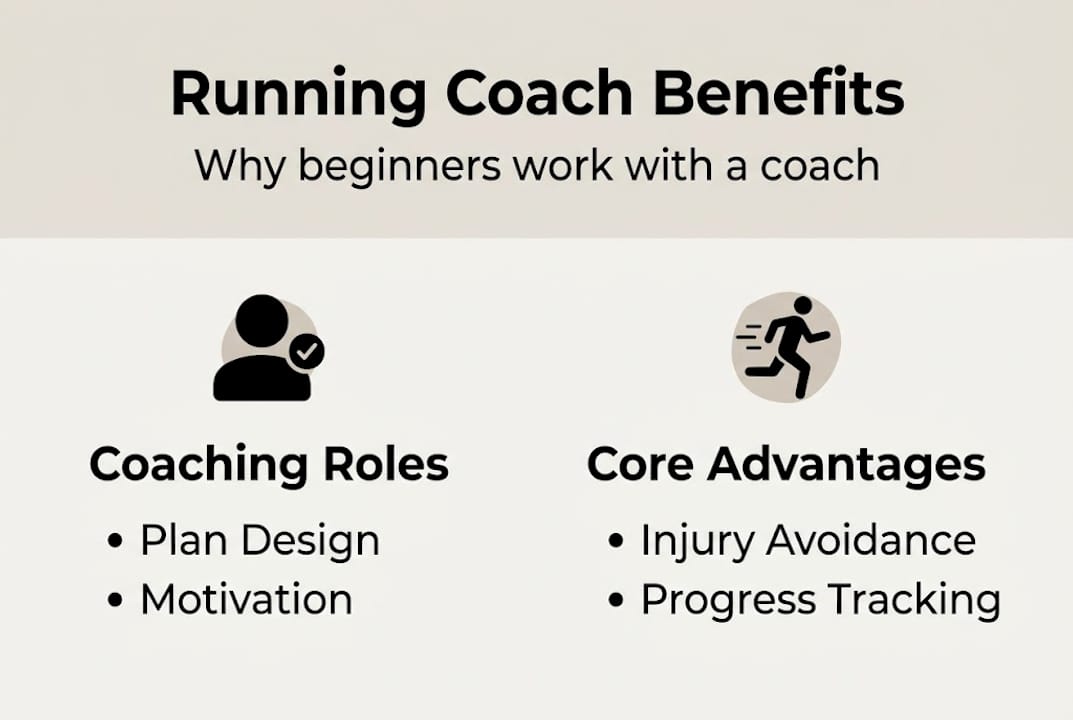
Running frequency for beginners should stay at 3 to 4 days per week to allow recovery and reduce overuse injuries.
What most new runners miss about coaching
Here's what nobody tells you about getting coached as a beginner: the plan itself is almost secondary.
You can find a Novice 1 Marathon plan online for free. Plenty of templates exist, and some are excellent. But what generic plans can't do is notice that you've had three bad nights of sleep, that your left knee is slightly off, or that your motivation has flatlined after a tough month at work.
Real coaching is adaptive. Coaches adjust your load based on life stress and fatigue, not just the calendar. They spot the early signs of overtraining before you even realize something is wrong. And the accountability piece, knowing someone is genuinely tracking your progress, changes behavior in ways a PDF schedule never will.
For absolute beginners, the biggest risk isn't running too slow. It's quitting or getting injured before race day. Personalized coaching directly addresses both. If you're wondering how to build something that fits your life, understanding how to make a training plan that adapts to you is the real starting point.
Get started with your personalized running plan
You now know what coaching does, how to find a qualified coach, and what a beginner plan actually looks like. The next step is simple: get a plan that's built for you.
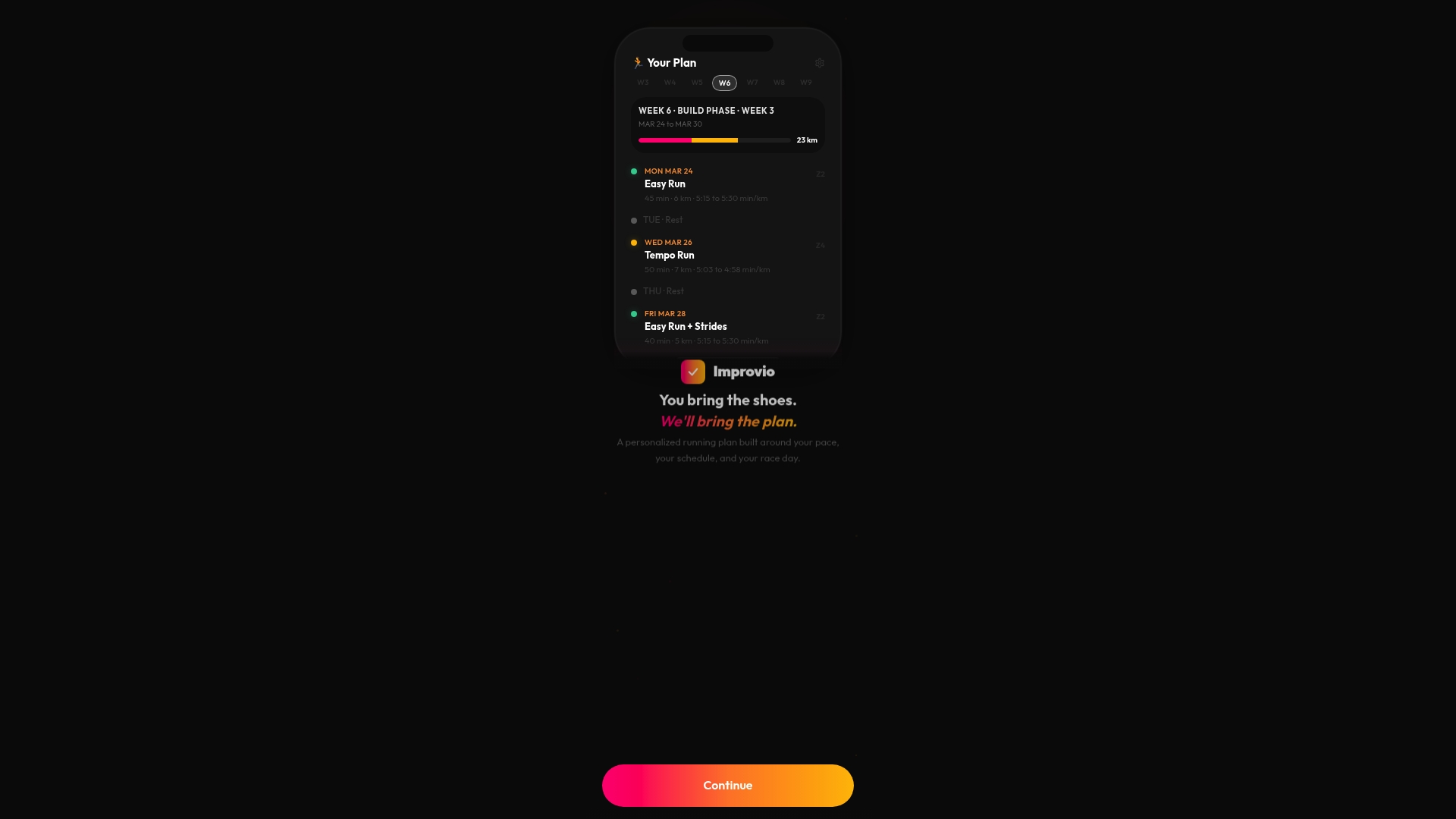
Improvio builds personalized running plans for absolute beginners in about 60 seconds. You enter your pace, your schedule, and your race date. We handle the rest. No guesswork, no generic templates, and no experience required. Every plan is structured around your life so you can train consistently and reach that finish line feeling ready. Start your first race journey today with a plan that actually fits you.
Frequently asked questions
Is a running coach worth it for beginners?
Yes. A coach helps you progress safely, avoid injury, and finish your first race with a plan that's built specifically for your fitness level and goals. Without proper progression, 80% of beginners get injured in their first year.
How does the run/walk method help new runners?
It allows gentle progression, protects you from common overuse injuries, and builds aerobic capacity faster than continuous running while also enabling longer training sessions.
Are running coach certifications important?
They show foundational knowledge, but experience matters most. Look for coaches certified by RRCA, USATF, ISSA, or UESCA who have specific experience working with beginners.
What basic running form should beginners follow?
Maintain tall posture, swing arms from your shoulders, land with a midfoot strike under your hips, and aim for a cadence of 170 to 180 steps per minute. Higher cadence significantly reduces injury risk for new runners.
How personalized are beginner running plans?
A good coach adjusts your plan weekly based on life stress and fatigue, ensuring the training always fits your current capacity rather than a fixed template.