

TL;DR:
- Beginners should start with run-walk intervals and increase mileage gradually using the 10% rule.
- Proper warm-up, good running form, and strength training are essential for injury prevention and efficiency.
- Consistent training, listening to your body, and proper nutrition support progress and prevent burnout.
Starting your first running journey is exciting. But for most beginners, it quickly gets overwhelming. You lace up, head out too fast, and end up sore, burned out, or sidelined by injury before week three. The good news? Most of these problems are avoidable. By building the right healthy habits early, you protect your body, stay consistent, and actually enjoy the process. This guide covers the core habits every new runner needs, from how to build mileage safely to what to eat before a run. Follow these steps and you'll set yourself up for a strong finish on race day.
Table of Contents
- Build your running base safely
- Warm up and master your running form
- Strength training, rest, and recovery
- Fuel up: hydration and nutrition for runners
- Gear and training plans: setting up for your first race
- Why true progress for beginners means listening and adapting
- Get personalized support and track your healthy habits
- Frequently asked questions
Key Takeaways
| Point | Details |
|---|---|
| Start with run-walk | Run-walk intervals and gradual increases help build endurance and prevent injury for new runners. |
| Warm up and form | Dynamic warm-ups and mastering proper running form can significantly reduce injuries and improve performance. |
| Strength and recovery | Regular strength training and rest days are crucial for healthy progress and avoiding burnout. |
| Hydration and nutrition | Hydrate properly and follow balanced nutrition to support energy and recovery in running routines. |
| Gear and planning | Invest in supportive shoes and follow a flexible training plan for successful race preparation. |
Build your running base safely
The biggest mistake new runners make is doing too much too soon. It feels great at first, but your joints and tendons need time to adapt to impact. Too much too soon causes 70 to 80% of beginner running injuries. That's a staggering number, and it's almost entirely preventable.
The solution? Start with run-walk intervals. This means you alternate between running and walking during your workout. For example, run for 60 seconds, walk for 90 seconds, and repeat for 20 to 30 minutes. This approach builds your aerobic base without overloading your body. Learn more about how to apply simple steps to start running from your very first session.
As you get stronger, use the 10% rule to increase your weekly volume. Weekly mileage increases should never exceed 10% from one week to the next. This prevents overuse injuries like shin splints and stress fractures, which are common when beginners ramp up too quickly.
Here are the key habits for safe base building:
- Run-walk intervals: Start at a 1:2 ratio (run to walk) and gradually reduce walk time
- 10% rule: Never increase weekly distance or time by more than 10%
- Easy pace: You should be able to hold a conversation while running
- Consistency over intensity: Three sessions per week beats one hard effort every few days
For runners managing extra weight or coming back from a prior injury, the run-walk method advice from coaches is especially valuable. Go slower, use longer walk breaks, and treat every completed session as a win. Check out the runner milestones guide to track progress at your own pace.
Pro Tip: Use a free app like Strava or Nike Run Club to log your sessions. Seeing your weekly totals grow is a powerful motivator, and it keeps you honest about not doing too much too fast. Follow a clear beginner running workflow to stay on track from the start.
Warm up and master your running form
Skipping your warm-up is a shortcut that costs you later. Cold muscles are tight muscles, and tight muscles tear more easily. Before every run, spend 5 to 10 minutes on dynamic moves that wake up your body.
Dynamic warm-up moves like leg swings, hip circles, and foot rolls prepare your joints and increase blood flow to key muscle groups. These are not stretches you hold in place. They are active movements that prime your body for the work ahead.
Here are the best warm-up moves for new runners:
- Leg swings: Forward and sideways, 10 reps each leg
- Hip circles: Loosen the hip joint before impact
- High knees: Activate the hip flexors and core
- Ankle rolls: Reduce the risk of ankle rolls mid-run
- Butt kicks: Prime your hamstrings for push-off
Now for running form. Good form is not about looking fast. It's about running efficiently and staying injury-free. Proper running form means short quick steps, a cadence of 170 to 180 steps per minute, upright posture, an engaged core, and no overstriding. Overstriding (landing your foot far in front of your body) sends a braking force up through your leg with every step.
"Focus on your cadence and posture before you worry about where your foot lands. A higher cadence naturally corrects most footstrike issues."
Increasing your cadence lowers impact forces by roughly 20%, which adds up significantly over a 30-minute run. The footstrike debate matters far less than these two factors combined.
Find your ideal warm up for running routine and pair it with the right running form guide to build a strong, consistent habit.
Pro Tip: Download a free metronome app or build a playlist with songs at 170 to 180 beats per minute. Run in rhythm with the beat and your cadence will naturally improve without overthinking it.
Strength training, rest, and recovery
Running alone will not make you a better runner. Your body also needs strength work to support every stride. Strength training twice per week targeting the glutes, core, and hips improves your running economy and significantly reduces injury risk. Running economy means how efficiently your body uses energy at a given pace.
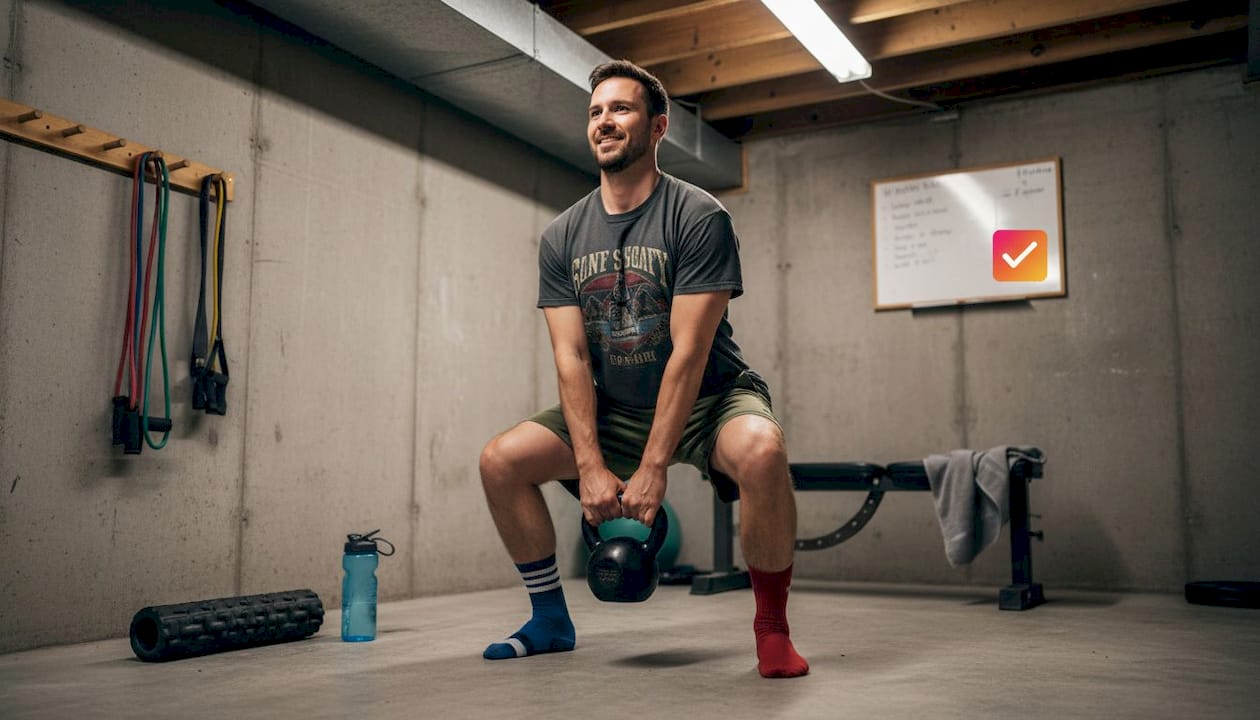
You don't need a gym. Bodyweight squats, lunges, glute bridges, and planks are enough. These movements build the foundation that keeps your knees tracking correctly and your hips stable on every run.
Here is a simple weekly schedule to follow:
- Day 1: Easy Run (20 to 30 minutes, run-walk intervals)
- Day 2: Strength training (glutes, core, hips, 20 to 30 minutes)
- Day 3: Rest or light walking
- Day 4: Easy Run
- Day 5: Strength training
- Day 6: Easy Run or cross-training (cycling, swimming)
- Day 7: Full rest day
Rest 1 to 2 days per week and never ignore pain. Running through pain is not toughness. It is how minor issues become serious injuries that sideline you for weeks. If something hurts beyond normal muscle fatigue, take an extra rest day.
Accountability also matters. Joining a local running group or finding an online community keeps you motivated when motivation dips. Use a structured resource like training plans for beginner runners so you know exactly what to do each day.
Pro Tip: On rest days, spend 10 minutes foam rolling your calves, quads, and IT band. Add some light static stretching afterward. It speeds up recovery and keeps your legs fresh for the next run. Your fitness plan steps should build in these recovery rituals from week one.
Fuel up: hydration and nutrition for runners
You wouldn't drive a car on an empty tank. Running is no different. What you eat and drink directly affects your energy, recovery, and how your body adapts to training.
For hydration, drink half your body weight in ounces of water daily, and add 20 extra ounces on days you run. Before heading out, drink 16 to 20 ounces of water in the hour leading up to your run. This keeps your muscles hydrated and your heart rate stable during effort.
For nutrition, the breakdown is straightforward. Prioritize 50 to 60% carbohydrates, with 20 to 25% each from protein and fat. Carbs are your fuel. Protein repairs your muscles. Fat supports long-term energy and joint health.
Post-run recovery is where many beginners fall short. Within 30 to 45 minutes after finishing, eat a snack with a 4:1 ratio of carbohydrates to protein. Think a banana with peanut butter, or chocolate milk.
| Timing | Nutrition goal | Example |
|---|---|---|
| Pre-run (1 hr before) | Light carb-based meal | Oatmeal, banana, toast |
| During run (under 45 min) | Hydration only | Water |
| Post-run (within 45 min) | 4:1 carbs to protein | Chocolate milk, smoothie |
| Daily baseline | 50-60% carbs, 20-25% protein/fat | Whole grains, lean meat, veggies |
Keep it simple. You do not need expensive supplements or meal plans. Use your beginner race preparation tips to learn how to structure your meals as race day approaches.
Gear and training plans: setting up for your first race
The right gear protects your body. The right plan protects your progress. Both matter equally for beginners.
Start with shoes. Replace running shoes every 300 to 500 miles to maintain cushioning and support. Worn-out shoes are a silent injury risk. Visit a specialty running store and have your gait assessed. They will help you find the right fit for your foot type.
For your first race, a 5K training plan is the perfect starting point. An 8 to 12 week Couch to 5K plan builds you up to running 20 to 30 continuous minutes, three days per week, with rest and cross-training built in.
Here is what to look for in gear and plans:
- Shoes: Good cushion, proper arch support, correct fit (thumb-width space at toe)
- Socks: Moisture-wicking material to prevent blisters
- Clothing: Breathable, sweat-wicking fabric for comfort
- Training plan: Gradual progression, built-in rest days, flexible scheduling
- Tracking: A way to log pace, distance, and how you feel
| Feature | Budget option | Better option |
|---|---|---|
| Running shoes | Entry-level cushioned shoe | Gait-assessed specialty shoe |
| Tracking | Free phone app | GPS running watch |
| Training plan | Generic app plan | Personalized plan by pace/race date |
| Recovery | Stretching only | Foam roller and stretching routine |
Pro Tip: Use your running app to track shoe mileage. When your shoes hit 400 miles, start shopping. Do not wait until they fall apart. Stay motivated with these motivation tips for beginners when training gets tough.
Why true progress for beginners means listening and adapting
Here's something most beginner running guides won't tell you: the plan is not the most important thing. Your response to the plan is.
Most new runners fixate on following their schedule perfectly. They feel guilty skipping a day or slowing their pace. But real progress comes from tuning into your body and adjusting when needed. A rest day taken early prevents a forced two-week break from injury.
Tracking your effort matters more than tracking your pace at first. Are you sleeping well? Is your motivation holding? Are your legs consistently heavy? These signals tell you more than any spreadsheet.
"Steady progress beats fast progress. The runner who shows up three times a week for twelve weeks will always outperform the one who sprints for two weeks and burns out."
Join a group, find a training buddy, or use a tool that tracks your milestones for runner success over time. Accountability is the habit that reinforces all other habits. Adapt your plan when life shifts. That flexibility is not weakness. It is wisdom.
Get personalized support and track your healthy habits
You now have a clear picture of the habits that build a strong running foundation. The next step is putting them into a plan that fits your schedule, your pace, and your race date.
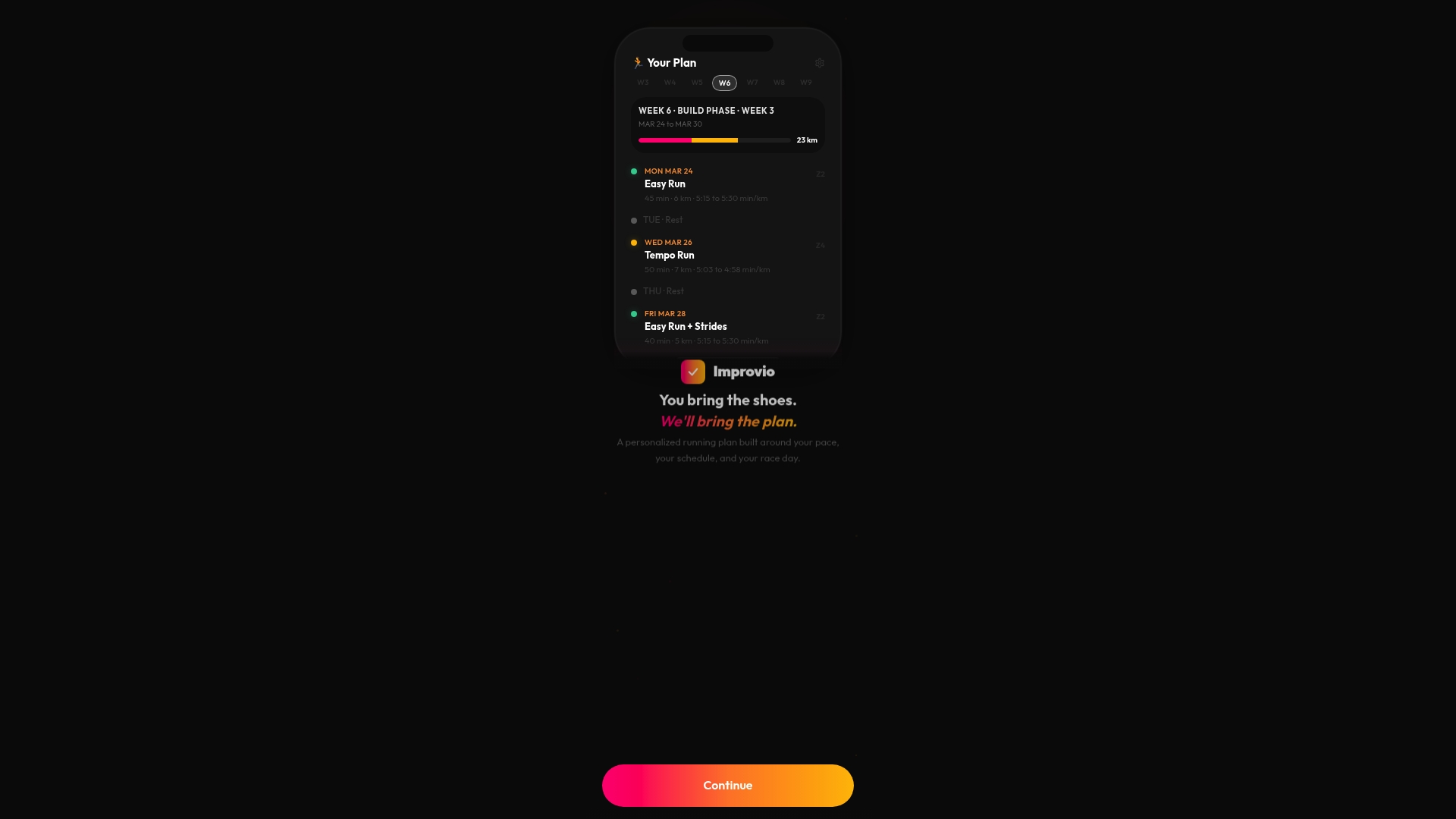
Improvio creates personalized running training plans built specifically for beginners like you. In about 60 seconds, you get a custom schedule that maps out every run, rest day, and workout between now and your first race. No experience needed. No guesswork. You bring the goals. We'll bring the structure. Track your healthy running habits with Improvio and take the next step toward your first finish line today.
Frequently asked questions
What is the best way for beginners to start running?
Run-walk intervals build your base safely by alternating running and walking, then gradually increase your weekly time using the 10% rule to prevent injury and burnout.
How many days per week should a beginner runner rest?
Rest 1 to 2 days per week minimum, and always avoid running through sharp pain or persistent fatigue to give your body the recovery time it needs.
What should beginner runners eat for best performance?
Aim for 50 to 60% carbohydrates in your daily diet with 20 to 25% each from protein and fat, and after every run prioritize a 4:1 carbs to protein snack for faster recovery.
How often should running shoes be replaced?
Replace running shoes every 300 to 500 miles to keep proper cushioning and support in place and lower your risk of common running injuries.