

TL;DR:
- Pace measures how long it takes to cover one unit of distance, helping beginners track progress.
- Running at the right pace ensures safety, reduces injury risk, and builds confidence.
- Tracking and adjusting your pace regularly guides personalized, sustainable training plans.
Most beginners think pace is something only serious or fast runners worry about. It's not. Pace is actually your most powerful tool as a new runner, and it's far simpler than it sounds. Once you understand what it means and how to use it, everything clicks. Your runs feel safer, more manageable, and genuinely rewarding. Pacing drives measurable progress even in the earliest weeks of training. This guide breaks down runner's pace in plain language, shows you why it matters, and gives you the practical steps to measure, track, and use it to build a training plan that fits your life.
Table of Contents
- What does runner's pace actually mean?
- Why pace matters for new runners
- How to determine and track your pace
- Using pace to personalize your training plan
- The real beginner's edge: Why pace, not speed, sets you up for success
- Ready to track your pace and progress?
- Frequently asked questions
Key Takeaways
| Point | Details |
|---|---|
| Runner’s pace is personal | Pace is simply how long it takes you to cover a set distance and is unique to every runner. |
| Tracking improves progress | Measuring your pace helps you build realistic, safe, and motivating running plans. |
| Focus on consistency | Steady pacing—not speed—prevents injuries and delivers the best gains for new runners. |
| Simple tools available | Beginner-friendly apps and watches make tracking and improving your pace easy and fun. |
What does runner's pace actually mean?
Pace is simply how long it takes you to cover one unit of distance. That's it. No complicated math. No fancy equipment required. If you ran one mile in 12 minutes, your pace is 12 minutes per mile. If you ran one kilometer in 7 minutes, your pace is 7 minutes per kilometer. It's a straightforward way to measure your running speed in a way that's personal and consistent.
Pace is tracked as minutes per mile or kilometer, depending on what system you use. In the United States, minutes per mile is standard. Most running apps let you switch between the two, so you can pick what feels natural to you.
Here's where beginners often get confused: average pace vs. race pace. Average pace is what you hit across a whole run. Race pace is the target speed you plan to hold during a specific event, like a 5K. They're related but not the same. Knowing both helps you train smarter.
"Pace isn't about being fast. It's about being consistent. Steady effort over time is what makes every new runner better."
Common ways to track your pace:
- A GPS running watch (most accurate, real-time updates)
- A free smartphone app like Nike Run Club or Strava
- A basic stopwatch plus a measured route
- A running treadmill with a built-in display
| Pace Type | What it measures | When to use it |
|---|---|---|
| Average pace | Overall speed across the full run | Tracking general fitness progress |
| Easy pace | Comfortable, conversational effort | Long runs, recovery runs |
| Race pace | Goal speed for a specific event | Race planning, tempo work |
| Current pace | Speed at this exact moment | Avoiding starting too fast |
The role of pacing is not about chasing numbers. It's about building a reliable picture of your effort so that every workout has a purpose. Beginners who ignore pace often go out too hard, burn out early, and then wonder why running feels terrible. Pace keeps that from happening.
Why pace matters for new runners
Now that you know what pace means, here's why you should actually care about it as someone just starting out.
First, pace keeps your runs safe and enjoyable. When you run too fast, your body struggles to keep up. Your heart rate spikes. Your legs get heavy. You end up walking home feeling defeated. Running at the right pace for your current fitness level means you finish each run feeling accomplished, not wrecked.

Running at the right pace reduces injury risk and improves finish rates for first-time racers. That's a big deal. Most beginner injuries come from doing too much, too soon, too fast. A consistent pace keeps you in a safe zone while still building real fitness.
Here's what pacing actually gives you as a beginner:
- A measurable way to see improvement week to week
- Confidence because you're hitting realistic goals, not chasing someone else's numbers
- Protection from overtraining and the fatigue that kills motivation
- A solid foundation for personalizing your training schedule
- A clear signal when something feels off (injury, illness, stress)
Pro Tip: Do the "talk test" during your Easy Runs. If you can say a full sentence without gasping, you're at the right pace. If you can't, slow down. It really is that simple.
Pace also builds confidence in a way that speed never does. When you track your pace over several weeks, you see real numbers improving. That 13-minute mile becomes a 12-minute mile. Suddenly, running feels possible. You're not just surviving the workout, you're actually progressing.
Statistic to keep in mind: Runners who follow structured plans and respect their pace are significantly less likely to drop out before race day. A personalized pace goal gives your training direction and your motivation a reason to stay strong. Check out running plans for beginners to see how structured weekly targets tie directly back to your pace.
How to determine and track your pace
Knowing why pace matters is great. Now let's make it real. Here's how to find your starting pace and track it week to week.
Step 1: Run a simple time trial. Pick a flat, measured route, even a track works perfectly. Run for 1 mile at a pace that feels hard but sustainable. Note the time. That's your baseline pace. Don't overthink it. Just run and record.
Step 2: Choose a tracking method. You don't need expensive gear to get started. Apps and GPS devices simplify pace tracking for beginners more than any paper log ever could.
| Tracking method | Cost | Accuracy | Best for |
|---|---|---|---|
| Pen and paper | Free | Low | Very casual tracking |
| Smartphone app | Free | Medium-High | Most beginners |
| GPS running watch | $100 and up | Very high | Dedicated runners |
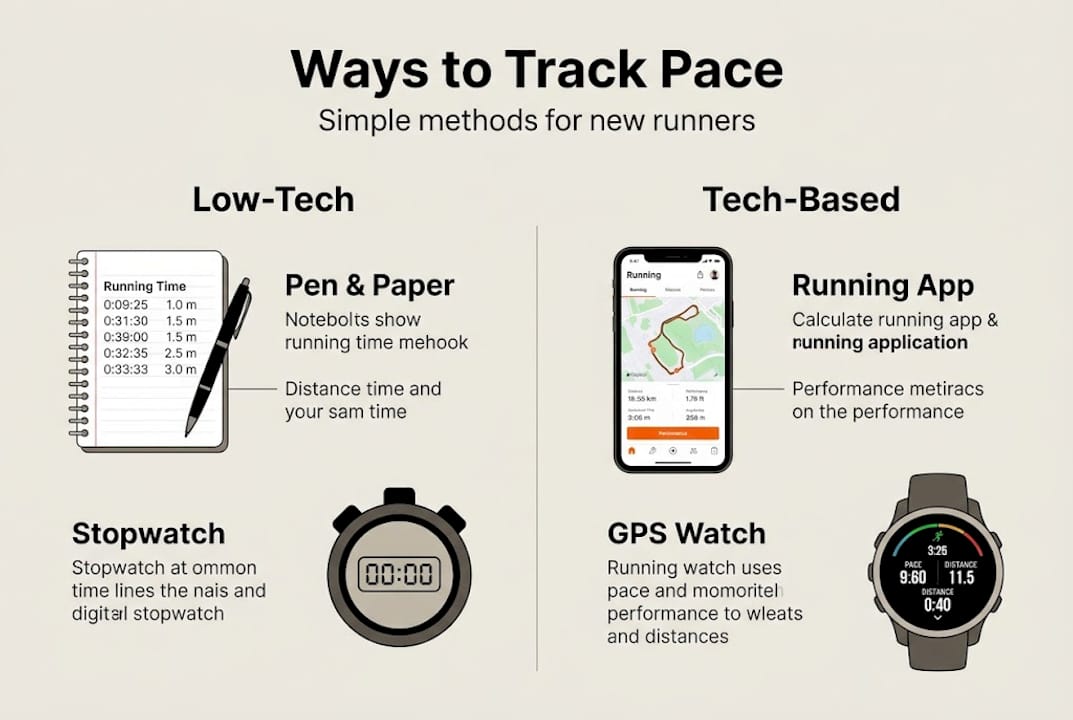
Step 3: Log every run. Record the date, distance, total time, and average pace after each workout. A simple note on your phone works fine. Patterns become obvious fast.
Step 4: Review weekly. Look at your pace data once a week. Are you getting faster? Are some days slower? This helps you spot trends, adjust your effort, and celebrate real progress.
Step 5: Set small, realistic pace targets. Aim to improve your average pace by 15 to 30 seconds per mile over four to six weeks. Tiny gains add up to big results.
Pro Tip: Don't compare your pace to anyone else's. Your starting pace is your starting pace. The only competition that matters is last week's version of you.
Building running structure for success starts with tracking. Once you have two or three weeks of data, you'll be amazed at how much you can see about your own running. Understanding how training plans work becomes much easier when you have real pace numbers to anchor your planning.
Using pace to personalize your training plan
You've measured your pace. You've tracked it for a week or two. Now here's how to use it to build a training plan that actually fits you.
The golden rule is simple: your plan should match your current pace, not the pace you wish you had. Running too fast in training is the number one mistake beginners make. It leads to exhaustion, skipped workouts, and eventual burnout.
How to build your pace-based plan in five steps:
- Set your weekly run frequency (three days per week is perfect for beginners).
- Assign an Easy Run pace to most of your runs, roughly 60 to 90 seconds slower than your time trial pace.
- Add one slightly faster run per week as you build fitness, just 15 to 30 seconds per mile quicker.
- Schedule rest days as seriously as run days. Recovery is where your body actually improves.
- Revisit and adjust your pace targets every three to four weeks based on your logged data.
Common pitfalls to avoid:
- Going out too fast on day one and paying for it on day two
- Skipping rest days because you feel great (this is when injuries sneak up on you)
- Comparing your plan to what a more experienced runner does
- Ignoring how weather, sleep, or stress affects your pace on any given day
Structured training based on personal pace increases beginner finish rates by 25%. That number matters. A plan built around your pace gives your body the right stimulus without overwhelming it.
Pro Tip: If your pace drops significantly during a run, slow down instead of pushing through. Fighting your pace always costs more than it gives back.
Once you understand why running schedules matter, using pace to anchor each workout becomes second nature. You stop guessing and start training with real purpose.
The real beginner's edge: Why pace, not speed, sets you up for success
Here's something most running articles won't tell you directly: chasing speed before you've built a base is the fastest way to quit running altogether.
New runners often feel embarrassed about being slow. They push hard to keep up with others, finish every run exhausted, and then label themselves as "not runners." But slowness isn't the problem. Inconsistency is. The runner who finishes every workout at a steady, comfortable pace builds fitness that lasts. The runner who sprints one day and collapses the next makes very little progress.
Focusing on pace for beginners instead of raw speed is genuinely liberating. When you stop trying to be fast and start trying to be steady, running becomes enjoyable. You stop dreading workouts. You start looking forward to them. That shift in mindset is what separates runners who stick with it from those who give up after two weeks.
The runners who show up at the finish line of their first 5K or 10K are almost never the ones who trained the hardest. They're the ones who trained the smartest, respected their pace, and kept showing up.
Ready to track your pace and progress?
You now know what runner's pace means, why it matters, and how to use it every single day. The next step is making the tracking part as easy as possible so you can focus on the running itself.
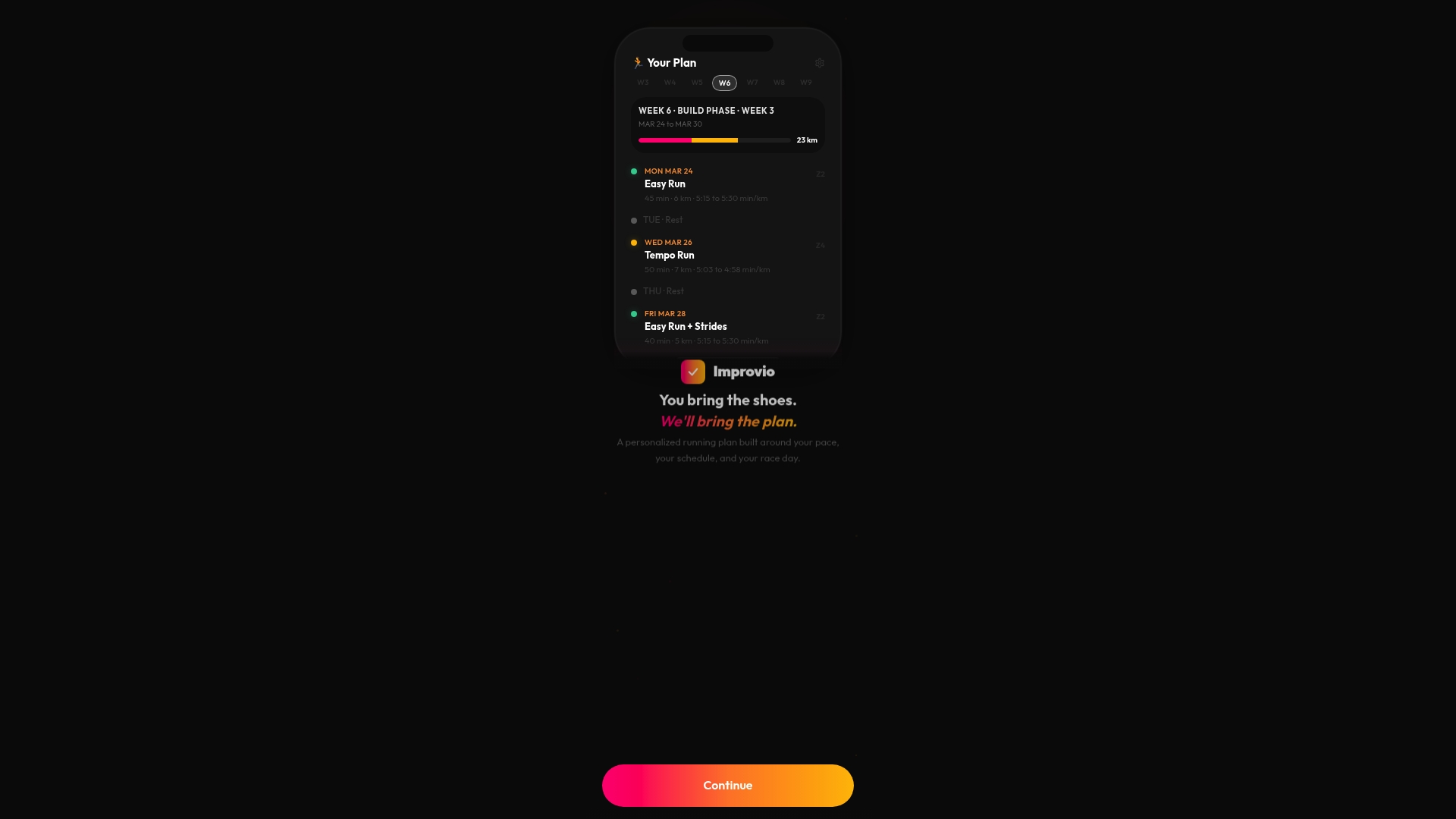
That's exactly what the Improvio running app is built for. In about 60 seconds, you enter your current pace, your schedule, and your race date. Improvio builds a personalized weekly training plan around your numbers automatically. No guesswork. No complicated spreadsheets. Just a clear plan that fits your life and grows with your progress. For a deeper look at how technology supports your journey, check out this running tech guide. You bring the shoes. We'll bring the plan.
Frequently asked questions
How do you calculate runner's pace if you have only a stopwatch and a set distance?
Divide the total time by the distance you ran. For example, 30 minutes for 3 miles equals a 10-minute-per-mile pace. Simple math, instant insight.
What's a good pace for a beginner runner?
A good beginner pace is one where you can run comfortably without gasping for air. Beginner pace is about steady, safe running rather than hitting a specific number, though 12 to 15 minutes per mile is common for many new runners.
Why does my running pace change during a single run?
Hills, fatigue, temperature, and even excitement at the start all affect your pace in real time. Course and energy changes affect moment-to-moment pace, so focus on how the whole run felt, not every single split.
How often should you check your pace as a beginner?
Once or twice per run is more than enough. Checking pace less often keeps running enjoyable and safe. Constantly watching your watch adds unnecessary pressure and pulls your focus away from the run itself.